What Is a Roller Buckle? How It Works and When to Use One
TL;DR:
- A roller buckle is a classic prong buckle with a spinning cylinder added where the strap enters the frame — the roller rotates as you tighten, dramatically reducing friction on the leather
- It extends belt life significantly by eliminating the scraping that standard prong buckles cause at the throat of the buckle
- Best suited for thick leather belts, work belts, gun belts, and any application where the belt is adjusted frequently or worn tight
- For dress wear and lighter leathers, a standard box-prong or ratchet buckle may be the better pick
- Material quality — solid steel vs. plated alloy — matters more than buckle style for long-term performance
Walk into any leatherworking shop or tactical gear store and you'll find roller buckles alongside standard prong buckles, ratchet systems, and D-rings.
They look nearly identical to a frame buckle at first glance — but that small cylinder sitting across the throat of the frame changes how the buckle behaves in daily use.
Here's exactly what a roller buckle does, how it compares to the alternatives, and when it earns its place on a belt.
What Is a Roller Buckle?
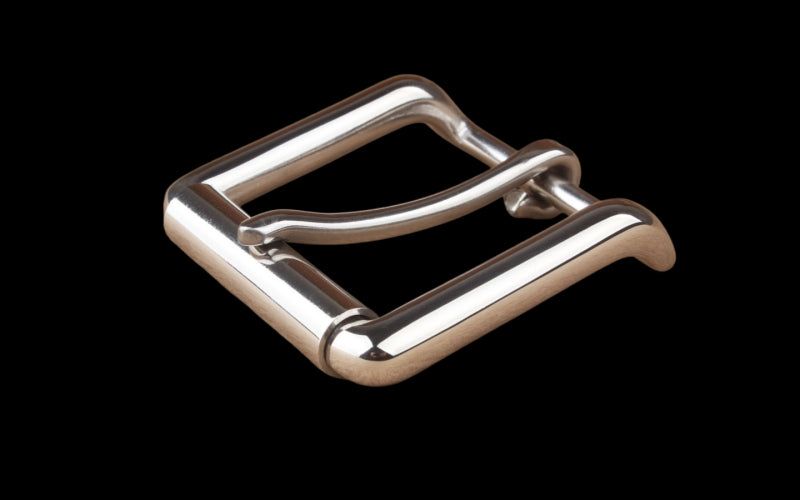
A roller buckle is a prong buckle fitted with a small rotating cylinder — the "roller" — mounted horizontally across the throat of the frame where the belt strap passes through. Instead of the leather sliding against a fixed metal bar when you tighten the belt, the cylinder spins freely, letting the strap glide over a rolling surface rather than scraping against a static edge.

The rest of the mechanism is identical to a standard prong buckle: a hinged pin passes through one of the holes punched in the strap, the prong locks into position, and the belt holds at the selected tension. The roller doesn't change how the belt fastens — it changes how the leather is treated during fastening. For a full overview of how different buckle styles compare, see our guide to types of belt buckles.
How Does a Roller Buckle Work?
When you thread a belt strap through a roller buckle and pull it tight, the spinning cylinder rotates in the direction of strap travel. This rolling action distributes friction across the full rotating surface rather than concentrating it at a single fixed point of contact between metal and leather.
In a standard (non-roller) frame buckle, the strap drags against a stationary metal bar every time you adjust the fit. Over months and years, this creates a friction groove — a worn area in the leather just behind the buckle that eventually cracks, thins, or frays. The roller eliminates this point wear almost entirely. According to Hanks Belts' roller buckle breakdown, the mechanism "greatly reduces the wear from a non-roller buckle, which virtually eliminates friction wear around the area where your buckle hooks through the belt."
The practical effect is twofold: the belt lasts longer, and it's noticeably easier to tighten and loosen — especially in thick, stiff leather where a fixed bar creates real resistance.
Roller Buckle vs. Standard Prong Buckle: What's the Difference?
A roller buckle and a standard prong buckle are functionally the same mechanism — prong through hole, strap held at tension — except the roller buckle adds a rotating cylinder at the strap's entry point that reduces friction during adjustment. The difference is most significant on thick leather and under frequent adjustment.

For a lightweight dress belt in 3–4 oz leather worn the same way every day, a standard prong buckle performs well and the friction wear is minimal. For a 12–14 oz work or gun belt adjusted multiple times daily or worn tight against body equipment, the roller's wear reduction extends the strap's usable life substantially.
| Feature | Roller Buckle | Standard Prong Buckle |
|---|---|---|
| Friction on leather | Low — roller distributes wear | Higher — fixed bar creates point wear |
| Ease of adjustment | Smooth — strap glides | Stiffer — especially in thick leather |
| Belt longevity | Extended — less strap degradation | Standard — wear appears over time |
| Formality | Casual to semi-casual | Casual to formal (depending on finish) |
| Common uses | Work, gun, tactical, outdoor belts | Dress, casual, everyday belts |
| Complexity | Slightly more complex | Simple and proven |
Both types are available across our full belt buckle collection in finishes from polished steel to antique brass.
When Should You Use a Roller Buckle?
Roller buckles are best suited for thick leather belts, heavy-duty applications, and situations where the belt is adjusted frequently or worn tighter than a standard dress belt.

The four use cases where a roller buckle meaningfully outperforms a standard prong buckle:
1. Gun and tactical belts. Concealed carry and duty belts are often worn tighter than everyday belts to stabilize holster weight, and are adjusted multiple times a day — on, off, and repositioned. As Relentless Tactical explains in their gun belt guide, the roller minimizes the cumulative strap wear that comes from this repeated, load-bearing adjustment.
2. Work and utility belts. Tool belts, trades belts, and outdoor belts in heavy leather experience heavy daily friction at the buckle. The roller's reduced friction extends the strap's lifespan in work environments where replacing equipment frequently is costly.
3. Equestrian and harness applications. Roller buckles are standard hardware in saddle-making and bridle construction because they handle constant adjustment and loading on thick leather straps without accelerating wear.
4. Thick leather everyday belts. A full-grain leather belt in 10–12 oz weight benefits from a roller buckle even in casual wear. The strap's stiffness means a standard prong bar creates real drag with every adjustment, and the wear shows on the leather over years of daily use.
Is a Roller Buckle Good for Dress Belts?
For most dress belt applications, a roller buckle is not the standard choice — and the reason is primarily aesthetic rather than functional. Dress belts traditionally use flat-frame prong buckles, box-frame buckles, or plaque buckles that present a clean, low-profile silhouette. The roller cylinder adds slight visual bulk to the buckle throat, which is visible when the strap is threaded through.
That said, a well-finished roller buckle in polished brass or silver on a slim dress belt is not inappropriate for business-casual or smart-casual wear. The distinction matters most at formal occasions — black-tie, suits with tailored trousers — where a flat, refined buckle profile is expected. See our dress belt collection for the standard configurations used in formal leather belts.
For everyday office wear on thicker leather, a roller buckle in a clean finish is a practical and understated choice. You get reduced wear and easier adjustment without sacrificing the look. Understanding what the point of a belt buckle is — function vs. fashion — helps clarify the right pick for each occasion.
Roller Buckle vs. Ratchet Buckle: Which Is Better?
A roller buckle and a ratchet buckle solve different problems. A roller buckle reduces leather wear at the buckle throat using a spinning cylinder; a ratchet buckle eliminates hole-based adjustment entirely using a micro-adjustment track on the strap's reverse.

The ratchet system removes hole wear as a concern altogether — since there's no fixed adjustment point, wear is distributed evenly across the hidden track. It also offers finer fit control: most ratchet systems adjust in 1/4-inch increments, versus the standard 1-inch spacing between belt holes. For all-day comfort across a full range of body positions, ratchet buckles are genuinely more precise. According to Holdform's buckle guide, ratchet systems "often make the difference between a belt feeling acceptable and genuinely comfortable across a full day."
The trade-off: ratchet belts have a specific aesthetic — the strap is typically thinner and the buckle mechanism is more visible. Roller buckles sit on traditional leather straps with conventional holes and have a classic look that works across more outfit contexts.
| Roller Buckle | Ratchet Buckle | |
|---|---|---|
| Adjustment precision | ~1 inch (hole spacing) | ~¼ inch (micro-track) |
| Wear reduction | Reduces strap friction at throat | Eliminates hole wear entirely |
| Leather compatibility | Thick or thin — any traditional strap | Requires ratchet-compatible strap design |
| Formality range | Casual to semi-formal | Casual to business-casual |
| Best for | Heavy leather, frequent adjustment | All-day comfort, precise fit |
Browse our ratchet buckle belt collection or box and prong buckle belts to compare styles side by side.
How to Identify a Quality Roller Buckle
Not all roller buckles are built equally. The roller itself needs to spin freely, consistently, and without wobble — a poorly fitted roller cylinder that binds or has too much lateral play defeats the purpose. Here's what to look for:
Metal composition. A solid brass or stainless steel roller buckle will outlast a plated zinc alloy version significantly. The roller is a moving part; it needs to maintain dimensional stability under daily load. Plated alloys wear faster at the pivot points where the cylinder seats. Our stainless steel buckle belts use hardware built to this standard.
Roller spin. Thread a strap through and tighten it — the roller should turn smoothly with no catching, grinding, or side-to-side slop. A stiff or binding roller means the fit between the cylinder and frame is poor, and it'll worsen with wear.
Frame weight. A light, thin frame that flexes under load is a red flag. Roller buckles on work or tactical belts need a frame that holds its shape under lateral stress when the belt is worn tight against equipment.
Prong quality. The prong still bears the belt's full load in a roller buckle. It should be solid — not a folded-sheet prong — and the pivot should be tight with no wobble.
According to Groove Life's buckle type analysis, hardware quality is consistently the most predictive factor for long-term buckle performance across all styles.
The Bottom Line
A roller buckle is a smart mechanical upgrade to the traditional prong buckle — the addition of a rotating cylinder reduces leather friction during adjustment, extends strap life, and makes tightening and loosening smoother, particularly on thick leather. It's the right choice for work belts, gun belts, equestrian applications, and heavy everyday leather where repeated adjustment creates cumulative wear.
For dress wear, the standard prong or box-frame buckle remains the conventional pick — cleaner profile, identical function, appropriate aesthetic for formal contexts. For all-day precision fit, a ratchet system edges out the roller on comfort alone. The right buckle style depends on the leather weight, wear frequency, and occasion. Start with our men's belt collection to compare configurations — every belt ships with solid hardware backed by a 10-year BELTLEY warranty.
Frequently Asked Questions
Q: What is a roller buckle?
A roller buckle is a prong-style belt buckle that includes a small rotating cylinder mounted across the frame's throat — the point where the belt strap enters the buckle. When you tighten the belt, the cylinder spins rather than the strap dragging against a fixed bar, significantly reducing friction and leather wear.

Q: What is a roller buckle used for?
Roller buckles are most commonly used on heavy-duty leather belts where frequent adjustment or tight wear causes significant strap wear over time — including gun belts, CCW belts, work and trades belts, and equestrian tack. They're also a practical upgrade on any thick leather everyday belt.
Q: Does a roller buckle last longer than a regular prong buckle?
The roller buckle's frame and prong have the same lifespan as a standard buckle; the advantage is extended leather strap life. By reducing friction at the buckle throat, it slows the wear pattern that eventually thins, cracks, or frays the strap behind the buckle — the most common failure point on traditional prong belts.
Q: Is a roller buckle better than a ratchet buckle?
They solve different problems. A roller buckle reduces strap wear using a spinning cylinder while keeping the traditional holes-and-prong adjustment system. A ratchet buckle eliminates hole-based adjustment entirely, offering micro-precision fit but a different aesthetic and strap design. For heavy leather and rugged use, the roller wins. For all-day comfort and precise fit, ratchet systems are typically more practical.
Q: Can a roller buckle be used with any belt strap?
Yes — roller buckles work with any standard belt strap that has punched holes. The strap threads through the frame, over the roller, and the prong passes through the chosen hole exactly as with a standard frame buckle. No special strap construction is needed, unlike ratchet buckles which require a specific strap format.
Q: How do I know if my roller buckle is good quality?
Spin the roller with a finger — it should rotate smoothly with no catching or wobble. The frame should be solid (not thin sheet metal that flexes under load), the prong should sit tight at its pivot, and the overall weight should feel substantial. Solid brass or stainless steel construction outperforms plated zinc alloy significantly in longevity.