How to Choose a Belt Buckle for Formal vs. Casual Occasions
TL;DR:
- Formal buckles are slim, flat-framed, and polished — the buckle should disappear into the outfit, not announce itself
- Casual buckles can be wider, chunkier, and more decorative — this is where personality enters
- Four variables decide formality: buckle size, finish (polished vs. matte), frame style, and embellishment level
- Match your buckle's metal finish to your watch and other hardware — this rule applies across all dress codes
- A 35mm brushed-finish frame buckle in silver or gold is the closest thing to a universal buckle that works from business casual to smart-casual weekend
The belt is the one accessory that crosses every level of dress code. It shows up under a bespoke suit at a board meeting and on a weekend hike. The buckle — not the leather strap — is what signals which register you're in. Get it wrong and it pulls a polished outfit apart. Get it right and it's invisible in the best possible way.
Here's the complete breakdown of how to read buckle formality and choose correctly for every occasion.
Which Buckle for This Week's Calendar?
Buckle formality by event:
| Your situation | Go with |
|---|---|
| Board meeting, interview | Slim flat frame, polished silver, under 35mm — the buckle should vanish. |
| Office business-casual | 35mm brushed-finish frame — present but quiet. |
| Weekend, jeans | Wider, character welcome: plaque, Western, antique brass. |
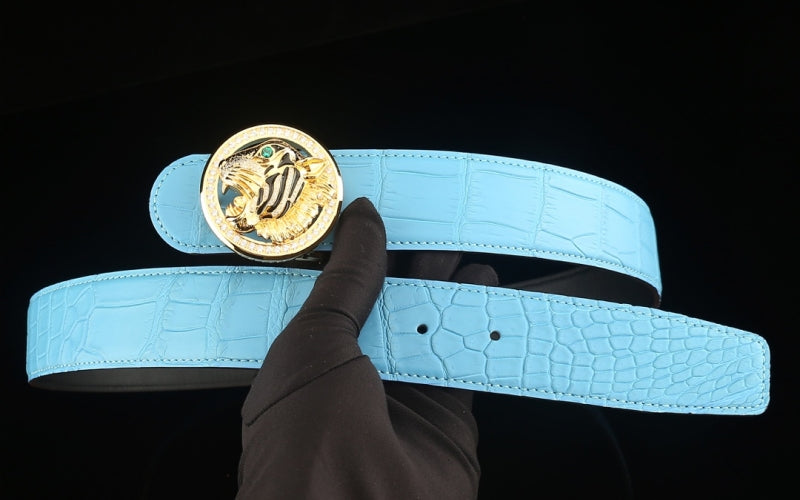
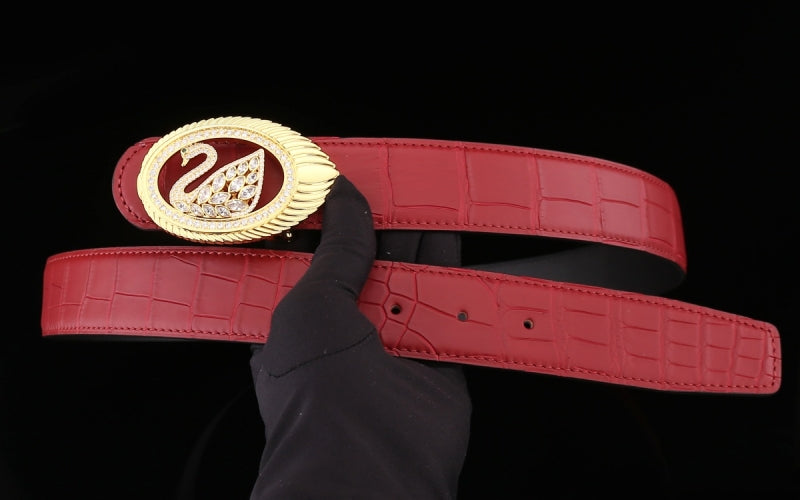
| Statement night out | This is where animal-head and rhinestone buckles live — one loud item, everything else muted. |
From invisible frames to dragon heads: BELTLEY's buckle range spans the whole spectrum.
What Makes a Belt Buckle Formal or Casual?
Four variables determine where a buckle falls on the formal-to-casual spectrum: size, surface finish, frame style, and embellishment. Formal buckles are small, flat, polished, and plain. Casual buckles can be large, matte, chunky, and decorative — and every combination between those poles has a place in the spectrum.

Size: The smaller the buckle face, the more formal. A dress buckle sits flush against the trouser waistband and takes up minimal visual space. A large western plate demands attention and works precisely because of that in casual contexts. Width also tracks formality — belts of 1"–1.25" (25–32mm) read formal; 1.5"+ (38mm+) reads casual.
Finish: High polish — mirror-bright silver or gleaming gold — is the formal standard. Brushed, satin, and matte finishes are more relaxed. Antique, oxidized, or patinated finishes are firmly casual. According to Real Men Real Style's belt guide, polished finishes are "eye-catching and great for evening events or upscale business attire" while brushed finishes are "more subtle and versatile, ideal for daily wear."
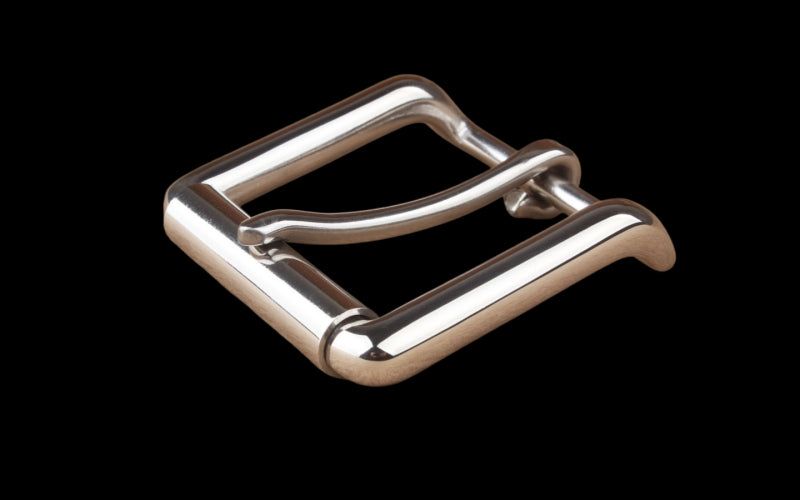
Frame style: Flat-frame prong buckles, plaque buckles, and slim box-frame buckles are the formal standard. O-rings, roller buckles, western plates, and novelty frames are casual. The more mechanism visible, the more casual the read.
Embellishment: Zero embellishment — no logos, engravings, gemstones, or decorative elements — is formal. Brand logos, initials, rhinestones, and motifs are casual. A plain buckle face is a canvas that lets the leather and outfit do the work. Our guide to types of belt buckles covers the full range with visual references for each style.
What Belt Buckle Should You Wear with a Suit?
For a suit — business formal or black-tie — the buckle should be a slim, flat-frame or plaque-style buckle in polished silver or gold, no wider than 1.25" (32mm), with zero embellishment. The goal is for the buckle to disappear behind the jacket lapels. A buckle that draws the eye undercuts a tailored silhouette.

The specific rules for suiting:
- Black suit, black-tie: Polished silver or gunmetal frame buckle, 1"–1.25" wide. Black leather strap, smooth finish. Nothing with a visible brand mark.
- Navy or charcoal suit, business formal: Polished gold or silver frame buckle, 1.25" wide maximum. Dark brown or black leather strap.
- Lighter suits (grey, beige): Brushed gold or silver is acceptable — the softer finish complements lighter fabrics. Dark tan or cognac leather works here.
As Buckle My Belt's formal occasion guide puts it: "A wide, textured, or heavily buckled belt will undermine the clean lines of a suit and signal that you don't understand dress codes." The buckle should be a detail — not a focal point. Browse our dress belt collection for options built to this spec.
What Buckle Works for Business Casual?
For business casual, a brushed or satin-finish frame buckle in silver or gold at 1.25"–1.38" (32–35mm) width is the reliable standard. It's refined enough for an office environment without the strict formality of a dress belt, and flexible enough to carry into after-work settings without looking overdressed.
Business casual gives you room to introduce small personality details — a subtle texture on the buckle face, a slightly heavier frame, or a modest logo if it's a premium brand mark rather than a fashion logo. The key constraint: the buckle should still be secondary to the outfit, not competing with it.
The 35mm width is the sweet spot for this dress code. Wide enough to read as contemporary, slim enough to work with chinos and tailored trousers. AMBFA's buckle occasion guide describes this tier as "the modern gentleman's default — functional, polished, and adaptable without appearing to try too hard." Pair with a full-grain leather belt in dark brown or black for a combination that carries across the full business casual spectrum.
The 5 Rules of Formal Buckle Style
These rules apply from smart business to black-tie. They're not arbitrary — each one has a functional logic behind it.

1. Keep the buckle width at or under 1.25 inches. Formal trousers have narrow belt loops. A wide buckle creates visual bulk at the waist and can stress the loop stitching. Slim buckles sit flat and clean.
2. Choose polished over matte. Suit fabrics — wool, flannel, tweed — have inherent texture. A polished buckle provides contrast and lift. A matte buckle flattens visually into the fabric and reads as an afterthought.
3. Match the metal finish to your watch and cufflinks. Silver watch = silver buckle. Gold watch = gold buckle. Mixed metals in one outfit create visual noise at the wrists and waist simultaneously, which reads as careless in formal contexts. This is the one matching rule that applies at every dress code level. Our breakdown of whether your buckle should match your watch covers this in full.
4. No visible branding or logos on the buckle face. At formal dress codes, a logo on the buckle reads as either insecure or off-brief. The exception: premium brands whose buckle mark is subtle and part of the buckle's design language (certain Hermès or Ferragamo pieces). Street-level logo belts — whatever the brand — don't belong at formal events.
5. Match the belt leather to your shoes in both color and sheen. Matte black belt with patent leather shoes is wrong. High-gloss black belt with a brushed leather oxford is also wrong. The leather finish of the strap and shoes should be consistent. The buckle finish then matches your metal hardware — watch, cufflinks, and collar hardware.
According to The Art of Manliness's comprehensive belt guide, violations of rules 3 and 5 are the two most frequently observed belt mistakes in formal settings.
What Belt Buckles Work Best for Casual Wear?
For casual wear — jeans, chinos, weekend outfits — buckle rules relax substantially. The right casual buckle is one that fits the outfit's personality, with size, finish, and style chosen to complement rather than just coordinate.
A 1.5" (38mm) frame buckle in brushed steel or antique brass works across nearly all casual contexts and ages well. Beyond that, the full range opens up:
- Western plate buckles: Bold, iconic with denim. The larger the plate, the more deliberately Western the read — calibrate to how committed you are to that aesthetic.
- O-ring and D-ring buckles: Clean and minimal. Works particularly well with braided leather or fabric straps for a relaxed, slightly bohemian look.
- Novelty and engraved buckles: Skull motifs, monograms, animal heads — appropriate in fully casual contexts where self-expression is the point.
- Wider frames: 1.5"–2" width reads naturally with jeans and adds visual weight that flatters looser-cut trousers.
The casual dress code also opens up leather finishes. Textured leather, suede, distressed full-grain, or exotic leathers all work alongside casual buckles — and this is exactly where statement pieces like crocodile or elephant leather make the most sense. Browse our casual belt collection for options that take the formality off without compromising material quality.
Should Your Buckle Be Gold or Silver?
The buckle metal finish — gold or silver — should match the dominant metal in your other accessories on a given day. This is the rule, and it applies across all dress codes.

Silver watch, silver ring = silver buckle. Gold watch, gold bracelet = gold buckle. Mixed metals in jewelry = either works, but pick one for the buckle and carry it through your accessories.
Gold buckles read warmer and pair naturally with brown leather, tan, and earth-tone outfits. Silver and gunmetal read cooler and pair naturally with black leather and grey or navy outfits. Both are appropriate at every formality level — this is a coordination decision, not a formality one. The finish matters more than the color: polished gold for formal, brushed gold for casual; same logic applies to silver. See our plaque buckle belt collection for both gold and silver options, and our stainless steel buckle belts for the most durable silver-finish option. Our breakdown on matching your buckle to your watch goes deeper on the metal coordination question.
The One-Belt Strategy: Is There a Universal Buckle?
The closest thing to a universal buckle — one that works from business casual through smart-casual weekend — is a 35mm brushed-finish frame buckle in silver or gold on a dark brown or black full-grain leather strap.

This combination works because:
- 35mm is too slim to read casual but wide enough to look contemporary
- Brushed finish avoids the formality ceiling of high polish while avoiding the clear casualness of matte or antique
- Frame-style buckle is the most versatile silhouette — dressier than a roller, more relaxed than a plaque
- Full-grain dark leather transitions from trousers to jeans without visual jarring
It won't work at black-tie (too casual) or on a work belt (too refined), but for the middle 80% of daily dressing occasions, it handles everything. The full explanation of dress vs. casual belt differences — including strap width, leather grade, and buckle style combinations — is in our guide to dress belts vs. casual belts.
The Bottom Line
Buckle formality comes down to four variables: size (small = formal), finish (polished = formal), style (flat frame = formal), and embellishment (none = formal). Master these and you can read any dress code correctly. The matching rule — buckle metal matches your watch — is the one constant across all levels.
At BELTLEY, every belt is built with a buckle that fits its leather's purpose: slim polished hardware on dress leathers, substantial brushed frames on casual full-grain. All buckles are solid stainless steel — no plating that wears through and changes finish over time — backed by our 10-year warranty. If you're building a versatile belt wardrobe, start with our full-grain leather belt collection and work outward from there.
Frequently Asked Questions
Q: What belt buckle is appropriate for a formal occasion?
A slim, flat-frame or plaque-style buckle in polished silver or gold, 1"–1.25" (25–32mm) wide, with no embellishment or visible branding. The buckle should sit flat against the trouser waistband and disappear under a jacket lapel. Anything wider, chunkier, or decorative is too casual for formal dress codes.
Q: Can you wear a big belt buckle with a suit?
No — a large buckle with a suit signals a style mismatch. Formal suits are built on clean vertical lines, and an oversized buckle creates visual bulk at the waist that breaks that silhouette. For suiting, the buckle should be as small and flat as possible.
Q: Should a belt buckle be gold or silver for formal wear?
Either is appropriate — the choice should be driven by your other metal accessories. Silver buckle if you're wearing a silver watch and silver cufflinks; gold buckle if your hardware is gold. Mixed metals undermine the deliberateness that formal dressing requires.
Q: What size buckle is best for business casual?
A 1.25"–1.38" (32–35mm) buckle in a brushed or satin finish — silver or gold — is the business casual standard. It reads polished without the rigidity of a formal dress buckle, and works with both tailored trousers and smart chinos.
Q: What belt buckle style works best with jeans?
Frame buckles, western plates, and O-rings all work with jeans — the choice depends on how casual and personality-forward you want the look. A 1.5" (38mm) brushed or antique-finish frame is the most versatile; a western plate with a larger face works for a bolder statement. Avoid slim polished dress buckles with denim — the formality registers as stylistic confusion.
Q: Does the buckle need to match the shoes?
The buckle metal should match your watch and jewelry — not specifically your shoes. The leather belt color should coordinate with your shoe leather color, but there's no direct rule requiring the buckle finish to mirror any element of the shoes. The metal-to-metal matching rule (buckle, watch, ring) is the relevant one.