What Is a Nile Crocodile Leather Belt? The Complete Guide
TL;DR:
- A Nile crocodile leather belt is made from Crocodylus niloticus — Africa's largest crocodile species, prized for its large, symmetrical belly scales and exceptional suppleness
- Nile crocodile leather ranks among the top three most valued reptile leathers globally, alongside American alligator and saltwater crocodile
- Legally sourced Nile crocodile leather is CITES Appendix II certified — meaning it comes from regulated farms, not wild populations
Spend any time researching exotic leather belts and you'll keep running into the same phrase: Nile crocodile. It appears on the product pages of serious belt makers and in the leather sections of luxury houses. But outside of "it's expensive and exotic," most buyers have no idea what actually makes Nile crocodile leather what it is — where it comes from, how it's structured, and why it performs the way it does.
This guide answers all of that. By the end, you'll know exactly what you're buying when you invest in a genuine Nile crocodile leather belt, and why this material has held its status at the top of the exotic leather hierarchy for over a century.
Is Nile Croc the Right Exotic for You?
Where it wins, and where another hide wins:
| Your situation | Go with |
|---|---|
| First crocodile belt | Nile croc belly cut — the best all-around balance of scale beauty, suppleness, and price ($118–$289 at BELTLEY). |
| Want the American classic | Alligator — smaller, rounder scales and the US-heritage cachet. From $178 in alligator-titled styles. |
| Rugged texture preference | Hornback cut Nile croc — ridged spine scales, the boldest look in the case. |
| Ethics top of mind | Insist on CITES-compliant farmed hides — regulated sourcing is the entire legitimate supply chain. |
legally sourced Nile crocodile, belly and hornback: BELTLEY's crocodile collection.
What Is Nile Crocodile Leather?
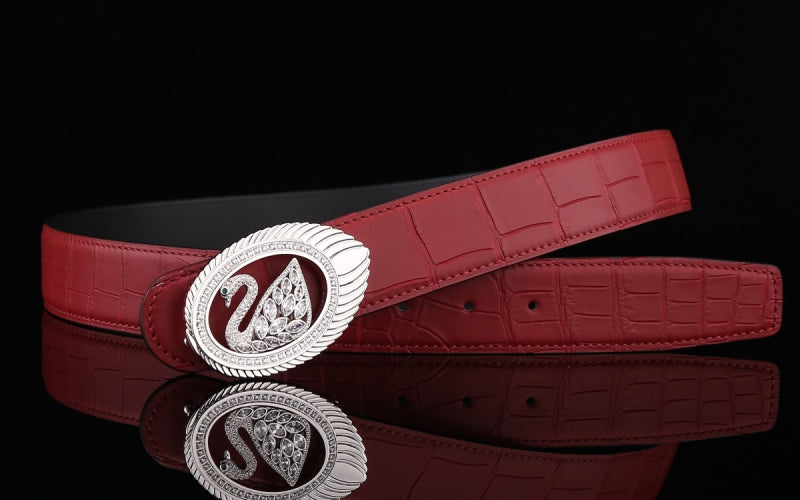
Nile crocodile leather is tanned hide sourced from Crocodylus niloticus — a large reptile species native to sub-Saharan Africa. Its belly skin is the most commercially valuable, characterized by large, flat, rectangular scales arranged in a regular grid pattern, exceptional suppleness, and a smooth surface texture that takes dye and finish exceptionally well.

Crocodylus niloticus is Africa's largest crocodile, reaching up to 16 feet in length and producing belly skins up to 70 cm wide — significantly larger than American alligator belly panels, which typically measure 30–45 cm. This scale allows for wider, more uninterrupted panel cuts in belt making, reducing the number of joins and producing a cleaner finished product.
A peer-reviewed study in PMC (NIH) on factors affecting Nile crocodile leather quality identifies scale regularity, skin width, and hide thickness uniformity as the primary determinants of Grade 1 Nile crocodile leather — all characteristics that directly translate to belt durability and visual appeal.
The Origins: Where Nile Crocodile Leather Comes From
Nile crocodile leather does not come from wild-caught animals. Since the 1970s, international trade in wild crocodile has been tightly restricted under CITES. Today, virtually all commercial Nile crocodile leather originates from licensed farming operations in sub-Saharan Africa — primarily Zimbabwe, South Africa, Uganda, Kenya, and Tanzania.
These farms operate under strict government quota systems. Crocodiles are hatched from eggs collected under permit, raised in controlled environments until reaching commercial size (typically 3–4 years), and processed by certified tanneries. Panam Leathers' guide to Nile crocodile leather notes that the combination of African climate, farm management standards, and the species' natural scale structure makes Nile crocodile one of the most consistent sources of premium exotic leather worldwide.
The tanning process for Nile crocodile is specialized. Unlike cowhide, which can be processed in high-volume industrial tanneries, crocodile hides require individual handling at each stage — soaking, liming, chrome or combination tanning, and finishing are all done by hand or in small batches to preserve the integrity of the scale structure.
How Is Nile Crocodile Different from Alligator Leather?
Nile crocodile and American alligator leather are the two most prestigious reptile leathers, but they are not the same. Nile crocodile scales are larger and more rectangular, with a V-shaped ridge pattern running down the back. Alligator scales are slightly more rounded and uniform. Both have ISO sensory pores; neither has the calcium-embedded rivets found in caiman leather.

The scale difference matters visually. Nile crocodile belly leather has a slightly more architectural, graphic quality — the large rectangular scales create strong lines. Alligator belly leather has a softer, more organic look. Both are equally supple and durable at equivalent grades, and both are sourced from CITES-regulated farms.
Price positioning overlaps significantly. Is It Leather's crocodile vs. alligator comparison notes that American alligator commands a small premium in US markets due to domestic sourcing prestige, while Nile crocodile may carry a slight premium in Asian and European markets due to hide width and scale size. Taza Leather's Nile vs. alligator guide confirms that from a construction and longevity standpoint, the two materials are essentially equivalent when sourced at Grade 1.
BELTLEY's full breakdown of alligator vs. crocodile belts and our guide to identifying the four crocodilian leathers cover these distinctions in detail if you want to go deeper.
Belly Cut vs. Hornback: The Two Cuts Used in Belt Making
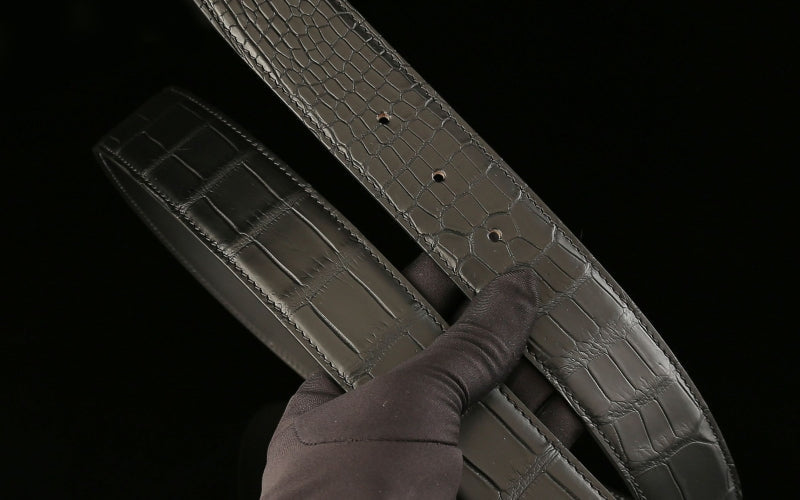
The part of the hide used determines the character of the finished belt. Most premium Nile crocodile leather belts use belly leather — the underside of the animal, which produces flat, smooth, soft scales arranged in that signature rectangular grid. Belly leather is the most valued cut: it's softer, more supple, takes color evenly, and ages gracefully.

Hornback leather comes from the dorsal (back) side of the crocodile, where bony scutes (raised, keeled scales) create a dramatically textured, three-dimensional surface. Hornback belts are visually striking and structurally rigid — they hold their shape firmly and suit a bold, statement aesthetic. The trade-off is that hornback leather is stiffer, less uniform, and harder to work with.
Roje Exotic Leather's crocodile species and leathers guide provides a detailed breakdown of how different cuts from the same Nile crocodile hide vary in grade, texture, and commercial value. A complete guide to these distinctions is also covered in our post on crocodile leather types for belts.
Why Is Nile Crocodile Leather Used in Premium Belts?
Nile crocodile belly leather is used in premium belts because it combines three qualities rarely found together in a single material: visual distinction, structural durability, and long-term suppleness. The large, flat belly scales develop a natural patina with wear without cracking or delaminating — properties that come from the hide's dense, tightly interlocked fiber network.
At the material science level, crocodile leather's durability comes from its unique dermis structure. The scales are reinforced by a dense collagen fiber network beneath the surface — far more tightly woven than the fiber structure of cowhide. Sunny Exotic Leather Tannery's guide to Nile crocodile exotic leather explains how this fiber density contributes to the leather's resistance to tearing, abrasion, and surface wear over decades of use.
This structural integrity is why BELTLEY uses Nile crocodile belly leather for our handcrafted belt collection. The material justifies a 10-year warranty — not as a marketing claim, but as a reflection of what the hide can genuinely withstand.
Is Nile Crocodile Leather Ethically Sourced?
When sourced correctly, yes. The Nile crocodile (Crocodylus niloticus) is listed under CITES Appendix II — meaning international trade is permitted but regulated. Wild-caught Nile crocodiles cannot be legally traded for commercial leather. All legitimate commercial leather comes from licensed farms operating under national quota systems in their respective African countries.

Regulated farming has actually contributed to Nile crocodile conservation. The San Diego Zoo Global / IELC data on Nile crocodile population shows that the species has recovered substantially since the 1970s, partly because farming programs give local communities a financial incentive to protect natural habitats. This is the model that CITES Appendix II is designed to enable.
For US buyers specifically, our guide on whether alligator and crocodile leather belts are legal in the USA covers the import and ownership regulations in detail.
How Long Does a Nile Crocodile Leather Belt Last?
A well-made Nile crocodile leather belt, properly maintained, lasts 20–30 years or more. The dense collagen fiber structure resists cracking and delamination better than cowhide, and the scale surface develops a richer patina with age rather than degrading. The limiting factors are hardware quality and stitching — not the leather itself.

This durability is the core argument for the price point. A Grade 1 Nile crocodile belt costs more upfront than a cowhide belt — but amortized over 20+ years of wear, the cost-per-year is often lower. Atelier Yang's comparison of Niloticus vs. Porosus crocodile leather confirms this longevity profile across both major crocodile species, noting that belly-cut leather from either species maintains structural integrity under regular use far beyond what bovine hides can match.
For those who want to maximize that lifespan, our full post on alligator and crocodile leather belt durability covers what affects longevity and how to extend it.
The Bottom Line
A Nile crocodile leather belt is made from Crocodylus niloticus belly or hornback skin — one of the world's most valued exotic leathers, farmed legally under CITES regulation in Africa. Its defining qualities are large, flat belly scales, exceptional suppleness, collagen-dense durability, and a surface that improves with decades of use rather than deteriorating.
The "Smart Money" case for Nile crocodile leather is straightforward: you pay more once, and you stop buying belts. At BELTLEY, our Nile crocodile leather belts are handcrafted in small batches by master artisans, fitted with stainless steel hardware, and backed by a 10-year warranty — fairly priced without the Brand Tax that inflates competitor prices. Browse the full BELTLEY crocodile and alligator belt collection and own something that genuinely lasts.
Frequently Asked Questions
Q: What is the difference between Nile crocodile and saltwater crocodile leather?
Both are top-tier exotic leathers. Saltwater crocodile (Crocodylus porosus) is generally considered slightly rarer and commands a small premium at the highest grades, particularly in Asian markets. Nile crocodile offers wider belly panels (up to 70 cm vs. 50–60 cm for saltwater) and a more pronounced rectangular scale pattern. For belt making, both produce exceptional results at Grade 1.
Q: Is Nile crocodile leather waterproof?
Nile crocodile leather is water-resistant, not waterproof. Brief contact with moisture — light rain, splashes — causes no permanent damage if the belt is blotted and air-dried promptly. Prolonged soaking will cause the scales to lift and the finish to deteriorate. Conditioning quarterly with an exotic leather conditioner maintains its water resistance.
Q: What does "belly cut" mean in a crocodile leather belt?
Belly cut refers to leather taken from the underside of the crocodile — the smoothest, softest, most supple part of the hide. The belly scales are flat, wide, and rectangular, giving a clean, polished look. This is the most prized cut for belts, wallets, and bags. Hornback cut, taken from the dorsal side, has raised, textured scutes and a bolder aesthetic.
Q: How do I know if my Nile crocodile belt is genuine?
Look for irregular scale variation (no two scales identical), visible ISO sensory pores (tiny asymmetrical openings on each scale), and a natural grain on the flesh side. The buckle should feel dense and heavy — solid brass or stainless steel. Perfectly symmetrical scale patterns indicate embossed cowhide, not genuine reptile leather.
Q: Are Nile crocodile leather belts legal in the United States?
Yes. Nile crocodile leather sourced from CITES-licensed farms can be legally imported and sold in the United States. Wild-caught Nile crocodile is prohibited. Reputable sellers can provide supply chain documentation tracing their leather to CITES-compliant tanneries.