What Designer Belt Should I Buy? A Decision Framework
TL;DR:Quick takeaways
- The right designer belt depends on three things: budget, logo preference (visible vs. subtle), and use case (investment, daily wear, statement)
- For investment/resale value: Hermès
- For visible brand signal: Gucci or Saint Laurent
- For quiet luxury craft: Bottega Veneta, The Row, or Brunello Cucinelli
- For superior material quality without the Brand Tax: genuine exotic leather at DTC pricing
Most designer belt guides give you a list and leave you to figure out which one applies to you. That's not a buying guide — it's a catalog. What actually helps is a decision framework: the right belt for your specific budget, style goals, and what you'll wear it with.
That's what this is. BELTLEY's men's and exotic leather collections sit at the end of this guide intentionally — read the framework first, then decide where you land.

Step 1: Set Your Budget Bracket
Designer belt pricing clusters into three practical tiers, and your tier determines which conversation you're in:
| Tier | Price Range | What's Available |
|---|---|---|
| Accessible Luxury | $150–$350 | Saint Laurent entry, Anderson's, Ferragamo, quality DTC exotic leather |
| Mid-Tier Luxury | $350–$700 | Gucci, Bottega Veneta, Tom Ford, Loewe, Brunello Cucinelli |
| Top-Tier / Investment | $700–$1,500+ | Hermès, Louis Vuitton premium lines, Alaïa |
The jump from accessible to mid-tier buys you more recognizable hardware and marginally better leather in most cases. The jump from mid-tier to investment tier buys you resale value and heritage positioning — the leather quality gap between a $500 Gucci belt and a $1,200 Hermès belt is real, but smaller than the price gap.
Step 2: Decide on Logo Visibility
This is the clearest fork in the road. Be honest with yourself — it shapes everything that follows.
Do You Want Visible Brand Recognition?
Best choices: Gucci GG, Louis Vuitton Initiales, Saint Laurent Cassandre
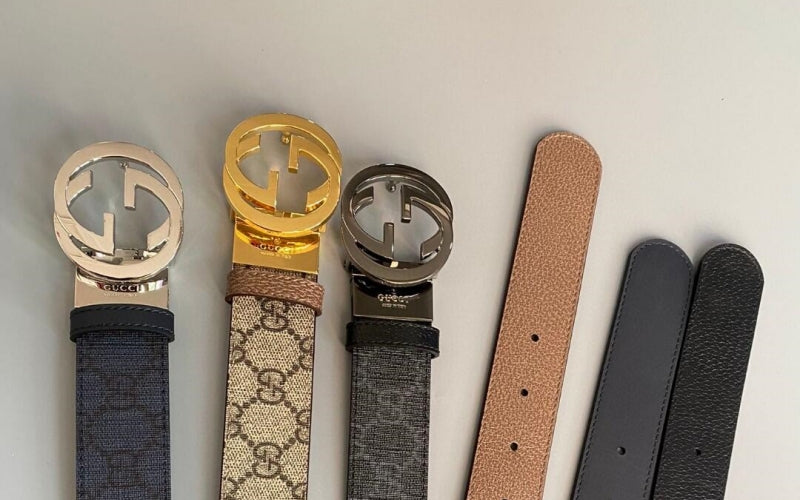
If the answer is yes — and there's nothing wrong with yes — then Gucci's Double G and LV's Initiales buckles are the market standard. Globally recognizable, instantly readable, widely discussed. Saint Laurent's Cassandre hardware is a step quieter but still clearly identifiable.
The honest trade-off: you're paying significantly for the logo. The leather at these price points is good, not exceptional. For what visible branding actually costs you in material quality, our analysis of why designer belts are so expensive breaks down the math.
Do You Want Subtle Luxury ("IYKYK")?
Best choices: Bottega Veneta, The Row, Brunello Cucinelli, Loewe
The quiet luxury movement has made understated accessories the signal of real taste. Bottega Veneta's intrecciato weave and The Row's minimal hardware are recognizable only to the fashion-literate — which is exactly the point for this buyer.
Brunello Cucinelli sits at the top of this tier for pure material quality: full-grain Italian calfskin, hand-finished edges, construction that justifies the price without relying on a logo to do the work.

Step 3: Match the Belt to Its Purpose
For Investment and Resale Value
Buy: Hermès
Hermès is the only mainstream luxury belt brand where the secondary market consistently returns 70–100%+ of original retail on classic designs. The Business of Fashion's luxury resale tracking identifies Hermès as one of the top three most liquid luxury goods categories globally. If you're treating a belt as a wearable asset, there's no real competitor.
Caveat: The entry price is $500–$1,500+. For the investment thesis to work, you need to buy a classic buckle in a neutral color — not a seasonal variation.

For Daily Business Wear
Buy: Ferragamo, Anderson's, or Brunello Cucinelli (32–35mm)
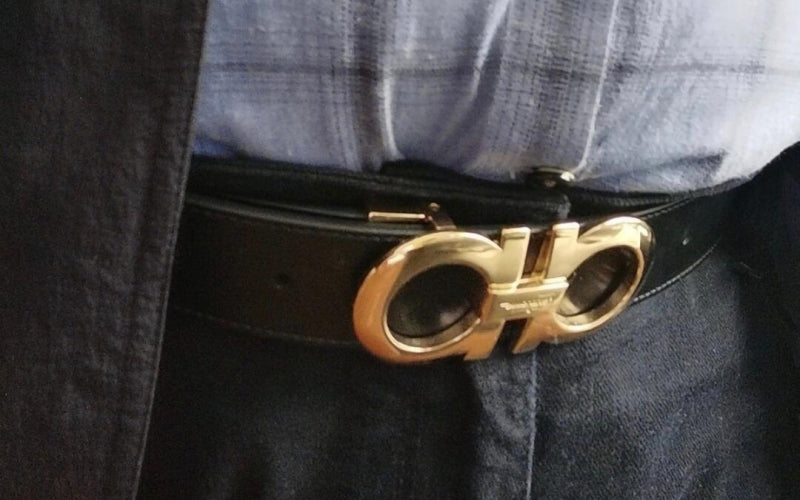
For a belt you'll wear five days a week to an office, the logo-to-durability trade-off matters. Ferragamo's Gancini calfskin belts at $300–$500 are among the best-constructed classic dress belts available. Anderson's at $150–$400 delivers comparable craftsmanship with less brand recognition — the insider choice for buyers who research before spending.
For Casual and Everyday Styling
Buy: Gucci, Saint Laurent, or full-grain cowhide at a quality DTC brand
At casual wear frequency — jeans three to four times a week — the belt is taking real wear. A mid-tier designer belt performs reasonably well, but a quality full-grain cowhide belt at $80–$150 from a craft-focused maker will outlast it.
For a Genuine Statement Piece
Buy: Alaïa (women's) or Loewe Obi Belt
For occasions where the belt is the outfit's centerpiece, Alaïa's waist-cinching silhouettes and Loewe's Obi design are the 2026 references. Neither is a daily wear item — they're occasion investments.

The Option No Roundup Mentions: Exotic Leather at DTC Pricing
Here's where every mainstream designer belt guide falls silent.
Genuine alligator and Nile crocodile belly leather outperforms calfskin on every material metric: fiber density, abrasion resistance, lifespan (20–30+ years vs. 10–15), and the development of character over time. According to the International Crocodilian Farmers Association, certified belly-cut crocodile leather exceeds bovine leather in structural integrity under daily use conditions — measurably, not just reputationally.
The traditional barrier: exotic leather belts at luxury houses cost $3,000–$8,000. That price is almost entirely Brand Tax. BELTLEY sources the same CITES-certified Nile crocodile and American alligator belly cuts — hand-finished by master artisans in small batches — at $149–$299.
For the "Smart Money" buyer who wants the finest material available without paying for a monogram, this is the category that luxury brand roundups never cover. No Brand Tax. No logo premium. Just the leather, backed by a 10-year warranty.

The Quick Decision Matrix
| Your Goal | Best Buy |
|---|---|
| Resale investment | Hermès |
| Visible brand signal | Gucci or Saint Laurent |
| Quiet luxury | Bottega Veneta or Brunello Cucinelli |
| Best daily dress belt | Ferragamo or Anderson's |
| Best material regardless of brand | Exotic leather (alligator/crocodile) |
| Maximum material quality, minimum brand tax | BELTLEY exotic leather ($149–$299) |

The Bottom Line
What designer belt you should buy depends on what the belt is doing for you. Logo signal, investment return, quiet craft, and material quality are four different goals — and they lead to four different brand answers. The mistake most buyers make is assuming they're in the same category as someone with a different goal entirely.
One angle the entire designer belt category overlooks: exotic leather at DTC pricing offers better material quality than calfskin at any price point — and better long-term value than most logo belts in the mid-tier. Before spending $400–$600 on a calfskin logo belt, it's worth reading our breakdown of whether luxury belts are actually worth it — and comparing it to what BELTLEY's exotic leather collection offers at the same or lower price.

Frequently Asked Questions
Q: What is the most popular designer belt?
Gucci's GG buckle belt is the most globally recognized designer belt, followed by Louis Vuitton's Initiales and Hermès's H-buckle. For 2026, Alaïa's corset belt and Khaite's Benny belt have emerged as the fashion-forward references among style publications. See our what designer belts are in style guide for current trend context.
Q: Which designer belts hold their value best?
Hermès holds value best — classic buckle designs in neutral colors regularly return 70–100%+ of retail on the secondary market. Louis Vuitton and Gucci depreciate more steeply (30–60% of retail within 2–3 years). Most other designer belts have minimal resale value.
Q: Is a designer belt worth buying?
It depends on the goal. For investment value, Hermès justifies the price. For material quality, many designer belts at $400–$700 don't outperform well-made full-grain alternatives at a third of the cost. For brand visibility or social signaling, yes — if that's what you're buying. Our full analysis: are luxury belts worth it.
Q: What's the difference between a luxury belt and a designer belt?
A designer belt carries a brand name — it may or may not use premium materials. A luxury belt, strictly defined, uses premium materials (full-grain or exotic leather, solid brass or stainless hardware) and high-quality construction — with or without a recognized brand name. The two overlap but are not the same. Our comparison of designer belt brands vs luxury brands covers this distinction.
Q: What designer belt is the most versatile?
For men: a 32–35mm calfskin belt in black or dark brown with understated hardware (Ferragamo Gancini, Hermès H, or Anderson's solid brass) works from business formal to smart casual. For women: a 35–40mm belt in a neutral tone with a clean rectangular buckle crosses the most outfit contexts. Exotic leather in the same widths and colors covers all the same ground with superior durability.

,%20and%C2%A0use%20case%C2%A0(investment,%20daily%20wear,%20statement)%0AFor%20investment/resale%20valu...)