What Color Leather Belt Should I Get? (A No-BS Guide )
TL;DR: Quick Answer
- Dark brown is the single most versatile leather belt color — it works with jeans, chinos, suits (navy/gray), and transitions seamlessly from office to weekend.
- Black is essential for formal wear and dark-toned outfits but less flexible than brown in casual settings.
- The ideal starter collection is three belts: black, dark brown, and tan/cognac — covering every dress code and color combination you'll face.

You're standing in front of a belt display — or scrolling through a collection online — and every color looks plausible. Black seems safe. Brown seems versatile. Espresso looks interesting.
And now you're overthinking it. The question of what color leather belt should I get has a surprisingly clear answer once you understand how belt colors interact with shoes, pants, and dress codes.
This guide gives you the exact framework: which color to buy first, which to add second, and how to match belts and shoes without second-guessing yourself every morning.

What Is the Most Versatile Leather Belt Color?
Dark brown is the most versatile leather belt color for both men and women. It pairs with black, navy, gray, olive, khaki, and denim — covering roughly 80% of the outfits in a typical wardrobe. Unlike black, which can look stark against lighter fabrics, dark brown blends naturally across the formality spectrum from business meetings to weekend barbecues.
Real Men Real Style's belt matching guide ranks brown as the most flexible belt family because it accommodates tonal variation — a dark brown belt works with chocolate shoes, cognac boots, and tan loafers without demanding an exact shade match. Black, by contrast, requires a precise match with black shoes or nothing.
The specific shade matters. A medium-to-dark brown (think espresso, walnut, or saddle brown) hits the sweet spot. Too light and it reads as strictly casual. Too dark and it approaches black territory without the same formal authority. BELTLEY's brown leather belt collection and espresso leather belts are both excellent starting points because they sit in that versatile middle range.
If you're buying one belt to cover the most ground, make it dark brown.

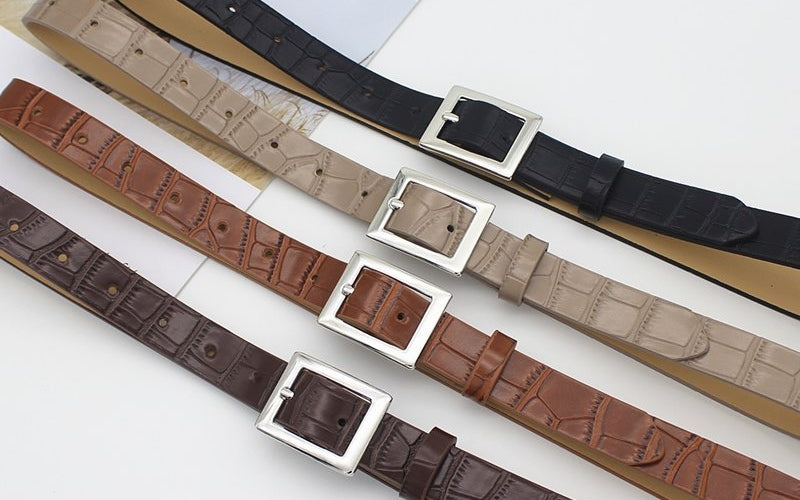
The Essential Belt Color Wardrobe
Most style experts recommend a three-belt foundation that covers every occasion. Here's the build order, from most to least urgent:
| Priority | Color | Best For | Formality Range |
|---|---|---|---|
| 1st belt | Dark brown | Daily wear, business casual, jeans, chinos, navy/gray suits | Casual → semi-formal |
| 2nd belt | Black | Formal events, black/charcoal suits, monochrome outfits, evening wear | Semi-formal → formal |
| 3rd belt | Tan / cognac | Summer outfits, lighter fabrics, weekend casual, relaxed styling | Casual → smart-casual |
According to The Cotton London's belt style guide, neutral-colored leather belts are always a safe foundation because they pair with virtually any outfit. Black, brown, and tan cover the full spectrum.
Once those three are covered, you can explore statement colors — blue, green, burgundy, or red — as accent pieces that elevate specific outfits. But the foundation comes first.
A practical note on quality: your first belt should be the one you invest in most. A full-grain leather belt in dark brown will develop a rich patina over years of daily wear, actually improving in appearance with time. Cheaper belts crack and peel; quality leather matures. Spend more on the belt you'll wear 200+ days a year.

Should Your Belt Match Your Shoes Exactly?
No — your belt and shoes should be in the same color family, but an exact shade match isn't necessary. Tonal coordination (close but not identical) actually looks more sophisticated than a factory-perfect match, especially in casual and business-casual settings.
The traditional rule — belt must match shoes precisely — was written for formal dress codes where everything is black or everything is dark brown. In those settings, yes, keep them close. But for the 90% of situations below black-tie, Bespoke Post's modern matching guide confirms that "same family, similar warmth" is the 2026 standard.
Here's how it works by formality level:
- Formal (suits, weddings, interviews): Match closely. Black shoes = black belt. Dark brown shoes = dark brown belt. Keep the leather finish similar too — polished shoes with a smooth belt, not a distressed one.
- Business casual: Same color family is enough. Cognac shoes with a walnut belt works. Burgundy loafers with a dark brown belt works.
- Casual: Almost anything goes as long as the tones don't clash. The brown belt vs. black belt decision becomes more about outfit tone than rigid matching.
Metal coordination matters too. Match your buckle metal to your other hardware — watch, cufflinks, ring. Silver buckle with silver watch. Gold buckle with gold accessories. Shoescoo's gentleman's guide highlights this as the detail that separates thoughtful dressing from accidental dressing.

What Color Belt Goes Best with Jeans?
Brown — in almost any shade — is the best belt color for jeans. The warm, natural tones of leather and denim are complementary, and the casual texture of both materials creates a cohesive look. Dark brown works with dark-wash denim. Tan or cognac pairs with light-wash and medium-wash jeans. Even espresso works with black denim.
Black belts with jeans work too, but they create a sharper, more urban contrast rather than the easy warmth of brown. Alpine Swiss's matching guide notes that a brown leather belt is the default choice for denim because it introduces visual warmth without competing with the jeans.
For specific denim-and-belt pairings, BELTLEY's guide on what color belt goes best with blue jeans covers every wash and shade combination.
Quick jeans-and-belt cheat sheet:
| Jeans Color | Best Belt Colors | Avoid |
|---|---|---|
| Dark indigo | Dark brown, espresso, black | Tan (too much contrast) |
| Medium wash | Saddle brown, cognac, tan | Nothing — almost everything works |
| Light wash | Tan, cognac, light brown | Black (too harsh) |
| Black denim | Black, espresso, dark brown | Tan, light brown |
| White/cream | Tan, cognac, natural | Black (stark contrast) |

What Color Belt Should I Wear with a Suit?
For charcoal and black suits, wear a black belt. For navy and gray suits, dark brown is the classic choice — though black also works. For tan, khaki, or light-colored suits, cognac or medium brown creates the cleanest coordination.
Incorio's practical matching guide confirms that suit-and-belt matching follows the same logic as suit-and-shoe matching: the belt acts as a bridge between your trousers and your shoes, so it should sit in the same color territory as your footwear.
Here's the suit-specific breakdown:
| Suit Color | Recommended Belt Color | Shoe Match |
|---|---|---|
| Black | Black | Black oxford/derby |
| Charcoal | Black or very dark brown | Black or dark brown |
| Navy | Dark brown (preferred) or black | Brown or black |
| Medium gray | Dark brown or cognac | Brown family |
| Light gray | Medium brown or cognac | Tan or cognac |
| Tan / khaki | Cognac or tan | Cognac or tan |
The navy suit deserves special attention because it's the most common business suit and the one where belt color makes the biggest difference. A dark brown belt with a navy suit signals confident, intentional style — it's warmer and more interesting than the safe but predictable black option. If you own one suit and need one belt for it, and the suit is navy, get dark brown.

Beyond the Basics: Non-Traditional Belt Colors
Once you own the black-brown-tan foundation, colored belts become powerful accent pieces. The key is treating them as outfit enhancers, not everyday staples.
Espresso / oxblood. The darkest browns with reddish undertones — sitting between brown and burgundy. Exceptionally sophisticated with navy, charcoal, and olive. BELTLEY's espresso leather belts live in this space: formal enough for business, distinctive enough to stand apart from standard brown.
Navy blue. A blue leather belt is an unexpected complement to gray trousers, khaki chinos, and lighter suits. It reads as creative-professional — a signal that you think about details without overthinking them.
Green. Olive and forest green belts pair beautifully with earth-toned wardrobes — brown shoes, tan chinos, cream shirts. Paul Malone's leather belt guide recommends green as the most wearable "statement" belt color for men because it stays grounded rather than flashy. Browse BELTLEY's green leather belt collection for options.
Burgundy / red. High impact. Best with dark neutral outfits where the belt provides the only color pop. Red leather belts work especially well against black or charcoal — think of it as a power tie in belt form.
Rule of thumb for colored belts: wear them with outfits that are otherwise neutral. One accent color per outfit. If your shirt is patterned, keep the belt neutral. If your outfit is monochrome, a colored belt adds the right amount of personality.

The Bottom Line
What color leather belt should I get? If you're buying one: dark brown. It covers jeans, chinos, most suits, and every situation from business casual to weekend casual. If you're building a collection: add black second for formal wear and dark-toned outfits, then tan or cognac third for summer and lighter fabrics. Those three colors handle every dress code and outfit combination you'll encounter.
The matching rules are simpler than most guides make them: stay in the same color family as your shoes, match your buckle metal to your other accessories, and match formality level (polished belt with polished shoes, rugged belt with casual boots). Get those three things right and you'll always look intentional.
Color matters — but so does quality. A perfectly matched belt that cracks and peels after six months undermines the entire outfit. BELTLEY's leather belts are handcrafted from full-grain hides, available in every essential color — black, brown, espresso, and beyond — with 316L stainless steel buckles, a 10-year warranty, and free worldwide shipping. Because the right color in the right quality is a combination that never goes out of style.
Frequently Asked Questions
Q: Can I wear a brown belt with black shoes?
Traditionally, no — especially in formal settings. But in casual and smart-casual contexts, a dark brown belt with black shoes can work if the contrast is intentional and supported by other warm tones in your outfit (like a brown watch strap or bag). For a full breakdown, see BELTLEY's guide on wearing a brown belt with black shoes.
Q: What color belt goes with gray pants?
Dark brown, cognac, or black all work with gray pants. Dark brown is the warmest and most interesting option. Black is the safest for formal gray suits. Cognac adds a polished, creative edge. Avoid tan with dark gray — the contrast is too sharp.
Q: Should women follow the same belt color rules as men?
The same foundational principles apply — match belt color family to shoe color, and coordinate metal tones. But women have more flexibility to use belts as statement accessories with dresses and high-waisted pants, where the belt becomes a focal point rather than a background element. In those cases, contrasting colors are intentional and stylish.
Q: Is a reversible belt a good first choice?
A quality reversible belt (typically black on one side, brown on the other) can be a practical space-saver. But the mechanism adds bulk to the buckle area, and neither side develops patina as well as a single-color belt. If you want the most refined look and best aging, buy two dedicated belts — one black, one brown.
Q: What color belt should I wear to a job interview?
Match your shoes. If you're wearing black dress shoes (the most common interview choice), wear a black belt. If you're wearing dark brown shoes with a navy suit, a dark brown belt is the right call. Avoid colored, textured, or statement belts — the interview is about you, not your accessories.
Q: Does belt color matter more than belt quality?
Quality matters more. A perfectly color-matched belt that cracks, peels, or loses its finish within a year does more damage to your appearance than a slightly imperfect color match on a belt that develops a rich patina over time. Invest in full-grain leather first, then refine your color collection.
,%20and%20transitions%20seamlessly%20from%20office%20to%20weekend.%0A%0ABlack%C2%A0is%20...)