What Belt for CEO-Level Executive Meetings?
TL;DR:
- At CEO level the belt is a material signal, not a dress code item — full-grain or exotic leather, 32–35mm, minimal buckle, zero logos is the standard that reads as authority without effort
- The casual CEO revolution (Zuckerberg in a tee, Jobs in a turtleneck) is real but irrelevant for most executives — the belt matters any time a suit or blazer does
- Quality communicates faster than logos at executive level — a crocodile or full-grain leather belt says more than a Gucci monogram to anyone who actually knows
Walk into a boardroom and the people who've been there before can read the room in seconds. Fit matters. Fabric matters. And yes — the belt matters. Not because anyone's consciously grading accessories, but because executive presence is built from a hundred small coherent signals, and the belt is one of them. At CEO or C-suite level, the question isn't whether to wear a quality belt — it's which one, and what it quietly communicates.
What Belt Should a CEO Wear to Executive Meetings?
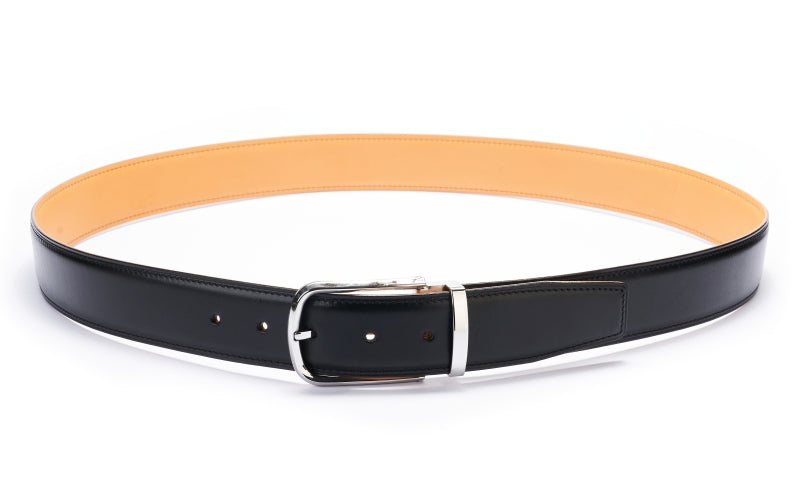
A CEO attending a board meeting, investor presentation, or high-stakes executive meeting should wear a smooth full-grain or exotic leather belt, 32–35mm wide, in black or dark espresso, with a slim minimal buckle in silver or gold. No logo hardware. No novelty finishes. The belt should be nearly invisible — part of a coherent whole rather than a statement piece.

Von Baer's CEO wardrobe guide makes the point cleanly: executive dress at the top level is about precision and intention, not formality for its own sake. The belt's job is to complete the outfit without drawing attention — which means quality leather that holds its finish, a buckle that matches your watch metal, and a width calibrated to your trouser loops. That's it. Explore BELTLEY's exotic leather belt collection for options that communicate material taste without requiring a logo.
Does a CEO Still Need a Belt in 2026?
If the suit has loops, yes. The "casual CEO" trend — Zuckerberg, Musk, Jobs — applies to founders in tech who've made the absence of a suit into a deliberate brand. For most executives, including CEOs in finance, professional services, manufacturing, consumer goods, and corporate law, a well-chosen suit with a quality belt is still the dominant boardroom signal.

Industry Leaders Magazine's analysis of the casual revolution in CEO attire confirms the shift is real but sector-specific. In Silicon Valley, casual signals "I'm above the formality game." In Wall Street, healthcare, or energy, it reads differently. Know your sector and dress accordingly. If you're in a room where suits are worn, the belt is part of the suit's completion — and its absence or poor quality is immediately visible at eye level when you stand.
What Leather Is Right for a CEO Belt?
This is where executive belts diverge from standard professional belts. At C-suite level, the leather choice shifts from "correct" to "communicative."

Full-grain cowhide is the baseline for executive contexts — smooth, non-porous, ages with a patina that improves rather than degrades. It's the correct material for any professional belt, but at executive level it's the minimum.
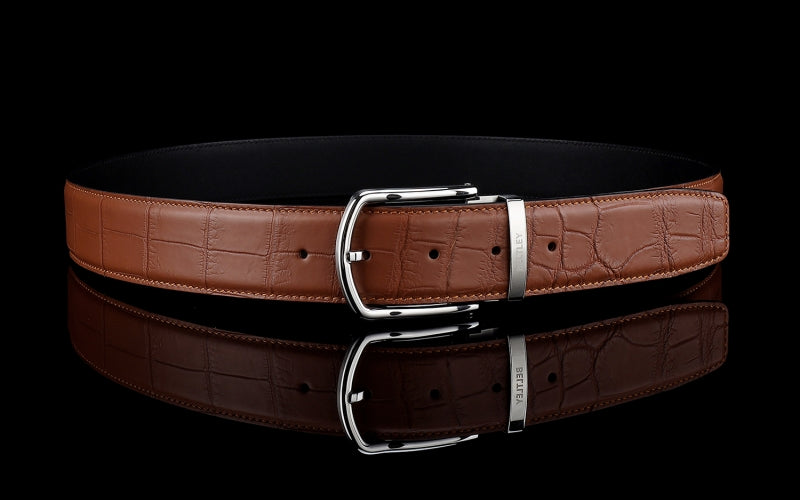
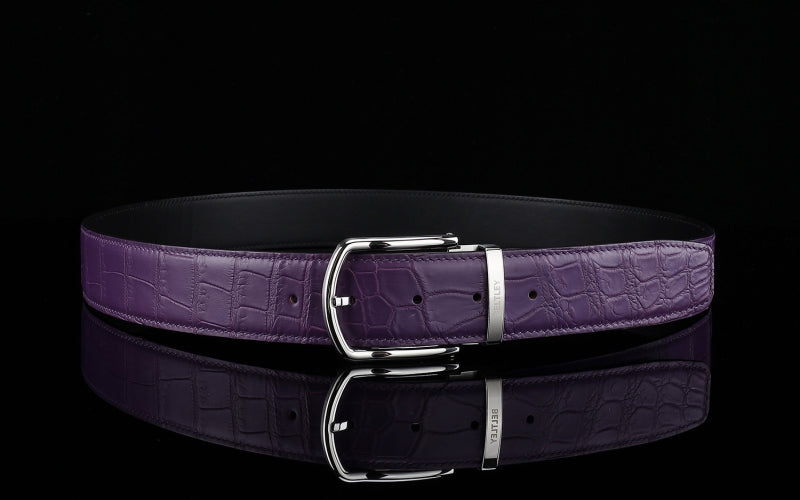
Exotic leathers — crocodile, alligator, elephant — are the materials that signal a different order of consideration. The Nile crocodile belly cut has a scale pattern that no cowhide can replicate. Elephant leather has a texture that's immediately identifiable to anyone who's handled it. These materials don't shout; they're simply different in a way that people in certain rooms understand.
Global Image Group's executive personal style guide notes that at executive level, quality of materials carries more authority signal than brand names — and that the shift from logo-based dressing to material-based dressing is actually a marker of taste maturity. A CEO wearing a Gucci GG buckle is signaling something. A CEO wearing a slim crocodile belt with an unmarked stainless buckle is signaling something else — and in most boardrooms, the second signal lands better.
What About the Casual CEO — Blazer, No Tie, Smart Dark Jeans?
This is the more common executive wardrobe in 2026 for mid-level executive contexts: internal leadership meetings, strategy offsites, innovation presentations, all-hands addresses. Blazer, open-collar shirt, dark jeans or tailored trousers, quality leather shoes. In this context, the belt becomes more visible because the suit jacket's structure isn't framing the look as tightly.

Here, a 35mm full-grain leather belt in dark brown or espresso works particularly well. Brown warms up a dark blazer combination in a way black doesn't, and the 35mm width bridges dress and casual trouser loop sizes. AC-Style's guide on how to dress like a CEO specifically calls out dark brown as an underrated executive color — professional enough for any leadership context, less stark than an all-black combination. Browse espresso leather belts for the specific shade that performs in this range.
Buckle Choice at Executive Level
The buckle is the only hardware on a belt and it sits at the visual center of the outfit. At CEO level, the spec is: slim, flat, matte or brushed finish, no logos, matched to watch and cufflinks.

Mirror-polished buckles read as lower quality — the finish wears off quickly and the high shine looks more costume than confident. Brushed silver or brushed gold are the professional finishes: they hold their appearance, pair well with most watch metals, and don't reflect light in distracting ways in video calls or presentation environments.
C-Suite Network's business professional attire guide notes that accessories at the executive level should coordinate as a system — watch metal, belt buckle, and cufflinks in the same metal family. That cohesion is the mark of someone who's thought through their presentation rather than assembled it. Should your belt buckle match your watch? — the full answer is there if you want it.
The Bottom Line
At CEO level, the belt question is really a material standards question. The right belt isn't the most expensive one or the most recognizable brand — it's the one that's built from a material you'd be confident defending in a conversation, with hardware that coordinates with the rest of your metals, at a width that fits your trousers without forcing. That spec points consistently to full-grain or exotic leather, 32–35mm, minimal buckle, no logos.
The people in the rooms where this matters understand craft. A crocodile belt from BELTLEY — handcrafted, small-batch, backed by a 10-year warranty — is exactly the kind of object that signals you've made the same considered choices about quality that you make everywhere else. Free worldwide shipping means it's the easy call. Browse the exotic leather collection or dress belt collection to find your match.
Frequently Asked Questions
Q: What belt should a CEO wear to a board meeting?
A smooth full-grain or exotic leather belt, 32–35mm, in black or dark espresso, with a slim brushed metal buckle matching your watch. No logo hardware, no novelty finishes. The belt should complete the suit without drawing attention to itself — precision and material quality, not display.
Q: Do CEOs wear designer belts?
Some do, but the more sophisticated executive move is quality without logos. A Hermès or Gucci buckle signals that you've heard of the brand; a crocodile leather belt with an unmarked stainless buckle signals that you understand materials. In boardrooms full of people who've moved past logo goods themselves, the second signal carries more weight.
Q: What belt width is right for a CEO in a suit?
32–35mm (1.25"–1.38") for a formal suit or tailored trousers. This fits dress trouser belt loops cleanly and maintains a slim, proportional line. For smart-casual CEO contexts — blazer and chinos or dark jeans — 35mm is the most versatile single width.
Q: Does exotic leather work for executive belt choices?
Yes — it's actually better suited for executive contexts than standard cowhide when properly executed. Crocodile belly leather, alligator, and elephant leather each have surface characteristics that communicate material knowledge without requiring a brand name. For CEO-level executive meetings, a slim exotic leather belt with minimal hardware is the understated luxury choice that sophisticated audiences recognize.