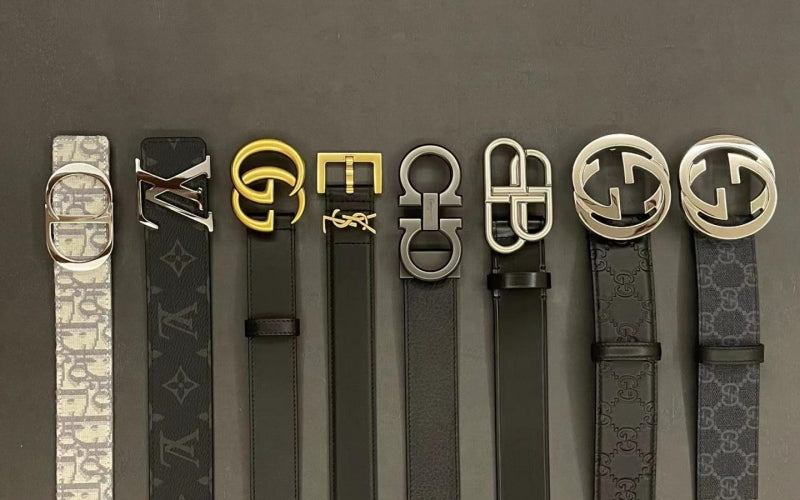
Top 10 Luxury Belt Brands in the World You Should Know
TL;DR:Quick answer
- Hermès holds the undisputed #1 position among luxury belt brands, with belts starting around $700 and resale values that often appreciate over time.
- The top 10 spans four countries (France, Italy, USA, UK) and price points from $300 to $6,675+ — but the most expensive belt doesn't always mean the best leather.
- Quiet luxury brands like Bottega Veneta and Ferragamo are gaining ground on logo-heavy houses like Gucci and Versace.

A great belt does more than hold your pants up. It signals taste, investment mindset, and an understanding of materials that most people never think about. But with dozens of fashion houses claiming "luxury," figuring out which brands actually deliver on craftsmanship — and which ones are mostly selling you a logo — takes some homework.
This guide ranks the 10 most respected luxury belt brands in the world based on leather quality, construction methods, heritage, design influence, and long-term value. We've cross-referenced rankings from Highsnobiety, Who What Wear, Robb Report, and our own experience working with premium leathers to build this list. Whether you're choosing your first designer belt or upgrading from a mid-range option, this is where to start.
Quick Comparison: Top 10 Luxury Belt Brands at a Glance
| Rank | Brand | Country | Founded | Price Range | Signature Style |
|---|---|---|---|---|---|
| 1 | Hermès | France | 1837 | $700 - $6,675+ | H Buckle Kit (interchangeable) |
| 2 | Gucci | Italy | 1921 | $350 - $790 | Interlocking GG Marmont |
| 3 | Louis Vuitton | France | 1854 | $500 - $3,000+ | LV Initiales (rotating buckle) |
| 4 | Bottega Veneta | Italy | 1966 | $500 - $900+ | Intrecciato woven leather |
| 5 | Ferragamo | Italy | 1927 | $450 - $600+ | Gancini hook buckle |
| 6 | Saint Laurent | France | 1961 | $410 - $700 | Cassandre YSL monogram |
| 7 | Versace | Italy | 1978 | $300 - $550+ | Medusa head buckle |
| 8 | Dior | France | 1946 | $500 - $1,200+ | 30 Montaigne / Saddle |
| 9 | Tom Ford | USA/Italy | 2005 | $500 - $900+ | T Icon buckle |
| 10 | Prada | Italy | 1913 | $400 - $850+ | Saffiano leather / Triangle logo |
Now let's break each one down — what they do well, where they fall short, and who they're actually best for.

1. Hermès — The Undisputed King
No list of luxury belt brands starts anywhere else. Hermès has been making leather goods since 1837, and the brand's DNA is literally rooted in harness and saddle-making — the exact skills that produce exceptional belts.
What makes Hermès belts special: Each belt takes 18+ hours of hand labor using a saddle stitch technique — a dual-needle method originally developed for horse harnesses in the 19th century. The stitching is stronger than machine alternatives because if one thread breaks, the rest hold. Hermès artisans sign each piece they create, and the brand offers an ingenious "Kit" system: you buy the leather strap and the buckle separately, then mix and match as your wardrobe evolves.
Leathers used: Box calf, Togo (grained), Epsom (textured), Chamonix, plus exotic skins including crocodile, alligator, and ostrich. For a deeper look at why Hermès commands such premiums, check our breakdown of why Hermès belts are so expensive.
Price reality: Entry-level H Buckle belts start around $700. Exotic options like the Constance Touareg in crocodile with a sterling silver buckle run $6,675+. Bespoke commissions can reach six figures. The silver lining? Hermès belts hold their resale value better than nearly any other fashion accessory — many appreciate over time.
Best for: The long-term investor who views a belt as a 20-year wardrobe anchor, not a seasonal accessory.

2. Gucci — The Most Recognizable Buckle in Fashion
The Interlocking GG buckle is arguably the single most recognizable belt buckle on the planet. Gucci has been a Florentine leather house since 1921, and while the brand has evolved dramatically across creative directors, the GG belt has remained a constant.
What makes Gucci belts special: Variety. Gucci offers more belt styles, widths, colors, and finishes than almost any competitor. The Marmont line bridges men's and women's seamlessly. The antiqued brass finish on the GG buckle gives it a vintage warmth that photographs well — a big reason it dominates Instagram and street-style coverage.
Leathers used: Calfskin, embossed leather, GG Supreme coated canvas. The canvas options are durable but are technically not leather — something worth noting at $400+. If leather quality is your priority, you'll want to understand the difference between full-grain leather and genuine leather.
The honest critique: Gucci's logo-forward approach means some styles feel more trend-driven than timeless. Resale value sits around 60-70% of retail — solid, but nowhere near Hermès territory. And the "genuine leather" labeling on some lower-tier models is a red flag for shoppers who care about material quality. For more detail, read our comparison of Gucci vs. Louis Vuitton belts.
Best for: The style-conscious buyer who wants a belt that's instantly recognizable and works across casual and dressed-up outfits.

3. Louis Vuitton — Heritage Meets Streetwear
Louis Vuitton's belt program is fascinating because it straddles two completely different audiences: the classic luxury buyer and the streetwear enthusiast. The LV Initiales belt with its rotating buckle mechanism is the house's signature, while the Monogram Canvas belt brings the brand's trunk-making heritage into an everyday accessory.
What makes LV belts special: The Monogram Canvas is a proprietary material — coated, scratch-resistant, and effectively waterproof. It's one of the most durable belt surfaces on the market. The rotating buckle on the Initiales line is an engineering detail that few competitors match. Under creative directors like Virgil Abloh and Pharrell Williams, LV belts have become cross-generational in appeal.
The honest critique: Canvas-based belts are not real leather, yet they're priced like premium leather goods. If you're paying $500+ for a belt, you might reasonably expect full-grain leather rather than coated textile. Counterfeiting is also rampant — LV is one of the most counterfeited brands in history, which can dilute the ownership experience. Our guide on how to tell if a Louis Vuitton belt is real covers the authentication details.
Best for: The buyer who values brand heritage, durability, and a belt that works with both a suit and a pair of sneakers.

4. Bottega Veneta — Quiet Luxury in Woven Leather
If Hermès whispers, Bottega Veneta doesn't even speak — it just lets the leather do the talking. Founded in 1966 in Vicenza, Italy, Bottega built its entire identity on the Intrecciato weave: thin strips of leather hand-woven into a distinctive crosshatch pattern with no visible logos anywhere.
What makes Bottega belts special: Each Intrecciato belt requires 3 artisans and 2 full days to produce. The leather is dyed in 12-ton wooden vats for 48 hours to achieve deep, even color saturation — a process described in detail by the brand's own atelier documentation. The result is extraordinarily supple leather that moves with your body rather than against it. Under creative director Matthieu Blazy, Bottega has become the defining brand of the "stealth wealth" movement.
The honest critique: The woven construction, while beautiful, can loosen over extended heavy wear. And the complete absence of branding means the belt won't "read" as luxury to anyone who isn't already in the know — which, depending on your perspective, is either the point or a limitation.
Best for: The quiet luxury buyer who considers visible logos a liability, not an asset.

5. Ferragamo — The Understated Italian Workhorse
Salvatore Ferragamo doesn't generate the same social media frenzy as Gucci or Versace, and that's exactly why a certain type of buyer gravitates toward it. The Gancini (hook) buckle is one of those designs that's recognizable to people who know fashion and completely invisible to everyone else.
What makes Ferragamo belts special: World-class Italian leather craftsmanship rooted in the brand's origins as a shoemaker (founded 1927). The reversible belt models — one side black, the other brown — offer genuine wardrobe versatility. Resale values run 65-80% of retail, higher than Gucci or Prada, making Ferragamo a smarter investment for value-conscious luxury buyers. For a closer look, read our review of whether Ferragamo belts are still in style in 2026.
The honest critique: The brand can feel conservative — more boardroom than bar. Younger consumers often overlook Ferragamo entirely, which keeps it off trend-driven lists.
Best for: The professional who needs a belt that transitions from client meetings to dinner without drawing attention to itself.

6. Saint Laurent — Parisian Edge
Saint Laurent (formerly Yves Saint Laurent) brings a rock-and-roll sensibility that no other house on this list matches. The Cassandre buckle — the interlocking YSL monogram — is more art than logo. It reads as Parisian attitude, not corporate branding.
What makes Saint Laurent belts special: Thin leather belts in the 20-25mm range are a fashion-editor staple. The brand's runway history includes some of the most photographed belt moments in fashion. Strong unisex appeal — the same styles appear in both menswear and womenswear presentations.
The honest critique: Thinner belts are inherently less durable for daily wear than wider options. The brand has changed creative directors multiple times, and some longtime fans note quality inconsistency across product lines.
Best for: The buyer who treats a belt as jewelry — a finishing detail rather than a workhorse.

7. Versace — Unapologetically Bold
The Medusa head buckle is one of the most distinctive belt designs ever created. Versace doesn't do subtlety, and that's the point. Founded in 1978 by Gianni Versace, the brand is synonymous with maximalism, celebrity culture, and red-carpet drama.
What makes Versace belts special: The entry price (~$300) is the lowest on this list for a major luxury house, making it the most accessible gateway into designer belts. The gold-tone Medusa hardware is unmistakable. Versace belts pair naturally with bold outfits — they're designed to be the loudest element in the room.
The honest critique: Very logo-heavy and polarizing. The "quiet luxury" crowd actively avoids Versace. Some lower-tier lines use synthetic materials despite the luxury price tag. If subtlety matters to you, this isn't your brand.
Best for: The buyer who wants maximum visual impact at the lowest entry price for a top-tier fashion house.
8. Dior — Classic French With Modern Edge
Dior's belt program has surged under the dual creative direction of Kim Jones (menswear) and Maria Grazia Chiuri (womenswear). The 30 Montaigne buckle — named after the brand's Paris headquarters — has become a modern classic, and the Saddle Belt mirrors the cult-status Saddle Bag that made Dior a 2026 runway leader in statement buckles.
What makes Dior belts special: The Oblique print is one of fashion's most iconic patterns. Strong presence in both men's and women's lines. The newly introduced Medaillon buckle (Jonathan Anderson era) features 18th-century rococo-inspired detailing — among the most ornate buckle designs on the market today.
The honest critique: Canvas-based Oblique belts share the same "not real leather" concern as Louis Vuitton's Monogram Canvas. Some models are heavily trend-dependent, which can date them quickly.
Best for: The fashion-forward buyer who follows Dior's seasonal narrative and wants a belt that reflects current design direction.
9. Tom Ford — The Power Belt
Tom Ford is the youngest brand on this list (founded 2005), but what it lacks in centuries of heritage it compensates for with razor-sharp aesthetic clarity. The T Icon buckle is architectural — clean, minimal, unmistakably modern. Every Tom Ford belt looks like it was designed for someone who runs something.
What makes Tom Ford belts special: 100% grained calf leather on nearly every model. Small production runs compared to mega-houses. Strong association with Hollywood (the brand dressed James Bond in Skyfall and Spectre). The T buckle comes in polished gold, gunmetal, and palladium — no flashy logos, just geometry.
The honest critique: Brand recognition is lower outside fashion circles. The range is narrower than competitors — fewer widths, fewer colors, fewer seasonal variations. And with the brand's acquisition by Estée Lauder and Tom Ford's personal departure, the future direction remains uncertain.
Best for: The power dresser who values clean design, quality materials, and a buckle that reads as confidence rather than status.
10. Prada — Intellectual Luxury
Prada closes this list not because it's the weakest, but because it's the most unconventional. While every other brand here leads with leather, Prada is equally known for its nylon accessories. The Saffiano leather — a cross-hatched, scratch-resistant finish — is the brand's true signature material, and it's one of the most durable surfaces in luxury goods.
What makes Prada belts special: Saffiano leather is nearly indestructible for daily wear. The triangle logo is one of fashion's most recognizable symbols. Under co-creative direction from Miuccia Prada and Raf Simons, the brand occupies a unique space at the intersection of fashion and intellectual design.
The honest critique: Belt designs can feel understated to the point of plain. The nylon belt offerings polarize opinion — is nylon "luxury"? Resale value trails behind Hermès, Gucci, and Ferragamo. Prada is less of a "belt brand" than any other name on this list.
Best for: The design-minded buyer who values material innovation and wants something that works as a daily-wear workhorse without screaming for attention.

What Actually Makes a Belt "Luxury"?
A luxury price tag doesn't automatically mean luxury construction. Here are the four things that genuinely separate a well-made belt from a branded one:
-
Leather grade: Full-grain leather (the outermost layer of the hide, untouched) is the gold standard. It develops a patina over time and lasts 10-15+ years. Top-grain is acceptable. "Genuine leather" is a red flag — it's often split leather coated with polyurethane that cracks within months. Learn more about what type of leather is best for belts.
-
Stitching method: Hand saddle-stitched belts (like Hermès) use two needles passing through the same hole from opposite sides. If one thread breaks, the others hold. Machine-stitched belts unravel from a single broken thread. Look for even, consistent stitching with no loose threads.
-
Edge finishing: Hand-burnished, sealed edges are the hallmark of quality. Painted-on edge coating that chips or peels is a shortcut.
-
Buckle hardware: Solid brass, 316L stainless steel, or palladium-plated buckles resist tarnishing and corrosion for years. Zinc alloy buckles corrode, leave green marks on clothing, and lose their finish within months. Our guide on types of belt buckles covers the hardware landscape in detail.

Which Luxury Belt Brand Holds Its Value Best?
Hermès dominates resale value among luxury belt brands, with many models retaining 90-100%+ of their retail price on secondary markets — some exotic-skin models actually appreciate. Ferragamo is the surprise performer, holding 65-80% of retail — better than Gucci (60-70%) or Louis Vuitton (50-65%). Bottega Veneta's resale strength is growing as the quiet luxury trend matures.
If you're thinking about a luxury belt as a financial investment, Hermès is the only brand that consistently appreciates. For everyone else, the smarter framework is cost-per-wear: a $500 belt you wear 300 times a year for 10 years costs $0.17 per wear. A $50 belt that cracks in 8 months and gets replaced three times costs $0.25 per wear. Quality leather — whether from a luxury house or a specialist leather brand — always wins the math. For more on this, see our guide on whether luxury belts are worth it.
The Bottom Line
The top 10 luxury belt brands each earn their reputation in different ways — Hermès through saddle-stitched craftsmanship, Bottega Veneta through the Intrecciato weave, Gucci through cultural ubiquity, Ferragamo through quiet professionalism. The common thread is that the best luxury belts are defined by their leather, their construction, and their hardware — not their logo.
That said, a luxury house name isn't the only path to a genuinely premium belt. At BELTLEY, we build handcrafted belts from full-grain and exotic leathers — crocodile, alligator, elephant, python — with 316L stainless steel buckles and a 10-year warranty. No middlemen, no Brand Tax.
Just the same materials and artisan techniques used by the houses above, delivered DTC at a fraction of the price. If the brands on this list inspire you but the price tags give you pause, browse BELTLEY's exotic leather belt collection or our full-grain leather belts to see what premium craftsmanship looks like without the markup.
Frequently Asked Questions
Q: What is the most expensive belt brand in the world?
Hermès is the most expensive mainstream luxury belt brand, with exotic-skin models reaching $6,675+ at retail and bespoke commissions exceeding $100,000. Gucci holds the record for the single most expensive belt ever produced — a diamond-encrusted piece valued at $256,970.
Q: Are designer belts worth the money?
It depends on the brand and the specific model. Brands that use full-grain leather, solid metal buckles, and hand-stitched construction (Hermès, Bottega Veneta, Ferragamo) deliver genuine longevity. Brands that charge luxury prices for coated canvas or "genuine leather" offer less material value per dollar. Read our full analysis on whether luxury belts are worth it.
Q: Which luxury belt is best for everyday wear?
Ferragamo's reversible Gancini belt and Prada's Saffiano leather belt are the strongest everyday options. Both feature durable, scratch-resistant surfaces and understated designs that work with everything from jeans to dress pants.
Q: What is the best luxury belt brand for men?
Hermès, Ferragamo, and Tom Ford consistently rank highest in men's-specific lists. Hermès leads on craftsmanship and investment value, Ferragamo on professional versatility, and Tom Ford on modern aesthetics.
Q: What luxury belt brand has no visible logo?
Bottega Veneta is the most prominent luxury brand that puts no visible logo on its belts. The Intrecciato weave is the brand signature — recognizable to fashion insiders without any branding.