Tonal vs. Contrast Stitching on Leather Belts: What's the Difference?
TL;DR:
- Tonal stitching uses thread that matches the leather color — it blends in, looks clean, works in formal contexts
- Contrast stitching uses thread in a different color (white on brown, tan on black) — it's a visible design feature, adds personality, works in casual and heritage contexts
- Neither is inherently better — the choice signals intent, and the quality of the stitching matters far more than the color
Look at the edge of your belt right now. See those small holes running parallel to the stitched seam? Each one represents one stitch. The thread connecting them is either invisible (tonal) or deliberately visible (contrast). That choice tells you something about the belt and the person who designed it.
Let's unpack it properly.

Tonal or Contrast: A 10-Second Pick
Thread color maps to wardrobe role:
| Your situation | Go with |
|---|---|
| Dress belt, formal settings | Tonal — the stitching should be felt, not seen. |
| Casual heritage look | Contrast (tan on brown, white on navy) — the stitch line IS the styling. |
| One do-everything belt | Tonal — it never argues with an outfit. |
| Judging quality either way | Look at stitch evenness and thread thickness, not color — saddle-stitched beats machine-line in any shade. |
Hand-finished stitching on every strap: BELTLEY's men's collection.
What Is Tonal Stitching?
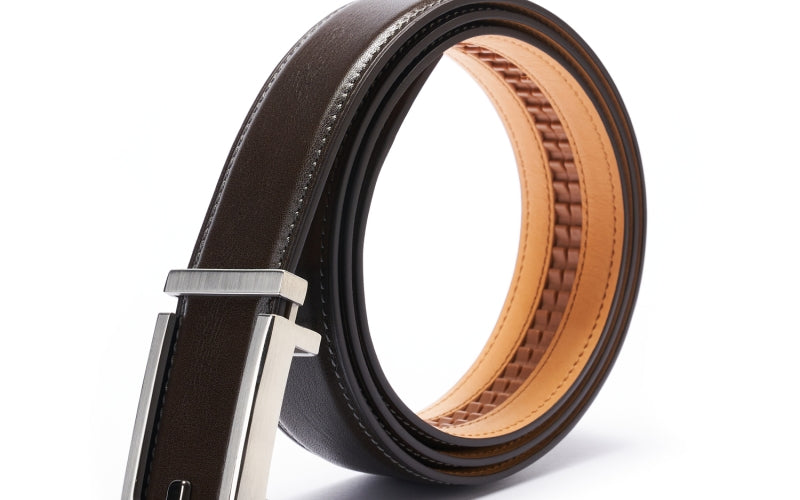
Tonal stitching means the thread color matches (or closely matches) the leather color. Dark brown leather, dark brown thread. Black leather, black or very dark grey thread. The stitching essentially disappears into the overall surface — you know it's there, but it doesn't draw the eye.
The effect is clean, minimal, and formal. A black dress belt with tonal black stitching looks like one continuous material. Nothing interrupts the surface. In professional and formal contexts — a law office, a board meeting, a dinner with a dress code — tonal stitching reads as polished restraint. Black leather dress belts almost universally use tonal stitching for exactly this reason.
It's the equivalent of monochrome dressing — everything coordinates without a single element competing for attention.
What Is Contrast Stitching?
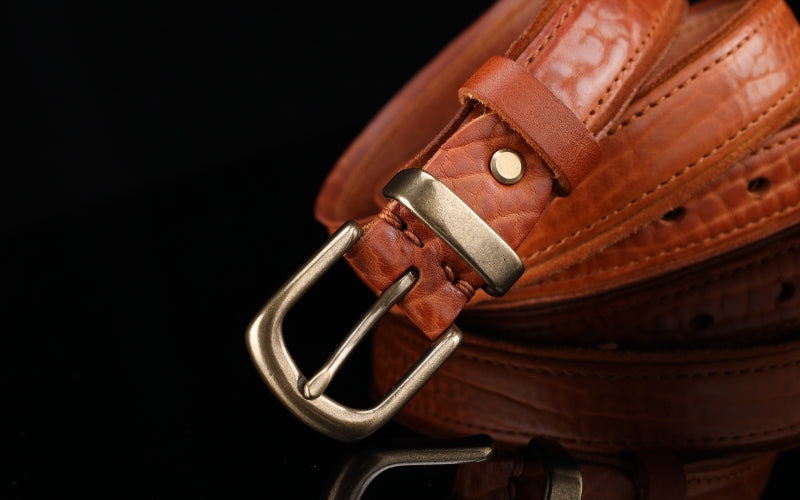
Contrast stitching uses thread in a noticeably different color from the leather. Classic examples: white or cream stitching on dark brown leather, tan stitching on black leather, navy on tan. The stitching becomes a visible design element — a deliberate line that draws the eye to the belt's craftsmanship.

The effect is expressive, heritage-forward, and casual. Contrast stitching has deep roots in traditional American Western leatherwork and English saddlery — both traditions where the stitching was a craft signature, not something to hide. Are Western belts in style? — the Western tradition is one place contrast stitching has never gone out of fashion.
Think of a classic pair of Red Wing boots with cream stitching, or a heritage wallet with tan saddle stitching on natural veg-tan. The contrast stitching is doing real visual work — it's part of the design vocabulary, not a detail.
Does Stitching Color Actually Signal Quality?
Indirectly, yes — but not in the way people assume.
The stitching color tells you about design intent, not quality level. Both tonal and contrast can be done beautifully or poorly. What actually signals quality is:
Stitch consistency. Count the stitches per inch (SPI). A well-crafted belt runs 6–8 stitches per inch in a perfectly even line. Uneven spacing — some stitches compressed, others stretched — indicates rushing or poor tooling.

Stitch lock. Is it saddle-stitched (two-needle, locked stitch) or machine-stitched (chain stitch)? Saddle stitching is stronger and more durable. How are leather belts made? explains the full stitching process and why it matters.
Thread material. Waxed linen or waxed polyester thread sits flat, resists fraying, and holds its appearance for years. Unwaxed thread looks cheaper immediately and frays at exposed areas over time.
Thread tension. Too tight and the leather puckers around the stitch line. Too loose and the thread sits slack on the surface. Correct tension sits the thread just below the leather surface in a clean, consistent line.
According to American Bench Craft's leatherworking standards, consistent stitch tension is one of the hardest skills to develop in leather craft — and one of the most visible indicators of an artisan's experience level.

Which Should You Choose?
Here's a simple guide:
| Context | Stitching Choice |
|---|---|
| Business formal, boardroom, interviews | Tonal (clean, minimal) |
| Smart-casual, chinos, blazer | Either — personal preference |
| Casual, dark jeans, weekend | Either — contrast adds personality |
| Western / heritage aesthetic | Contrast (tan, cream, or white) |
| Exotic leather (crocodile, alligator) | Tonal (let the leather be the statement) |
The rule of thumb: if the leather itself is the statement (exotic, interesting grain), use tonal stitching and let the material speak. If the leather is a classic, solid finish, contrast stitching can add the personality that makes the belt interesting. Exotic leather belts — the crocodile scale pattern is the visual event. Contrast stitching would compete with it unnecessarily.

The Bottom Line
Tonal or contrast is a design decision, not a quality decision. Both are correct when done intentionally. The quality signals are in how the stitching is done — consistency, tension, thread material, stitch lock — not whether the thread matches the leather.
What never belongs on a quality belt: uneven stitch spacing, puckered leather, fraying thread, or stitching that wanders from a straight line. Those are quality failures regardless of thread color. Browse handmade belts — every stitch is placed deliberately.

Frequently Asked Questions
Q: What is tonal stitching on a leather belt?
Tonal stitching uses thread that matches the leather color, making the stitching blend into the belt surface. It creates a clean, minimal look appropriate for formal and professional contexts. Black belt with black thread, brown belt with brown thread.
Q: What is contrast stitching on a belt?
Contrast stitching uses thread in a noticeably different color from the leather — cream on brown, tan on black. It makes the stitching a visible design element, adding personality and a heritage aesthetic. Common in Western, workwear, and casual leather goods.
Q: Does stitching color indicate belt quality?
Not directly. Both tonal and contrast stitching can be done at high or low quality. Quality indicators are stitch consistency (6–8 SPI in even spacing), stitch lock (saddle stitch vs. chain stitch), waxed thread, and correct tension that doesn't pucker the leather.