Tanner Goods Belt Guide: Bridle Leather, Quality, Worth It?
Quick answer: A Tanner Goods belt is the heritage-Americana pick — thick, vegetable-tanned English Bridle leather cut, dyed, waxed, and stamped by hand in Portland, Oregon, paired with a solid brass buckle. Founded in 2006, Tanner Goods makes belts built to break in and last decades, not to flash a logo. Prices run roughly $100–$155. It's worth it if you want honest, made-in-USA leather that ages beautifully; less so if you want exotic skins or designer branding.
Last updated: June 2026 • By BELTLEY
TL;DR:
- The signature is thick, vegetable-tanned English Bridle leather with a solid brass buckle.
- Cut, dyed, waxed, and stamped by hand in Portland, Oregon (founded 2006).
- Core lineup: the Standard, Classic, and Daily belts — all heavy-duty workhorses.
- Stiff at first; breaks in and softens over a few months of wear.
- Prices run roughly $100–$155; no logo, all craft.
- Worth it for honest made-in-USA leather; skip if you want exotic skins or a designer name.
Tanner Goods belongs to the made-in-America heritage workshop tradition — the same world as Red Wing boots and selvedge denim. It built its name on thick vegetable-tanned leather and buy-it-for-life construction, and its belts are some of the most recommended "first real leather belt" picks on the internet. If you're considering one, here's the full picture: the leather, the three core styles, the break-in, the price, and whether it's worth it. For where well-made leather sits versus logo belts, see are full-grain leather belts worth it.
Which Tanner Goods Belt Is Right for You?
Match what you want to the style.

| What you want | Go with |
|---|---|
| The simplest everyday workhorse | The Standard Belt (1.5", roller buckle) |
| A refined dress-casual option | The Classic Belt |
| A slightly slimmer daily belt | The Daily Belt |
| Maximum thickness and ruggedness | The heaviest bridle-leather style |
| A natural hide that patinas fast | An undyed natural-tan finish |
| A buy-it-for-life gift | Any Tanner belt — they age beautifully |
If you're weighing heritage makers against designer names, what designer belt should I buy frames the field.
What is a Tanner Goods belt?
A Tanner Goods belt is a heavy-duty, made-in-USA leather belt built from thick vegetable-tanned English Bridle leather with a solid brass buckle. Founded in Portland, Oregon in 2006, Tanner Goods cuts, dyes, waxes, and stamps each belt by hand. It's defined by craftsmanship and longevity rather than any logo.
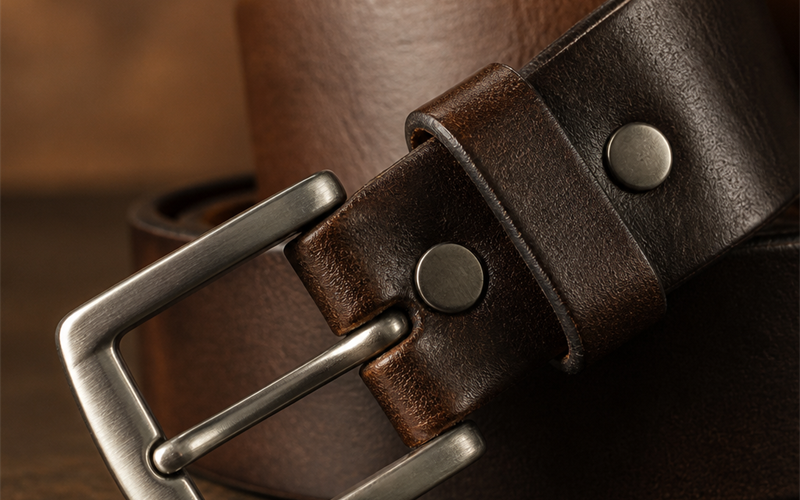
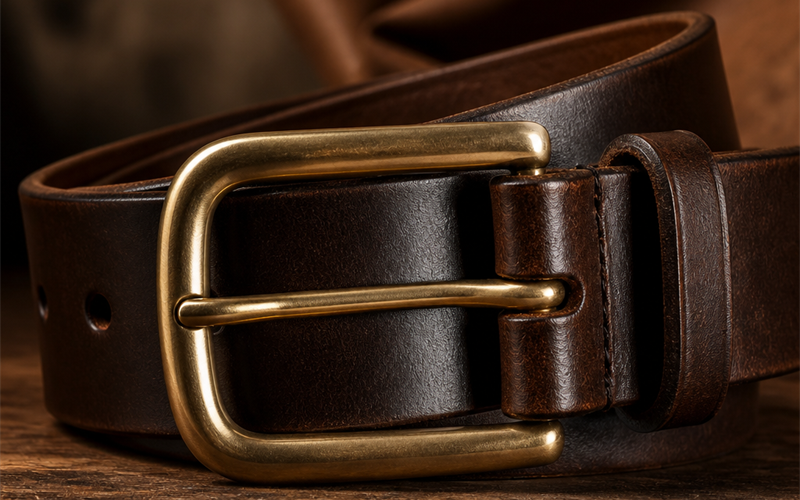
The leather is the whole story. Tanner Goods is, as one long-term review puts it, "perhaps best known for its well-made, durable leather belts" that "age as nicely as your selvedge denim." The belts use thick bridle leather — typically in the 8-to-11-ounce range — finished with hand-set rivets and a cast-brass roller buckle. There's no monogram and no flash; the appeal is a belt that starts stiff, breaks in to your body, and lasts for decades. It's a belt for someone who values how leather is made, not whose name is on it.
What is English Bridle leather, and why does it matter?
English Bridle leather is a fully vegetable-tanned leather, originally developed for horse tack, that's stuffed with waxes and oils for strength and water resistance. It's prized for durability and a smooth finish on both sides. On a belt, it means a thick, structured strap that breaks in slowly and lasts for years.

This leather choice is the reason Tanner belts feel the way they do. Vegetable tanning uses natural tannins from tree bark and is "a process that takes longer than mineral tanning" — but it produces a firmer, longer-lived hide ideal for "belts and other clothing accessories." Bridle leather takes that a step further with hot-stuffed waxes, which is why reviewers describe the leather as "thick and burly, high quality English Bridle leather" that's stiff at first and "softens up after wearing it for a few months." That break-in is a feature: the belt molds to you and develops a personal patina. For more on grading, see how to tell if a belt is full-grain leather.
What's the difference between the Standard, Classic, and Daily belts?
The Standard Belt is the simplest 1.5" workhorse with a roller or cast-brass buckle. The Classic Belt is a slightly more refined version of the same idea. The Daily Belt is a versatile everyday option in 8oz bridle leather. All three are heavy-duty, vegetable-tanned, and made by hand in Portland.

The differences are subtle, because the whole line shares one philosophy: thick leather, solid hardware, no nonsense. The Standard is the original utilitarian design, 1.5 inches wide with through-hole press-fit rivets. The Classic dresses that formula up slightly for smart-casual wear. The Daily leans a touch more versatile for rotation. None of them are "dress belts" in the thin-Italian-calfskin sense — they're substantial, casual-to-rugged straps. If you want a slimmer dressier profile, you may prefer a calfskin dress belt; for an everyday rugged anchor, a thick bridle belt is exactly right.
How good is the quality of a Tanner Goods belt?
Tanner Goods belt quality is excellent. The belts use thick vegetable-tanned English Bridle leather, solid brass hardware, and hand-finishing — burnished, dyed, waxed, and stamped in Portland. Construction is heavy-duty and built to last decades, with quality you feel in the heft and the break-in.
This is a workshop obsessed with doing leather right. Each belt is hand-burnished and hand-stamped, the rivets are set rather than glued, and the brass buckle is cast hardware chosen for durability over shine. Reviewers consistently call the belts "sturdy" heirloom pieces that justify their price through materials and make. The honest caveat is comfort: the stiff break-in period is real, so this isn't a belt that feels broken-in on day one. But that's the trade for leather this thick — it earns its character with wear.
Key stat: A Tanner Goods belt is cut from 8–11 oz vegetable-tanned English Bridle leather and finished by hand in Portland, Oregon — burnished, dyed, waxed, and stamped. At roughly $100–$155 with a solid brass buckle and no logo, you're paying for made-in-USA leather built to outlast a dozen fast-fashion belts.
How much does a Tanner Goods belt cost, and is it worth it?
Tanner Goods belts cost roughly $100 to $155 depending on the style and leather. They're worth it if you want honest, made-in-USA leather and hardware built to last decades. They're less worth it if you want exotic skins, a slim dress profile, or a designer logo, since Tanner is about craft and durability, not status.

The value case is cost-per-year. A $120 belt that lasts 20 years and only looks better with age is far cheaper over time than a $40 bonded-leather belt you replace every two years. You're paying for thick bridle leather, hand-finishing, solid brass, and American manufacturing — real substance. The trade-offs are honest: the break-in takes patience, the styles are casual-to-rugged rather than formal, and there's no brand cachet for those who want it. If durable, no-logo leather is the goal, it delivers. For the math on this, see are full-grain leather belts worth the investment.
How do you care for and break in a Tanner Goods belt?
Break in a Tanner Goods belt simply by wearing it — the stiff bridle leather softens and molds to you over a few months. For care, wipe off dirt with a soft cloth and apply a small amount of leather conditioner once or twice a year to keep the leather supple and prevent cracking.

The break-in is the main "maintenance" up front: expect a stiff belt for the first few weeks that gradually relaxes. After that, bridle leather is low-fuss. A light conditioning a couple of times a year replaces the oils that wear and weather pull out, keeping the strap flexible and rich. Avoid soaking it and store it rolled or hung rather than crammed. Done occasionally, this keeps the leather alive for decades — the whole point of buying bridle leather in the first place. For the full routine, see our leather care guide.
The Bottom Line
A Tanner Goods belt is honest American leather: thick, vegetable-tanned English Bridle leather, cut and finished by hand in Portland, Oregon, on a solid brass buckle, built to break in and last for decades. At roughly $100–$155, with no logo and a patient break-in, it's worth it if you want made-in-USA craftsmanship over status — and not the pick if you want exotic skins or a slim dress belt. Here's the on-brand footnote: that buy-it-for-life philosophy — great leather plus solid hardware, no Brand Tax — is exactly what we build on. A BELTLEY full-grain leather belt gives you the same age-into-character leather and solid hardware, and our exotic leather belts take that craft into crocodile and alligator if you want something rarer. Tanner proves the principle; you can enjoy it across more leathers than one.
Frequently Asked Questions
Q: What leather do Tanner Goods belts use?
Tanner Goods belts use thick, vegetable-tanned English Bridle leather, typically in the 8-to-11-ounce range. Originally developed for horse tack, bridle leather is stuffed with waxes and oils for strength and water resistance, which is why the belts are durable, structured, and age beautifully with wear.
Q: Where are Tanner Goods belts made?
Tanner Goods belts are made in Portland, Oregon, where the company was founded in 2006. Each belt is cut, dyed, waxed, burnished, and stamped by hand in their studio, with hand-set rivets and a solid cast-brass buckle. They're a genuinely made-in-USA product.
Q: How much is a Tanner Goods belt?
Tanner Goods belts cost roughly $100 to $155 depending on the style and leather, with the Standard, Classic, and Daily belts forming the core lineup. You're paying for thick bridle leather, hand-finishing, solid brass hardware, and American manufacturing rather than a logo.
Q: Do Tanner Goods belts need to be broken in?
Yes. The thick English Bridle leather is stiff when new and softens over a few weeks to a few months of wear, molding to your body. That break-in is normal for heavy bridle leather and is part of why the belt lasts so long and develops a personal patina.
Q: Is a Tanner Goods belt worth it?
It's worth it if you want honest, made-in-USA leather and hardware built to last decades, and you don't mind a stiff break-in. It's less worth it if you want exotic skins, a slim dress profile, or a designer logo. For durable, no-logo leather, it's a strong buy.