Suede vs Leather Belt—Which One is Better? (Detailed Comparison)
TL;DR: Quick Answer
- Leather wins on durability, longevity, weather resistance, and cost-per-year. It's the workhorse.
- Suede wins on texture, comfort, and casual style points. It's the showpiece.
- Leather ages like wine. Suede ages like bread. One gets better. The other gets sad.
- The correct answer? Own both. Use them for different jobs. Stop making them compete.
Two belts. Same animal. Completely different personalities.
One is smooth, tough, and ready for anything. The other is soft, stylish, and absolutely terrified of rain. Choosing between a suede vs leather belt is like choosing between a pickup truck and a convertible. Both are great. Both have a purpose. Using the wrong one in the wrong situation is how regret happens.
The internet is full of "it depends" answers on this topic. We're going to be more specific. By the end, you'll know exactly which belt to wear, when, and why — with actual numbers, not vibes. If you want the price breakdown specifically, our guide on is suede or leather more expensive covers the full cost analysis.

Suede or Smooth: Match the Belt to the Job
Same animal, opposite personalities — assign them correctly:
| Your situation | Go with |
|---|---|
| Daily wear, all weather | Smooth leather — the workhorse that ages like wine |
| Texture play, casual style points | Suede — nothing else adds that softness to an outfit |
| You live somewhere rainy | Leather — suede is, scientifically speaking, terrified of water |
| You can own two | Do — leather for the week, suede for dry weekends. Stop making them compete |
The smooth side of the equation lives in the full-grain collection. The full comparison:
What's the Actual Difference Between Suede and Leather?
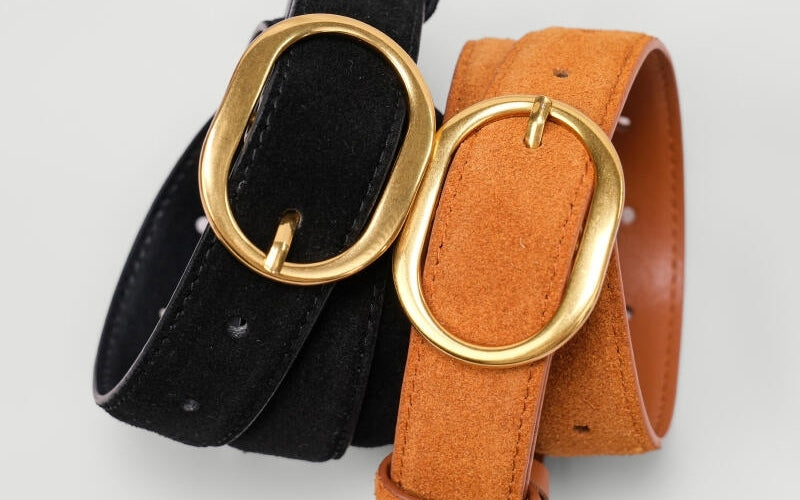
Suede and leather come from the same animal hide but from different layers. Leather (specifically full-grain) uses the tough outer surface with its natural grain intact. Suede uses the softer inner layer, which gets buffed to create a velvety nap. Same hide. Different sides. Different everything.
Think of it like a coconut. The outside is hard, protective, and built to survive. The inside is soft, textured, and delicate. Both are useful. Neither is a substitute for the other.
According to Gear Patrol's suede analysis, suede's napped texture gives it a "fun, textured" quality that smooth leather can't replicate. But Southern Trapper's materials guide notes that suede's open fiber structure makes it "more susceptible to staining and damage from moisture" — the trade-off for all that softness.
For a complete breakdown of leather types for belts, we ranked every option from full-grain to bonded.

The Head-to-Head Comparison Table
No opinions. Just data.
| Feature | Suede Belt | Full-Grain Leather Belt |
|---|---|---|
| Material source | Inner hide layer (buffed) | Outer hide layer (natural grain) |
| Texture | Soft, velvety, matte nap | Smooth, firm, natural grain |
| Weight | Light | Moderate to heavy |
| Flexibility | Excellent from day one | Stiff initially, softens over time |
| Break-in period | None | 3–7 days |
| Durability | Moderate (2–5 years) | High (5–10+ years) |
| Water resistance | Very low | Moderate to high |
| Stain resistance | Low | Moderate |
| Scratch resistance | Low (marks show easily) | High (scratches blend in) |
| Patina | Minimal — wears flat over time | Rich — develops character with age |
| Maintenance | High (brush after every wear, spray quarterly) | Low (condition twice a year) |
| Formal suitability | Smart-casual to business casual | Casual to black-tie |
| Color options | Broad (pastels, earth tones) | Broad (classic palette) |
| Price range | $30–$150 | $50–$200 |
| Cost per year | $10–$27 | $6–$15 |
The pattern is clear. Leather leads on every durability and practicality metric. Suede leads on comfort, texture, and day-one feel. Different tools for different jobs.

How Do They Age Differently?
This is where the gap gets wide. Leather ages like a well-used leather chair — developing a glossy patina, with scratches and marks blending into the surface to add character. Suede ages like a favorite t-shirt — slowly wearing flat, losing texture, and eventually looking tired rather than distinguished.
According to J.L. Rocha's suede aging guide, suede absorbs its environment over time. Normal wear creates a gentle softening that can look beautiful. But water damage causes the nap to harden and develop "an almost polished surface" — the opposite of what you want. Suede's aging is a coin flip between "nicely broken in" and "visibly damaged."
Full-grain leather doesn't have this problem. Scratches fill in. Oil from your hands deepens the color. The surface develops a protective shell. According to Holdform's 2026 belt style guide, full-grain leather "develops a protective shell over time, and scratches add character, not drama."
A full-grain leather belt at year five looks better than it did at year one. A suede belt at year five looks... five years old. That's not a criticism. It's physics.

Which Looks Better?
Depends on the outfit. Suede wins in casual and smart-casual contexts. Leather wins everywhere else. But "everywhere else" is a much bigger territory.
Suede shines with:
- Chinos + blazer + loafers (the smart-casual sweet spot)
- Earth-tone outfits that benefit from texture contrast
- Unstructured summer suits
- Relaxed weekend fits where you want polish without stiffness
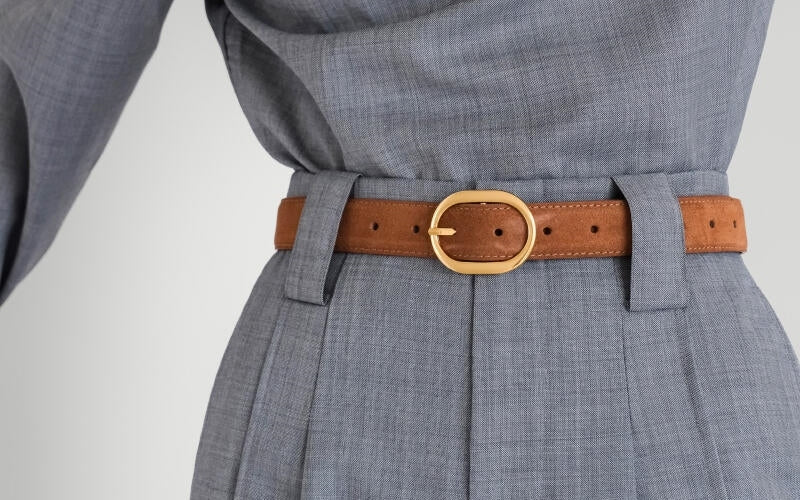
According to Permanent Style's belt capsule guide, suede belts work best as a "casual complement" — think tan suede or braided suede with a camp collar shirt and blue jeans. The Shoe Snob's belt guide adds that suede doesn't need to match your shoes exactly — a "similar shade" is enough for casual settings.
Leather dominates with:
- Suits (all formality levels)
- Office wear / business professional
- Jeans + dress shirt combos
- Formal events and dress codes
- Any situation involving rain, sweat, or uncertainty
According to Buckle My Belt's dress code guide, formal settings always call for smooth leather. Suede reads as too relaxed for black-tie or strict business dress codes. A dress belt in full-grain leather handles everything from board meetings to weddings.
For suede-specific styling with leather shoes, our guide on how to wear a suede belt with leather shoes covers the mixing-textures rules.

Which Handles Weather Better?
Leather. Not close. This is suede's biggest weakness and leather's biggest strength in head-to-head comparison.
Water and suede have a toxic relationship. According to Vessi's suede care guide, when suede gets wet, fibers expand, deform, and stiffen as they dry — leaving watermarks that alter both texture and color. O-Sur's damage guide adds that water causes dye bleeding, uneven darkening, and hardened patches. Severe cases result in permanent shape loss.
Full-grain leather shrugs off moisture. It naturally resists water to a moderate degree and can be treated for even higher resistance. Rain hits it? Wipe it off. Sweat accumulates? Condition it later. No panic. No emergency protocols.
If you live somewhere with unpredictable weather (which is everywhere in 2026), leather is the safer daily choice. Suede is for days when you've checked the forecast and the sky looks friendly.

Which Requires More Maintenance?
Suede. Significantly more. And the maintenance isn't optional — it's the difference between a belt that lasts and one that doesn't.
Suede maintenance:
- Brush with a suede brush after every wear (30 seconds)
- Apply suede protector spray every 3 months
- Treat stains immediately — cornstarch for oil, suede eraser for dry marks
- Store away from sunlight, dust, and moisture
- Never use water or regular leather conditioner
Full-grain leather maintenance:
- Condition with leather cream twice a year
- Wipe with damp cloth as needed
- Store hanging or flat
- That's it
According to Roger Ximenez's belt guide, leather belts are "low-maintenance investments" that improve with minimal care. Suede demands more attention. Not difficult attention — but consistent attention. Skip the brushing and dirt grinds into the nap like slow-motion sandpaper.
For the full care routine for both types, our leather care page covers everything.

So Which One Should You Actually Buy?
Here's the no-hedge answer:
Buy a leather belt if you:
- Need one belt that works with everything
- Wear suits or business attire regularly
- Hate maintenance routines
- Live in a rainy or humid climate
- Want something that looks better with age
- Prioritize longevity over day-one softness
Buy a suede belt if you:
- Already own a good leather belt and want variety
- Dress smart-casual most days (chinos, blazers, loafers)
- Want texture and visual interest
- Are willing to do 30 seconds of brushing after wear
- Check the weather before getting dressed (responsible adult behavior)
Buy both if you:
- Own more than three pairs of pants (statistically likely)
- Understand that different outfits need different accessories
- Want maximum wardrobe flexibility with minimal effort
The men's belt collection and women's belt collection at BELTLEY cover the full-grain leather side of this equation — handcrafted, stainless steel hardware, 10-year warranty. Your daily driver. The suede can handle date night. The leather handles everything else.

The Bottom Line
Suede vs leather belt isn't a question with one winner. It's a question with two answers for two different purposes. Leather wins on durability (5–10+ years vs. 2–5), weather resistance (rain-proof vs. rain-phobic), maintenance (twice a year vs. every wear), aging (patina vs. flatness), and cost-per-year (half the price of suede over time).
Suede wins on texture, comfort, softness, and smart-casual styling. The smart move is owning both — leather for the 80% of days when you need reliability, suede for the 20% when you want to look effortlessly polished.
At BELTLEY, we handcraft every belt from full-grain leather with stainless steel hardware — 10-year warranty, free worldwide shipping, 30-day hassle-free returns. Browse the full-grain leather belt collection and cover the foundation first. Then add suede when you're ready to accessorize.

Frequently Asked Questions
Q: Is a suede belt or leather belt more durable?
Leather, by a wide margin. Full-grain leather belts last 5–10+ years with minimal care. Suede belts last 2–5 years with regular maintenance. In abrasion testing, suede shows visible wear after 20,000 rubs versus 30,000+ for smooth leather — a 33% durability gap.
Q: Can you wear a suede belt to the office?
Yes — in business-casual environments. Suede belts pair well with chinos, blazers, and smart separates. For strict business professional or formal dress codes, smooth full-grain leather is the safer choice. Suede reads as relaxed, which works in most modern offices but not in traditional corporate settings.
Q: Does suede age well like leather?
Not in the same way. Full-grain leather develops a rich patina — darkening and gaining character over time. Suede gradually wears flat and can develop water stains or hardened spots. Leather's aging is universally seen as an improvement. Suede's aging is situational — gentle use looks fine, but water damage looks permanent.
Q: Can I wear a suede belt in the rain?
Not recommended. Water darkens suede, causes fiber stiffness, and leaves permanent watermarks. A protector spray adds some resistance but doesn't make suede waterproof. If rain is possible, wear a leather belt instead. Suede is a fair-weather accessory.
Q: Should a suede belt match your shoes?
Not exactly. In casual settings, a similar shade is enough — brown suede belt with brown leather loafers works perfectly without an exact match. Mixing suede and leather textures is actually encouraged in smart-casual styling. Exact matching only matters in formal dress codes, where you'd likely be wearing smooth leather anyway.
Q: Which is cheaper — suede or leather?
Suede costs less upfront ($30–$150 vs. $50–$200 for full-grain). But leather costs less per year because it lasts 2–3x longer. A $90 leather belt at 8 years costs about $11/year. A $50 suede belt at 3 years costs about $17/year. Leather is the better long-term value.