Is Suede or Leather More Expensive? (The Answer Might Surprise You)
TL;DR: Quick Answer
- Full-grain leather costs more than suede at the raw material level — $4–$7/sq ft vs. $2–$4/sq ft
- But a designer suede belt can cost more than a mid-range leather one. A Hermès suede belt runs $450. Brand math is different from material math.
- Cost-per-year? Leather wins by a landslide. It lasts 2–3x longer, making it cheaper to own despite the higher sticker price.
- Suede is cheaper to buy. Leather is cheaper to keep. Choose your definition of "expensive."
This should be a simple question. Is suede or leather more expensive? One number should settle it.
But no. Because the answer depends on what you're comparing, at what quality tier, and over what time frame. Raw suede is cheaper than raw full-grain leather. But a luxury suede belt can cost more than a full-grain leather one from a DTC brand. And a $50 suede belt that dies in 18 months is more expensive per year than a $120 leather belt that lasts a decade.
"Expensive" is doing a lot of work in this question. Let's break it apart with actual numbers. For the full material comparison beyond price, our suede vs. leather belt guide covers durability, style, and care differences.

Which One Should YOUR Money Buy?
Price-per-purchase and price-per-year give different answers:
| Your situation | Go with |
|---|---|
| Lowest upfront cost | Suede — cheaper raw material, cheaper finished belt. |
| Lowest cost over a decade | Full-grain leather — 2–3x the lifespan flips the math completely. From $58. |
| Texture for fall outfits | Suede earns its keep as a seasonal accent — just don't make it your daily driver. |
| One belt, maximum value | Full-grain with a 10-year warranty — the warranty alone outlives most suede belts. |
The cost-per-year winner: BELTLEY's full-grain collection.
Which Costs More: Suede or Full-Grain Leather?
Full-grain leather costs more than suede at every level — raw material, wholesale, and standard retail. Suede runs $2–$4 per square foot wholesale, while full-grain leather sits at $4–$7. The gap exists because suede comes from the inner hide layer, requires fewer finishing steps, and uses material that would otherwise be waste.
That's the baseline. According to Szoneier Leather's pricing guide, the leather price ladder looks like this:
| Leather Type | Raw Cost (per sq ft) | Processing Cost |
|---|---|---|
| Bonded leather | Under $1 | Minimal |
| Corrected grain | $1.50–$3 | Low |
| Suede | $2–$4 | Moderate (+$0.50–$1.50 for buffing) |
| Top-grain | $3–$5 | Moderate |
| Full-grain | $4–$7 | High (full tanning + finishing) |
| Exotic (crocodile) | $25–$80 | Very high |
According to Hoplok Leather's cost guide, the extra buffing and brushing steps to create suede add $0.50–$1.50 per square foot in labor. But that still keeps suede well below full-grain pricing. A belt uses roughly 2 square feet of leather — so the raw material difference between suede and full-grain is about $4–$6 per belt. Not exactly earth-shattering.
The real price gap happens after the leather leaves the tannery. That's where things get weird.

Why Is Suede Cheaper Than Regular Leather?
Suede is cheaper because it's made from the underside of the animal hide — the softer, inner layer that gets separated during the splitting process. Full-grain leather uses the premium outer surface with its natural grain intact. Suede essentially repurposes what would otherwise be a lower-value byproduct.
Three factors drive the price difference:
1. Hide position. According to Tanner Bates' leather guide, full-grain leather comes from the dense, protective outer layers. Suede comes from underneath — the part of the hide that nature designed to be soft, not strong. Same animal. Different neighborhood. Different rent.
2. Processing time. Von Baer's comparison guide explains that full-grain leather requires weeks of tanning, dyeing, and polishing. Suede requires fewer steps — split, buff, dye, done. Less processing time means lower cost. Tanneries are factories. Time is money.
3. Durability gap. Suede is less durable. Buyers know this. Manufacturers know this. The market prices it accordingly. According to Rustic Town's leather guide, suede is "generally more budget-friendly because it isn't as durable" — a polite way of saying the market charges less for something that lasts less.
None of this makes suede bad. It makes suede affordable. Which is actually a selling point.

How Do Finished Products Compare in Price?
Here's where the clean price hierarchy breaks down. Raw material cost ≠ retail price. Brand markup, craftsmanship, and designer positioning scramble the numbers completely.
| Product | Suede Version | Full-Grain Leather Version |
|---|---|---|
| Belt (DTC brand) | $40–$100 | $60–$150 |
| Belt (designer brand) | $200–$450 | $300–$700 |
| Jacket | $150–$400 | $300–$800 |
| Shoes | $80–$250 | $100–$400 |
| Bag / accessories | $100–$300 | $150–$500+ |
According to Lanci Shoes' price analysis, a Hermès leather belt costs around $700, while the same brand's suede version costs $450. Different material. Same logo. Both cost more than most people's monthly grocery bill.
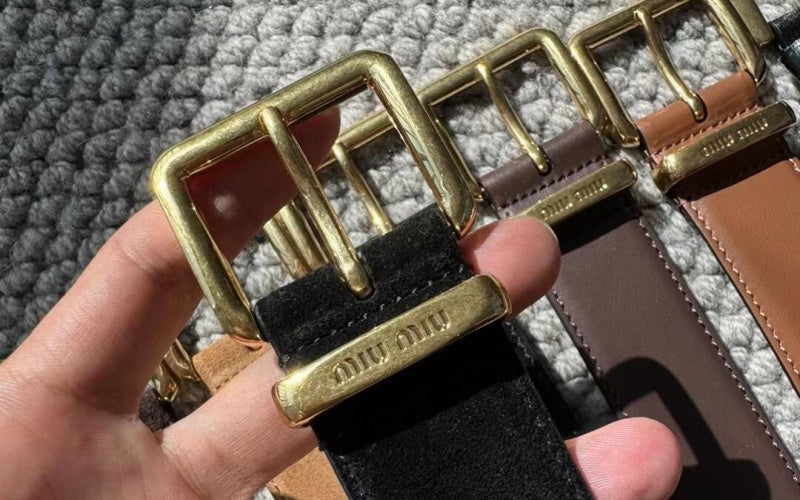
John Candor's leather guide adds that designer suede from brands like Gucci and Prada can outprice mid-tier leather — a $400 suede belt isn't uncommon in that world. The brand tax overrides the material cost entirely.
At BELTLEY, we skip the designer markup. Our full-grain leather belts sit in the $60–$150 range — DTC pricing, no brand tax, same quality materials. That's less than most designer suede belts. Let that sink in.

The Cost-Per-Year Math Nobody Wants to Do
Sticker price is one number. Ownership cost is a different number. And ownership cost is the one that actually matters to your wallet.
| Scenario | Price | Lifespan | Cost Per Year |
|---|---|---|---|
| Cheap suede belt | $40 | 1.5 years | $26.67/year |
| Quality suede belt | $100 | 4 years | $25.00/year |
| DTC full-grain leather belt | $90 | 8 years | $11.25/year |
| Premium full-grain leather belt | $150 | 10+ years | $15.00/year |
| Designer suede belt | $400 | 4 years | $100.00/year |
Read that again. A $90 full-grain leather belt costs $11.25 per year to own. A $40 suede belt costs $26.67 per year. The "expensive" leather belt is actually cheaper. By a lot. Over time, suede's lower sticker price becomes its most expensive quality.
According to Von Baer's leather value guide, full-grain leather's lifespan advantage makes it "the better investment for anyone who values long-term value over initial cost." Szoneier Leather confirms that full-grain belts last 8–12 years under daily wear, while suede tops out at 2–5 years.
The designer suede line? $100 per year for a belt that dissolves in rain. That's not luxury. That's a subscription.

When Does Suede Actually Make Financial Sense?
Suede isn't always the wrong financial choice. Sometimes the math works out:
Occasional wear. If you're buying a suede belt for specific occasions — date nights, blazer outfits, smart-casual events — you're not putting daily stress on it. A suede belt worn twice a month can last far longer than a daily-wear suede belt. The per-wear cost drops dramatically.
Style rotation. If you already own a full-grain daily driver belt and want a second belt for texture variety, suede fills that role perfectly. It's a complement, not a replacement.
Budget constraints. A $50 suede belt right now beats waiting six months to save for a $120 leather belt — if you need a belt today. Practicality wins over theory.
Fashion experimentation. Suede comes in colors and textures that full-grain leather doesn't replicate. If you want that specific soft matte look, full-grain won't deliver it. The suede aesthetic has unique appeal that no amount of durability math erases.
The smart play? Own both. A full-grain belt for the 80% of days when you need reliability. A suede belt for the 20% when you need style points. Our men's collection and women's collection cover both ends.

Which Leather Type Gives the Best Value for Belts?
Full-grain leather. Objectively. For belts specifically, no other leather type delivers the same combination of durability, patina development, and cost-per-year efficiency.
According to Buckle My Belt's leather ranking, full-grain is the top choice for belts because belts endure constant bending, friction, and moisture — exactly where suede struggles most. Blackbird Leathers' pricing analysis confirms that full-grain commands premium pricing for good reason: it outperforms every other non-exotic option on durability.
For the full breakdown of which leather works best for belts, our guide on what type of leather is best for belts ranks every option.
At BELTLEY, we use full-grain leather across our entire lineup — not because it's the cheapest to source, but because belts get abused daily. Cheap leather fails fast. Our belts come with a 10-year warranty because they're built to actually last that long. Free worldwide shipping. 30-day hassle-free returns. No brand tax. Just leather that earns its price.

The Bottom Line
Is suede or leather more expensive? Suede is cheaper to buy. Leather is cheaper to own. Raw suede costs $2–$4 per square foot versus $4–$7 for full-grain leather. But full-grain lasts 2–3x longer, which makes its cost-per-year roughly half that of suede.
Designer brand math scrambles everything — a $450 Hermès suede belt costs more than a handcrafted full-grain belt from a DTC brand. The real question isn't which costs more at the register. It's which costs more per year in your closet.
And on that metric, full-grain leather wins convincingly. Browse the full-grain leather belt collection at BELTLEY — handcrafted, stainless steel hardware, 10-year warranty, free worldwide shipping. The belt costs more than suede today. It costs less than suede over time.

Frequently Asked Questions
Q: Is suede or leather more expensive for belts?
Full-grain leather belts cost more upfront — typically $60–$150 from DTC brands versus $40–$100 for suede. But leather lasts 5–10+ years compared to suede's 2–5, making leather cheaper per year. A $90 leather belt costs about $11/year. A $40 suede belt costs about $27/year.
Q: Why is suede cheaper than full-grain leather?
Suede comes from the inner (underside) layer of the hide, requires fewer processing steps, and is less durable. Full-grain leather uses the premium outer surface, requires weeks of tanning and finishing, and maintains superior strength. The market prices each according to quality and longevity.
Q: Can designer suede cost more than regular leather?
Yes. Brand markup overrides material cost. A Hermès suede belt runs about $450 — more than most DTC full-grain leather belts at $60–$150. At the designer tier, you're paying for the logo and brand positioning, not the raw material.
Q: How much does suede leather cost per square foot?
Suede costs $2–$4 per square foot at wholesale, with an additional $0.50–$1.50 for the buffing and brushing process. For comparison, full-grain leather runs $4–$7 per square foot. A belt uses roughly 2 square feet of material.
Q: Is suede or leather a better value for money?
For daily-wear items like belts, full-grain leather offers better value. Its 5–10+ year lifespan makes the cost-per-year lower than suede despite a higher purchase price. Suede offers better value only for occasional-wear pieces where durability isn't the primary concern.
Q: Should I buy a suede belt or a leather belt?
Buy both — for different purposes. A full-grain leather belt handles daily wear, office, weekends, and weather. A suede belt handles style-forward occasions — date nights, blazers, smart-casual outfits. If you can only buy one, choose full-grain leather. It covers more situations and lasts longer.