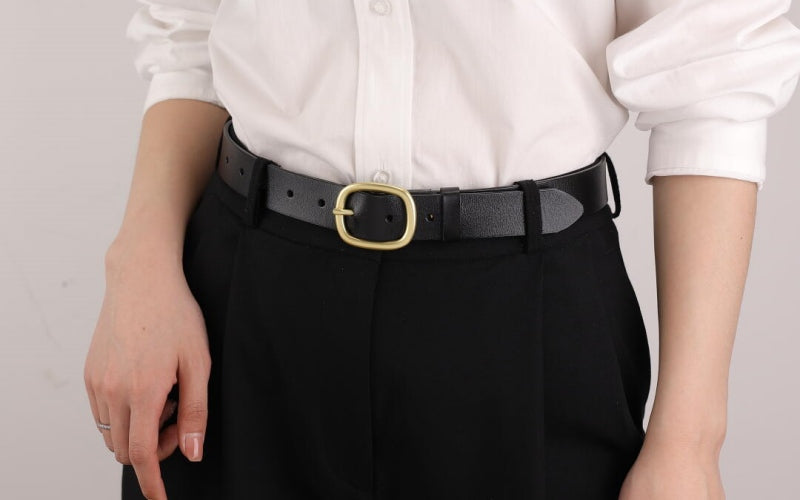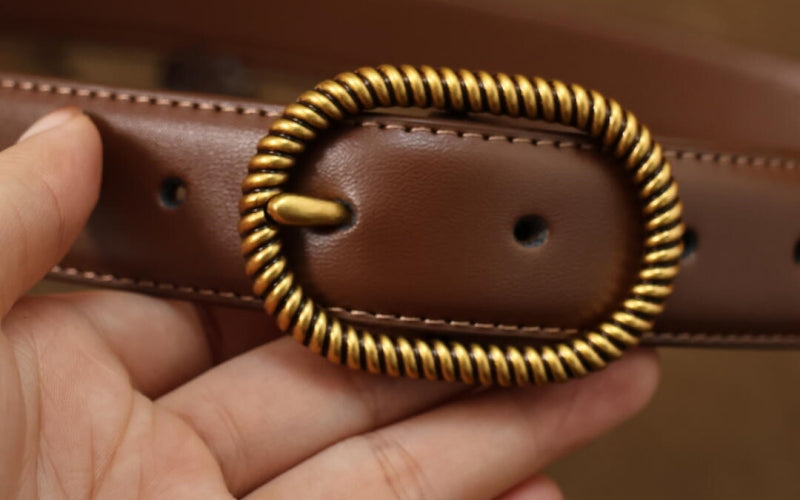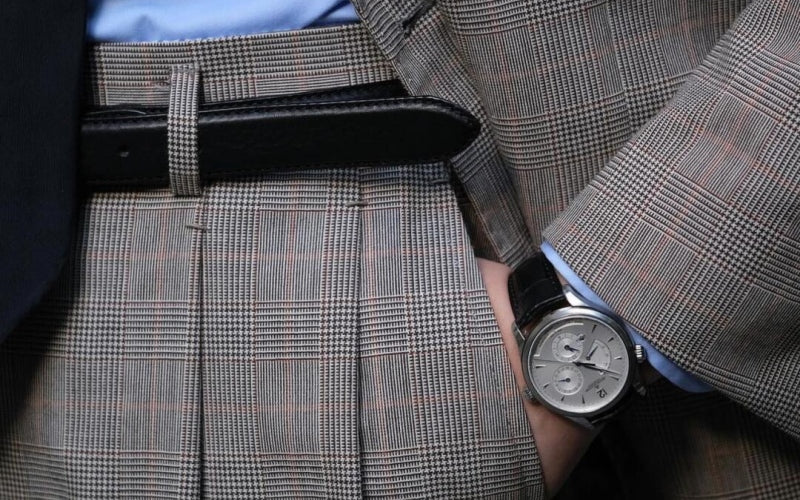
Should Your Belt Buckle Match Your Watch? (Spoiler: It’s Not That Simple)
Quick answer:
- For formal and professional settings, yes — match your belt buckle metal to your watch case metal for a polished, intentional look.
- For casual wear, matching is optional. Mixing metals (silver buckle + gold watch) is widely accepted and on-trend, as long as it looks deliberate.
- Bonus coordination: if your watch has a leather strap, matching the strap color to your belt leather creates a second layer of cohesion that most people miss.
You're wearing a stainless steel Seiko. Your belt has a brass buckle. Does anyone actually notice? Should your belt buckle match your watch, or is this one of those rules that sounds important but doesn't hold up in practice?
The honest answer: it depends on where you're going. The buckle-watch pairing is the single most visible metal relationship in any outfit — both sit at waist-to-wrist level and appear together the moment you gesture, check the time, or sit down. Getting this one right does more for your overall look than any other accessory decision. Here's a practical framework that works across dress belts and casual styles alike.

Does Your Belt Buckle Have to Match Your Watch Metal?
No — it doesn't have to, but matching creates a cleaner visual impression. When your buckle and watch share the same metal family (silver with silver, gold with gold), the eye registers coordination without consciously analyzing it. When they clash — say, a bright yellow-gold buckle next to a polished silver watch — the contrast is noticeable because both accessories sit in the same visual zone.
The key distinction is tonal matching versus exact matching. Your buckle doesn't need to be the identical alloy as your watch case. A brushed stainless steel buckle pairs cleanly with a polished silver-tone watch. A warm brass buckle works alongside a yellow-gold or even rose-gold watch. The eye reads "same tone family" — not "same metal specification."
According to The Art of Manliness' watch styling guide, the watch-to-belt connection is one of the three fundamental menswear pairings (alongside belt-to-shoes and watch-to-occasion). Getting it right signals that your outfit was assembled with intention.

The Two-Layer Matching System
Most styling advice stops at metal matching. But there's a second coordination layer that separates a good outfit from a great one: leather matching.
If your watch has a leather strap, you now have two matching opportunities:
- Metal match: buckle metal ↔ watch case metal
- Leather match: belt leather color ↔ watch strap color
A brown leather watch strap paired with a brown leather belt creates a warm, cohesive look that frames the entire mid-body. A black leather strap with a black leather belt does the same in a more formal register. BluShark's accessory coordination guide recommends treating the watch strap like a third leather accessory alongside shoes and belt — coordinate all three for maximum polish.
For metal bracelet watches (no leather strap), you only have the metal layer to work with. This is where buckle metal choice matters most. A stainless steel sport watch lives naturally next to a stainless steel buckle. A gold dress watch pairs best with a brass or gold-plated buckle.

When to Match: Context-Based Guidelines
The right approach depends entirely on where you're wearing the outfit. Here's a practical breakdown:
| Setting | Metal Match? | Leather Match? | How Strict? |
|---|---|---|---|
| Black tie / formal | Yes — exact tone | Yes — both black | Strict |
| Business professional | Yes — tonal | Yes — same color family | Moderate |
| Business casual | Recommended | Helpful but optional | Relaxed |
| Smart casual / date | Optional | Optional | Flexible |
| Weekend / streetwear | Not required | Not required | Maximum freedom |
For formal and business contexts, Trendhim's accessory matching rules reinforce that the buckle-watch-cufflinks trio should share a metal tone. For business casual and below, the rule loosens — and deliberately mixing metals can look more interesting than matching.
If you need guidance on coordinating the rest of the outfit, our guide on matching a belt with your work outfit covers belt-to-shoes, belt-to-pants, and metal coordination for professional settings.

What About Smartwatches and Apple Watches?
Smartwatches complicate the matching equation because their cases often come in finishes (space gray, starlight, midnight) that don't map neatly to traditional gold or silver. An Apple Watch in "starlight" aluminum has a warm undertone that sits between silver and gold — making it ambiguous to match.
The practical solution: treat smartwatch cases as neutral and focus on the band instead. If your Apple Watch has a brown leather band, coordinate with a brown belt. If it has a stainless steel band, a stainless steel buckle creates a clean connection.
Buckle and Band's Apple Watch coordination guide suggests treating the Apple Watch the same way you'd treat a traditional timepiece — the coordination principles don't change, only the color names do.

How to Build a Two-Belt System That Covers Every Watch
Most men own 2-3 watches. Rather than buying a belt for each one, two belts in complementary metal tones cover every scenario:
Belt 1: Cool-tone buckle (stainless steel or silver)
- Pairs with: stainless steel watches, white-gold watches, silver-tone smartwatches, titanium sport watches
- Best leather: black or espresso for maximum versatility
Belt 2: Warm-tone buckle (brass or gold)
- Pairs with: gold watches, rose-gold watches, two-tone watches, "starlight" or warm-finish smartwatches
- Best leather: brown or cognac for a rich, warm palette
This two-belt system, combined with matching your belt to your shoes, gives you complete coverage for any outfit-watch combination without cluttering your closet.
At BELTLEY, we craft buckles in both 316L stainless steel (a clean silver tone that never tarnishes) and solid brass (a warm gold tone that develops a natural patina). Both are paired with full-grain leather and backed by a 10-year warranty — so your two-belt system stays functional for a decade.

The Bottom Line
Should your belt buckle match your watch? For formal and professional settings — yes, match the metal tone. For casual settings — match if you want, mix if you prefer, but be intentional either way. The leather strap-to-belt color match is a second coordination layer worth using.
Build a two-belt foundation — one cool-tone buckle, one warm-tone — and you'll never have to think about this question again. Browse BELTLEY's stainless steel buckle belts and brass buckle belts to find handcrafted options in both tones. Free worldwide shipping, 30-day returns, and a 10-year warranty on every belt.

Frequently Asked Questions
Q: Should your belt buckle match your watch if you wear a rubber or NATO strap?
With a rubber or NATO strap, there's no leather to coordinate — so the only matching point is metal. Match your buckle tone to the watch case metal. Since NATO straps are inherently casual, strict matching is optional. A tonal match is enough.
Q: Can you wear a rose gold watch with a silver belt buckle?
You can, especially in casual settings. Rose gold is warm-toned, so it pairs more naturally with brass or gold buckles. Next to a silver buckle, the contrast is noticeable but not jarring — it reads as mixed metals, which is an accepted styling trend. If you want seamless coordination, a brass buckle is the closer match.
Q: Does this rule apply to women's belts and watches too?
The same principles apply, but women's styling conventions allow more mixing freedom. A gold watch with a silver designer belt buckle is common in women's fashion and rarely draws scrutiny. For women's outfit coordination, see our guide on matching belts with outfits for ladies.
Q: What if my watch has a two-tone case (silver and gold)?
A two-tone watch is the ultimate bridge piece — it matches with both silver and gold buckles equally well. If you own a two-tone watch, you have maximum flexibility. Any belt buckle metal will coordinate.
Q: Is it better to match your belt to your watch or your shoes?
Belt-to-shoes is the more traditional and widely enforced rule — especially for leather color matching. Belt-to-watch (metal matching) is a secondary coordination point. If you can only get one right, prioritize belt-to-shoes color matching first, then coordinate the buckle metal to your watch.