Plated vs Solid Brass Belt Buckles: Which Lasts?
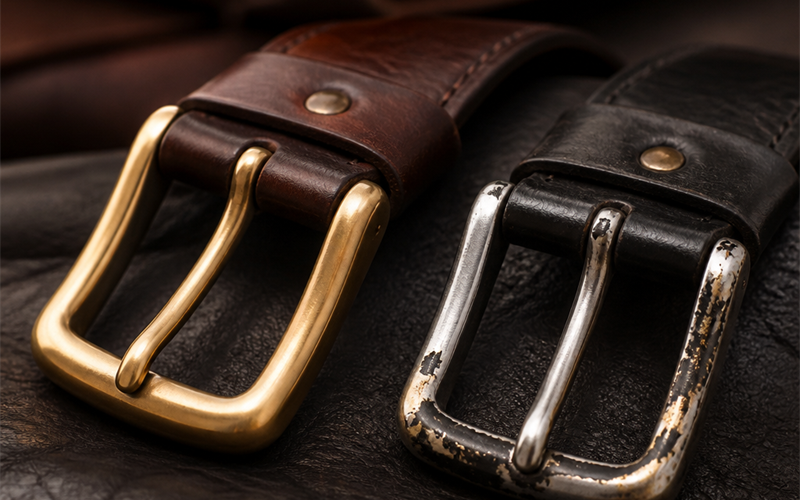
Quick answer: Solid brass (and solid stainless steel) belt buckles last for decades because there's no coating to fail — scratches and tarnish polish right out, and brass develops a protective patina. Plated buckles, usually zinc alloy under a thin nickel or chrome layer, eventually peel, bubble, and chip at the edges, exposing the dull base metal underneath. For longevity, buy solid; plated is fine only for short-term, light-duty wear.
Last updated: June 2026 • By BELTLEY
TL;DR:
- Solid brass / solid steel: no plating to fail; scratches polish out; lasts decades.
- Plated (zinc alloy): thin nickel/chrome coating that peels, bubbles, and chips at edges over time.
- The tell: solid buckles are noticeably heavier; plated ones feel light and can show worn spots.
- Brass develops a protective patina; plated zinc corrodes to "white rust" once the coating wears through.
- Cost: solid brass costs ~4–5× more than plated zinc — and outlasts it many times over.
- The BELTLEY 3-Material Rule calls for a solid 316L stainless or solid brass buckle, never plated zinc.
The buckle is the part of a belt most likely to fail — and the easiest place for a maker to cut costs. Two belts can look identical on a rack, but one has a solid metal buckle built to last a lifetime and the other has plated zinc that will flake within a couple of years. This guide explains the difference, how to spot it, and why it matters more than almost any other belt spec. For the full ranking, see what is the strongest type of belt buckle.
Which Buckle Material Should You Choose?
Match your priority to the material.

| Your priority | Best buckle |
|---|---|
| Longest life, restorable finish | Solid brass |
| Maximum strength + corrosion resistance | Solid 316L stainless steel |
| A warm, classic, patina look | Solid brass |
| Lowest price, light/occasional use | Plated zinc alloy |
| A heirloom or buy-it-for-life belt | Solid brass or steel |
| Avoiding peeling/chipping entirely | Anything solid (never plated) |
If durability is the goal, buy solid. Browse solid brass buckle belts or stainless steel buckle belts.
What's the difference between plated and solid brass buckles?
A solid brass buckle is made entirely of brass, so its color and finish go all the way through. A plated buckle is usually cheap zinc alloy with a thin layer of brass, nickel, or chrome on the surface. The plating can wear through, but solid brass has no coating to fail — it just patinas.

The key word is solid. As one hardware comparison puts it, "solid brass naturally outlasts zinc alloy" because "brass forms a protective patina, while zinc corrodes away and requires high-quality plating to achieve any real durability." Plated zinc buckles "often peel, bubble, or chip, revealing the less attractive base metal underneath," whereas solid brass "has no plating to fail." Brass itself is a copper-zinc alloy long used "in applications where corrosion resistance and low friction are required," from locks and hinges to fittings — which is exactly why it's a century-old standard for belt hardware. For more on what buckles are made of, see types of belt buckles.
Why does plating peel and chip over time?
Plating peels and chips because it's only a thin surface coating bonded to a different base metal. Daily friction at the prong, edges, and high-contact areas gradually wears the coating through, and once the base metal is exposed it oxidizes — leaving dull patches, bubbling, or flaking that can't be polished out.
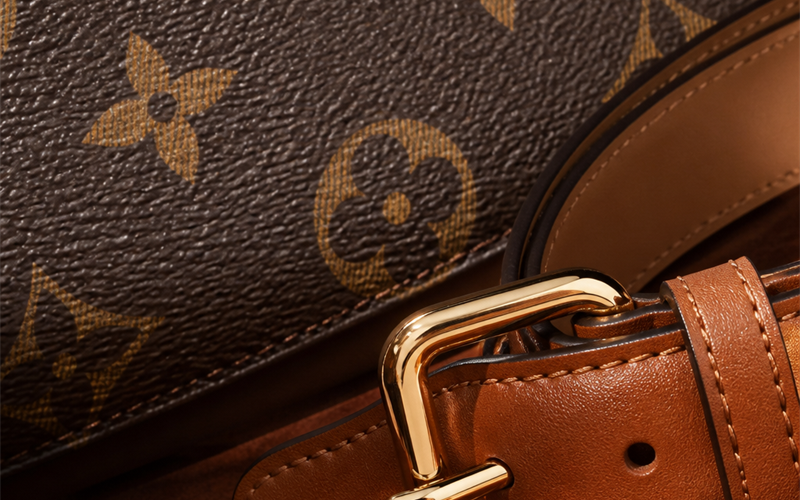
This is the fundamental weakness of any coated hardware. As one maker explains, a nickel- or chrome-plated buckle "adds a protective layer initially," but "with regular use, the plating can wear through in spots, especially around edges or high-contact areas." Underneath is usually zinc alloy, which corrodes into a chalky "white rust" once exposed. Because the damage is the coating failing — not the surface scratching — there's no fixing it: you can't polish back a layer that's gone. A solid buckle has no such layer to lose, which is why it ages instead of degrading. The same logic is why Gucci buckles tarnish when their plating wears.
How can you tell solid brass from plated?
The fastest tell is weight: solid brass is dense and feels substantial in the hand, while plated zinc feels noticeably lighter. Also check edges and high-wear spots for any color change or worn patches — plating often reveals a different metal underneath — and look for "solid brass" in the product spec, since "brass-plated" means plated.

A few quick checks separate the two. Heft it: solid brass has a density around 8.4 g/cm³, so a heavy buckle "immediately signals a high-quality, durable product," while plated zinc feels light. Inspect the prong and edges under good light — any hint of a different-colored metal peeking through means plating. Read the listing carefully: "solid brass" is the real thing, but "brass-plated," "brass-tone," or "brass-finish" all mean a coating over a cheaper base. And a magnet helps in some cases: brass isn't magnetic, so a strong magnetic pull suggests a plated steel or other base. For value over time, see are old belt buckles worth anything.
Does solid brass tarnish, and is that bad?
Solid brass does develop a patina — a darker, sometimes greenish surface tone — but that's not damage. The patina is a stable protective layer that shields the metal underneath, and any tarnish can be polished back to a bright shine in minutes. Unlike plating, solid brass never peels or flakes.

Patina is a feature, not a flaw. Brass "develops a stable green patina" that acts as "a protective shield," in contrast to plated zinc, which forms "white rust" signaling "the surface is breaking down." Many people love the warm, aged look brass takes on and leave it alone; others polish it bright with a brass cleaner whenever they like. Either way, the metal underneath is sound. That reversibility is the whole point: a solid brass buckle can look brand-new again decades from now, while a worn plated buckle is permanently marred. For care specifics, see our leather care guide.
Key stat: Solid brass costs roughly 4–5× more than plated zinc per buckle (about $4 vs under $1) — but it has no coating to fail, so it lasts decades and polishes back to new, while plated zinc peels and corrodes once the thin layer wears through. The cost-per-year math favors solid every time.
What does a buy-it-for-life buckle look like?
A buy-it-for-life buckle follows the BELTLEY 3-Material Rule: a solid 316L stainless steel or solid brass buckle paired with full-grain leather and sealed edges. Solid hardware won't peel or flake, full-grain leather won't crack, and sealed edges resist wear — the three specs that decide whether a belt lasts years or months.

Hardware is one leg of that durability tripod, and it's the one most often faked with plating. A solid 316L stainless buckle leads on raw strength and corrosion resistance; solid brass leads on classic looks and easy restoration. Both share the key trait: no coating to lose. Pair either with full-grain leather and burnished or painted edges and you have a belt engineered to age into character rather than fall apart — which is exactly the standard every BELTLEY belt is built to. As one maker bluntly notes, hardware quality is decisive because "the buckle fails, the belt does too." For the durability deep dive, see what is the most durable leather belt.
The Bottom Line
Plated vs solid brass comes down to whether there's a coating waiting to fail. Solid brass and solid stainless steel have none — they shrug off scratches, polish back to new, and last for decades, with brass developing a protective patina along the way. Plated zinc buckles look fine at first but peel, bubble, and chip at the edges within a couple of years, and once the base metal shows there's no fixing it. For anything you plan to keep, buy solid. Here's the on-brand take: a great buckle is half of what makes a belt last, which is why the BELTLEY 3-Material Rule pairs a solid 316L stainless or solid brass buckle with full-grain leather and sealed edges. Explore solid brass buckle belts and full-grain leather belts built to that standard — and never pay designer money for plated zinc.
Frequently Asked Questions
Q: How can I tell if a belt buckle is solid brass or plated?
Check the weight first — solid brass is dense and substantial, while plated zinc feels light. Inspect the edges and prong for any different-colored metal showing through, which signals plating. Finally, read the spec: "solid brass" is real, but "brass-plated," "brass-tone," or "brass-finish" all mean a coating over cheaper metal.
Q: Does a solid brass buckle tarnish?
Yes, solid brass develops a patina — a darker or greenish surface tone — but that's a protective layer, not damage. You can leave it for an aged look or polish it back to a bright shine in minutes. Unlike plating, solid brass never peels or flakes, so the metal stays sound for decades.
Q: Why do plated belt buckles peel?
Plated buckles peel because the finish is only a thin coating bonded to a cheaper base metal, usually zinc alloy. Friction at the prong, edges, and high-contact spots wears the coating through, and once the base metal is exposed it oxidizes. The damage is the coating failing, so it can't be polished out.
Q: Is solid brass or stainless steel better for a belt buckle?
Both are excellent because both are solid metal with no plating to fail. Solid 316L stainless steel leads on raw strength and corrosion resistance and stays bright; solid brass offers a warm, classic look, develops a patina, and polishes back easily. Choose based on the look you prefer — either will last.
Q: Are plated belt buckles worth buying?
Only for short-term, light-duty, or budget use. Plated zinc buckles look fine initially and cost much less, but they peel and corrode once the coating wears, and the damage is permanent. For any belt you want to keep for years, a solid brass or solid stainless steel buckle is the far better value.
%20belt%20buckles%20last%20for%20decades%20because%20there's%20no%20coating%20to%20fail%20%E2%80%94%20scratches%20and%20tarnish%20polish%20right%20out,%20and%20brass%20develops%20a%20protective%20pat...)