10 Most Iconic Leather Types For Belts For Making Belts
TL;DR:Quick answer
- Full-grain cowhide is the everyday gold standard — strongest conventional hide, ages beautifully, lasts 15–20+ years
- Exotic leathers (crocodile, alligator, elephant, stingray) outlast all bovine options and develop unique character with age
- Leather type determines performance — durability, patina, care requirements, and best occasion all vary significantly by hide
- Not every leather makes a great belt: python and embossed alternatives look good but underperform in daily use
The leather a belt is made from determines everything — how long it lasts, how it ages, what occasions it suits, and how much care it needs. A cowhide belt and a Nile crocodile belt are both "leather belts," but they're not remotely the same product.
This guide covers the 10 most significant leather types used in belt-making: what makes each distinctive, where each excels, and who it's actually for. For the full range of what these materials look like finished and worn, browse BELTLEY's exotic leather belt collection.
Which Hide Fits Your Life?
Ten leathers, one decision — sorted by what you need most:
| Your situation | Go with |
|---|---|
| One belt for everything | Full-grain cowhide — the everyday gold standard, 15–20 years of service. From $58 at BELTLEY. |
| Dress belt for suits | Calfskin ($100–$148) — finer grain, sleeker face, made for tailoring. |
| Maximum toughness | Elephant (from $199.99) — the most durable hide on the list, period. |
| Prestige and presence | American alligator or Nile crocodile ($118–$289) — the leathers everything else gets compared to. |
| High style, lighter wear | Python (from $112) — stunning pattern, just rotate it rather than daily-driving it. |
All five recommendations are in BELTLEY's collections — 10-year warranty on every one.
The 10 Leather Types at a Glance
| Leather | Durability (1–10) | Patina | Best For | Lifespan |
|---|---|---|---|---|
| Full-grain cowhide | 8 | Excellent | Daily wear, work | 15–20+ yrs |
| Vegetable-tanned leather | 8.5 | Best of all | Investment belts | 20–30 yrs |
| American alligator | 9 | Good | Dress, luxury | 20–30 yrs |
| Nile crocodile | 9 | Good | Dress, statement | 20–30 yrs |
| Elephant | 10 | Moderate | Rugged luxury | 25–30 yrs |
| Ostrich | 7 | Moderate | Soft dress belts | 15–20 yrs |
| Stingray | 9.5 | Low | Statement, collector | 30+ yrs |
| Buffalo/bison | 8.5 | Good | Heavy-duty, casual | 15–25 yrs |
| Calfskin | 7 | Moderate | Slim dress belts | 8–12 yrs |
| Python/snakeskin | 5 | None | Fashion, occasional | 5–10 yrs |
1. Full-Grain Cowhide — The Everyday Standard
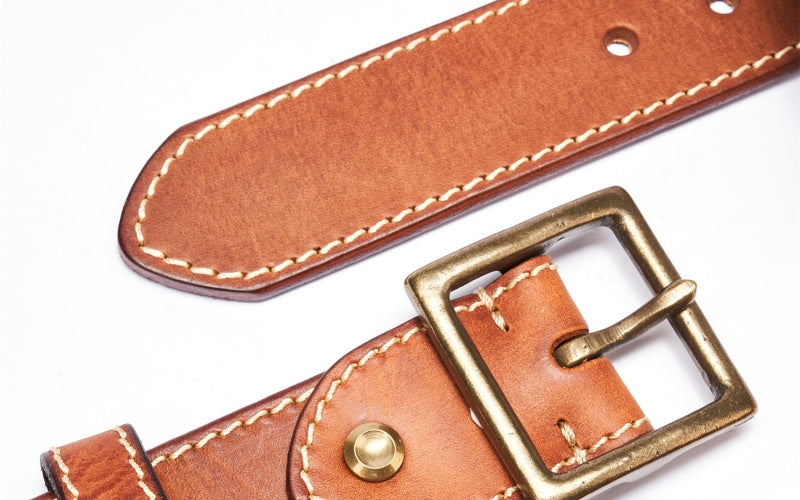
Full-grain cowhide is the benchmark leather for belt-making. It uses the outermost hide layer without any surface correction, preserving the densest fiber structure and the natural grain pattern. The Leather Working Group lists fiber integrity as the primary quality indicator — and full-grain cowhide tops that scale for conventional hides.
Why it works for belts: Firm enough to hold shape under a buckle, flexible enough to bend thousands of times without cracking, and thick enough (3.5–5mm ideal) to resist stretching at the holes. Develops a rich patina over years of wear.
Best for: Daily wear belts, workwear, anyone building a long-term wardrobe foundation. BELTLEY's full-grain leather belts are built on single-piece construction at this grade — no laminated layers, no filler.

2. Vegetable-Tanned Leather — The Long-Game Choice
Vegetable-tanned leather isn't a hide type — it's a tanning method applied to full-grain cowhide. Hides are processed using plant-based tannins (oak bark, chestnut, mimosa) over 30–60 days, rather than the 24-hour chrome tanning process used for most commercial leather.
The result is firmer, denser leather that develops the most dramatic patina of any belt material. According to the Genuine Italian Vegetable-Tanned Leather Consortium, veg-tanned hides retain higher structural rigidity over decades and absorb conditioning oils more effectively than chrome-tanned alternatives.
Why it works for belts: Starts rigid (breaks in over the first few weeks of wear) and becomes supple with use. The uncoated surface absorbs oils from handling, developing a personalized patina unique to each wearer.
Best for: Buyers who want a belt that becomes more personal over time. The investment piece in your wardrobe.

3. American Alligator — The Prestige Exotic
American alligator (Alligator mississippiensis) leather is widely considered the most desirable exotic hide for belt-making. The belly section — the premium cut — features a symmetrical tile-like scale pattern with no visible sensory pores, a soft hand feel, and natural flexibility.
Alligator hides are farmed under strict CITES Appendix II regulations that govern population sustainability and trade documentation. That certification also functions as a quality signal — the documentation chain is traceable.
Why it works for belts: Interlocking osteoderms beneath the scales create a naturally reinforced structure that resists scratching and surface damage. Belly-cut alligator flexes as smoothly as quality cowhide while outperforming it on abrasion resistance.
Best for: Dress, business, and occasion wear. The material that communicates discernment without a logo. See our full comparison of alligator vs crocodile belts for the detailed distinction.

4. Nile Crocodile — The Distinguished Alternative
Nile crocodile (Crocodylus niloticus) leather differs from alligator primarily in one visible detail: small sensory pore dots appear within each scale. The scales are slightly more irregular in size and shape than alligator, giving the leather a more dynamic visual character.
Farmed Nile crocodile leather, sourced from CITES-certified operations primarily in Africa, matches American alligator in durability metrics while offering slightly firmer hand feel. The International Crocodilian Farmers Association documents that both species score comparably on abrasion resistance tests.
Why it works for belts: Same structural advantages as alligator. The pore detail is a visible authenticity marker that genuine crocodile leather buyers recognize and value.
Best for: Dress and statement belts. BELTLEY's alligator and crocodile belt collection includes both species, handcrafted from belly cuts at DTC pricing.

5. Elephant Leather — Maximum Durability
Elephant leather is the thickest and toughest commercially available belt leather. Its distinctive pebbled texture — irregular raised nodes across the surface — is completely unique and impossible to emboss convincingly on cowhide.
Elephant hides used in leather goods come exclusively from legally culled populations in southern Africa (primarily Botswana and Zimbabwe) under CITES Appendix II permits. Supply is genuinely limited, making authentic elephant leather belts relatively rare.
Why it works for belts: Tensile strength exceeds every other common belt leather. Resists punctures, abrasion, and moisture. The thickness means minimal stretching even under heavy daily use.
Best for: Collectors, buyers who want the most indestructible belt available, and anyone drawn to a texture that cannot be replicated. Browse BELTLEY's elephant leather belt collection to see the range.

6. Ostrich Leather — Natural Oils, Natural Suppleness
Ostrich leather is instantly recognizable by its quill follicle pattern — the raised bumps where feathers were anchored. It's one of the few exotic leathers with significant natural oil content built into the hide structure.
According to the South African Ostrich Business Chamber, ostrich hides contain higher levels of natural lanolin than most commercially tanned leathers. This built-in moisture resists cracking even with infrequent conditioning — a meaningful advantage for buyers who don't want to maintain a rigorous care schedule.
Why it works for belts: Natural flexibility and oil content keep it supple through years of use. The quill pattern is a genuine luxury identifier.
Best for: Soft dress belts and lighter wear. Less suited to heavy-duty daily use than crocodile or elephant — ostrich is softer and more susceptible to deep scratches.
7. Stingray Leather — The Scratch-Proof Outlier
Stingray leather (shagreen) is the most scratch-resistant belt material available. Its surface is composed of tiny calcium-coated denticles — essentially a natural armor — that makes conventional abrasion almost impossible. A fingernail pressed firmly across stingray leather leaves no mark.
[Insert external link to: leather material science documentation on stingray denticle structure]
Why it works for belts: Unmatched surface hardness. A stingray belt used daily for 30+ years will show minimal surface wear. The texture is unmistakable — small pearlescent nodules that catch light distinctively.
Best for: Statement and collector pieces. The extreme surface hardness also makes stingray one of the more technically difficult leathers to work with, limiting availability from quality makers.
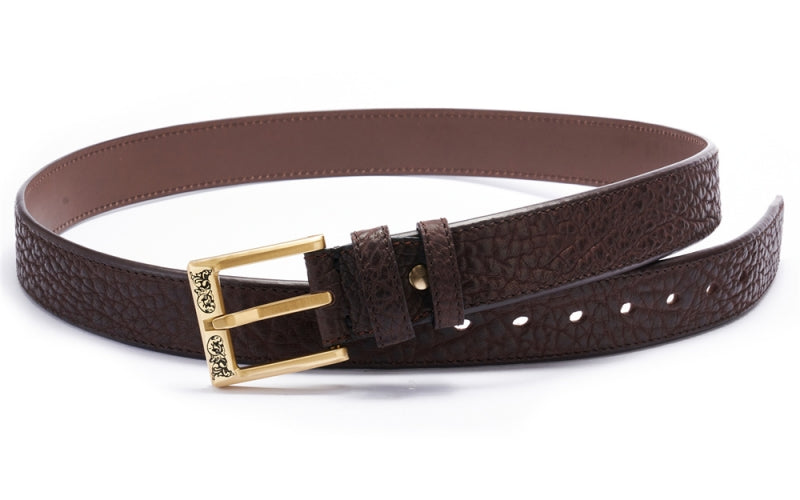
8. Buffalo / Bison Leather — The Rugged Workhorse
Buffalo and bison hides are 30–40% thicker than standard cowhide, with a more pronounced surface grain and higher resistance to tearing. The American Bison Society documents that bison hide has been used for heavy-duty leather goods since the 19th century precisely because of its superior abrasion resistance.
Why it works for belts: Built for daily hard use. The natural thickness provides structure without needing double-layer construction. Holds its shape under sustained tension better than cowhide.
Best for: Casual and workwear belts, buyers who prioritize toughness over refinement. Slightly stiffer than cowhide, so it takes longer to break in.

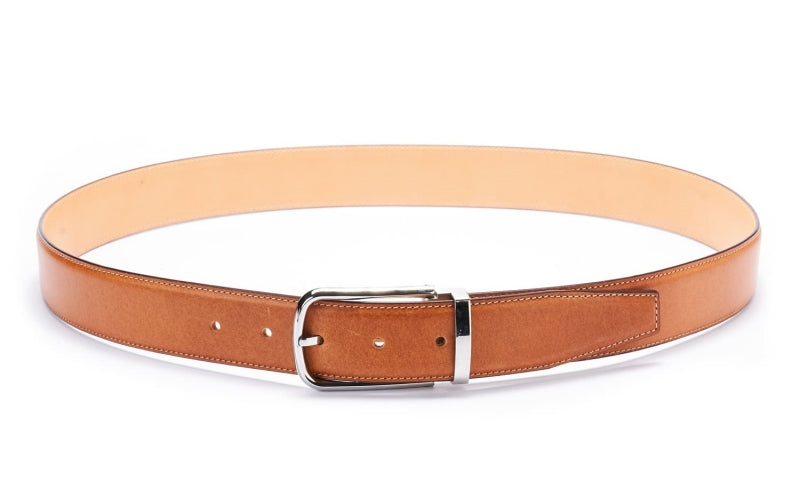
9. Calfskin — The Dress Belt Choice
Calfskin comes from younger cattle hides, which have a finer grain structure and softer hand feel than standard cowhide. The tighter, smaller grain pattern makes it the traditional choice for slim dress belts — the type worn under a tailored suit at 1.25–1.38 inches wide.
Why it works for belts: Polishes beautifully, takes dyes evenly, and produces the smooth, refined surface associated with formal leather goods. The finer grain gives it a more luxurious visual texture than full-grain cowhide from mature cattle.
Best for: Slim dress belts, formal occasions, buyers who prioritize refined appearance over rugged durability. Calfskin doesn't outlast standard full-grain cowhide, but for the occasions it's worn, longevity is rarely the primary concern.

10. Python / Snakeskin — High Style, Lower Durability
Python leather is visually arresting — large, overlapping scales with a graphic pattern that photographs dramatically. It's legal to sell in most markets under CITES Appendix II permits and widely used in fashion accessories.
Why it works for belts (sometimes): The visual impact is undeniable, and genuine python leather can last several years with careful maintenance.
Why it underperforms: The scales sit on a relatively thin dermal layer. Under daily belt use — constant folding, friction against belt loops — the scale edges catch and lift. Python requires conditioning every 2–3 weeks under regular wear, according to [Insert external link to: Italian Tanning Association care guidelines for reptile leather]. It's the most maintenance-intensive material on this list.
Best for: Occasional wear and fashion-forward styling rather than daily use. For buyers who love the snake aesthetic without the fragility, a cowhide belt with a python-inlay accent delivers the look with full-grain durability behind it.
The Bottom Line
The best leather for a belt depends entirely on what you need from it. Full-grain cowhide handles daily life with minimal fuss. Exotic leathers — crocodile, alligator, elephant, stingray — outlast conventional options and develop character that mass-market belts can't replicate. Python delivers visual drama at the cost of maintenance. And calfskin serves a specific formal niche nothing else quite fills.
What separates a great belt from a disappointing one is rarely the leather alone — construction quality, tanning method, and hardware specification matter equally. A poorly made crocodile belt will fail before a well-made cowhide one. At BELTLEY, every hide goes through grade selection before it's cut — because the leather type is only the beginning of what makes a belt worth owning. Browse the full men's belt collection to see these materials in finished form.
Frequently Asked Questions
Q: What is the best leather type for making belts?
Full-grain cowhide is the best all-around leather for belt-making — it combines durability, flexibility, and patina development at accessible price points. For maximum longevity, vegetable-tanned full-grain leather is the top choice. For exotic luxury, alligator and crocodile belly leather lead the category.
Q: Which leather type lasts the longest in a belt?
Stingray leather lasts the longest (30+ years), followed by elephant (25–30 years) and crocodile/alligator (20–30 years). Among conventional hides, vegetable-tanned full-grain cowhide reaches 20–30 years with proper care. The lifespan hierarchy tracks closely with fiber density and surface hardness.
Q: Is exotic leather more durable than cowhide for belts?
Yes, most exotic leathers are more durable than cowhide. Crocodile, alligator, elephant, and stingray all have denser fiber structures and natural surface reinforcements that standard bovine leather doesn't match. The tradeoff is price and, in some cases (python), higher maintenance requirements.
Q: What leather type is best for dress belts?
Calfskin and alligator belly leather are the traditional choices for dress belts. Calfskin has a fine grain ideal for slim formal straps. Alligator combines dressy appearance with exotic luxury and superior durability. Full-grain cowhide in a slim cut also works well for business dress at a lower price point.
Q: How do I choose the right leather type for my belt?
Match the leather to the use case: full-grain cowhide for daily wear, exotic leather for dress and investment pieces, buffalo for heavy-duty use, calfskin for formal occasions. Then factor in maintenance tolerance — ostrich and cowhide are forgiving; python demands regular conditioning. Our guide on what type of leather is best for belts covers the decision framework in more detail.
...)