Is Buffalo Leather Good for Belts? ( It’s the Hulk of Leather… )
TL;DR: Quick Answer
- Buffalo leather is excellent for belts — thick, durable, and built to outlast most cowhide options
- It develops a rugged patina over time instead of falling apart (your belt ages like whiskey, not like milk)
- The tradeoff: stiffer break-in period, higher price, and fewer color options than cowhide

You typed "is buffalo leather good for belts" into a search bar. That means you're shopping smart. Good. Because buffalo leather is one of those materials that flies under the radar while quietly outperforming half the leather section at your local department store. It's thick. It's tough. And it gets better with age — which is more than most of us can say.
But "good" depends on what you need. A rugged everyday belt? Buffalo is outstanding. A sleek dress belt for the office? Maybe not its strongest suit. Let's break it all down.

Is Buffalo the Right Hide for You?
Tough is the headline — fit is the decision:
| Your situation | Go with |
|---|---|
| Hard daily wear, jeans and boots | Buffalo, yes — thicker fibers than cowhide and a rugged patina that earns its scars. |
| Dress belt needs | Skip buffalo — calfskin ($100–$148) or glazed croc owns the formal lane. |
| Impatient with break-in | Buffalo starts stiff and stays stubborn for weeks. Full-grain cowhide softens faster. |
| Want maximum toughness, period | Elephant (from $199.99) out-toughs even buffalo — the durability ceiling. |
Rugged through refined: BELTLEY's men's collection covers the whole spectrum.
What Makes Buffalo Leather Different from Regular Cowhide?
Buffalo leather comes from a thicker, denser hide that isn't stretched during tanning. This gives it more natural strength per square inch than standard cowhide. The grain is bolder, the texture is rougher, and the overall feel is noticeably heavier in your hand.
Here's the nerdy part. Buffalo hide has an epidermal layer up to three times thicker than cowhide. The collagen fibers underneath are wider and more widely spaced. That sounds like a bad thing — less density, right? — but those thick fibers compensate by lasting longer under stress. Think rebar versus chicken wire.
According to Weaver Leather Supply, water buffalo leather has larger pores and a more pronounced grain pattern, while cowhide tends to be smoother and more uniform. Cowhide is also more elastic. It stretches to your body. Buffalo leather? It holds its shape. Stubbornly. Like a leather-wrapped opinion.
For belts, that stubbornness is actually a feature. A belt that holds its shape doesn't sag, curl, or warp after six months of daily wear. And if you want to understand how different leathers stack up for belts specifically, our leather types for belts guide covers the full lineup.

Is Buffalo Leather Durable Enough for Everyday Belts?
Yes. Buffalo leather is one of the most durable options you can choose for a belt. It resists tearing, doesn't deform easily, and handles daily friction better than most cowhide alternatives. A well-made buffalo belt can last 10 to 20 years with basic care.
That's not marketing fluff. The Buffalo Billfold Company explains that American bison leather has roughly 40% more tensile strength than standard cowhide. Forty percent. That's a significant gap.
The reason comes down to the tanning process. Buffalo hides are not stretched during tanning, unlike most cowhide. Stretching thins the leather and makes it more pliable — great for jackets, not ideal for a belt that needs to hold 10 pounds of tools, a phone holster, and your dignity. Unstretched buffalo leather stays thick and rigid. It earns its softness over time through actual use.
One note: that thickness means a stiffer break-in period. Your first week with a new buffalo belt might feel like wearing a leather hula hoop. Give it two weeks. It'll mold to your waist and reward your patience with years of reliable service.
If durability is your top priority, also consider a double-layer full-grain belt — two layers of leather stitched together for maximum lifespan.

Buffalo Leather vs. Cowhide for Belts: Quick Comparison
Numbers talk. Here's how the two stack up side by side:
| Feature | Buffalo Leather | Cowhide Leather |
|---|---|---|
| Thickness | 1.5–2.0+ mm (not stretched) | 1.0–1.5 mm (often stretched) |
| Tensile strength | ~40% stronger than cowhide | Standard baseline |
| Grain pattern | Bold, pronounced, rugged | Smoother, more uniform |
| Flexibility | Stiff initially; softens over time | Flexible from day one |
| Patina | Deep, matte, rugged character | Smooth, glossy sheen |
| Break-in period | 1–3 weeks | Minimal |
| Price | Higher (scarcer hides, harder to work) | Lower (widely available) |
| Best belt style | Casual, rugged, work belts | Dress, casual, all-purpose |
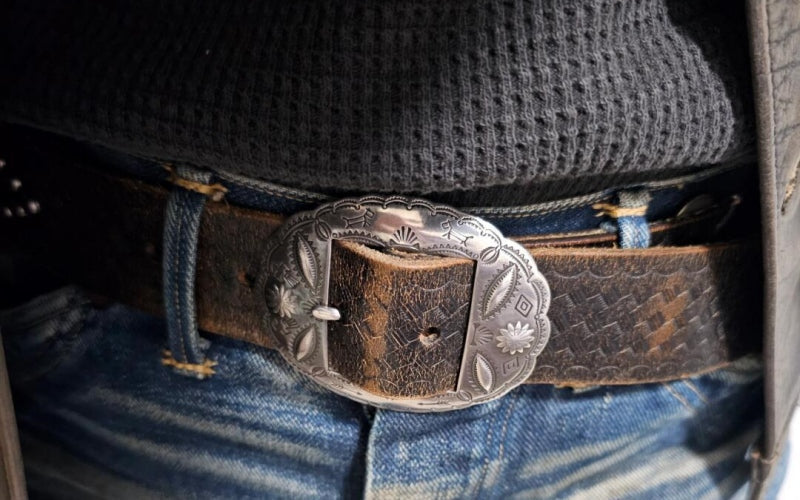
According to Frederic St. James, buffalo leather's scars and grain lines deepen over time into a rugged, matte finish. Cowhide develops a glossy patina. Both are beautiful. They're just speaking different languages.
We put together a detailed cow leather belt vs. buffalo leather belt comparison if you want the full breakdown with product examples.

Wait — Water Buffalo or American Bison?
Two different animals. Two different leathers. And the market uses "buffalo" for both, which is confusing. Let's clear this up fast.
American bison (the big fuzzy ones from Montana) produce a thick, dense leather with fine hair follicle patterns and a slightly more uniform texture. Water buffalo (from Southeast Asia) produce a thicker, more porous leather with a bolder grain. Both are excellent for belts. Both are tougher than standard cowhide.
Independence Brothers notes that bison leather is slightly more flexible, while water buffalo is stiffer and more moisture-absorbent. For a belt, either works beautifully. Bison gives you a slightly refined look. Water buffalo goes full rugged.
The important thing: make sure the product actually specifies which animal. "Buffalo leather" on a listing could mean either — or in some unfortunate cases, neither. If the price seems suspiciously low for a "buffalo" belt, it's probably corrected-grain cowhide wearing a costume.

How Do You Care for a Buffalo Leather Belt?
Buffalo leather is low-maintenance compared to more delicate exotics. Wipe it with a dry cloth after wear. Condition it twice a year with a wax-free product. Store it flat or hanging — never rolled tight. That's basically it.
MAHI Leather's care guide recommends cleaning with a damp cloth and avoiding solvents or silicone-based products. For conditioning, Bick 4 is a popular choice — it won't darken the leather or leave a waxy buildup. Always test any conditioner on a hidden spot first. Buffalo leather is tough, but it can still absorb color-changing products unevenly.
If your buffalo belt gets wet — and it will, eventually — pat it dry with a towel and let it air-dry away from direct heat. Radiators and hair dryers are the enemy. They crack leather faster than a bad joke cracks a room.
For more detail on keeping any leather belt in shape, check out our full leather care guide.
Is Buffalo Leather Worth the Higher Price?
Buffalo leather belts typically cost 20–50% more than comparable cowhide belts. The hides are scarcer. Processing is harder because of the thickness. And the finished product is genuinely more durable. You're paying for material that will likely outlast two or three cheaper alternatives.
Think of it as cost-per-wear math. A $50 cowhide belt that lasts three years costs you about $17 per year. A $90 buffalo belt that lasts ten years costs you $9 per year. The expensive belt is actually the cheap one. Funny how that works.
That said, buffalo isn't the only path to a long-lasting belt. A quality full-grain cowhide belt — one made from the top layer of the hide without sanding or correction — can last just as long with proper care. Full-grain is the key word. If you want to know why, our guide on what type of leather is best for belts explains the grading system.
And if you really want to upgrade beyond buffalo, exotic leather belts — crocodile, alligator, elephant — occupy a different tier entirely. But that's a different conversation and a different budget.
The Bottom Line
Buffalo leather is excellent for belts. Full stop. It's thicker than cowhide, tougher under stress, and ages into something that looks better at year five than it did at year one.
The tradeoffs — a stiffer break-in, a higher price tag, and a more casual aesthetic — are minor compared to the durability you get in return. If you want a belt that can handle daily abuse and develop serious character along the way, buffalo belongs on your shortlist.
At BELTLEY, we use buffalo and bison textures in our rugged belt collection precisely because these hides can take a beating and still look intentional. Every belt we ship is handcrafted, backed by a 10-year warranty, and comes with free worldwide shipping. Browse the full men's belt collection to find the right leather for your life.
Frequently Asked Questions
Q: Is buffalo leather better than cowhide for belts?
For pure durability, yes. Buffalo leather is thicker, has roughly 40% more tensile strength, and resists tearing better than standard cowhide. Cowhide wins on flexibility and refinement. The best choice depends on whether you prioritize ruggedness or versatility.
Q: How long does a buffalo leather belt last?
A well-made buffalo leather belt can last 10 to 20 years with basic care — occasional conditioning and proper storage. Some users report buffalo leather goods lasting decades. The material gets better with age, developing a rich patina rather than deteriorating.
Q: Does buffalo leather crack easily?
No. Buffalo leather is highly resistant to cracking because of its thick fiber structure. The main risks are excessive dryness (condition twice a year) and heat exposure (never dry it near a radiator or in direct sunlight). With minimal care, cracking is rare.
Q: Is water buffalo leather the same as bison leather?
No. Water buffalo (Bubalus) are from Asia and Africa. American bison (Bison) are from North America. Both produce excellent, thick leather, but they differ in grain pattern, flexibility, and texture. The market often labels both as "buffalo," so check product descriptions carefully.
Q: Why are buffalo leather belts more expensive?
Three reasons: buffalo hides are scarcer than cowhide, the thicker material is harder to cut and work during manufacturing, and the finished product offers superior durability. The higher upfront cost usually translates to lower cost-per-year over the belt's lifespan.
Q: How do I break in a stiff buffalo leather belt?
Wear it daily. Buffalo leather softens naturally through body heat and movement — usually within one to three weeks. You can speed things up slightly by applying a small amount of leather conditioner, but avoid over-conditioning. Patience beats shortcuts with this material.