How to Restore a Peeling Gucci Belt (Can It Be Fixed?)
Quick answer: It depends on what your Gucci belt is made of. Most peeling Gucci belts are GG Supreme coated canvas — a PVC-coated fabric, not leather — and once that plastic top layer flakes off, it cannot be truly restored, only cosmetically patched. A genuine leather Gucci belt that's merely dry or lightly cracked, however, can often be revived with proper conditioning.
Last updated: June 2026 • By BELTLEY
TL;DR:
- Gucci's best-selling belts use GG Supreme coated canvas (PVC-coated fabric), not leather.
- When the plastic coating peels, it's delaminating — that damage is permanent and can't be "reconditioned."
- A real leather Gucci belt that's dry or surface-cracked can improve with conditioning.
- A cobbler can sometimes re-glue a separating leather backing, but not rebuild a flaked canvas face.
- The honest math: a deep-peeling coated-canvas belt usually isn't worth the repair cost — replace it.
A peeling Gucci belt sends most owners into a panic, then a Google spiral. Here's the part nobody at the boutique mentions: the answer hinges entirely on material. Gucci's iconic GG monogram belts — the ones at $450–$550 — are largely coated canvas, a printed fabric sealed under a thin plastic film, often backed by a strip of leather. That construction is why they peel, and why "restoring" them is so different from restoring a leather belt. If you want a belt you can actually condition and keep for decades, full-grain leather belts behave the opposite way. Below is exactly what's fixable, what isn't, and how to tell which Gucci you own.
Can Your Peeling Gucci Belt Be Saved?
Find your exact situation before you spend a cent on repair products.

| Your situation | What to do |
|---|---|
| GG Supreme coated canvas, plastic film flaking | It's delaminating — can't be restored; only cosmetic touch-up or replace |
| Genuine leather Gucci, dry or lightly cracked | Condition it — surface often improves and softens |
| Leather backing peeling away from the canvas | A cobbler can re-glue or re-stitch the backing |
| Peeling is deep, wide, or across the logo | Repair cost rarely beats replacement — retire it |
| You want a belt that won't peel again | Switch to solid full-grain leather, not coated canvas |
Not sure what you're looking at? The material test in the next section settles it in ten seconds.
Why is my Gucci belt peeling in the first place?
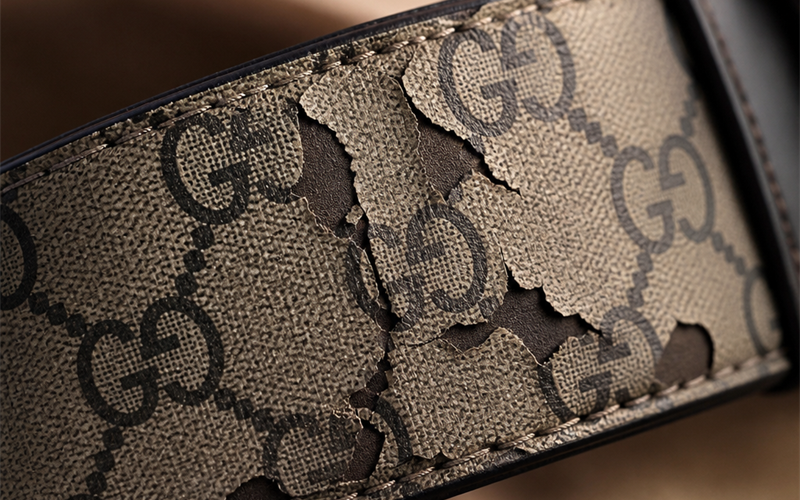
Your Gucci belt is peeling because the GG Supreme face is coated canvas, not leather. A printed fabric base is sealed under a PVC (plastic) film, and over time that film loses flexibility, separates from the cloth, and flakes — especially where the belt bends, rubs the buckle, or sits in heat.
This is a known trait of coated and bonded materials, not a fluke. Plastic coatings rely on plasticizers to stay soft, and as Wikipedia's entry on polyvinyl chloride notes, those plasticizers are "highly susceptible to leaching" — once they migrate out, the film turns brittle and cracks. The same fate hits layered leather-look materials: bonded leather can suffer "flaking of the surface material in as little as a few years." Real, single-piece leather has no coating to shed, which is the whole point.
How do I know if my Gucci belt is canvas or leather?
Check the back and the edge. GG Supreme canvas shows a woven cloth texture under the print and a perfectly uniform pattern, while genuine leather has irregular grain, a faint hide smell, and edges that are painted or burnished rather than fabric-backed. Gucci's own listings describe GG Supreme as "coated canvas" or "coated microfiber."

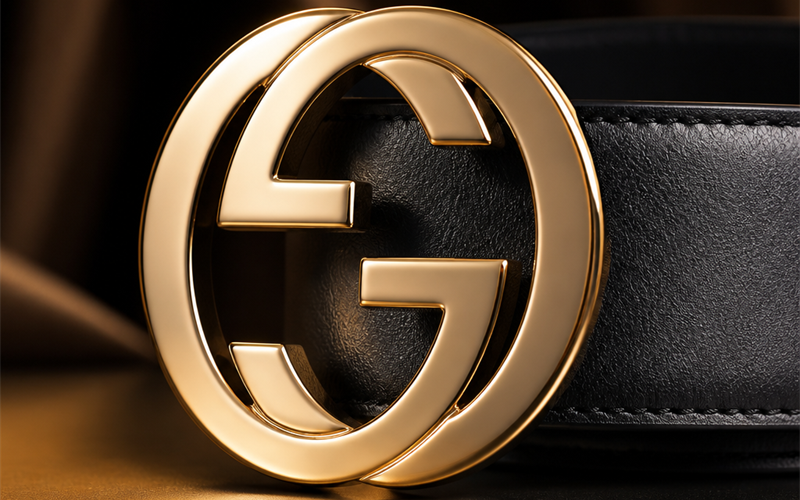
This one detail decides everything about restoration. A coated fabric is built to be wipe-clean and water-resistant, not to be fed oils — conditioner sits on top and does nothing. Leather, by contrast, drinks conditioner and can be partially revived. If your belt is the classic beige-and-brown GG or the black-on-black monogram, it's almost certainly canvas. If it's a solid-color Gucci with a logo buckle (like many GG Marmont leather styles), it's likely real leather. For the wider value picture, see our breakdown of why Gucci belts are so expensive.
How to restore a peeling leather Gucci belt (step by step)
If yours is genuine leather, you can often improve a dry, lightly cracked surface — though you can't erase deep cracks. Clean it, condition it in thin coats, and let it rest so the oils penetrate. The goal is to soften and seal, not to "repaint."

- Confirm it's leather using the back-and-edge test above.
- Wipe clean with a barely-damp cloth, then let it fully dry.
- Apply a quality leather conditioner in a thin, even coat with your fingertips.
- Let it absorb 12–24 hours, then buff gently and repeat once if still stiff.
- For visible cracks, a color-matched leather filler/cream can mask them — but won't structurally repair them.
Conditioning frequency matters more than the product; our guide on how to keep leather belts from cracking covers the routine. Just know the ceiling: conditioning revives dry leather, not dead leather.
Key stat: A GG Supreme belt retails around $450–$550, yet its face is PVC-coated canvas, not leather — and coated/bonded surfaces can begin flaking in "as little as a few years," while a well-made full-grain leather belt is built to last decades.
How to handle a peeling coated-canvas Gucci belt
You can't restore a flaking canvas coating, but you can slow it and tidy it cosmetically. Stop the friction and heat that accelerate peeling, trim loose flakes carefully, and for separation between the leather backing and canvas, see a cobbler. Accept that this is damage control, not repair.
Realistic options:
- Cosmetic touch-up: a color-matched vinyl/leather paint pen can hide small bald spots, but it will rub and re-peel.
- Re-gluing the backing: if the leather strip is lifting from the canvas, a leather repair shop can re-bond or re-stitch it.
- Professional reconditioning services exist for coated-canvas bags and belts, but they refinish the surface — they don't make it leather, and results vary.
- Replace it: once peeling crosses the logo or wraps the edge, the cost-to-result math stops working.
If you're weighing whether to sink money into the repair, our look at whether Gucci belts hold their value is worth a read first.
Is it worth repairing a peeling Gucci belt?
Usually not, if it's coated canvas. A cosmetic touch-up is cheap but temporary, and a professional refinish can cost a meaningful share of the belt's resale value with no guarantee. For a genuine leather Gucci, conditioning is cheap and worthwhile; structural repairs rarely are.

Here's the part that stings: you paid a luxury price for a material that was never built to be restored. A solid-leather belt at a fair price will outlast a coated-canvas belt at triple the cost — and you can actually maintain it. That's the trade buyers rarely see until the peeling starts. Compare the construction honestly in our Gucci vs Louis Vuitton belts comparison, both of which lean heavily on coated canvas.
What lasts longer than a coated-canvas designer belt?
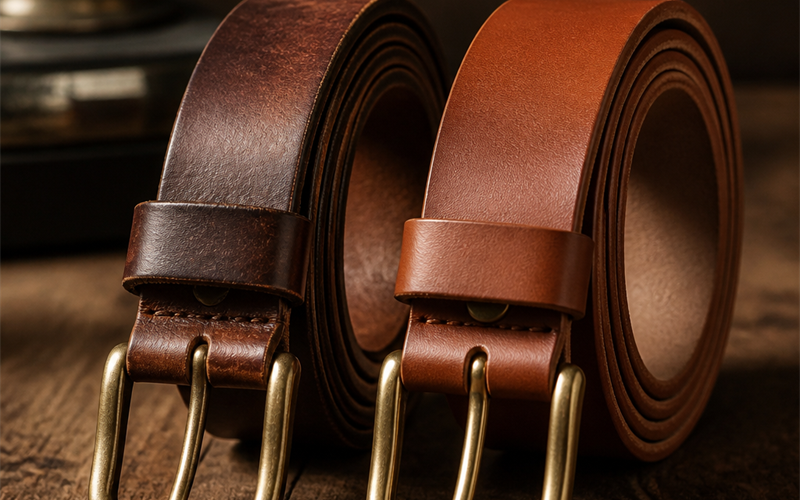
A single-piece full-grain leather belt lasts far longer because it has no coating to delaminate. Full-grain develops a patina instead of peeling, takes conditioner, and can be re-edged and re-buckled for decades. The face is the actual hide, not a plastic film printed over fabric.

This is the core reason direct-to-consumer leather brands have eaten into the logo-belt market. At BELTLEY, our belts are built from genuine full-grain and exotic leather with sealed edges and solid hardware — handcrafted, fairly priced, and made to be maintained rather than thrown out. If your peeling Gucci taught you anything, let it be the value of buying the material, not the monogram. Browse designer-quality belts that won't flake in two summers.
The Bottom Line
Whether you can restore a peeling Gucci belt comes down to one question: canvas or leather? Coated GG Supreme canvas peels because a plastic film is shedding off fabric, and that's permanent — you can hide it, slow it, or replace the belt, but you can't recondition plastic. Genuine leather Gucci belts that are simply dry can be brought back with patient conditioning. Either way, the lesson points the same direction: a real, single-piece leather belt you can actually maintain beats a coated one you can only watch deteriorate. Restore what's leather, retire what's canvas, and buy your next belt for the hide — not the logo.
Frequently Asked Questions
Q: Why is my Gucci belt peeling?
Most Gucci belts use GG Supreme coated canvas — a fabric sealed under a PVC film — and that plastic coating flakes as it ages, especially at bend points and in heat. The peeling is the coating delaminating from the canvas, which is normal for coated materials and can't be reversed.
Q: Can a peeling Gucci belt be repaired?
A genuine leather Gucci belt that's dry can be conditioned; a coated-canvas one cannot be truly restored. You can cosmetically touch up canvas with a color-matched paint pen or have a cobbler re-glue a lifting leather backing, but the flaked coating won't come back.
Q: Is the Gucci GG Supreme belt real leather?
No. GG Supreme is coated canvas — Gucci describes it as coated fabric or microfiber — usually backed with a thin strip of leather. The visible monogram face is printed fabric sealed under plastic, not hide, which is exactly why it peels rather than patinas.
Q: How do I stop my leather Gucci belt from cracking?
Condition genuine leather two to four times a year, keep it out of direct heat and sun, and store it rolled or hung rather than crammed in a drawer. See our leather care guide. Coated canvas, however, can't be conditioned — there's no leather to feed.
Q: Is it worth buying a Gucci belt if it peels?
That's a personal call, but knowing the material is coated canvas should shape your expectations and your budget. If you want a belt to last decades, a solid full-grain leather belt is the better value — it ages into a patina instead of flaking apart.