How to Match a Belt with Your Outfit: The Guy's Guide for 2026
A belt is one of those things that most men don't think about until something looks off. The shoes are great, the shirt fits, the trousers are clean — but something about the outfit isn't landing. Nine times out of ten, it's the belt. Wrong color, wrong width, wrong buckle for the occasion. These are fixable problems, and once you understand the logic behind them, you never have to think about it again.
This is the guide for that. Five rules, a handful of common mistakes, and a practical system you can apply to every outfit you own. Start with the men's belt collection when you're ready to put it into practice.

Rule 1 — Start With the Shoes, Not the Pants
Most guys make the same mistake: they look at their pants and ask what belt matches. That's the wrong starting point.
Your shoes determine your belt color. Black shoes: black belt. Brown shoes: brown belt. The pants are a neutral background — they don't drive the decision. What your eye actually tracks in an outfit is the leather-to-leather relationship between your shoes and your belt. When those match, the outfit has a visual system that reads as intentional. When they don't, it looks like you grabbed the wrong belt on the way out.
The rule extends to finish. Effortless Gent's belt matching guide puts it well: polished shoes pair with polished leather, matte or suede shoes pair with matte or suede leather. Wearing a high-gloss dress belt with rough-out suede chukkas creates a finish conflict that's hard to name but easy to see.
Shade flexibility exists in casual contexts. Dark brown isn't the same as cognac, but they work together because they're in the same tonal family. Espresso and black are distinct, but paired with the right outfit they read as compatible. The line you don't cross: warm browns (cognac, tan, saddle) mixed with cool browns (espresso, walnut, chocolate). Those live in different tonal families and they fight each other.
For the brown vs. black decision specifically, our brown belt vs. black belt guide maps the whole decision across outfit types.

Rule 2 — Match Belt Width to the Formality of Your Outfit
Width is the second thing to get right, and it's where most men's casual and formal looks go wrong in opposite directions.
Here's the core principle: narrower is more formal, wider is more casual. The specific widths that work:
| Outfit Type | Belt Width | Examples |
|---|---|---|
| Formal suits, tuxedos | 1" – 1.25" (25–32mm) | Black-tie, business formal |
| Dress trousers, smart blazer | 1.25" – 1.38" (32–35mm) | Business casual, office |
| Chinos, casual trousers | 1.38" – 1.5" (35–38mm) | Smart casual, weekend |
| Jeans, heavy denim | 1.5" (38mm) | Casual, everyday |
A wide belt on a suit is the fastest way to make a sharp outfit look costume-y. A skinny belt on jeans looks underscaled — like the belt got lost in the loops. These aren't aesthetic opinions; they're proportion rules that The Art of Manliness' complete guide to men's belts and most professional tailors agree on.
The rule applies at BELTLEY too. We make full-grain belts in widths from 1" to 1.5" specifically because different outfits need different scales — a slim dress belt for tailored trousers and a 1.5" casual belt for denim aren't interchangeable, and trying to use one for both is where the proportions break down.

Rule 3 — Match the Leather Finish, Not Just the Color
Color gets all the attention. Finish gets ignored. That's why an outfit can have a correctly colored belt and still feel wrong.
The leather finish on your belt should mirror the leather finish on your shoes. A high-polish Oxford calls for smooth, semi-glossy leather. A pebbled loafer works with pebbled or textured leather. Raw-edge suede shoes pair naturally with a matte or suede belt. Texture contrast creates visual noise that the eye reads as a mismatch even when the colors are technically correct.
This matters more in formal settings than casual ones. For a weekend outfit, mixing a matte full-grain belt with slightly textured chukkas is fine — the casual register tolerates it. For a suit with mirror-polished Oxfords, a rough-out or heavily textured belt is a genuine disruption.
Full-grain leather handles this well because it has a natural variation in surface that works in both directions — smooth enough for smart-casual, characterful enough for casual. At BELTLEY, we've been selecting full-grain hides since 1999, and the surface quality is one of the criteria our craftsmen evaluate before a hide gets approved for production. A hide that looks good on paper but has an inconsistent grain finish doesn't make it through. You can feel the difference in a belt you've worn for six months — full-grain develops a patina that actually improves, corrected-grain just deteriorates. Our full-grain leather belt collection shows what that looks like in practice.

Rule 4 — The Buckle Should Match Your Metal Accessories
Color and width sorted. Now the buckle.
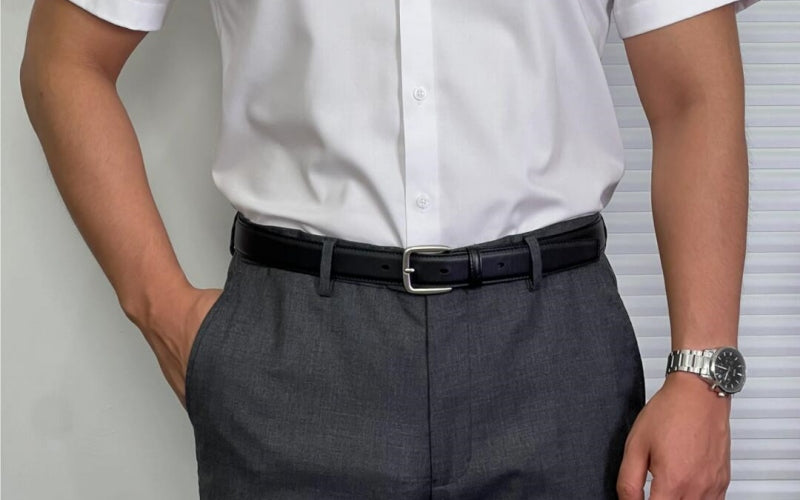
The rule is simple: buckle metal should match your other metals. Silver buckle with a silver watch. Gold buckle with gold cufflinks. Mix metal tones in your accessories — silver watch, gold ring, mixed belt — and the outfit reads as uncoordinated in a way that's hard to identify but impossible to unsee.
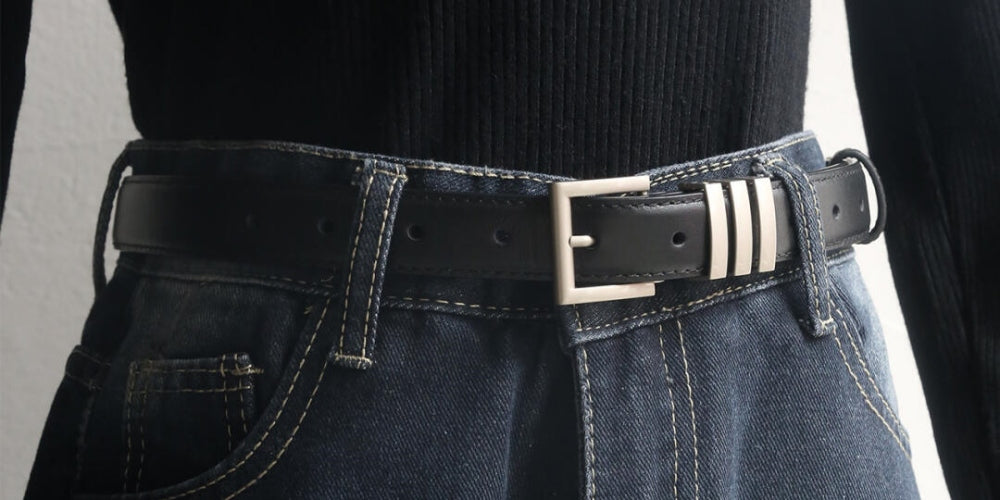
Buckle style follows the formality rule: smaller and simpler is more formal, larger and more decorative is more casual. A slim frame buckle or bar buckle belongs on a dress belt. A heavier box-frame or statement buckle belongs on a casual belt. Wearing a large western or statement buckle with a suit is a reliable way to look like you put on the wrong outfit.
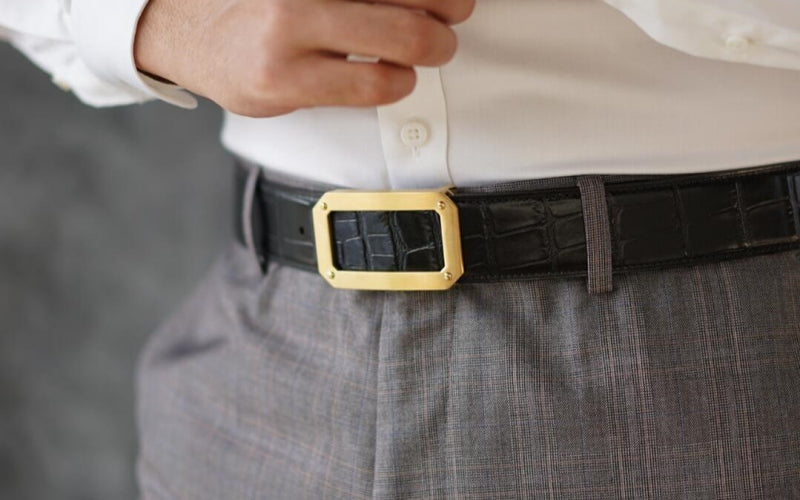
Permanent Style's belt capsule guide makes the case clearly: the belt buckle in a formal context should be invisible — the belt does its job quietly. In casual contexts, the buckle has more room to express itself.
Our 316L stainless steel buckle belts use marine-grade stainless specifically because it holds its finish without tarnishing — no greenish cast on the metal after a year of wear, which is the failure mode of cheaper zinc alloy hardware. When you're matching metal across your accessories, the buckle staying the same color it was on day one matters.

Rule 5 — Know When the Rules Actually Don't Apply
Here's the part most style guides skip: these rules are for conventional dressing. Casual outfits, personal style, and deliberate contrast are all legitimate reasons to bend or break them.
Wearing a cognac belt with black jeans and brown suede boots? That's a warm-tonal casual outfit — the cognac is doing intentional color work, not accidental mismatch. A statement buckle on a weekend outfit? Fine. The rules exist to prevent accidental mismatches, not to make every man dress identically.
The distinction is intention versus oversight. An oversized western buckle on a Saturday outfit with jeans and boots is intentional. The same buckle on a business suit is an oversight. Context and formality determine whether a choice reads as deliberate or careless.
In 2026, the trend direction in men's belts leans toward slightly more character — textured leathers, quiet statement buckles, and earthy tones that push past the standard black-or-brown binary. A cognac or dark olive belt is a current choice that still coordinates with most casual wardrobes. The underlying rules haven't changed; the palette has expanded. For what color works with everything regardless of trend, our post on what color belt goes with everything is the practical reference.
The 5 Most Common Belt Matching Mistakes
These come up constantly. Each one is an easy fix once you know what you're looking for.
1. Wrong color against mismatched shoes. Still the #1 offender. Black belt with brown shoes, brown belt with black shoes. Fix: look at the shoes first, always.
2. Wide casual belt with formal trousers. A 1.5" casual belt on suit trousers disrupts the silhouette and makes the whole outfit read as informal. Fix: slim belt (1"–1.25") for anything tailored.
3. Correct color, wrong finish. Matching the leather color but ignoring whether it's polished, matte, or textured. Fix: mirror the finish of your shoes, not just the color.
4. Mismatched metals. Silver buckle with a gold watch is the most common version of this. Fix: pick one metal tone for your accessories before you leave the house.
5. Belt tail too long. The end of the belt should pass through the first keeper loop and stop — it shouldn't be flopping beyond the second loop. Real Men Real Style's belt guide is specific on sizing: your belt size should be 1–2 inches larger than your trouser waist, sized so the buckle pin goes through the middle hole. Check our size guide if you're unsure what size to order.

The 2 Belts Every Man Actually Needs
Most men either own one belt that does everything badly, or fifteen belts that overlap. The practical answer is two.
Belt 1 — Black dress belt, 1"–1.25" wide, smooth leather, simple frame buckle. This covers every formal, business, and smart-casual outfit with black or dark shoes. It should last a decade with basic maintenance. This is not the belt you wear with jeans.
Belt 2 — Brown casual belt, 1.5" wide, full-grain leather, classic buckle. This covers jeans, chinos, boots, sneakers, and most casual weekend outfits. Brown is more versatile than black for casual wear because it coordinates with the earthier, warmer tones that show up in casual clothing more often. Cognac or medium brown covers the widest range.
Cobbler Union's belt-to-shoe matching guide echoes this two-belt logic: one formal, one casual, both correctly sized, both quality leather. More than that and you're adding redundancy rather than range.
Both belts benefit from full-grain leather because it ages well and responds to conditioning in a way that lower grades don't. A quality belt bought once is less expensive over ten years than three cheap ones. BELTLEY backs every belt with a 10-year warranty on materials and construction — which only makes sense when you're confident in what goes into it.

The Bottom Line
Match your belt to your shoes, get the width right for the outfit's formality, mirror the leather finish, coordinate the metal, and know when the rules exist to help you versus when you can ignore them. That's the whole system.
You don't need a different belt for every outfit — you need two good ones that are correctly sized and genuinely well-made. Start with the men's belt collection and use the size guide if you need help with sizing. And if it doesn't work, the 30-day return policy means you're not stuck with anything that doesn't fit the way you wanted.

Frequently Asked Questions
Q: Should a man's belt always match his shoes?
Yes — in formal and smart-casual outfits, the belt and shoes should be in the same leather color family. Black shoes with a black belt, brown shoes with a brown belt. In casual outfits, there's more flexibility, but the belt and shoes should still be in compatible tonal families. The key is intention — a deliberate contrast is different from an accidental mismatch.
Q: What belt width should a man wear?
Match width to formality: 1"–1.25" for suits and dress trousers, 1.25"–1.38" for business casual and chinos, 1.5" for jeans and casual outfits. The wider the belt, the more casual the look. A wide casual belt on a suit disrupts the silhouette; a slim dress belt on jeans looks underscaled.
Q: Should your belt buckle match your watch?
Yes — buckle metal should match your other metals. Silver buckle with a silver watch and silver jewelry. Gold buckle with gold accessories. Mixing metal tones in your accessories creates visual noise that makes an otherwise well-matched outfit feel uncoordinated.
Q: What color belt goes with the most outfits?
Medium brown or cognac covers the most ground in a casual wardrobe, pairing naturally with blue jeans, chinos, earth tones, and most casual shoes. Black covers formal and smart-casual contexts most reliably. If you own one belt, dark brown or cognac is more versatile day-to-day. If you own two, one black dress belt and one brown casual belt covers virtually every situation.
Q: How long should a belt tail be after buckling?
The belt tail should pass through the first keeper loop only — ideally extending 1–2 inches beyond it. The buckle pin should go through the middle hole (third of five) when the belt is correctly sized. If the tail hangs past the second keeper loop, the belt is too large. If you can only use the last hole, it's too small.