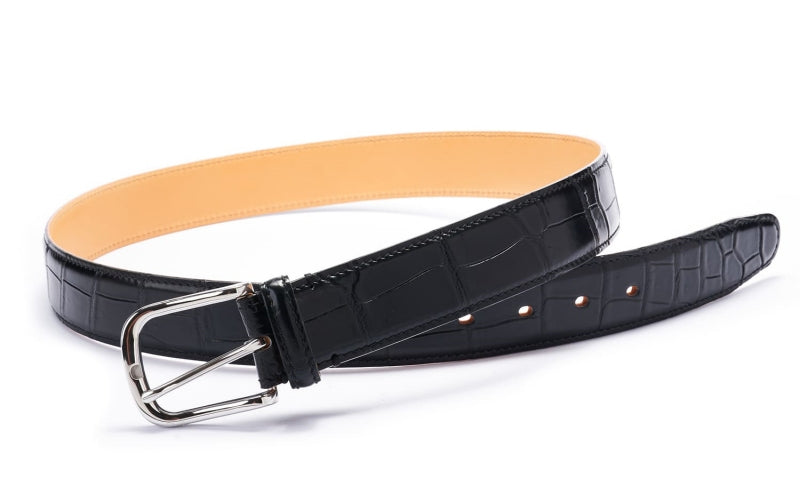
How To Match Belt With Outfit For Wedding in 2026
TL;DR:Quick answer
- Match your belt to your shoes — same color family, same finish (matte or polished). This is the non-negotiable rule at any wedding.
- Width matters: 1.25"–1.38" for suits and formal wear, 1"–1.18" for dresses and high-waisted pants.
- Black-tie = no belt. Use suspenders instead. For every other dress code, a clean leather belt is the right move.

You've got the suit. You've got the shoes. The tie is sorted. And then you stare at your belt drawer and wonder which one won't embarrass you in 200 wedding photos.
Getting your belt right for a wedding is simpler than most people make it — but the stakes are real. A mismatched belt breaks an otherwise sharp outfit the way a cracked phone screen ruins a new case. Here's exactly how to match your belt with your outfit for a wedding, broken down by dress code, color, and role.
Should Your Belt Match Your Shoes at a Wedding?
Yes — always. At a wedding, your belt should match your shoes in color, material, and finish level. Black shoes get a black belt. Brown shoes get a brown belt. If your shoes are polished, your belt should be smooth leather, not distressed or suede. This is the single most important accessory rule for any formal or semi-formal event.
This isn't fashion snobbery — it's visual cohesion. According to GQ's formal dressing guide, the belt-shoe match creates a "frame" around your outfit, anchoring the top and bottom halves with a consistent color. When that frame is broken — say, a tan belt with black oxfords — the eye catches the mismatch immediately.
At BELTLEY, our dress belts are designed in matched color families specifically for this purpose. A belt in espresso brown will pair seamlessly with espresso, cognac, or walnut-toned shoes without needing to be an exact pixel-for-pixel match.
For a deeper breakdown of the matching principle, our guide on how to match belts and shoes covers every color combination.

Wedding Belt Rules by Dress Code
Not every wedding calls for the same belt. The dress code changes everything — and one dress code doesn't call for a belt at all.
| Dress Code | Belt? | Width | Color | Buckle Style |
|---|---|---|---|---|
| Black-tie / Formal | No — wear suspenders | N/A | N/A | N/A |
| Semi-formal / Cocktail | Yes | 1.25"–1.38" (32–35 mm) | Black or dark brown | Slim plaque or box-prong |
| Dressy casual | Yes | 1.25"–1.5" (32–38 mm) | Brown, tan, or burgundy | Polished prong or clean buckle |
| Casual / Beach | Optional | 1"–1.5" (25–38 mm) | Tan, cognac, or woven | Brass, rope, or nautical |
The black-tie rule is non-negotiable. A tuxedo is designed to be worn with suspenders (also called braces) — the waistband sits higher and tighter than a suit, making a belt redundant and visible under the cummerbund or vest. The Black Tie Guide, the most cited formal wear resource online, explicitly states that belts should never be worn with a tuxedo.
For semi-formal weddings — the most common dress code — a 1.38-inch dress belt in black or dark brown with a clean buckle is the safest choice. It threads through suit loops without bunching and sits flat under a jacket.

What Color Belt Should You Wear to a Wedding?
For most weddings, black or dark brown covers 90% of situations. Black pairs with charcoal, navy, and black suits. Brown pairs with navy, tan, beige, and lighter gray suits. Burgundy is the stylish wildcard — it works with navy and charcoal and signals that you put thought into the details.
Here's a quick color-matching cheat sheet:
| Suit / Outfit Color | Best Belt Color | Shoe Color to Match |
|---|---|---|
| Black | Black | Black |
| Charcoal gray | Black or dark brown | Same as belt |
| Navy | Brown, burgundy, or black | Same as belt |
| Light gray | Medium brown or tan | Same as belt |
| Tan / Khaki | Cognac or tan | Same as belt |
| Beige linen | Light brown or woven tan | Same as belt |
One mistake people make: matching the belt to the suit instead of the shoes. Your belt is an accessory bridge between your shoes and your trousers. It should speak the same language as your footwear, not your jacket. A brown leather belt with a navy suit and brown brogues is textbook — even though brown and navy don't "match" in the crayon-box sense.
What Belt Width Works Best for Wedding Suits?
For men's suits, a belt width between 1.25 inches (32 mm) and 1.38 inches (35 mm) is ideal. This range sits flush in standard trouser belt loops without bunching or looking too casual. A 1.5-inch belt works for less structured suits and casual weddings but can look bulky under a fitted jacket.
For women wearing high-waisted trousers, jumpsuits, or belted dresses, a 1-inch to 1.18-inch belt keeps the proportions feminine without competing with the outfit's silhouette.
The general rule from Savile Row tailoring tradition: the more formal the occasion, the narrower the belt. A slim 1.25-inch strap with a flat buckle reads sharper than a chunky 1.5-inch strap with a western buckle — even if both are the same leather quality.

Should Your Belt Buckle Match Your Other Metals?
Yes. Your belt buckle should match the dominant metal tone of your other accessories — watch, cufflinks, tie bar, and jewelry. Silver buckle with silver watch. Gold buckle with gold cufflinks. Mixing metals at a casual barbecue is fine. Mixing metals at a wedding is visible in every photo.
This principle is called "metal harmony" in menswear styling, and Esquire's accessory guide recommends it as a baseline for any event above business casual.
BELTLEY's stainless steel buckle belts use 316L surgical-grade steel that maintains a consistent silver tone over years — no chipping, no discoloration. For gold-tone hardware, our brass buckle collection uses solid brass (not brass-plated zinc), so the finish deepens with age rather than flaking off mid-reception.

Wedding Belt Mistakes to Avoid
Even a good belt can go wrong. These are the errors we see most often:
- Wearing a belt with a tuxedo. Suspenders only. Full stop.
- Choosing a statement buckle. A wedding isn't your stage. Keep buckles slim and understated — save the rhinestone buckles for your own party.
- Wearing a worn-out belt. Cracked edges, scuffed leather, or a buckle with the finish peeling off will photograph terribly. If your belt has seen better days, replace it — a quality full-grain leather belt will handle dozens of weddings.
- Ignoring the tail. Your belt tail should extend 4–6 inches past the buckle and tuck into the first loop. A tail that hangs loose or wraps past the second loop means the belt is the wrong size.
- Mixing brown belt with black shoes. The one color combination that's never okay at a formal event.

Seasonal Considerations
The time of year changes which belts work best:
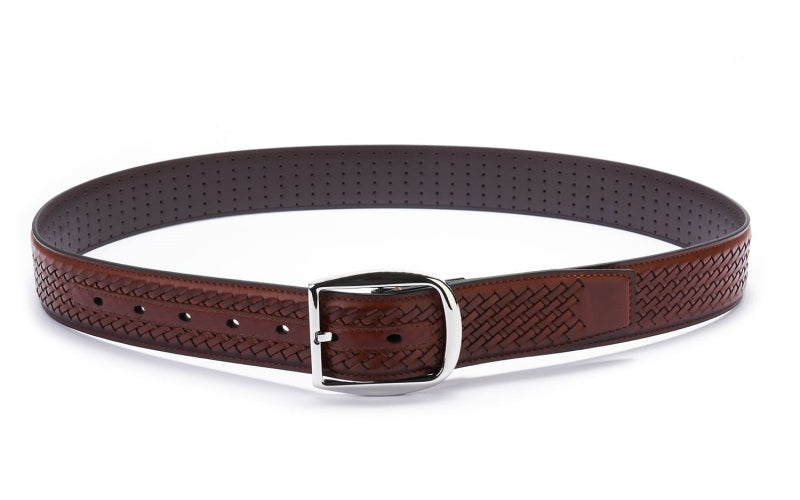
Spring/Summer weddings: Lighter browns, cognac, and tan work beautifully with linen and lighter fabrics. A woven or braided belt pairs naturally with a relaxed outdoor ceremony.
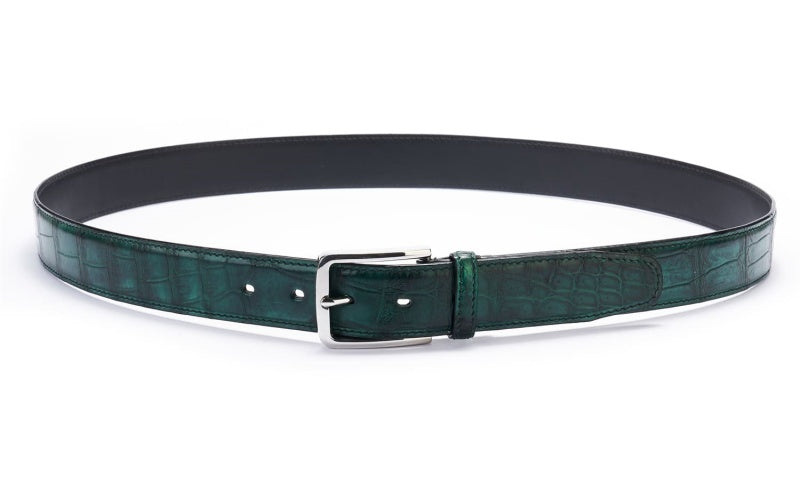
Fall/Winter weddings: Dark brown, espresso, burgundy, and black dominate. Richer leather tones complement heavier fabrics like wool and tweed. A polished espresso leather belt with a charcoal wool suit is a sharp cold-weather combination.
According to The Knot's 2025 wedding trends report, outdoor and destination weddings now account for over 40% of ceremonies — meaning lighter, more flexible belt options are increasingly appropriate.
The Bottom Line
Matching a belt with your wedding outfit comes down to three rules: match the shoes (color and finish), fit the dress code (no belt with a tux, slim belt with a suit), and coordinate your metals. Get those three right and your accessories will look intentional in every photo.
BELTLEY belts are built for exactly this — handcrafted full-grain leather, 316L stainless steel or solid brass hardware, and widths designed for suit loops. Every belt ships free worldwide with a 10-year warranty, and the 30-day return policy means you can order, try it against your suit, and send it back if the color isn't perfect. Browse the dress belt collection and show up to the next wedding looking like you got dressed on purpose.

Frequently Asked Questions
Q: Can you wear a brown belt to a wedding?
Absolutely — brown is appropriate for semi-formal, cocktail, dressy casual, and casual weddings. Match it to brown shoes and pair with navy, gray, or tan suits. The only time to avoid brown is at a black-tie event (where you shouldn't wear a belt at all).
Q: Should you wear a belt or suspenders to a wedding?
For black-tie/formal weddings, wear suspenders — never a belt with a tuxedo. For semi-formal and casual weddings, a belt is the standard choice. Never wear both a belt and suspenders at the same time.
Q: What width belt is best for a wedding suit?
A belt between 1.25 inches (32 mm) and 1.38 inches (35 mm) fits standard suit trouser loops and looks proportional under a jacket. Avoid anything wider than 1.5 inches for formal settings.
Q: Does your belt buckle need to match your watch at a wedding?
Yes — match your belt buckle metal to the dominant metal of your other accessories (watch, cufflinks, tie bar). Silver with silver, gold with gold. Consistent metal tones create a polished, coordinated look in photos.
Q: Can a woman wear a belt to a wedding?
Yes. A slim 1-inch to 1.18-inch belt works well with high-waisted trousers, jumpsuits, and belted dresses at semi-formal and casual weddings. Choose a clean buckle and match the color to your shoes or handbag.
Q: Is a reversible belt appropriate for a wedding?
A high-quality reversible belt with a clean buckle mechanism is fine for semi-formal and casual weddings. Avoid cheap reversible belts where the seam is visible along the edge — that detail photographs poorly at close range.
.%20This%20is%20the%20non-negotiable%20rule%20at%20any%20wedding.%0A%0AWidth%20matters:%201.25%22%E2%80%931.38%22%20for%20suits%20and%20fo...)