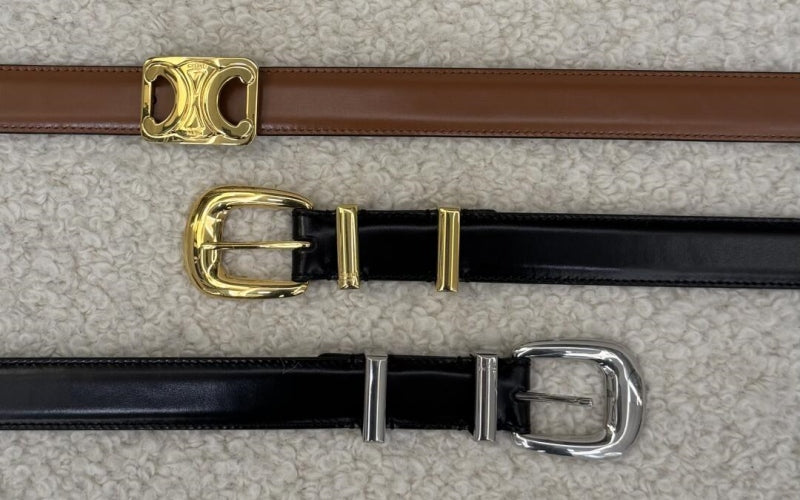
How to Choose the Perfect Belt Color for Your Dress
TL;DR: Quick Answer and main takeaways
- Three approaches work for any dress: match the belt color to the dress (monochromatic), contrast it deliberately, or go neutral and let the dress be the story.
- The belt color decision changes significantly by dress type — a printed dress, a solid-color dress, and an LBD each call for a different approach.
- Shoe-matching still applies in formal contexts; in casual dress styling, the belt can follow the dress palette instead.

A belt on a dress does something a belt on trousers rarely needs to do: it actively changes the silhouette. It creates a waist where there wasn't one, divides a column shape into top and bottom, and can shift a casual dress into something more intentional. The color you choose either reinforces that effect or fights it.
The decision is simpler than most style guides make it. You're really making one choice — do you want the belt to blend into the dress, accent it, or stand as its own element? Everything else follows from that. BELTLEY's women's belt collection covers the full color range, including full-grain neutrals and statement shades across every width.

What Color Belt Goes with a Dress?
The answer depends on the dress — but the three universal approaches are: match the belt to the dress color (monochromatic), choose a neutral that doesn't compete (black, tan, cognac), or pick a color from within the dress that the belt can pull forward. Any of these three produces a coherent result. What doesn't work is a random belt color with no relationship to what the dress is doing. As Cedar & Lily Clothier's guide to wearing belts with dresses notes, the belt's job on a dress is to add definition — and color coherence is what makes that definition look intentional rather than accidental.
The fastest decision framework: look at the dress first. If it's a solid color, you have three clean options. If it's a print, there are colors already in the fabric — use one. If it's neutral (black, white, cream), almost any belt color works, so you can choose for effect.

Belt Color by Dress Type
This is where most guides go wrong — giving generic advice when the right answer changes completely depending on what kind of dress you're working with.
Little Black Dress (LBD)
The LBD is the most forgiving canvas for belt color because black is a true neutral that accepts everything. Your choices in order of versatility:
A black belt on a black dress creates a clean, elongating monochrome effect — the waist is defined without breaking the color story. A tan or cognac leather belt introduces warm contrast that reads casual and natural. A bold color — red, white, cobalt, burgundy — turns the belt into a deliberate accent piece and makes the LBD feel more dressed-up or playful depending on the color. Metallics (gold, silver) lean formal and work for evening wear.
The only belt that genuinely doesn't work on a black dress: medium grey or navy, which read as near-black mismatches rather than intentional contrast.
Solid-Color Dress (non-black)
A dress in a single clear color — cobalt blue, olive green, dusty rose, burnt orange, cream — gives you the most creative belt latitude of any dress type.
Match the belt to the dress: a camel belt on a camel-colored dress, a tan belt on a cream dress. This creates an elongating, tonal look. Contrast with a neutral: a black belt on a red dress is strong and graphic; a tan belt on a green dress is warm and earthy. Accent with a complementary color: warm cognac against dusty blue works because the undertones harmonize rather than clash.
The one rule for solid-color dresses: Buckle My Belt's women's belt guide identifies this clearly — avoid a belt color that's almost but not quite the dress color. A slightly-off match reads as a mistake, not a choice. Either match it closely or contrast it clearly.
Floral or Printed Dress
The dress already has multiple colors in it — use them. The most effective approach is to pull one of the secondary or accent colors from the print and match the belt to that shade. A floral with navy, white, and soft yellow accents? A navy belt anchors the print. A yellow or tan belt brings out the warmth in the flowers.
A simpler but still effective approach: a neutral belt (tan, brown, or black) that appears somewhere in the pattern. This always reads as intentional because the color is already present in the fabric.
What to avoid: a belt in a color that doesn't appear in the print at all, especially if it's a bold color. The belt will look like it belongs to a different outfit.
Note on wrap dresses specifically: many floral wrap dresses have a built-in sash or tie as part of the design. If that's the case, an additional belt creates visual competition rather than definition — let the dress do what it was designed to do.
White or Cream Dress
White and cream dresses are the belt's best showcase because the pale fabric lets the belt's color read cleanly. Tan and cognac leather are the most natural choice — warm leather against white creates a relaxed, sun-warmed look that's hard to get wrong. A black belt on a white dress is graphic and clean, stronger in formal or structured contexts. A metallic gold belt against white or cream is an evening option that sits naturally without looking costume-y.
Avoid cool grey or navy belts against white and cream — the contrast is harsh rather than clean.
Maxi Dress
The maxi dress creates a different proportion challenge — the belt is covering a small fraction of a lot of fabric, so its color needs to either blend naturally or make a very clear statement. Boho Via's guide to belts with long dresses recommends that with a maxi, the belt color should either match the dress closely (same family) or be significantly different (clear contrast). The visual midpoint — close but not matching — reads poorly on a long silhouette because the eye has more fabric to compare it against.
For casual maxi dresses in earthy or boho palettes, cognac and tan leather are natural partners. For flowy solid-color maxis, a statement belt in the dress's complementary color creates beautiful effect.

Should the Belt Match the Shoes When Wearing a Dress?
In formal contexts, yes — coordinating belt and shoes in the same leather family (both black, or both brown) produces the most polished result. In casual dress styling, the belt can follow the dress palette instead, with more flexibility than in trouser or suit dressing.
The reason women's dress styling is more flexible than men's suit styling on this point is proportional: on a dressed outfit, the shoes are often partially covered by the hem, the dress fabric dominates the visual field, and the belt's relationship to the dress matters more than its relationship to shoes seen only at the ankle.
Permanent Style's belt styling guide makes the same distinction: in professional or dressed-up contexts, keep the leather accessories coordinated. In casual everyday dressing, the belt earns more independence and can respond to the overall outfit palette rather than just the footwear.
The practical shortcut: if you can see a lot of shoe (strappy sandal, open-toe mule, low-cut flat), shoe-belt coordination matters more. If the shoe is partially hidden or minimal (ankle boot under a midi, flat under a maxi), the belt has more freedom.
For more on belt color decisions across outfit types — not just dresses — our Belt Color 101 for women covers the full framework including seasonal color logic and the neutral-foundation approach.

When to Match vs. When to Contrast
This is the real decision underneath every belt color choice. Here's when each approach works best:
Match (monochromatic): When you want the dress to read as one clean silhouette. When the dress fabric or cut is the focal point. When the occasion is formal or the look is deliberately minimal. A same-color belt disappears into the outfit — it adds waist definition without adding visual noise.
Contrast (deliberate): When you want the belt to be a statement element. When the dress is simple and can absorb a color accent. When you're using the belt to introduce warmth (cognac on a cool-toned dress) or graphic energy (black on white). Contrast only works when it's decisive — a slightly different shade reads as a mismatch, not a contrast.
Neutral fallback: When you're not sure, or when the dress is doing a lot on its own (complex print, dramatic cut, bold color). A neutral belt — tan, cognac, or black depending on the dress's color temperature — always reads as intentional because it doesn't compete.
For occasions when a bold belt IS the point — a statement piece that transforms a simple dress — our post on what is a statement belt for dresses goes deeper on how to use a belt as a deliberate focal point. And for the width decision — which also significantly changes the effect — our thin vs. thick belt with a dress guide covers the proportions.

What Belt Colors Work Best in 2026?
Cognac and warm tan are the strongest performing neutral shades in 2026, driven by an overall fashion direction toward warm earthy tones and natural leather. Deep forest green and burgundy have emerged as the most compelling belt accent colors — both pair naturally with the warm neutral dress palette that's dominated this year.
For 2026 specifically, the Pantone Color of the Year — Mocha Mousse, a warm brown-beige tone — has anchored a broader trend toward warm leather accessories. Cognac and espresso leather belts align directly with this palette and have seen increased pairing with everything from cream dresses to olive and terracotta. For bolder choices, deep burgundy and oxblood belts are working particularly well against the season's earthy and warm-neutral dress colors.
Metallics remain strong for evening and statement wear: gold with warm dress tones (cream, ivory, camel, olive), silver with cooler or pastel shades (grey, lavender, soft blue). Both work on the LBD in formal contexts.
BELTLEY's belt color collection covers every shade discussed above — all in full-grain leather handcrafted since 1999, with hardware that won't tarnish and construction backed by a 10-year warranty. Whether you're building from a neutral foundation or adding a statement accent, the goal is the same: buy it once, wear it for years.

The Bottom Line
Choosing the perfect belt color for a dress comes down to three questions: what type of dress is it (solid, print, LBD, maxi, wrap), what effect do you want the belt to produce (blend, contrast, or neutral), and what's the formality level (determines how closely shoe-belt coordination applies). Answer those three and the right color is obvious.
The foundation colors — black, cognac, and tan — handle the majority of dress situations without overthinking. From there, picking up an accent color from a printed dress or adding a statement burgundy or white belt to a simple solid dress extends your range considerably. Browse belts with dresses for 2026 styling inspiration, or explore the full women's collection to find the right color and width for what's currently in your wardrobe.
Frequently Asked Questions
Q: What color belt should I wear with a dress?
Start with the dress type. For a solid-color dress, match the belt closely or contrast it clearly — avoid the ambiguous middle. For a printed dress, match one of the accent colors in the print. For a black dress, anything from black to cognac to bold accents works. Tan and cognac are the safest universal choices when you're uncertain.
Q: What color belt goes with a floral dress?
Match the belt to one of the secondary or accent colors in the print — not the dominant color. If the floral has navy, cream, and dusty rose, a navy or dusty rose belt both work. A tan or brown neutral that appears anywhere in the print is also always safe. Avoid bold colors that don't appear in the pattern at all.
Q: What color belt looks best with a white dress?
Tan and cognac leather are the most natural choice against white — warm leather on a pale dress creates a relaxed, effortless look. Black provides clean, graphic contrast for more structured contexts. Metallic gold works for evening wear. Avoid cool grey or navy, which look harsh against white rather than deliberately contrasting.
Q: Should my belt match my shoes when wearing a dress?
In formal settings, yes — coordinating belt and shoe in the same leather family (both black or both brown/tan) gives the most polished result. In casual dress styling, the belt can respond to the dress palette rather than the shoes, especially when the shoe is minimal or partially hidden by the hem.
Q: Can you wear a brown belt with a black dress?
Yes — a dark cognac or espresso brown belt against a black dress creates warm, natural contrast that works well in casual and smart-casual contexts. Choose a rich dark brown rather than light tan, which has too much contrast against black. For formal events, a black belt is still the cleaner choice.
,%20contrast%20it%20deliberately,%20or%20go%20neutral%20and%20let%20the%20dress%20be%20the%20stor...)