First Leather Belt: The Buying Guide for Young Adults
TL;DR:
- Look for "full-grain leather" specifically — anything labeled just "leather" or "genuine leather" is a lower grade that peels within months and needs replacing
- 35mm width is the answer for a first belt: fits both dress trouser loops and jeans, the only width that does both cleanly
- Add 2 inches to trouser waist for belt size; match the color to your most-worn shoes — black or dark brown covers the widest range
So you need a real belt. Maybe you just got a job that requires looking like an adult. Maybe you showed up to something important wearing a canvas belt and someone gave you a look. Maybe you genuinely just never bought one and now you're Googling it.
Whatever brought you here — welcome. This guide is written for someone who knows nothing about leather belts and wants to know enough to buy the right one and stop thinking about it.
First Real Belt: The 30-Second Spec
Everything below the table explains; this just decides:
| Your situation | Go with |
|---|---|
| First job, office-bound | Black full-grain, 35mm, plain buckle — interview through promotion. |
| College casual life | Dark brown 35mm — jeans-first but cleans up for presentations. |
| Budget under $70 | Entirely doable: BELTLEY's full-grain starts at $58 — full-grain at this price is the whole DTC point. |
| Don't know your size | Trouser waist + 2 inches. A 32 wears a 34. Write it down. |
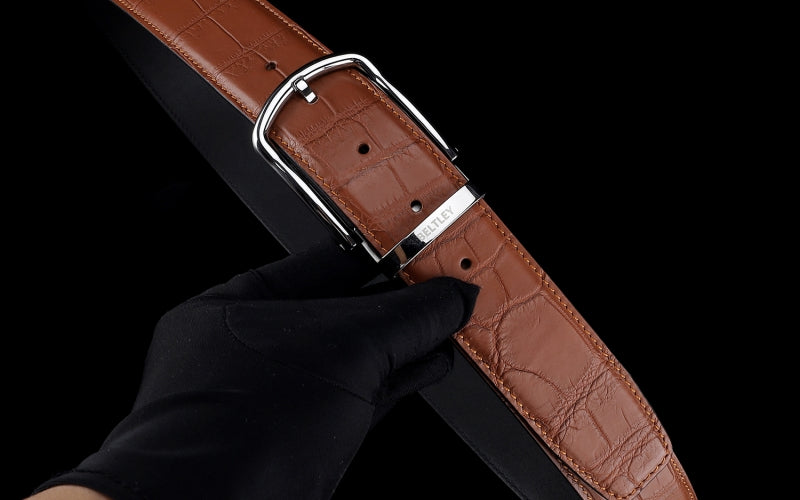
Your first real belt: BELTLEY full-grain, 10-year warranty — likely the last "first belt" you'll need.
Start Here: What Actually Is a "Real" Leather Belt?
Not all leather is the same, and the label "genuine leather" on a belt tag is — annoyingly — not the good one.

Here's the quick version:
Full-grain leather = the real deal. Cut from the outermost layer of the hide. Dense, durable, develops a patina (a natural shine that improves over time). This is the leather that gets better with age and doesn't peel.
Genuine leather = marketing for lower-quality leather. Made from the leftover layers after the full-grain is cut off, bonded together, and coated with artificial finish to look nice. It usually does look nice — for about six months, then it peels. Every time.
Bonded/PU leather = mostly not leather. Scraps bonded with polyurethane. Avoid.
When you buy your first leather belt, look for "full-grain" specifically. If the product just says "leather" or "genuine leather," it's probably not worth buying. Full-grain vs. genuine leather — the full explanation if you want to go deeper.
BELTLEY's belts are all full-grain. We've been making them since 1999 and back every belt with a 10-year warranty. That warranty only makes sense if the leather actually lasts — which is the point.
What Color Should Your First Belt Be?
Two options, and honestly both are correct:

Black — goes with black shoes, charcoal suits, formal occasions, job interviews. The "I need to look correct" belt.
Brown — goes with brown/tan shoes, blue and grey everything, casual and smart-casual outfits. The "I wear this most days" belt. Medium-to-dark brown is the most versatile shade.
If you can only buy one: buy the color that matches the shoes you wear most often. That's the whole rule. Don't wear a brown belt with black shoes or vice versa — it's the most visible matching error in men's fashion. What color belt goes with everything? — the full breakdown if your shoe collection is complicated.
What Width Belt Should You Get?
Belt width is measured in millimeters and matters more than you'd expect.
- 32–35mm: Dress belt width. Goes with suit pants and formal trousers. Fits through the narrower loops on dress pants.
- 35–38mm: Casual belt width. Goes with jeans, chinos, khakis.
- 38mm+: Workwear and outdoor. Not for professional or formal wear.
For your first belt, 35mm is the answer. It sits in the middle, works with both dress trousers and jeans, and covers everything until you figure out exactly what you need. Belt width explained for every outfit — if you want to understand the why.
What Size Belt Should You Buy?
Belt size ≠ trouser size. This surprises almost everyone their first time.

Add 2 inches to your trouser waist size. Wear 32" pants? Buy a 34" belt. Wear 34" pants? Buy a 36" belt.
Belt size is measured from the buckle pin to the center hole — not the total length. When a belt fits correctly, the tip should end up in the second or third belt loop with the pin in the middle hole of the five. Too long looks sloppy; too short can't close. If you're unsure: BELTLEY's size guide — takes two minutes.
What Buckle Should You Get?
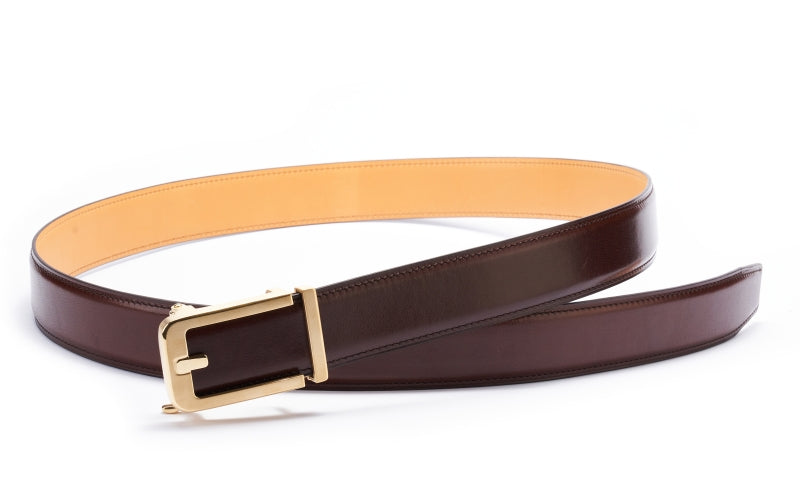
For your first belt: simple rectangular metal buckle, silver or gold finish.

That's it. No logo. No novelty shapes. No oversized Western buckle unless you're specifically building that aesthetic. A simple flat buckle matches everything, looks right in formal and casual settings, and doesn't date. Match the metal to your watch if you have one (silver watch = silver buckle, gold watch = gold buckle).
How Much Should You Spend?
The honest range for a quality first leather belt is $80–$150.

Under $50 almost always means genuine leather, which means you'll replace it within two years. $150+ gets you into full-grain territory from brands that have thought carefully about construction.
The math: $120 belt lasting 10 years = $12/year. $40 belt replaced every 18 months = $32/year. The expensive belt is cheaper. According to Ape to Gentleman's men's belt buying guide, a leather belt is consistently one of the best cost-per-wear investments available in men's fashion — the case for spending more up front is airtight.
The Bottom Line
Full-grain leather. Black or brown (match your shoes). 35mm for general use. Simple buckle. Add 2 inches to your pant size for sizing.
That's your first belt. Browse full-grain leather belts at BELTLEY — free worldwide shipping, 30-day returns, and a 10-year warranty means your first "real" belt purchase is completely risk-free.
Frequently Asked Questions
Q: What should I look for when buying my first leather belt?
Full-grain leather (not "genuine leather"), a width of 35mm for general use, a simple rectangular buckle, and a color that matches your most-worn shoes. Avoid anything labeled just "leather" or "genuine leather" — these are lower grades that peel within a year or two.
Q: What size belt should I buy for my first leather belt?
Add 2 inches to your trouser waist size. If you wear 32" pants, buy a 34" belt. Belt size is measured from the buckle pin to the center hole, not the total length.
Q: Is full-grain leather worth the extra cost for a first belt?
Yes. Full-grain leather doesn't peel or crack under normal wear — a quality belt lasts 10+ years, making it cheaper per year than replacing cheap belts annually. It's the only leather grade that improves with age.
Q: What color belt should a young adult buy first?
Buy the color that matches the shoes you wear most. Black for black shoes (formal contexts), brown for tan/brown shoes (casual and everyday). If you can only own one, dark brown covers the most daily-wear situations.