Does Wearing a Belt Make Your Waist Look Smaller? (Style Hacks)
TL;DR: Quick Answer
- A belt won't physically reduce your waist size, but it can create a visual illusion of a smaller waist when worn correctly.
- The slimming effect depends on belt width, placement, color, and your body type — there's no one-size-fits-all rule.
- Wearing a belt wrong (too tight, wrong width, wrong position) can actually make your midsection look wider, not slimmer.

You've probably heard the classic styling advice: "Just throw on a belt." But does wearing a belt make your waist look smaller — or is that just a fashion myth? The answer is more nuanced than a simple yes or no, and it has a lot to do with how your eye processes visual information. Whether you're choosing a women's leather belt or a men's dress belt, the way you wear it matters more than the belt itself.
Here's the full breakdown — backed by visual science and real-world styling principles.

Does a Belt Actually Make Your Waist Smaller?
No. A belt does not physically shrink your waist. It's not a corset, and it's not a waist trainer. Tightening a belt compresses soft tissue temporarily, but Harvard Health confirms that wearing or not wearing a belt has no measurable impact on waist circumference over time.
What a belt can do is create the optical illusion of a narrower waist. And that illusion, when done right, is surprisingly effective.
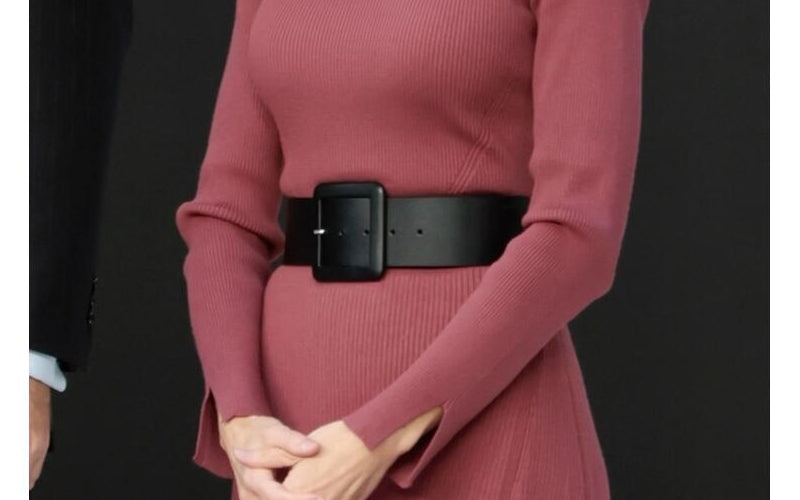
The human brain processes shapes by scanning for contrast, horizontal lines, and break points. A belt creates a distinct horizontal line across your torso. That line signals to the eye: "this is the narrowest point." The brain then perceives everything above and below that line as proportionally wider — and suddenly, you look like you have more of an hourglass shape.
This is rooted in Gestalt principles of visual perception, the same psychology behind why vertical stripes make you look taller and dark colors make you look slimmer. It's not magic — it's just how our brains are wired.

What Width Belt Is Most Slimming?
A belt that's roughly one-quarter to one-third the distance between your waist and bust line will create the most balanced, slimming proportion. For most people, this translates to a belt width between 1 inch and 1.5 inches (25mm–38mm).
But the right width depends heavily on your frame:
| Body Frame | Best Belt Width | Why |
|---|---|---|
| Petite / short torso | 1"–1.25" (25–32mm) | A wide belt can visually cut a short torso in half, making you look shorter |
| Average frame | 1.25"–1.38" (32–35mm) | Enough visual weight to define the waist without overwhelming the silhouette |
| Tall / long torso | 1.38"–1.5" (35–38mm) | A wider belt shortens a long torso and creates stronger waist definition |
| Plus-size | 1.25"–1.5" (32–38mm) | Proportional width; ultra-thin belts can disappear or create an unflattering "cut" |
Style consultant Imogen Lamport of Inside Out Style has demonstrated that overly wide belts (2 inches or more) on shorter frames compress the visual torso length, while extremely thin belts on larger frames can accentuate width rather than define shape.
Our 1.38" (35mm) dress belts sit in the sweet spot for most body types — wide enough to make a visual statement, slim enough to stay proportional.

Where Should You Place a Belt to Look Slimmer?
Position your belt at the narrowest part of your torso — typically just above the navel, at your natural waistline. This is the point where your ribcage begins to flare outward above and your hips flare outward below, creating maximum contrast.
A belt placed too low (on the hips) won't create any waist definition. A belt placed too high (at the ribcage) can look costume-like and uncomfortable.
Here's a quick placement test: stand straight, bend sideways, and notice where your torso creases. That crease point is your natural waist — and exactly where your belt should sit for the slimmest effect.
For women specifically, AARP's styling guide recommends positioning the belt a half-inch to one inch above your actual waistline for an even more dramatic hourglass silhouette. This trick works especially well over dresses and blouses.
Want more placement tips? Our guide on how to wear a belt to hide your tummy covers specific techniques for women.

Does Belt Color Affect the Slimming Illusion?
Yes — and most people get this wrong. A belt that matches your outfit creates a seamless vertical line, keeping the eye moving up and down without interruption. This makes you look taller and slimmer overall.
A belt that contrasts your outfit (black belt on a white dress, for example) draws the eye horizontally to your waist. That's great if your waist is genuinely your narrowest point and you want to highlight it. But if you carry weight around your midsection, a high-contrast belt acts like a spotlight on the area you'd rather minimize.
The rule of thumb:
- Match your belt to your outfit for an elongating, slimming effect
- Contrast your belt only if you want to draw attention to a defined waist
- Dark belts on dark clothing = maximum slimming power
- Matte finishes recede visually; glossy or patent finishes reflect light and add visual volume
At BELTLEY, our black leather belts and espresso leather belts are the most versatile for tonal dressing — they blend with most wardrobes while creating that seamless slimming line.
Can a Belt Create an Hourglass Figure?
A belt alone can create the appearance of an hourglass figure if you pair it with the right garment. The belt defines the waist, while the garment provides volume above and below. Together, they simulate the hourglass ratio that the brain reads as "slim waist."
The best garments to belt for this effect:
- A-line dresses — natural flare below the belt creates hip volume
- Shirt dresses — cinching at the waist transforms a boxy shape into curves
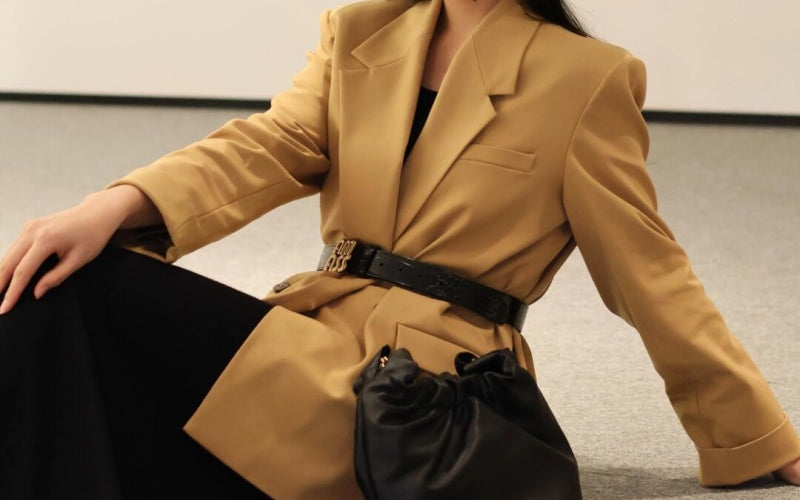
- Blazers and cardigans — belted over a jacket creates structured shoulder width above and hip drape below
- Wrap dresses — already designed to cinch, a belt reinforces the effect
The worst garments to belt if you want to look slimmer:
- Bodycon/tight clothing — a belt over something already skin-tight creates a "squeeze" effect
- Cropped tops — no fabric to gather, so the belt just sits flat without creating shape
- Very thick or bulky sweaters — the belt creates bunching that adds, not subtracts, visual volume
For more on this, check our guide on choosing thin or thick belts with a dress.

Should You Wear a Belt If You Have a Big Stomach?
You absolutely can — but technique matters. The key is to avoid wearing the belt too tight. A belt that digs into flesh creates the "muffin top" effect, where skin and fabric bulge above and below the belt line. That makes your midsection look bigger, not smaller.
Instead:
- Wear the belt at your natural waist, even if that's above your belly
- Choose a medium width (1.25"–1.38") — too thin disappears, too wide compresses
- Keep it slightly loose — it should define your waist, not constrict it
- Layer strategically — wear the belt over a structured jacket or cardigan, not directly over a thin shirt
A study published in the Journal of Physiological Anthropology found that wearing belts too tightly can increase intra-abdominal pressure and contribute to acid reflux — so there's a health reason not to overtighten, too.
We have a full guide on how to wear a belt when you have a belly with specific tips for both men and women.
Do Wide Belts Make You Look Thinner?
Wide belts (1.5 inches or more) can make you look thinner if you have a long torso and a defined natural waist. The extra width covers more of the midsection, creating a "corset" effect that visually compresses the waist area.
But wide belts backfire on shorter torsos. They eat up too much vertical space, making your torso look stubby and your legs look shorter. On undefined waists, a wide belt can emphasize the lack of curves rather than creating them.
For a deeper breakdown by body type, read do wide belts make you look thinner — we cover every scenario with specific recommendations.

The Bottom Line
Does wearing a belt make your waist look smaller? Not physically — but visually, yes, when you get the width, placement, and color right. A well-chosen belt at your natural waist creates a horizontal break point that tricks the eye into perceiving an hourglass silhouette. The wrong belt (too tight, too wide, wrong position) does the opposite.
The most flattering approach: pick a belt between 1" and 1.5" wide, match it to your outfit for a seamless line, position it at your natural waist, and keep it comfortably snug — not tight.