Does a Tight Belt Cause Bloating or Digestion Problems?
Quick answer: A tight belt doesn't cause bloating, but it can make existing bloating more uncomfortable and may aggravate digestion by compressing a full stomach and intestines. Squeezing the abdomen raises internal pressure, which can worsen trapped gas, reflux, and that overfull feeling after meals. A belt worn at a comfortable, non-constricting tension avoids the problem.
Last updated: June 2026 • By BELTLEY Editorial
TL;DR:
- A tight belt doesn't create gas, but it worsens the discomfort of bloating.
- Compressing a full abdomen raises pressure, aggravating gas, reflux, and fullness.
- A belt suddenly feeling tight can also be a bloating or weight-change signal.
- Fix it by wearing the belt comfortably and loosening a notch after meals.
We've all felt it: a belt that was fine in the morning feels like a vice after a big lunch. Whether that tight belt is actually harming your digestion — or just reminding you that you're bloated — is a fair question. The answer hinges on abdominal pressure and a full gut. This guide separates the real mechanism from the myth and gives you simple ways to stay comfortable. It complements our wider look at the side effects of wearing a tight belt.

Belt Comfort Fixes by Symptom
If your belt and your stomach are arguing:
| Your situation | Go with |
|---|---|
| Uncomfortable after meals | Loosen a notch when eating — or wear a ratchet belt that adjusts in 6mm steps. |
| Reflux flare-ups at your desk | Two-finger tension rule, belt at the natural waist — compression is aggravating it. |
| Belt comfortable standing, tight sitting | Normal anatomy — size to your seated waist if you sit all day. |
| A belt that's suddenly tight for weeks | That's a body signal, not a belt problem — worth a doctor's visit, not a new hole. |
Micro-adjustable comfort: ratchet options in BELTLEY's men's collection.
Can a tight belt cause bloating?
A tight belt doesn't cause bloating, but it makes it feel worse and can aggravate the underlying discomfort. Bloating comes from gas, air, or fluid building up in the digestive tract. A tight belt compresses that already-distended abdomen, increasing pressure and discomfort, but it isn't producing the gas itself.

The distinction matters. As the reference on bloating explains, abdominal bloating is "an excess buildup of gas, air or fluids in the stomach" — a digestive event, not a clothing one. Cleveland Clinic's overview of a bloated stomach describes it as a "feeling of tightness, pressure or fullness in your belly" driven mostly by excess gas and fluid — again, something the gut produces, not the waistband. Your belt didn't put the gas there. What it can do is squeeze the area where that gas is trapped, turning mild bloating into a genuinely uncomfortable, pressured feeling. So the belt is an aggravator, not a cause. Relieve the external squeeze and you relieve much of the discomfort, even though the bloating itself runs its course independently.
How does a tight belt affect digestion?
By raising intra-abdominal pressure on a full stomach and intestines. That pressure can push stomach contents upward (worsening reflux), make trapped gas more uncomfortable, and contribute to an overfull, sluggish sensation after eating. It doesn't "stop" digestion, but the mechanical compression can make the whole process feel worse.

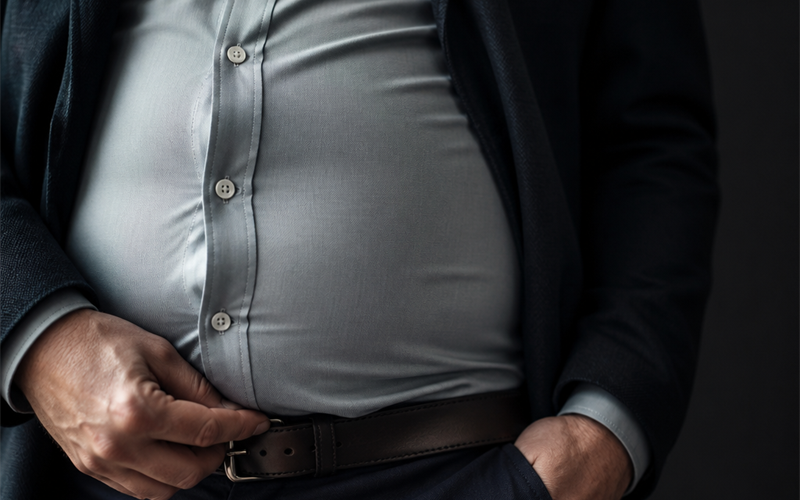
Key stat: A belt that fastens comfortably in the morning but feels tight by evening often reflects normal daily abdominal distension — the gut can expand noticeably after meals and across the day, which is exactly when over-tightening causes the most discomfort.
The body naturally expands and contracts around the midsection throughout the day, peaking after meals. A belt cinched for your empty-stomach morning waist becomes a constriction by dinner. This is the same abdominal-pressure mechanism behind belt-related reflux, covered in our piece on whether a belt can cause acid reflux. None of this requires a special belt — it requires not over-tightening one. A comfortably fitted belt leaves room for normal post-meal expansion, which is why we emphasize fit in how should a belt fit on a man.
Is a belt suddenly feeling tight a warning sign?
It can be. A belt that's gotten noticeably tighter over weeks may signal weight gain or fluid retention, while one that's tight only after meals usually reflects normal post-eating bloating. Persistent, unexplained abdominal swelling that keeps your belt tight is worth mentioning to a doctor.

The belt makes a handy, honest gauge. Here's how to read it:
| Belt feels tight... | Likely meaning |
|---|---|
| Only after large meals | Normal post-meal bloating |
| Gradually over weeks/months | Weight gain or fluid retention |
| Suddenly and persistently | Worth a medical check |
| Late in the day, eases overnight | Normal daily distension |
Using a belt with closely spaced holes or a ratchet micro-adjust lets you track and accommodate these changes without discomfort — you can simply move a notch rather than enduring a too-tight fit. Our ratchet buckle belts adjust in small steps for exactly this reason. If the tightness is sudden, severe, or paired with other symptoms, treat the belt as a warning gauge and see a professional rather than just loosening it.
How do you wear a belt to avoid bloating discomfort?
Wear it at a relaxed tension — snug enough to hold your trousers, loose enough that your stomach can expand after eating — and loosen a notch after a big meal. Sit upright, choose a belt you can adjust precisely, and size it so the everyday hole isn't already pulling tight on an empty stomach.

The practical guidance is forgiving. Leave room for two fingers between belt and waist; if there's no room on an empty stomach, you'll be miserable after dinner. After a heavy meal, dropping one notch removes most of the pressure. Precise adjustability is the real comfort feature here, so you're never stuck between holes — and sizing correctly from the start, as in how do I know what size men's belt to buy, keeps the daily fit comfortable. A belt should accommodate your body's normal rhythms, not fight them.
The Bottom Line
A tight belt doesn't cause bloating — gas, air, and fluid in your gut do that — but it absolutely makes bloating more uncomfortable and can aggravate digestion by compressing a full, distended abdomen. The belt is best thought of as a gauge and an aggravator: read it honestly, and wear it loosely enough to leave room for normal post-meal expansion. At BELTLEY, we design belts to hold your trousers and then get out of your way, with precise adjustment so comfort never depends on the gap between two holes. Explore comfortable, finely adjustable options in our men's belts and ratchet buckle belts collections.
Frequently Asked Questions
Q: Can wearing a tight belt make you bloated?
A tight belt doesn't create bloating, but it makes existing bloating feel much worse by compressing your already-distended abdomen and raising internal pressure. The gas or fluid causing the bloating comes from digestion, not the belt — the belt just squeezes the uncomfortable area.
Q: Why does my belt feel tighter after eating?
Because your stomach and intestines expand as they fill and digest food, so your waist measurement genuinely increases after a meal. A belt sized for your empty-stomach waist then feels tight. Loosening a notch after eating relieves this normal post-meal expansion.
Q: Is a tight belt bad for digestion?
A tight belt can aggravate digestion by raising abdominal pressure, which may worsen reflux, trapped gas, and an overfull feeling. It doesn't stop digestion, but the mechanical compression makes the process more uncomfortable. A comfortably fitted belt avoids this.
Q: Should I be worried if my belt keeps getting tighter?
If your belt tightens only after meals, that's normal bloating. If it's gradually tighter over weeks, it may reflect weight gain or fluid retention. Sudden, persistent, or severe abdominal swelling that keeps your belt tight is worth discussing with a doctor.