Can a Belt Cause or Worsen a Hernia?
Quick answer: A normal belt doesn't cause a hernia, but a very tight belt can raise pressure inside the abdomen, which may aggravate an existing hernia or its symptoms. A belt is also not a treatment — a hernia support is a medical device (a truss), not a fashion belt. If you have or suspect a hernia, wear any belt loosely and see a doctor; don't rely on a belt to hold it in.
Last updated: June 2026 • By BELTLEY Editorial
TL;DR:
- A regular belt doesn't cause hernias; they form from a weak spot plus abdominal pressure.
- A very tight belt can raise abdominal pressure and aggravate an existing hernia.
- A fashion belt is not a hernia treatment — that's a medical truss, used under guidance.
- With a known or suspected hernia, wear belts loosely and consult a doctor.
Hernias and belts both involve the abdomen, so it's natural to wonder whether your belt is helping, hurting, or causing one. The short version is that belts don't create hernias, but tightness and abdominal pressure are part of the hernia story — and a regular belt should never be mistaken for a medical support. This guide explains the mechanism clearly and how to wear a belt sensibly if a hernia is a concern. For related fit issues, see our overview of the side effects of wearing a tight belt.

Hernia and Belt: The Practical Rules
Conservative guidance, situation by situation:
| Your situation | Go with |
|---|---|
| No hernia, just cautious | Normal belts at comfortable tension pose no causal risk — wear on. |
| Diagnosed hernia | Loose tension only, and follow your doctor's guidance — the belt is neutral, the pressure isn't. |
| Tempted to "support" it with a tight belt | Don't — a fashion belt is not a truss; medical devices exist for that job. |
| Post-surgery return to belts | Surgeon's timeline first; soft, wider straps at gentle tension when cleared. |
Comfortable-tension options: BELTLEY's men's collection.
Can wearing a belt cause a hernia?
No, a normal belt doesn't cause a hernia. Hernias form when an organ or tissue pushes through a weak spot in the abdominal wall, driven by raised pressure inside the abdomen. A typical belt worn at a normal tension doesn't create that weakness or generate the kind of pressure that causes hernias — straining, heavy lifting, and chronic coughing do.

The cause lies inside, not at your waistband. The reference on hernia explains that "conditions that increase the pressure of the abdominal cavity may also cause hernias or worsen the existing ones." Cleveland Clinic's hernia overview lists the real culprits as straining, heavy lifting, chronic coughing, and constipation — the internal pressure-raisers, not the gentle, external snugness of a belt holding up your trousers. So you can wear a belt without fear of causing a hernia, as long as you're not wearing it so brutally tight that it adds meaningful abdominal pressure all day.
Can a tight belt make an existing hernia worse?
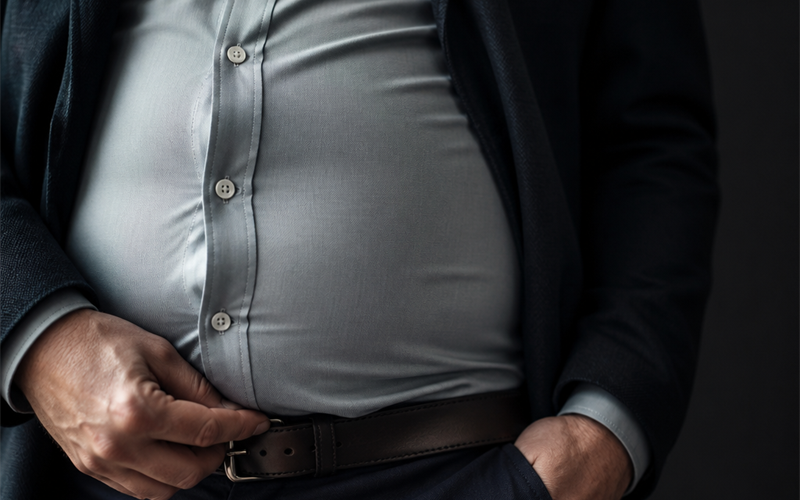
It can. A very tight belt increases pressure inside the abdomen, and since that pressure is what pushes tissue through a hernia, an over-tight belt may aggravate an existing hernia or make it more uncomfortable or visible. It won't typically worsen a hernia worn at a normal, comfortable tension.

Key stat: The same factor that helps form hernias — raised intra-abdominal pressure — is what can aggravate an existing one, which is why medical guidance focuses on reducing pressure (avoiding straining, heavy lifting, and excessive constriction) rather than the belt itself.
The key word is "tight." A belt at a sensible tension adds negligible abdominal pressure; a belt cranked hard over the midsection adds more, and for someone with a hernia that's the wrong direction. This is the same intra-abdominal pressure logic behind belt-related reflux and aggravated bloating — over-tightening is the common thread. If you have a hernia, the simplest, safest move is to wear belts loosely and let a comfortable fit, not constriction, hold your trousers. Choosing a correctly sized belt makes that effortless, as covered in how should a belt fit on a man.
Is a belt the same as a hernia support?
No. A hernia support, or truss, is a medical device specifically designed to apply gentle, controlled pressure over a hernia to keep it in place — and it should only be used under a doctor's guidance. A fashion or dress belt is not a truss, isn't designed for that purpose, and shouldn't be used to manage a hernia.

This is an important safety distinction. People sometimes assume a tight belt can "hold a hernia in," but that's not how it works — and trying to do so can apply pressure in the wrong place or mask a problem that needs medical attention. Here's the difference:
| Fashion/dress belt | Hernia truss (medical) |
|---|---|
| Holds up trousers | Supports a specific hernia |
| Worn at the waist | Positioned over the hernia site |
| No medical design | Designed with a doctor's input |
| Not a treatment | Used under medical guidance |
If you need support for a hernia, that's a conversation with a healthcare professional, not a job for your leather belt. A regular belt's role is simple and unchanged: hold your trousers comfortably. The two should never be confused.
How should you wear a belt if you have a hernia?
Wear it loosely and comfortably — snug enough to hold your trousers, never tight enough to compress your abdomen. Avoid cinching over the hernia site, choose a belt you can adjust in small increments, and follow your doctor's advice on activity and support. Don't use a regular belt as a substitute for proper hernia care.

The practical approach is gentleness and precise adjustment. A belt with closely spaced holes or a ratchet micro-adjust lets you find the loosest tension that still holds your trousers, rather than being forced into a tight hole — our ratchet buckle belts work well for this. Position matters too: let the belt sit where it's comfortable and away from any tender area. Above all, treat a hernia as a medical matter. Get the right size from the start — see how do I know what size men's belt to buy — so your everyday belt is comfortable, not constricting.
The Bottom Line
A belt doesn't cause hernias — those come from a weak spot in the abdominal wall plus raised internal pressure from straining and lifting — but a very tight belt can aggravate an existing one by adding to that pressure. Just as importantly, a fashion belt is not a hernia support; a truss is a medical device used under a doctor's guidance. If a hernia is a concern, wear belts loosely, size them comfortably, and get proper medical advice. At BELTLEY, we build belts to hold your trousers comfortably and adjust precisely, so a sensible fit is always within reach. Explore comfortable, finely adjustable options in our men's belts and ratchet buckle belts collections. For any hernia, see a doctor.
Frequently Asked Questions
Q: Can a tight belt give you a hernia?
No. Hernias form from a weak spot in the abdominal wall combined with raised internal pressure from things like heavy lifting, straining, and chronic coughing — not from a belt. A normal belt worn at a comfortable tension doesn't create that pressure, so it won't cause a hernia.
Q: Will a tight belt make my hernia worse?
It can. A very tight belt raises pressure inside the abdomen, and that pressure is what pushes tissue through a hernia, so an over-tight belt may aggravate it or make it more uncomfortable. Wearing a belt at a comfortable, non-constricting tension avoids this.
Q: Can I use a regular belt to hold in a hernia?
No. A regular belt isn't designed to support a hernia and shouldn't be used that way — it can apply pressure in the wrong place and mask a condition that needs care. A hernia support (truss) is a medical device used under a doctor's guidance; a fashion belt is not a substitute.
Q: How should I wear a belt after hernia surgery?
Follow your surgeon's guidance first. Generally, wear any belt loosely and comfortably, avoid compressing the surgical area, and choose a belt you can adjust in small increments so it's never tight. Don't rely on a belt for support — use only what your doctor recommends.