Do Wide Belts Make You Look Thinner? (Detailed Answer and Tips)
TL;DR: Quick Answer
- Yes, wide belts can make you look thinner — but only when positioned at your natural waist (the narrowest point of your torso) and paired with the right outfit.
- The effect works through an optical illusion: a wide belt creates a clear horizontal "break" that defines the waist, visually separating the upper and lower body to suggest an hourglass shape.
- Body type matters — wide belts are most slimming on long torsos and average-to-curvy frames, but can shorten a petite or short-waisted figure.
A belt that actually makes you look slimmer sounds too good to be true — like a fashion cheat code. But there's real visual science behind it. The right wide belt, worn in the right place, manipulates how the eye reads your body's proportions.
The catch? "Wide belt" alone isn't enough. Width, placement, color, and your body's proportions all determine whether the belt flatters or backfires. This guide covers exactly how wide belts create a slimming effect, which body types they work best on, and the specific styling moves that make the difference. For a broader look at whether wearing a belt makes your waist look smaller, we've covered that too.

How Do Wide Belts Create a Slimming Effect?
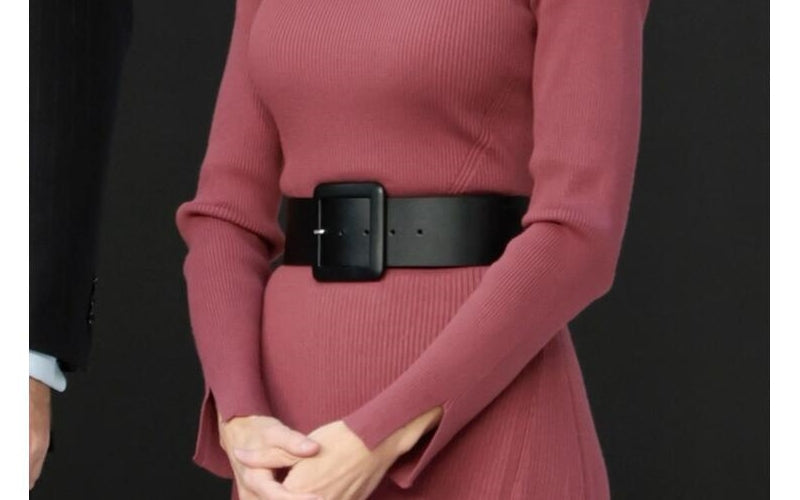
Wide belts create a slimming effect by introducing a strong horizontal line at the narrowest point of the torso, which visually divides the body into two segments and draws the viewer's eye inward toward the waist — producing the illusion of an hourglass shape.
This isn't just fashion theory. Research on optical illusions in clothing design from Auburn University found that horizontal elements placed strategically on the body can alter perceived proportions. The key word is "strategically." A horizontal line at the widest part of your body (hips, for example) makes you look wider. But a horizontal line at the narrowest point — your natural waist — makes the areas above and below it look broader by comparison, creating the appearance of curves even on a straighter frame.
A 2016 study published via ScienceDaily confirmed that garments using optical illusion principles (including strategic horizontal breaks) measurably improved how women perceived their body shape. A wide belt functions the same way: it's outfit contouring.
The wider the belt, the stronger the visual "anchor" at your waist. A skinny 1-inch belt creates a subtle line; a 1.5-inch or wider belt creates a definitive one that the eye can't miss.

Which Body Types Benefit Most from Wide Belts?
Wide belts are most flattering on long-waisted, hourglass, and pear-shaped bodies. They're trickier — but still workable — on petite, short-waisted, and apple-shaped frames if you adjust placement and width.
Here's a breakdown by body type:
| Body Type | Wide Belt Effect | Best Width | Placement |
|---|---|---|---|
| Long torso | Shortens the torso, balances leg-to-body ratio | 1.5"-3" | Natural waist |
| Hourglass | Amplifies existing curves, cinches the waist | 1.5"-2" | Natural waist |
| Pear | Draws the eye up from wider hips to narrower waist | 1.5"-2" | Natural waist |
| Rectangle | Creates waist definition where there's less natural curve | 1.5"-2" | Natural waist |
| Apple | Can work, but needs a flexible belt to avoid muffin-top effect | 1.5" max | Under bust or at high hip |
| Petite / short waist | Can shorten the torso further — proceed with caution | 1"-1.25" | Natural waist (narrower width) |
Style expert Imogen Lamport of Inside Out Style recommends a useful rule of thumb: your belt width should be roughly one-quarter to one-third of the distance between your waist and your bust or hip line. If that distance is short, a wide belt will visually eat up your torso. If that distance is long, a wide belt brings everything into proportion.
For a more detailed comparison of how width changes the look, our guide on thin vs. thick belts for men breaks down the same principles for men's styling.

The Color and Material Factor
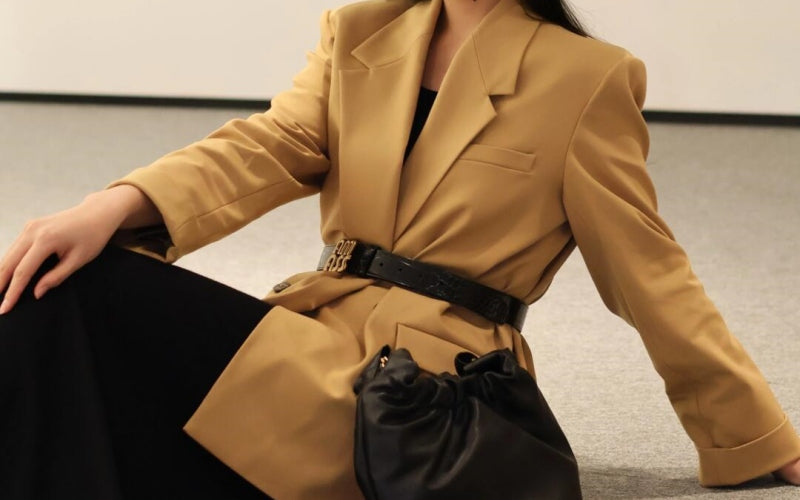
Belt color is just as important as width for the slimming effect. A belt that matches your outfit color creates a longer, leaner line because the eye travels over it without interruption. A contrasting belt draws maximum attention to the waist — great for hourglass figures, risky for anyone who doesn't want their midsection to be the focal point.
The general rule from stylists at AARP's fashion guide:
- Tone-on-tone (black belt with black dress, brown belt with brown outfit): Maximum elongation. The belt defines shape without creating a visual "cut."
- Subtle contrast (dark brown belt with navy dress, espresso belt with charcoal): Moderate waist emphasis with sophistication.
- High contrast (black belt with white dress): Strong waist focus. Most slimming if your waist is your narrowest point and you want to highlight it.
Material matters too. A stiff, thick belt that doesn't conform to your body's shape will sit on top of your figure rather than cinching into it — creating bulk rather than definition. Full-grain leather belts are ideal because they're rigid enough to hold their shape but supple enough to wrap and mold to your waist over time.

Can Wide Belts Make You Look Wider Instead of Thinner?
Yes — if worn at the wrong position, in the wrong width, or with the wrong outfit, a wide belt can actually add visual width rather than reduce it.
The most common mistakes:
- Wearing the belt at the hip line instead of the natural waist. Your hips are typically wider than your waist. A belt there emphasizes width rather than narrowness. StyleCaster's belt guide specifically warns against this.
- Choosing a belt that's too wide for your torso length. If the belt covers more than one-third of the space between your bust and hips, it compresses the visual proportions of your torso and makes you look shorter and wider.
- Cinching too tightly. Over-tightening creates a "muffin top" effect where fabric bunches above and below the belt. The belt should define your waist, not squeeze it. Our guide on how to wear a belt to hide your tummy covers this in detail.
- Using a high-contrast belt with a straight-cut outfit. If the dress or top has no natural waist shaping, a bold contrasting belt can look like a horizontal bar strapped to a rectangle.

Do Wide Belts Work for Men Too?
Wide belts create a more structured, defined silhouette on men — though the "slimming" effect is subtler because men's fashion typically uses belts at the hip rather than the natural waist.
For men, the sweet spot is a 1.5-inch (38mm) belt. This width provides enough visual weight to anchor an outfit and define the waist area without looking costume-like. According to Hayden Hill's body-type belt guide, men with larger midsections actually look slimmer in a medium-width belt (1.38"-1.5") than in a skinny belt, because the wider belt creates proportion while a thin one can "disappear" and emphasize the belly by contrast.
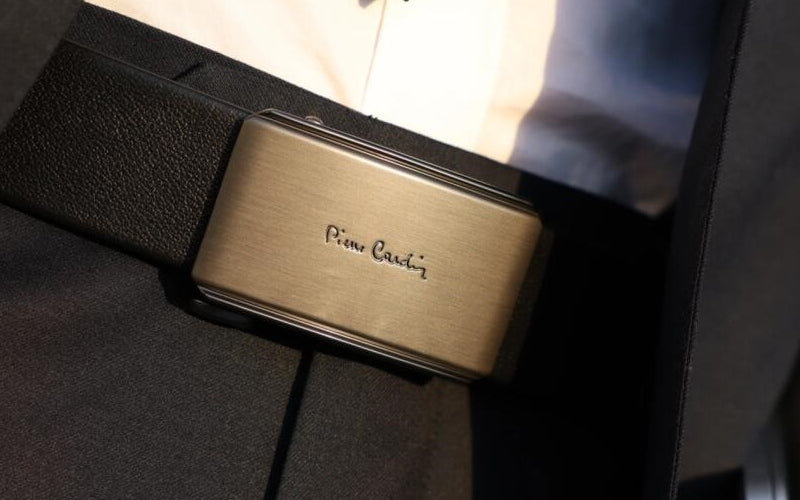
The key for men: tuck your shirt in so the belt is visible, choose a belt that closely matches your pants color, and avoid oversized buckles that draw the eye to the widest part of the stomach. A clean, understated buckle — like a stainless steel box-frame design — keeps the line smooth.

The Bottom Line
Wide belts can absolutely make you look thinner — the optical illusion is real, and the science backs it up. The trick is matching width to your body type, placing the belt at your natural waist (not your hips), and choosing a color that works with — not against — your outfit. For most people, a 1.5-inch full-grain leather belt in a neutral tone is the most universally flattering starting point.
Explore BELTLEY's women's belt collection or browse by belt width to find the right fit for your frame. Every belt comes with free worldwide shipping, 30-day hassle-free returns, and a 10-year warranty — so you can try it risk-free.
Frequently Asked Questions
Q: Do wide belts make you look thinner or wider?
Wide belts make you look thinner when worn at the natural waist — the narrowest point of your torso. Worn at the hips or in a width that's too large for your torso length, they can add visual width instead. The key is matching belt width to your body proportions.
Q: What belt width is most slimming?
For most body types, a belt between 1.25 inches and 1.5 inches offers the best slimming effect. This width is substantial enough to create visible waist definition without overwhelming the torso. Petite frames should lean toward 1.25"; taller or longer-waisted frames can go up to 2 inches or wider.
Q: Should I match my belt color to my outfit for a slimming effect?
A tone-on-tone approach (belt color close to your outfit color) creates the longest, leanest visual line. A contrasting belt draws more attention to the waist, which is slimming if your waist is your narrowest point, but can be less flattering if you prefer a seamless silhouette. Check our belt color matching guide for women for outfit-specific advice.
Q: Are wide belts still in style for women?
Yes. Wide belts remain a key accessory trend in 2026, especially cinched over dresses, blazers, and knitwear. The current trend favors structured leather belts in neutral tones with minimal buckles. Read our full breakdown on whether wide belts are still a thing for women.
%20and%20paired%20with%20the%20right%20outfit.%0AThe%20effect%20wo...)