Do Men Wear Belts Because They Don’t Have Hips? (Quick Answer)
TL;DR: Quick Answer
- Men do have hips, but the male pelvis is narrower and more compact than the female pelvis — giving pants less structure to grip
- This anatomical difference is a major reason men rely on belts to keep pants in place
- Belts also serve style, professional, and practical purposes well beyond simple anatomy
You've probably seen this claim floating around TikTok and social media: "Men wear belts because they don't have hips." It's catchy, a little funny, and — like most viral takes — only about half true. Men absolutely have hips. But male hip anatomy is shaped differently from female anatomy, and that difference has a direct impact on why men's belts became a wardrobe staple centuries ago.
Let's break down what's actually going on beneath the waistband.

Do Men Really Not Have Hips?
Men have hips. Every human does — the pelvis is a critical skeletal structure that connects your spine to your legs and supports the weight of your upper body. What men don't have is the wide, flared hip shape that characterizes the female pelvis.
According to anatomy research from Medicine LibreTexts, the female pelvis is wider, shallower, and has a broader pelvic inlet — adaptations tied to childbirth. The male pelvis, by contrast, is taller, narrower, and more compact, optimized for bipedal locomotion rather than carrying a child. The subpubic angle in men measures roughly 70 degrees, while in women it opens to 90–100 degrees. A study published in the Italian Journal of Anatomy and Embryology confirmed that these differences are consistent across populations and driven by evolutionary pressures.
So when someone says men "don't have hips," they mean men lack the pronounced lateral flare that naturally holds fabric in place. And that distinction matters more than most people realize.

Why Does Hip Shape Affect Whether You Need a Belt?
Wider hips create a natural shelf. Pants rest on that shelf and stay put through friction and gravity — no belt required. Narrower male hips offer less of a ledge, which means pants sit on a relatively straight, cylindrical surface that slopes downward. Gravity wins.
This is why your pants slide south every time you sit, bend, or walk — the surface they're gripping is smooth and tapered. A belt solves this by cinching the waistband tighter than the hip circumference below it, creating artificial friction that keeps everything anchored. Research from the Cleveland Clinic's anatomy guide explains that the male pelvis prioritizes structural support for upright movement, not width — which is precisely why belts became a functional necessity.
If you've ever wondered why your pants keep falling down even with a belt, body shape is usually the root cause. Men who carry weight in their midsection rather than their hips face an even steeper challenge.

Is Anatomy the Only Reason Men Wear Belts?
Anatomy is a significant factor, but it's far from the complete story. Men wear belts for at least four distinct reasons: function, formality, fashion, and habit.
Function is the obvious one — keeping pants up. But formality matters just as much. In most professional and business-casual environments, a belt signals that you've put thought into your outfit. A suit without a belt (and without side adjusters or suspenders) looks unfinished. We covered this extensively in our guide on why every man needs a belt.
Fashion is where belts get interesting. A well-chosen belt — whether it's a full-grain leather belt or something in exotic crocodile — adds visual weight to an outfit. It anchors the eye, defines the waistline, and can be a subtle statement piece. According to Gentleman's Gazette, belts evolved from purely military and utilitarian accessories into style essentials during the early 20th century.
And then there's habit. Most men grow up wearing belts because their fathers did. The muscle memory of threading leather through loops every morning is deeply ingrained — and that routine persists even when the pants fit perfectly.

How Did Belts Replace Suspenders for Men?
Before belts dominated men's wardrobes, suspenders were the standard. Through most of the 19th century, men's trousers had high waistlines that made belts impractical, and suspenders handled the job.
The shift happened gradually. World War I exposed millions of men to military-issue belts, and when they came home, they brought the preference with them. By the 1920s, trouser waistlines dropped, belt loops became standard on ready-made clothing, and suspenders started losing ground. Life magazine reported in 1938 that 60% of American men had switched to belts — a number that has only grown since. The history of suspenders on Wikipedia documents how the three-piece suit's decline further exposed suspenders, which many men considered underwear-adjacent.
Today, suspenders occupy a niche — formal events, vintage aesthetics, and men who simply prefer them. But belts won the war. And hip anatomy was quietly driving that victory all along: belts work with the body's shape rather than trying to override gravity from above.
For a deeper look at this timeline, check out our article on when men started wearing belts.

Do Women Need Belts Less Than Men?
From a purely anatomical standpoint, yes. Women's wider hips and the natural waist-to-hip ratio create more friction against fabric, which means pants are less likely to slide. This is one reason women's belts tend to be thinner and more decorative — they're often a style choice rather than a structural one.
That said, modern fashion has complicated the equation. Low-rise cuts, oversized fits, and high-waisted styles all change where pants sit relative to the hips. Plenty of women wear belts for function, especially with jeans and trousers designed to sit at the natural waist. And women's belts have become genuine fashion statements — from wide cinch belts over dresses to slim leather straps on tailored pants.
The anatomical advantage is real, but it doesn't make belts irrelevant for women. It just shifts the primary purpose from "keeping pants up" to "completing the look."

What Kind of Belt Actually Keeps Men's Pants Up?
Not all belts are created equal. If your belt isn't doing its job, the problem is usually material, width, or fit — not your anatomy.
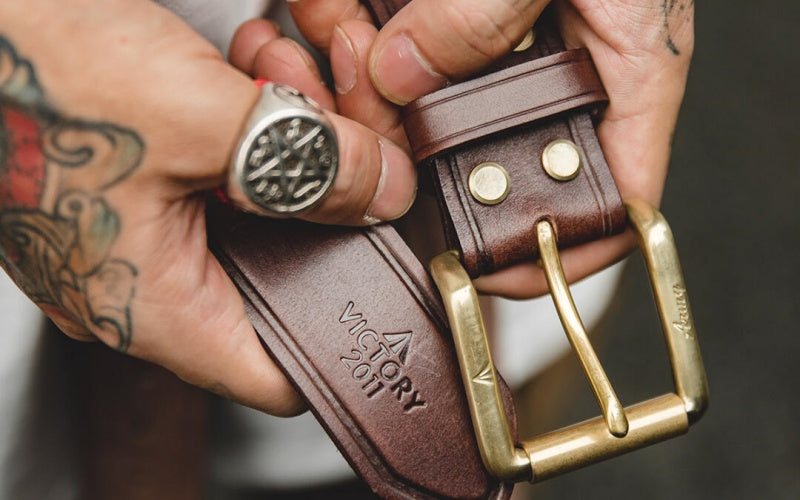
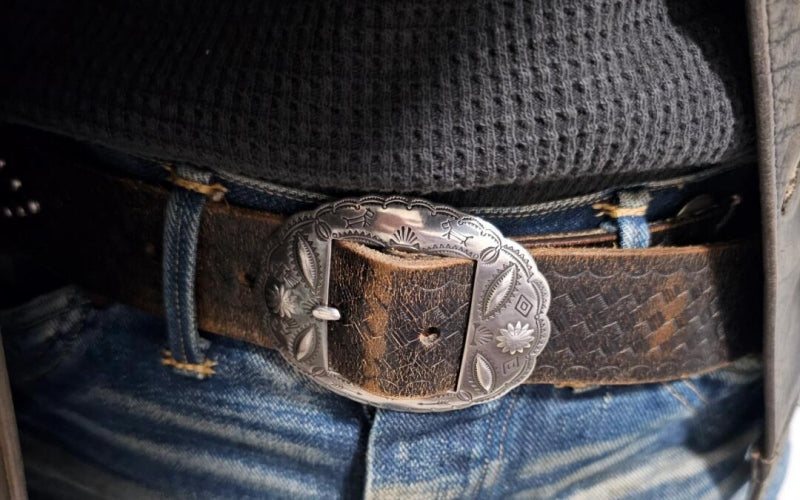
Material matters most. A full-grain leather belt grips against fabric far better than bonded leather or synthetic alternatives. Full-grain leather also stiffens slightly with wear, conforming to your body shape and creating a custom fit over time. At BELTLEY, we work exclusively with full-grain hides because that grip and durability is non-negotiable for a belt that actually functions.
Width affects stability. A 1.5-inch (38mm) belt distributes pressure across a wider surface area, which prevents the belt from rolling or digging. For casual wear, this is the sweet spot. Dress belts at 1.25 inches (32mm) or 1.38 inches (35mm) offer a cleaner look while still providing solid hold.
Fit is everything. Your belt should fasten at the middle hole. Too tight and it bunches fabric; too loose and it defeats the purpose. Use a proper size guide before ordering.
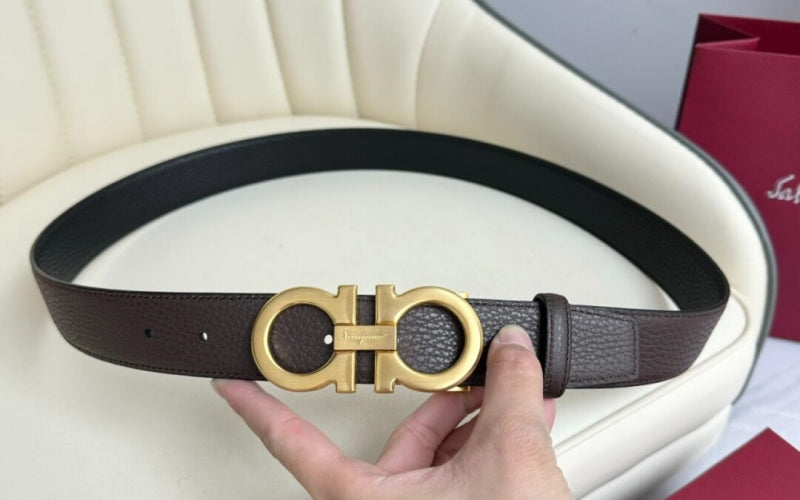
Buckle weight counts. An oversized, heavy buckle pulls the front of your pants down. Choose hardware that balances style with function — 316L stainless steel or solid brass offers durability without unnecessary weight.

The Bottom Line
Men wear belts partly because of anatomy — the narrower male pelvis simply doesn't hold pants the way wider female hips do. But that's the starting point, not the full explanation. Belts became essential through a combination of biology, fashion history, professional norms, and the shift away from suspenders after World War I.
Understanding the "why" makes it easier to choose the right belt: one that matches your body shape, your wardrobe, and how you actually move through the day.
A quality full-grain leather belt, properly sized, handles the anatomy problem while elevating everything above and below it.
Browse BELTLEY's men's belt collection to find one built for both function and style — handcrafted, backed by a 10-year warranty, and shipped free worldwide.

Frequently Asked Questions
Q: Do men actually have hips?
Yes. Every human has a pelvis and hip joints. The difference is shape — the male pelvis is narrower and taller than the female pelvis, which means men's hips don't flare outward enough to naturally hold pants in place.
Q: Why do my pants fall down even with a belt?
The most common causes are wrong belt size, poor-quality belt material, or body shape. Men who carry weight in their stomach rather than their hips struggle most. A stiffer full-grain leather belt in the correct size typically solves the problem.
Q: Did men always wear belts?
No. Before the 1920s, most men wore suspenders. Belts became mainstream after World War I, when military uniforms introduced soldiers to belt-and-loop systems. By the late 1930s, the majority of American men had switched.
Q: Are suspenders better than belts for keeping pants up?
Suspenders distribute weight from the shoulders rather than relying on hip friction, so they're technically more effective for men with very narrow hips or larger midsections. However, belts remain far more common and versatile for everyday wear.
Q: What belt width is best for keeping men's pants up?
A 1.5-inch (38mm) belt offers the best combination of grip and comfort for casual and everyday wear. For dress pants, 1.25 to 1.38 inches works well without sacrificing much hold.
Q: Do women need belts?
Women need belts less often for pure function due to wider hip anatomy, but belts remain a key styling tool. Many modern pants cuts — especially low-rise and relaxed fits — still benefit from a belt regardless of body shape.