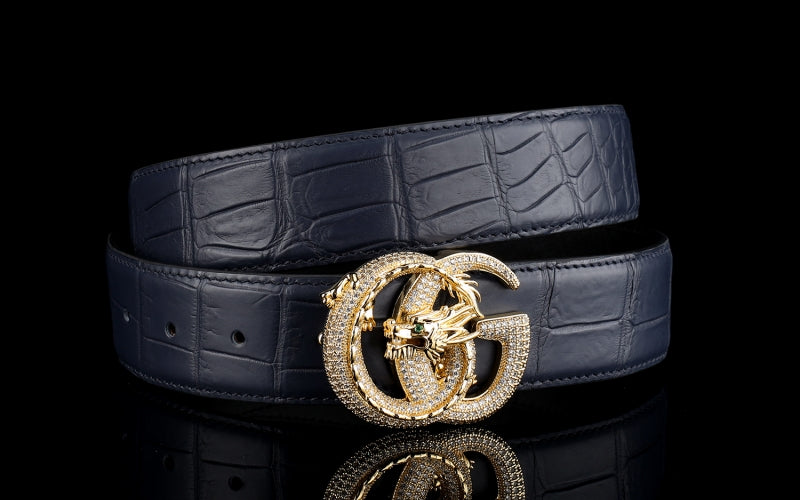
Crocodile Belt Scratch Repair: DIY or Pro? (2026 Guide)
TL;DR:
- Level 1 (surface scuff on glaze) and Level 2 (light scuff into matte) are safe DIY fixes with microfiber, finger heat, and a quality reptile conditioner.
- Level 3 (deep scratch into the dermis) and Level 4 (torn or lifted scale) require professional refinishing or, occasionally, full replacement.
- Never use shoe polish on glazed crocodile, abrasive sponges, mineral solvents, or heat guns — these cause more damage than the scratch itself.
- BELTLEY's 10-year warranty covers stitching and construction defects, not user-inflicted wear; in-stock belts ship in 2–3 days if a replacement is the better path.
Quick Facts
- Glazed crocodile finish: hard polished topcoat, prone to micro-scratching.
- Matte crocodile finish: softer hand, hides light scuffs but absorbs oils faster.
- Safe at home: dry microfiber buff, body-heat polishing, reptile-safe conditioner.
- Never use: shoe wax, acetone, magic erasers, kitchen sponges, hair dryers.
- Pro repair cost: typically $60–$180 depending on scale damage.
Rate Your Scratch, Pick Your Path
DIY or professional — decided by depth:
| Your situation | Go with |
|---|---|
| Hairline scuff on the glaze | DIY: microfiber and finger-heat buffing — Level 1, fully recoverable at home. |
| Dull scuff into matte surface | DIY with reptile conditioner — Level 2, follow the step-by-step below. |
| Scratch catches your fingernail | Professional refinishing — Level 3 goes into the dermis; home fixes make it worse. |
| Lifted or torn scale | Pro or replacement — and check warranty coverage first (BELTLEY's 10-year covers construction defects). |
Prevention beats repair: the routine lives in BELTLEY's leather care guide.
A note from our workshop
In our atelier, we handle exotic hides every day — and we still scratch them. A keychain in a pocket, a granite countertop, a careless hug from a watch bezel. Crocodile is durable, but its scales are keratin plates sitting over a leather dermis, and that surface remembers everything. The good news: most marks you panic about are cosmetic, and a calm five minutes with a soft cloth fixes them. The trick is knowing which level of scratch you actually have before you reach for any product.

What does each level of crocodile belt scratch look like?
Crocodile belt scratches fall into four severity levels: Level 1 is a hairline mark on the glaze that catches light; Level 2 is a scuff exposing the matte underlayer; Level 3 is a cut into the dermis showing pale leather; Level 4 is a torn, lifted, or missing scale requiring restoration. Diagnose first, repair second.
Run your fingernail lightly across the mark. If it glides without catching, you are almost certainly at Level 1 or 2. If your nail dips into the scratch, you are at Level 3 or 4. In our experience — consistent with professional leather conservation practice — most owner-reported "ruined" exotic pieces are actually Level 1, fully recoverable in under ten minutes.

How do you fix a Level 1 micro-scratch on glazed crocodile?
For Level 1 micro-scratches on glazed crocodile, buff the area with a clean microfiber cloth using small circular motions, then warm the spot with the pad of your finger for 20–30 seconds. The natural oils and gentle heat re-flow the glaze and the mark disappears. No products needed.
Glazed crocodile gets its mirror shine from being polished under an agate stone wheel during finishing. That same principle works at home — you are essentially re-polishing the topcoat. If the belt is one of our glazed crocodile dress styles, this is the only "repair" most owners will ever do. Work in good light, and stop the moment the scratch vanishes. Over-buffing thins the glaze.

How do you fix a Level 2 scuff that exposes the matte underlayer?
For Level 2 scuffs, apply a pea-sized amount of reptile-safe conditioner to a microfiber cloth (never directly to the belt), work it into the scuffed scales in the direction of the grain, let it absorb for 10 minutes, then buff with a second dry cloth. The conditioner re-saturates the exposed fibers and blends the color back.
Use a conditioner formulated for exotic leather — generic mink oil or saddle soap is too aggressive. Our full protocol lives on the BELTLEY leather care page, but the short version: less is more, and always test on the underside of the belt tip first. If the scuff is along a full-grain leather edge rather than the croc face, the same technique works but absorbs faster.

Key Takeaways (Mid-Post Recap)
- Diagnose before you treat. A fingernail test sorts 90% of scratches into the right level.
- Heat + microfiber handles Level 1 with zero products.
- Conditioner, sparingly applied, handles Level 2.
- Levels 3 and 4 are not DIY territory — pigment matching and re-glazing require workshop tools.
- Skip the household hacks. Most "tips" from non-exotic leather forums damage glazed croc.
When should you call a professional for crocodile belt repair?
Call a professional any time the scratch breaks the dermis (Level 3) or lifts a scale (Level 4). These repairs require color-matched pigments, airbrush re-glazing, and in some cases scale grafting — none of which can be replicated at home without ruining the belt's resale and structural integrity.
A qualified exotic leather restorer (look for ateliers that service Hermès or Brioni-grade goods) will typically charge $60–$120 for a Level 3 refinish and $120–$180 for Level 4 scale work. For BELTLEY customers, we often recommend comparing that cost against a replacement: our men's crocodile belts and women's belts are in stock and ship within 2–3 days of order, so a fresh belt sometimes makes more economic sense than restoration on a heavily worn piece.

What should you NEVER use on a crocodile belt scratch?
Never use shoe polish (especially wax-based) on glazed crocodile, abrasive sponges or "magic erasers," acetone or nail polish remover, hair dryers or heat guns, olive oil, coconut oil, or any silicone spray. Each of these either strips the glaze, clogs the scale pores, or causes permanent discoloration.
Shoe polish is the most common mistake we see. It is formulated for smooth calfskin and contains waxes and dyes that sit on top of crocodile scales unevenly, creating dark streaks that no conditioner can lift. Abrasive sponges physically remove the glaze. Heat guns warp the dermis. If you remember nothing else from this guide, remember the "never" list — it prevents 95% of irreversible damage we see at the workshop.

Does the BELTLEY warranty cover scratched crocodile belts?
The BELTLEY 10-year warranty covers materials and construction defects — stitching failures, buckle hardware faults, lining separation, and tannery flaws. It does not cover scratches, scuffs, water damage, or wear from normal use, because those are owner-controlled outcomes, not manufacturing issues.
That said, we believe in taking care of our customers. If you damage a belt within the first 30 days, our hassle-free return and exchange policy usually offers the cleanest path. Beyond 30 days, we offer paid restoration consultations and, where possible, partial credit toward a replacement from our exotic leather belt collection. Read the full terms on the warranty page.
The Bottom Line
Crocodile belts are remarkably durable, but they are not invincible — and the difference between a five-minute fix and a $150 restoration usually comes down to the first thing you reach for. Diagnose the level. Trust microfiber and heat for Level 1, conditioner for Level 2, a professional for Levels 3 and 4. At BELTLEY, we've spent over two decades watching customers either rescue or wreck good belts in the first minute after the scratch happens — and the rescuers are the ones who stop, look, and do less. If your belt is past saving, our crocodile belt collection is in stock and ships in 2–3 days.
Frequently Asked Questions
Q: Can I use leather lotion from my couch care kit on my crocodile belt? A: No. Furniture leather lotions are formulated for pigmented split leather and often contain silicones that clog crocodile scale pores. Use a conditioner specifically labeled for exotic or reptile leather, and apply via cloth, never directly.
Q: Will a scratched crocodile belt heal on its own over time? A: Level 1 marks sometimes "self-polish" with regular wear as your body heat and clothing reflow the glaze. Levels 2–4 do not self-heal; the dermis does not regenerate once exposed.
Q: How do I prevent crocodile belt scratches in the first place? A: Store the belt rolled (not folded) in a cotton dust bag, keep it away from keys and metal watches, and rotate between two or three belts so each gets recovery time. Our leather care guide covers full storage protocols.
Q: Is alligator more scratch-resistant than crocodile? A: Slightly. Alligator scales are tighter and slightly thicker on average, but both leathers behave the same way under the four-level severity scale described above. Repair methods are identical.
Q: Does BELTLEY offer a repair service? A: We offer paid restoration consultations for BELTLEY-purchased belts. Contact our team through the FAQ contact form with photos of the damage, and we'll quote a fix or recommend a replacement from current stock.
By the BELTLEY artisan team — handcrafting exotic leather belts since 1999. Last updated: May 10, 2026.
%20and%20Level%202%20(light%20scuff%20into%20matte)%20are%20safe%20DIY%20fixes%20with%20microfiber,%20finger%20heat,%20and%20a%20quality%20reptile%20conditioner.%0ALevel%203%20(deep%20scratch%20into%20the%20derm...)