Cordovan Leather Belts: What Makes Shell Cordovan the King of Leather?
TL;DR:
- Shell cordovan leather comes from the hindquarters of a horse — only two small oval panels per hide, making it extremely rare
- The tanning process takes a minimum of 6 months at specialized tanneries like Horween in Chicago
- Cordovan belts don't crease like cowhide — they ripple and develop a mirror-like patina that deepens for decades
- Shell cordovan runs approximately $110 per square foot, making it among the most expensive leathers on earth
- For belts specifically, full-grain cowhide and exotic leathers often deliver better value per dollar while offering comparable longevity
Few materials in the leather world carry as much reverence as shell cordovan. Shoemakers chase it. Watchstrap collectors hoard it. Enthusiast forums debate it with the intensity reserved for things that genuinely matter. But what actually makes cordovan leather special — and does that reputation hold up when it comes to belts?
This guide covers everything: what shell cordovan is, how it's made, how it stacks up against full-grain leather, and whether a cordovan leather belt is worth the investment.
What Is Shell Cordovan Leather?
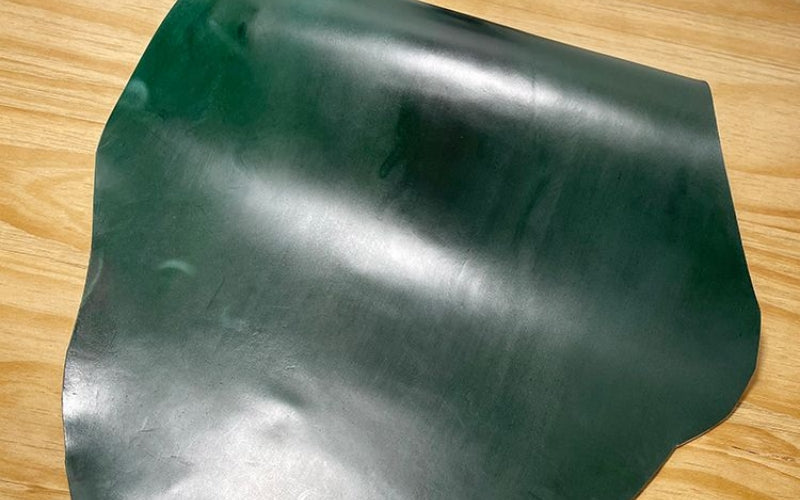
Shell cordovan is a non-split leather made from a specific membrane found beneath the hide of a horse's hindquarters. It is not simply "horsehide" — the term "shell" refers to two distinct oval panels harvested from the rump, each measuring roughly 12–14 square feet. Those two panels are the entirety of usable shell cordovan from a single animal. That structural density — a tight, non-porous fiber network — gives cordovan its famous hardness, luster, and resistance to creasing.

Unlike cowhide, which has a grain layer that can be sanded and corrected, cordovan's surface is pure, intact membrane. There's no buffing or embossing to hide imperfections — what you see is what the horse produced. For a deeper look at how different materials compare, our guide to 10 iconic leather types for belts covers the full spectrum.
Where Does Cordovan Leather Come From?
Shell cordovan is sourced almost exclusively from horse populations in Europe and Japan, where draft horses with appropriately dense rump membranes are selectively raised. In North America, one name dominates: Horween Leather Company in Chicago — operating since 1905 — is the only North American tannery still producing authentic shell cordovan.
The scarcity is biological, not manufactured. Only certain horses develop the required membrane thickness, and from each hide, only those two oval sections qualify as true shell. This natural bottleneck limits annual cordovan production to hundreds of hides — not thousands. Nick Horween, the tannery's director, has described the material directly: "A product made of shell cordovan will last multiple lifetimes."
How Shell Cordovan Is Made
The production timeline alone separates cordovan from virtually every other leather. At Horween, the process requires a minimum of 6 months from raw hide to finished material — and that's considered efficient. Most modern leathers are processed in days using chrome tanning. Cordovan isn't compatible with shortcuts.

The key stages:
- Vegetable tanning — Hides are immersed in natural tannins for at least 60 days. Slow chemistry, no industrial accelerants.
- Hot-stuffing — Massive wooden drums pound a blend of waxes, oils, and tallow deep into the fiber structure. This creates the leather's characteristic feel and prevents premature drying over decades of use.
- Hand-curing and shaving — Artisans gradually shave the shell to ideal thickness. The margin between perfect and ruined is thin; this step requires significant experience.
- Hand-dyeing — The shell takes dye differently than cowhide, producing the rich burgundy, dark brown, and black shades cordovan is known for.
According to The Tannery Row's shell cordovan FAQ, the finished material is "smooth and supple to the touch, incredibly durable, and possesses a unique luster that only gets better with age and use."
How Does Cordovan Compare to Full-Grain Leather for a Belt?
Shell cordovan and full-grain cowhide are both premium belt materials, but they differ in two key ways: cordovan never creases — it ripples under bending stress and recovers — while cowhide develops fold lines over years of wear. Cordovan also costs 5–10 times more per square foot. For most belt use cases, that difference matters.

Both leathers develop a rich patina over time, but the character differs. Cordovan's patina trends toward a deep, mirror-like shine — almost lacquered in appearance. Full-grain cowhide develops a more organic, mottled warmth. Neither is superior; they're simply different aesthetics. Our article on what type of leather is best for belts covers the full comparison with practical buyer guidance.
| Feature | Shell Cordovan | Full-Grain Cowhide |
|---|---|---|
| Durability | Exceptional | Excellent |
| Crease resistance | Yes — ripples, doesn't fold | No — develops crease lines |
| Patina development | Mirror-like, deepens over decades | Rich, organic, natural warmth |
| Water resistance | Poor — highly water-sensitive | Moderate |
| Price per sq ft | ~$110 | $8–$30 |
| Availability | Very limited | Widely available |
| Best use | Dress shoes, fine dress belts | Dress and casual belts |
As Ashland Leather's material breakdown notes, cordovan's advantages are most pronounced in footwear — shoes flex at the toe box hundreds of times daily, making crease-resistance a genuine differentiator. For belts, which flex far less, the premium is harder to justify on performance alone. Our full-grain leather belt collection delivers decades of wear at a fraction of the cordovan price point.
Why Is Shell Cordovan Leather So Expensive?
Shell cordovan costs approximately $110 per square foot at retail — roughly 5–10 times the price of premium full-grain cowhide. Three compounding factors drive this: scarcity of raw material, a time-intensive production process, and an extremely limited tannery network.
Scarcity: Two small oval panels per horse, from a limited global pool of suitable animals. Production volume is constrained by biology, not by manufacturing capacity.
Process time: Six months minimum per batch. That's six months of skilled labor, tannery space, and tied-up capital before a single piece ships. Compare that to chrome-tanned cowhide, which processes in 24–72 hours.
Specialized production: Horween is the only North American producer. The European and Japanese equivalents are equally small-scale operations. There is no industrial alternative producing comparable material.
A single cordovan belt requires roughly 1–1.5 square feet of material, placing raw material cost alone at $110–$165 — before any labor, hardware, or markup. That context makes retail cordovan belt pricing easier to understand.
Is a Cordovan Leather Belt Worth It?
For most buyers, a shell cordovan belt is a luxury indulgence rather than a practical necessity. The material is extraordinary — but its most celebrated properties (crease-resistance, mirror-like luster) matter most in footwear, where repeated bending is severe. A belt experiences far less mechanical stress and typically lives behind a jacket or partially hidden by a tucked shirt.

That said, for the leather enthusiast who wants a single belt that will outlast them and only improve with decades of use, genuine shell cordovan is a serious option. According to Nicola Meyer's shell cordovan belt analysis, authentic cordovan belts are rare in the market — most products labeled "cordovan" are cordovan-colored leather (a warm red-brown shade), not actual shell cordovan material. If you're buying, verify the source tannery.
For buyers who want premium construction and longevity without the cordovan premium, exotic leather belts — crocodile, alligator, elephant — offer their own category of exceptional material and character. Our guide to the most durable leather belts walks through the options clearly.
How Do You Care for a Cordovan Leather Belt?
Cordovan leather requires cordovan-specific products — never standard leather conditioner, which softens it excessively and can collapse its structure. Use Saphir Cordovan Cream or a comparable product, applied sparingly with a horsehair brush. Cordovan is highly sensitive to water: blot immediately if wet, never rub or apply heat to dry it.
Daily maintenance:
- Wipe with a soft, dry cloth after each wear to remove dust and surface oils
- Buff lightly with a horsehair brush — friction is your best friend with cordovan; it develops the shine naturally over time
Periodic conditioning:
- Apply a small amount of cordovan-specific cream every few months, or when the surface feels dry
- Work in circular motions, then buff to a luster — the mirror finish develops gradually, not overnight
Water exposure:
- Blot immediately with a clean, dry cloth — do not rub
- Allow to dry naturally, away from heat sources
- Water marks can be permanent if not addressed; treat as soon as possible
For broader guidance on caring for premium leather goods, our leather care page covers conditioners, storage, and maintenance across all leather types.
The Bottom Line
Shell cordovan earns its reputation. The tanning process, material scarcity, and performance characteristics — particularly its crease-resistant behavior and decades-long patina development — place it in a category of its own. For a leather enthusiast who wants the finest belt material available and is prepared to invest accordingly, genuine shell cordovan is difficult to argue against.
For most buyers, though, the value equation for belts is less compelling than it is for shoes. Full-grain cowhide and premium exotic leathers deliver exceptional durability and character at a fraction of the price. At BELTLEY, we work with handcrafted full-grain hides and exotic leathers — crocodile, alligator, elephant — because these materials offer the longevity and craft our customers expect, without a price premium that primarily benefits footwear. Every belt comes with a 10-year warranty on materials and construction, and ships free worldwide. Explore our men's belt collection or browse full-grain leather belts to find your match.
Frequently Asked Questions
Q: Is cordovan leather actually horse leather?
Yes — shell cordovan comes specifically from the hindquarters of horses, but only from a dense membrane layer beneath the outer hide, not the skin itself. Each horse yields only two usable oval panels. "Cordovan" as a color description (a warm red-brown tone) is a separate use of the word and refers to shade, not material.

Q: What's the difference between cordovan color and cordovan leather?
"Cordovan color" is simply a deep burgundy-red shade used to describe dye tones across any leather type. True shell cordovan leather is an entirely different product — a specific horsehide-derived material regardless of what color it's dyed. The vast majority of "cordovan" products on the market are cowhide in a cordovan color, not actual shell cordovan.
Q: How long does a shell cordovan belt last?
With proper care, shell cordovan can last several decades — Horween describes it as capable of lasting "multiple lifetimes." This assumes regular cleaning with appropriate cordovan-specific products, minimal water exposure, and storage away from direct sunlight and heat.
Q: Why does shell cordovan ripple instead of crease?
Cordovan's fiber structure is more tightly packed and denser than cowhide. When bent, the fibers compress and spring back rather than folding permanently. The characteristic wave or ripple that results is a mark of authentic shell cordovan — not a defect.
Q: Is shell cordovan waterproof?
No — shell cordovan is notably water-sensitive and significantly more vulnerable to water than full-grain cowhide. Water can leave permanent marks if not blotted immediately. It should be treated with a protective cordovan-specific product and kept out of rain whenever possible.
Q: Are full-grain leather belts a good alternative to cordovan?
Yes, for most buyers. Full-grain cowhide offers outstanding durability, genuine patina development, and excellent value — without cordovan's water sensitivity or price premium. Read our detailed breakdown of whether full-grain leather belts are worth it to see how they compare.