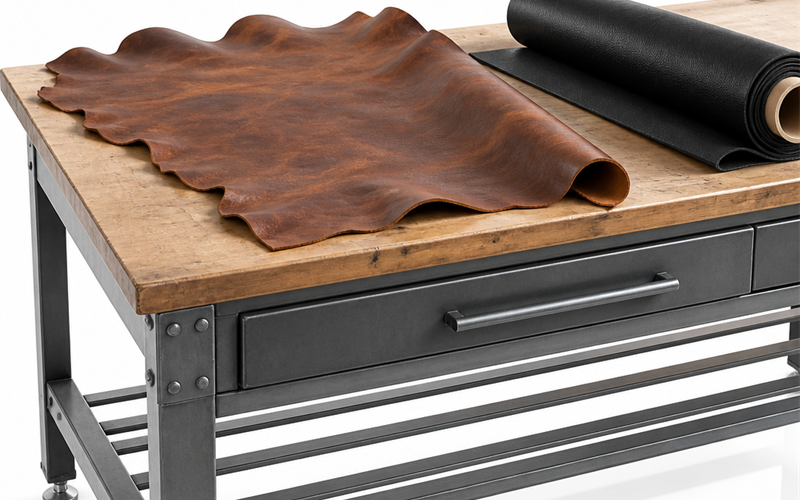
How to Care for an Italian Vegetable-Tanned Belt vs a Chrome-Tanned One
TL;DR:
- Vegetable-tanned belts need annual conditioning with beeswax-based products. They absorb conditioning and reward it.
- Chrome-tanned belts need almost no conditioning. They're sealed by their tanning chemistry already.
- Wrong care kills both: over-conditioning veg-tan creates dark blotches; conditioning chrome-tan over-softens the leather.
- The right care doubles a belt's lifespan. The wrong care can shorten it dramatically.
There's a question that comes up roughly every six months from a customer who's just bought their first quality Italian belt.
"How do I take care of this thing?"
The honest answer depends on a single piece of information they often don't know yet — whether the belt is vegetable-tanned or chrome-tanned. The care routines are completely different. Treating one like the other is the most common way people accidentally damage premium Italian leather.
This post walks through both routines clearly, what each tannage actually needs, and what to never do. For wider context on the two tanning methods, our vegetable-tanned vs chrome-tanned leather belt comparison post is the foundation read.
Which Belt Do You Own? Care Accordingly
The care fork, decided by your belt's tanning:
| Your situation | Go with |
|---|---|
| Veg-tan (matte, earthy, stiffens when dry) | Beeswax-based conditioner annually — it absorbs and rewards the feeding. |
| Chrome-tan (soft, uniform color) | Almost nothing — a damp wipe; conditioning over-softens sealed leather. |
| Not sure which you have | Water-drop test: veg-tan absorbs and darkens briefly; chrome-tan beads. Then care accordingly. |
| Exotic (croc/alligator) | Reptile-specific conditioner only, every 3–4 months — neither standard routine applies. |
The full routine per leather: BELTLEY's leather care guide.
What's the Core Difference in How Each Belt Needs Care?
Vegetable-tanned belts are essentially porous — they absorb oils, waxes, and conditioners over time and benefit from periodic feeding. Chrome-tanned belts are sealed at the chemical level — the chromium-fiber bond resists absorption, so conditioning sits on the surface rather than penetrating. The care logic flips completely between the two.

A side-by-side summary:
| Care Aspect | Vegetable-Tanned | Chrome-Tanned |
|---|---|---|
| Conditioning frequency | 1–2x per year | Rarely needed |
| Conditioning product | Beeswax-based, natural | Light pH-neutral only |
| Absorption | High | Low |
| Patina behavior | Develops with use | Minimal change |
| Moisture risk | Stains and absorbs water | Beads water |
| Recovery from damage | Yes, with proper care | Limited |
Wikipedia's tanning entry covers the chemistry behind why these two leather families behave so differently in real-world conditions. Our what is vegetable tanning post covers the veg-tan side in depth.
How Often Should You Condition a Vegetable-Tanned Italian Belt?
Condition a vegetable-tanned Italian belt once or twice a year — once is enough for indoor office wear, twice if the belt sees heavy outdoor exposure or dry climate use. Over-conditioning is one of the most common ways to damage veg-tan leather; the leather can only absorb so much wax before it starts blotching, darkening unevenly, or feeling greasy.
The conditioning rhythm:
- Light office wear: 1x per year, autumn ideal
- Daily mixed wear: 1–2x per year
- Heavy outdoor wear: 2x per year
- Dry climate wear: 2x per year + occasional spot conditioning
- Belt in storage: Once before storage, no more
Signs your veg-tan belt needs conditioning:
- Edges look slightly dry or pale
- Surface has lost some of its natural glow
- Leather feels slightly stiff at flex points
- Color has lightened in high-wear zones
Signs of over-conditioning:
- Blotchy dark patches that don't blend in
- Greasy or sticky surface feel
- Color that looks artificially "wet"
- Conditioner pooling on the surface after application
For more on belt lifespan management, our How Long Does a Properly Made Italian Leather Belt Last? post covers what the right care routine adds in years.
How Often Should You Condition a Chrome-Tanned Italian Belt?
A chrome-tanned Italian belt usually needs no conditioning at all in its first 5–10 years of normal wear, and only light treatment every few years thereafter. Chrome tanning seals the leather's fiber structure, so the hide doesn't dry out the way veg-tan does. Most chrome-tanned belt damage comes from over-conditioning, not under-conditioning.

The realistic chrome-tan care schedule:
- Years 1–5: Wipe occasionally with a dry cloth. Nothing else needed.
- Years 5–10: Light wipe with pH-neutral cleaner if visibly dirty.
- Years 10+: Optional light conditioning every 2–3 years if leather shows wear.
- Storage: Dust cover and dry location; no conditioning needed before storage.
The reason for the difference: chrome tanning's chromium-fiber bonds are essentially permanent, and the resulting leather doesn't have free fiber sites to absorb conditioning the way veg-tan does. Applying veg-tan-style conditioning to chrome-tan creates a surface residue that attracts dirt and dulls the finish.
Our What Is Chrome Tanning and Why Is It Controversial? post covers the chemistry side in more depth.
What Conditioners Should You Use on Each Type?
For vegetable-tanned belts, use natural beeswax-based or saddle soap-based conditioners — products designed for traditional leather goods. For chrome-tanned belts, use only pH-neutral leather cleaners and avoid wax or oil-heavy conditioners entirely. The most common mistake is using a veg-tan conditioner on chrome-tan leather, which leaves a buildup that's hard to remove.
Recommended product types:
| Leather Type | Use This | Avoid This |
|---|---|---|
| Vegetable-tanned | Beeswax conditioner, saddle soap | Mink oil (over-softens), petroleum products |
| Chrome-tanned | pH-neutral cleaner, light leather lotion | Beeswax, neatsfoot oil, heavy waxes |
| Both | Soft horsehair brush for surface cleaning | Solvents, alcohol-based cleaners |
Specific category guidance:
- Saddle soap (gentle, soap-based): Good for veg-tan deep cleaning before conditioning
- Beeswax cream (e.g., natural beeswax + carnauba blend): Ideal veg-tan conditioner
- Mink oil: Skip — over-softens leather and darkens it too aggressively
- Neatsfoot oil: Use very sparingly on heavy-duty veg-tan belts only
- Petroleum-based products: Avoid for any quality leather
Our right and wrong conditioners for Italian calfskin belts post covers the product-side in more detail.
How Do You Actually Apply Conditioner Correctly?
Apply conditioner correctly by using a small amount on a clean soft cloth, rubbing it gently into the leather in circular motions, letting it absorb for 15–30 minutes, then buffing with a clean dry cloth. Less is more — start with less product than you think you need; you can always add more, but you can't easily remove over-conditioning.

The step-by-step:
- Clean first. Wipe the belt with a slightly damp clean cloth to remove dust and surface oils. Let dry.
- Test patch. Apply a tiny dot of conditioner to an inconspicuous area (back of buckle fold). Wait 10 minutes. Confirm color reaction is acceptable.
- Apply lightly. Use a pea-sized amount of conditioner on a clean soft cloth.
- Rub gently. Work in small circular motions across the leather surface.
- Wait. Let the conditioner absorb for 15–30 minutes.
- Buff. Wipe off any excess with a clean dry cloth.
- Rest. Don't wear the belt for 24 hours after conditioning if possible.
This routine takes 5 minutes plus absorption time. Done once or twice a year for veg-tan, it dramatically extends belt life. Wikipedia's beeswax article covers why natural beeswax is the gold-standard veg-tan conditioner — same biological origin as the leather, perfectly compatible chemistry.
What Common Care Mistakes Should You Avoid?
The most damaging care mistakes are over-conditioning veg-tan belts (causing blotches and greasy surfaces), conditioning chrome-tan belts at all (causing dulling and residue buildup), using harsh cleaners (alcohol, solvents) on any leather, exposing leather to direct heat for drying, and storing belts in plastic bags that trap moisture.

The top six mistakes:
- Over-conditioning. "If a little helps, a lot must help more." Wrong. Apply minimal product.
- Conditioning chrome-tan. Most chrome-tan belts don't need it; conditioning them creates surface residue.
- Using alcohol or solvents. They strip oils from leather and accelerate cracking.
- Heat drying. Heating wet leather causes cracking and warping. Always air dry.
- Plastic storage. Plastic traps moisture and accelerates leather degradation.
- Ignoring the buckle fold. The most stressed area gets the least care; condition this zone specifically.
Our leather care page walks through the full proper care routine. For longevity context, our What Is the Most Durable Leather Belt? and The Truth About Leather Belt Durability posts cover what proper care actually adds in service life.
How Do You Store an Italian Belt for the Long Term?
Store an Italian belt by either rolling it loosely or hanging it from a belt hook in a cool, dry, dark place — never folded tightly and never in plastic. For long-term storage (6+ months), use a cotton or linen dust bag, and condition the belt once before storage if it's veg-tan. Avoid storing belts in sealed boxes that trap humidity.
Long-term storage best practices:
- Cool, dry location — closet shelf or drawer; avoid bathrooms, basements
- Cotton dust bag for veg-tan belts; chrome-tan can store unsealed
- Rolled loosely or hung — never folded tightly
- Away from direct light — sunlight fades leather over months
- Annual check if stored long-term — look for mold, dryness, or pest damage
- One-time conditioning before veg-tan goes into storage
A well-stored veg-tan belt can come out of storage years later looking nearly as good as when it went in. A poorly-stored belt can develop irreversible damage in months.
Does Italian Exotic Leather (Crocodile) Need Different Care?
Yes — Italian exotic leather belts (crocodile, alligator) need specialized care because the scale structure traps oils and conditioners differently than smooth cowhide. Use exotic-specific leather conditioners, apply even more sparingly than smooth leather, and pay extra attention to the spaces between scales where dirt accumulates.

Exotic leather care quick rules:
- Use exotic-specific conditioners (specialized formulations)
- Apply with extra care to avoid over-saturating scale joints
- Clean between scales with a soft brush
- Avoid water exposure as much as possible
- Store with extra care — exotic leather is more fragile when stored
For exotic belt options, our exotic leather belts collection covers the category. Our crocodile belt for women: width, styling, hardware post covers crocodile-specific considerations.
The Bottom Line
Italian vegetable-tanned and chrome-tanned belts both need care — but they need different care. Veg-tan rewards periodic feeding with natural beeswax conditioning; chrome-tan rewards being mostly left alone. Treat them the same and you damage one or both. Treat them right and they'll outlast you.
The single most important care rule: identify your belt's tannage before you touch any product to it. If you don't know, do the water-drop test (covered in our Are All Italian Leather Belts Vegetable-Tanned? post) and act accordingly. At BELTLEY, our handmade belts collection leans veg-tan and our dress belts collection leans chrome-tan calf — different belts, different care, both built to last with the right routine.
Frequently Asked Questions
Q: Can I use the same conditioner on every leather belt I own?
Probably not. Veg-tan belts want beeswax-based conditioning; chrome-tan belts want minimal intervention. Using the same product on both leads to one being under-cared-for and the other being damaged by over-conditioning.
Q: My veg-tan belt got wet — what should I do?
Blot it gently with a clean dry cloth (don't rub). Let it air-dry at room temperature away from heat or sunlight. Once fully dry, apply a light conditioning to restore any oils washed out. Don't try to speed-dry with a hair dryer or radiator.
Q: Can I use shoe polish on a leather belt?
Generally no. Shoe polish is designed for the specific demands of shoe leather and often contains pigments and waxes that aren't ideal for belt finishing. Use belt-specific or general leather conditioner instead.
Q: How do I get a stain out of an Italian veg-tan belt?
Light stains can sometimes be reduced with saddle soap and gentle cleaning. Deeper stains often become permanent — veg-tan leather absorbs the stain into the fiber structure. For valuable belts with stubborn stains, a leather restoration specialist is your best option.
Q: Does the belt's buckle need care too?
Yes, occasionally. Solid brass benefits from occasional polishing (or leaving alone for natural patina). stainless steel needs almost no care beyond a wipe. Avoid harsh metal polishes that can scratch the buckle surface.
Q: Will good care really double my belt's lifespan?
Often yes. A poorly cared-for veg-tan belt might last 8–12 years; a well-cared-for one easily lasts 20–30+ years. The difference comes from preventing edge fraying, fiber dryness, and stitching breakdown — all of which proper care addresses early.