Are All Italian Leather Belts Vegetable-Tanned? (Spoiler: No)
TL;DR:
- No — only about 25-30% of Italian leather belts are actually vegetable-tanned.
- Tuscany handles most of the vegetable-tan production. The rest of Italy runs major chrome-tan operations.
- Both are "Italian leather." Both can be excellent. Neither is automatically better.
- The right question isn't "is it veg-tan" — it's "is it the right tannage for this belt."
There's a myth that floats around the leather goods world like a friendly ghost.
It goes: "Italian leather = vegetable-tanned = best leather in the world."
Italian leather can be vegetable-tanned. It can also be chrome-tanned. It can be aldehyde-tanned. It can be a hybrid of two methods. The country produces all of it, in volume, and the quality range across each method is enormous.
This post lays out what's actually going on inside Italy's leather industry — what gets tanned where, why both methods exist, and what to actually look for when you're shopping. For wider context on the country's belt economics, our why Italian leather belts cost more post is the right starter.
What Percentage of Italian Leather Belts Are Vegetable-Tanned?
Roughly 25–30% of Italian leather belts are vegetable-tanned. The other 70–75% are chrome-tanned, aldehyde-tanned, or some hybrid combination. The vegetable-tan share has been stable for decades — it's never been the default Italian tanning method, only the most famous one.

The split varies by belt type:
- Casual / heritage / pull-up belts: 60–70% vegetable-tanned
- Dress belts: 20–30% vegetable-tanned
- Designer / fashion belts: Under 10% vegetable-tanned
- Exotic leather belts (crocodile, etc.): 10–15% vegetable-tanned
Vegetable tanning is concentrated in casual and heritage categories because the leather's character — softening, patina, slow color shift — fits those design briefs. Dress and fashion belts mostly use chrome tanning because the color uniformity and finishing flexibility matter more than long-term patina.
Wikipedia's tanning entry covers both processes in technical detail. Our own vegetable-tanned vs chrome-tanned leather belt comparison translates the chemistry into what you'd actually notice on a finished belt.
Where in Italy Is Vegetable-Tanned Leather Actually Produced?
Almost all premium Italian vegetable-tanned leather comes from Tuscany — specifically the Santa Croce sull'Arno area near Pisa. The region is home to about 70 tanneries coordinated under the Tuscan Vegetable-Tanned Leather Consortium, which sets standards, certifies producers, and protects the geographic origin designation.
A quick tour of Italian tannery regions:
| Region | Specialty | Tanning Type |
|---|---|---|
| Tuscany (Santa Croce) | Belt strap, heritage leather | Vegetable |
| Veneto (Arzignano) | Dress leather, automotive | Chrome |
| Lombardy (around Milan) | Fashion leather, exotics | Chrome / Mixed |
| Marche | Footwear leather | Chrome |
| Piedmont | Specialty / niche | Mixed |
Wikipedia's Tuscany article covers the region itself, and for the broader industry view, our 18 Italian tanneries and the real leather belt industry post walks through the major players by name.
This geographic concentration matters. When a belt label says "Made in Italy" without specifying region, you're getting an unknown mix. When it says "Tuscan vegetable-tanned," you're getting something specific.
Why Do Italian Tanneries Use Chrome Tanning at All?
Italian tanneries use chrome tanning because it's faster, cheaper, more colorfast, and better suited to the dress and fashion belt categories that dominate global belt sales. Vegetable tanning takes 30–60 days; chrome tanning takes 1–3 days. For a fashion-driven market with seasonal collections, that timeline difference is decisive.

The functional advantages of chrome tanning:
- Speed. 1–3 days vs 30–60 days
- Color range. Almost any color, fully saturated
- Softness. Naturally softer from day one
- Water resistance. Better than untreated veg-tan
- Consistency. Hide-to-hide uniformity is much higher
The trade-offs:
- No patina. Chrome-tanned leather looks the same at year 10 as year 1
- Less character. Uniform = predictable but flat
- Environmental concerns. Chromium use is regulated; effluent handling matters
Our What Is Chrome Tanning and Why Is It Controversial? post covers the environmental and ethical questions in depth. Wikipedia's chromium article and the tanning entry's chrome section cover the chemistry.
Is Vegetable-Tanned Leather Automatically Better Than Chrome-Tanned?
No — neither tanning method is automatically better. The right tanning method depends on what the belt is supposed to do. Vegetable-tanned leather wins for casual, heritage, and patina-developing belts. Chrome-tanned leather wins for dress, fashion, and uniform-color belts. Both can be premium quality at the top of their categories.

A common-sense matchup:
| Belt Type | Better Tanning |
|---|---|
| Heritage casual brass-buckle belt | Vegetable |
| Black formal dress belt | Chrome |
| Tan pull-up daily belt | Vegetable |
| Bright color fashion belt | Chrome |
| Brown business-casual belt | Either |
| White or pastel belt | Chrome (veg-tan won't hold the color) |
| Belt you want to patina for 10 years | Vegetable |
| Belt you want to stay looking new | Chrome |
Our What Is a Vegetable-Tanned Leather Belt? covers the strengths, and our companion piece on the disadvantage of vegetable-tanned leather covers where it falls short. Both are useful before you decide.
How Do You Tell If an Italian Belt Is Vegetable-Tanned?
You can tell if an Italian belt is vegetable-tanned by checking the flesh side color, doing the water test, smelling the leather, and looking for the consortium mark. Vegetable-tanned leather has a natural beige flesh side, absorbs water slowly with a darkening effect, has an earthy tannin smell, and may carry a Pellealvegetale certification logo.
Quick five-second tests:
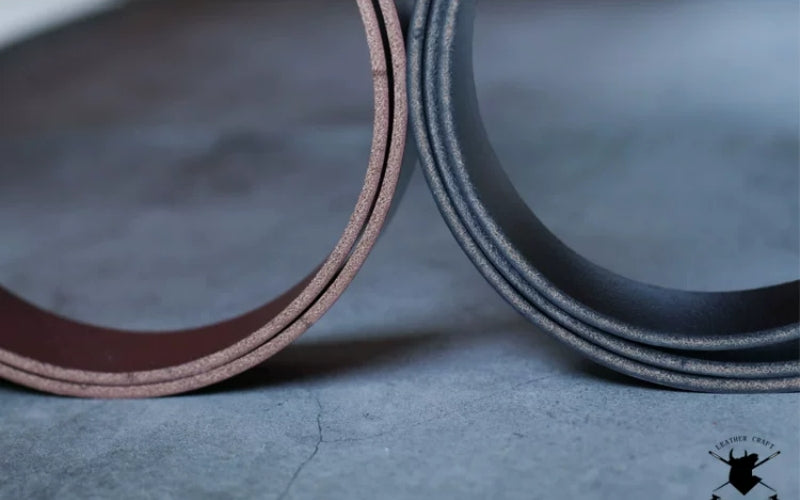
- Flesh-side color. Veg-tan = natural beige/tan. Chrome-tan = pale blue, gray, or white (the chrome itself is greenish but usually masked).
- Water drop test. Veg-tan darkens as it absorbs water, then dries back. Chrome-tan beads water.
- Smell. Veg-tan = earthy, tannin, slightly sweet. Chrome-tan = mostly neutral or chemical-faint.
- Patina test (if owned). Veg-tan ages visibly within 6 months. Chrome-tan barely changes.
- Certification logo. Real Tuscan veg-tan often shows the Pellealvegetale consortium symbol.
Our How to Tell if a Belt is Full Grain Leather post covers related identification tests that apply across both tanning methods.
Does the "Made in Italy" Label Guarantee Vegetable-Tanned?
Absolutely not — "Made in Italy" only refers to where the belt was constructed, not how the leather was tanned. An Italian belt can use Italian chrome-tanned leather, Italian vegetable-tanned leather, imported leather of any origin, or a combination. The label tells you nothing about the tannage.

This is one of the most common misunderstandings in leather goods marketing. Brands often imply that "Italian leather" automatically means "vegetable-tanned by master Tuscan tanners" — and most of the time, that's not what's inside the belt.
To know what's actually inside:
- Look for specific tannery names (Walpier, Conceria 800, Conceria Pasubio, etc.)
- Look for the Pellealvegetale Consortium mark on certified veg-tan products
- Look for explicit "vegetable-tanned" language, not just "Italian leather"
- Ask the seller directly if it matters to you
Wikipedia's Made in Italy article explains how the country-of-origin designation works legally and in practice. It's about final assembly, not raw material sourcing.
What Are Italy's Other Tanning Methods?
Beyond vegetable and chrome, Italian tanneries also produce aldehyde-tanned (chrome-free), oil-tanned, and combination-tanned leather. Aldehyde tanning is the main modern alternative to chrome — it's chrome-free, produces soft white-cream leather, and is popular for car interiors and bags. Combination tanning starts with chrome and finishes with vegetable for hybrid properties.

A quick breakdown:
- Aldehyde / "wet white" — chrome-free, very soft, used for cars and bags
- Oil tanning — produces dense, water-resistant leather like English bridle leather
- Combination tanning — chrome base + veg-tan finish, common in mid-range Italian leather
- Brain tanning, alum tanning — historic methods, almost extinct commercially
The chemistry behind each is covered in Wikipedia's tanning article. For belt purposes, the four major categories are vegetable, chrome, oil (bridle-style), and combination.
The Bottom Line
The "Italian leather = vegetable-tanned" equation is a marketing oversimplification that ignores 70% of what Italy actually produces. Both vegetable and chrome tanning are part of authentic Italian leather production. Both can be excellent. The country isn't a single style — it's a whole industry with multiple specializations.
If you specifically want vegetable-tanned, look for the Pellealvegetale certification or named Tuscan tanneries. If you want chrome-tanned for a dress belt, that's also a legitimate Italian leather product. At BELTLEY, we use both depending on the belt — our handmade belts collection leans veg-tan for heritage/casual; our dress belts collection often uses chrome-tan calf for formal dress. The right tannage matches the belt's job.
Frequently Asked Questions
Q: Is vegetable-tanned leather always more expensive than chrome-tanned?
Usually yes — the slower process and higher labor cost mean veg-tan is typically 30–60% more expensive at the wholesale level. But finished belt retail prices depend more on workshop and brand markup than on tanning method alone.
Q: Does chrome-tanned leather mean lower quality?
No. Chrome-tanned leather at the top of its category is excellent. Many of the world's most expensive leather goods — luxury handbags, dress shoes, fine accessories — use chrome-tanned hides. Quality scales within both tanning methods independently.
Q: Can a belt be both vegetable-tanned and chrome-tanned?
Yes — combination tanning is common in Italian leather production. The leather is typically chrome-tanned first for softness and color, then vegetable-tanned in a finishing pass for character and aging behavior. The hybrid splits the difference between pure veg-tan and pure chrome.
Q: Why is Tuscany so dominant in vegetable tanning?
Geography and water. Tuscan tanneries have access to the right water chemistry (low minerality), proximity to Mediterranean cork oak and chestnut forests for tannin sources, and a 1,000-year continuous tradition. The Pellealvegetale Consortium also protects and promotes the regional specialty.
Q: Is my Italian belt with no consortium mark not vegetable-tanned?
Not necessarily. Many vegetable-tanned belts don't carry the consortium mark because the tannery isn't a consortium member or the brand didn't pay to use the logo. The mark is a guarantee when present, but its absence doesn't mean chrome-tanned. Check the flesh side and smell — those are more reliable.
Q: How can I find specifically Tuscan vegetable-tanned belts?
Look for explicit language about Tuscan or Pellealvegetale tannage, or shop from brands that specify their leather sources. Our full-grain leather belts collection leans into Italian craftsmanship transparency where the leather origin is part of the product story.