Best Belt for Short Men — Proportion, Width & Length
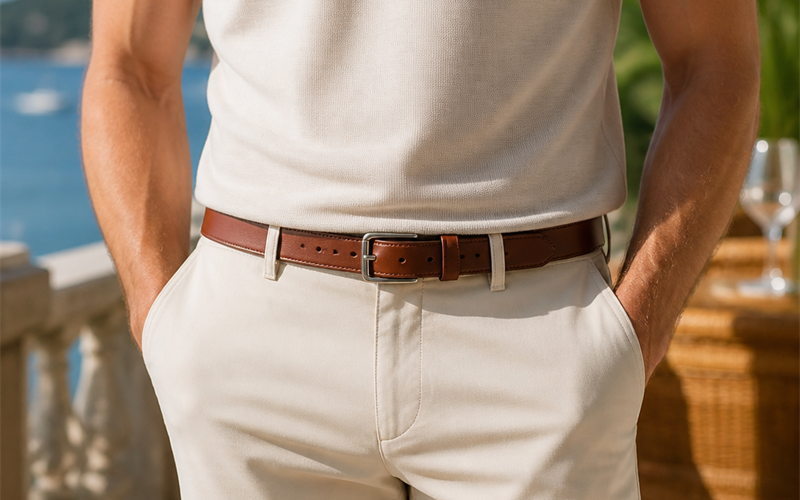
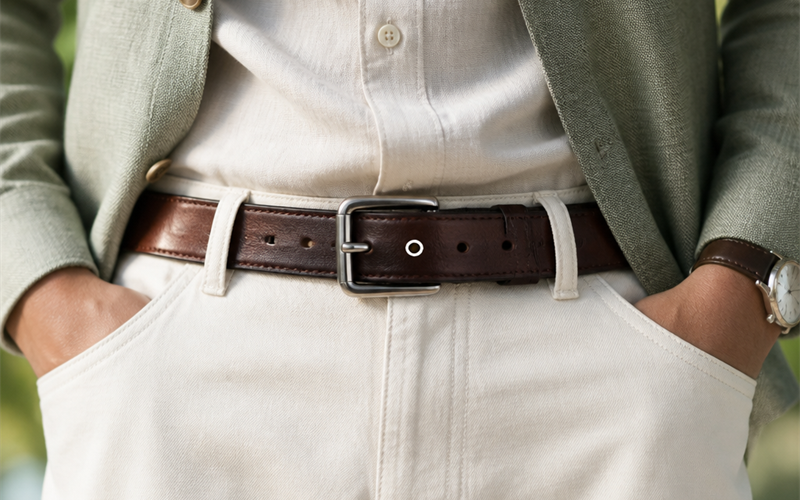
Quick answer: The best belt for short men is a slimmer width (1.25"–1.38" rather than a chunky 1.5"+), in a color close to your trousers for an unbroken vertical line, sized so the tail is short and tucked. Proportion is everything: a narrow belt suits a smaller frame, a tonal belt elongates the body, and a long flapping tail or an oversized buckle visually cuts your height. Keep it slim, matched, and tidy.
Last updated: June 2026 • By BELTLEY Editorial
TL;DR:
- Choose a slimmer width (1.25"–1.38") — chunky belts overwhelm a smaller frame.
- A belt tonal with your trousers creates an unbroken, elongating vertical line.
- Size so the tail is short and tucked — a long flapping tail cuts your height.
- Avoid oversized buckles; keep proportion and tidiness the priority.
Belts are a proportion game, and for shorter men the right choices subtly elongate the body while the wrong ones visually chop it in half. The good news is that a few simple principles — width, color, and tail length — make a real difference. This guide covers exactly what to look for and what to avoid. For the general sizing foundation, see how do I know what size men's belt to buy.

Proportion Plays for Shorter Frames
The height-smart belt spec:
| Your situation | Go with |
|---|---|
| Everyday belt choice | 1.25"–1.38" width — slimmer hardware suits the frame's scale. |
| Maximizing visual height | Belt tonal with the trousers — an unbroken vertical line reads taller. |
| Long tail flapping | Fix immediately — excess tail horizontally bisects you; trim or resize. |
| Statement buckle love | Scale it down — a medium sculptural buckle delivers the effect without the horizontal cut. |
Slim widths across colors: BELTLEY's men's collection.
What belt width is best for short men?
A slimmer width — around 1.25" (32mm) to 1.38" (35mm) — suits short men better than a chunky 1.5"-plus belt. A narrower belt is proportional to a smaller frame and doesn't visually overwhelm or cut the body. Wide, heavy belts draw a thick horizontal line across the midsection that can make a shorter wearer look stockier and shorter.

Width is about proportion, not rules for their own sake. A smaller frame is balanced by smaller-scale accessories, so a slim-to-medium belt sits in proportion while a thick belt looks oversized and emphasizes width over height. Our guide to thin vs thick belts for men covers the broader trade-off, but for shorter men specifically, leaning slimmer is the safer default. A 1.25"–1.38" belt works for both dress and smart-casual, keeping the waistline clean rather than bulky. Custom shirtmaker Proper Cloth gives shorter men the same advice — if you wear a belt, "select a slim belt with a minimal buckle" — to preserve the unbroken vertical line that elongates a smaller frame. Reserve a chunky 1.5" casual belt for occasions where it genuinely suits the outfit, and make slim-to-medium your everyday choice. You'll find these widths across our men's belts and dress belts collections.
Why does belt color matter for height?
Because a belt that matches your trousers creates an unbroken vertical line that elongates the body, while a high-contrast belt cuts you in half horizontally at the waist, visually shortening you. A tonal belt-to-trouser pairing is the single most height-flattering choice a shorter man can make.

Key stat: The visual principle is simple — a horizontal line across the midsection shortens, while an unbroken vertical column lengthens — which is why a belt tonal with your trousers (minimizing the horizontal break) is the most height-flattering choice.
This is the most powerful lever you have. Here's how color choices read:
| Belt vs trousers | Visual effect |
|---|---|
| Tonal / matching | Unbroken line, elongates |
| Slight tonal contrast | Mostly elongating |
| High contrast | Horizontal cut, shortens |
| Bright/bold standalone | Draws eye to waist break |
A black belt with black or charcoal trousers, or a brown belt with tan chinos, keeps the eye flowing uninterrupted from chest to shoe. A stark contrast — a black belt over light trousers — creates a hard horizontal break that visually shortens. You can still match your belt to your shoes for cohesion, just aim to keep the belt close enough to the trousers to avoid a jarring cut. This is the same matching logic in how to match belts and shoes, applied with proportion in mind.
How should a short man handle belt length and the tail?
Size the belt so the tail is short — ending around the first belt loop — and always tuck it through the keeper loop. A long tail that flaps or wraps far past the buckle draws a distracting horizontal line and looks sloppy, both of which work against a clean, elongating silhouette. Buy the right size so there's minimal excess.

Tail management is where many shorter men go wrong, often because they're wearing a belt that's too big. The fix is correct sizing: a belt that fastens comfortably on the middle hole leaves only a short tail, which you tuck through the keeper loop for a tidy finish. A long, dangling, or doubled-back tail creates visual clutter at the waist and emphasizes the horizontal break you want to minimize. If your tail is consistently too long, your belt is too big — size down, as explained in which belt hole should you use. A short, clean, tucked tail keeps the waistline neat and the vertical line intact, which is exactly what flatters a shorter frame.
What belt mistakes make short men look shorter?
The big ones: oversized chunky buckles, wide heavy belts, high-contrast belt colors, and long flapping tails. Each draws attention to the waist as a horizontal break and adds visual bulk, working against height. Avoid statement buckles and bold contrast; favor slim, tonal, tidy belts that keep the silhouette clean and vertical.

The common errors all share a theme — they emphasize width and horizontal interruption at the waist. A big flashy buckle pulls the eye to the midsection break; a wide belt thickens the waistline; a contrasting color chops the body; a long tail clutters it. The corrective is consistent: keep everything at the waist slim, tonal, and minimal so the eye flows past it. A clean, understated buckle is part of this, in line with the quiet-luxury preference for minimal hardware. None of this is about hiding your height — it's about proportion and a clean line, which flatter any frame but matter most when every visual inch counts.
The Bottom Line
For short men, the best belt strategy is proportion and a clean vertical line: choose a slimmer width (1.25"–1.38"), keep the belt color close to your trousers to avoid a height-shortening horizontal cut, size it so the tail is short and tucked, and skip oversized buckles and bold contrast. These small choices subtly elongate the body and keep the waistline tidy, while the wrong ones visually chop your height. It's not about rules — it's about scale and a smooth line. Find slim-to-medium, well-proportioned belts in versatile neutrals in our men's belts and dress belts collections, built full-grain and priced without a Brand Tax.
Frequently Asked Questions
Q: What width belt should a short man wear?
A slimmer width of around 1.25" (32mm) to 1.38" (35mm) suits short men best, staying proportional to a smaller frame. Chunky 1.5"-plus belts can overwhelm the body and emphasize width over height. A slim-to-medium belt works for both dress and smart-casual wear.
Q: Should short men wear matching or contrasting belts?
Matching (tonal) belts are more flattering for height. A belt close in color to your trousers creates an unbroken vertical line that elongates the body, while a high-contrast belt cuts you in half horizontally at the waist, visually shortening you. Keep the belt tonal with your trousers where possible.
Q: How long should a short man's belt tail be?
Short — ideally ending around the first belt loop, then tucked through the keeper loop. A long, flapping, or doubled-back tail draws a distracting horizontal line and looks untidy. If your tail is consistently too long, the belt is too big; size down so the fit lands on the middle hole.
Q: Do big belt buckles make you look shorter?
They can. An oversized, flashy buckle draws the eye to the waist as a horizontal break and adds visual bulk to the midsection, working against height. Shorter men generally look better in clean, understated buckles that keep the waistline tidy and the vertical line of the outfit uninterrupted.

,%20in%20a%20color%20close%20to%20your%20trousers%20for%20an%20unbroken%20vertical%20line,%20sized%20so%20the%20tail%20is%20short%20a...)