Belt With Joggers & Sweatpants: Acceptable in 2026?
Quick answer: Skip the belt with classic pull-on joggers and sweatpants — the drawstring already does the job, and a belt on loop-free athleisure looks forced. The one exception: tailored joggers that ship with real belt loops, where a slim leather belt is not only acceptable but sharp.
Last updated: May 2026 • By BELTLEY Editorial
TL;DR:
- A belt with joggers is unnecessary on any pair that has a drawstring and no belt loops — that covers most sweatpants.
- Tailored or "elevated" joggers with genuine belt loops (think slim ankle, ponte or twill fabric) can take a thin 30–32 mm leather belt.
- If you're tucking in a shirt or going monochrome, a slim belt sharpens the waistline; otherwise let the drawstring lead.
- Match the belt to the dressiness of the joggers, never to a tracksuit.
Athleisure stopped being a gym thing years ago. The category — defined by Wikipedia as a hybrid of athletic clothing worn as everyday wear — now shows up at brunch, on flights, and in offices that loosened their codes after 2020. That shift created a genuine styling question men keep asking in 2026: when joggers blur the line between sweatpants and trousers, do you reach for a belt or not? The answer hinges on one detail most people overlook — belt loops. Below is the honest rule, the rare exceptions, and exactly what to wear instead. If you already know your joggers are loop-free, browse our casual belts for the next outfit instead.
Should You Wear a Belt With Joggers?
For standard joggers and sweatpants, no — the elastic-and-drawstring waist is built to hold the pant up on its own, so adding a belt is redundant and visually clumsy. Reserve a belt only for tailored joggers that come with actual belt loops, where it reads as intentional tailoring rather than a mismatch.

The reason is structural, not just aesthetic. A belt isn't decoration — as menswear maker Oliver Wicks puts it, a belt is there to help your pants fit your body better, and it needs belt loops to do that job. Pull-on joggers were never engineered around that system; the drawstring is the closure. Strap a belt over a stretchy, loop-free waistband and it either slides, bunches, or floats — none of which looks deliberate.
Why Do Most Joggers Not Have Belt Loops?
Because joggers descend from sportswear, not tailoring. The classic jogger inherits the elastic cuff and drawstring waist of sweatpants, a garment designed for movement and comfort where a rigid belt would only get in the way. The missing loops are a design signal, not an oversight.

That heritage matters when you're deciding what to do. Real Men Real Style makes the point bluntly that belt loops don't always require a belt — and the inverse is just as true: no loops is the maker telling you a belt was never part of the plan. Forcing one in defeats the relaxed proportion that makes joggers work in the first place.
Key stat: Belt loops only became a standard feature on men's trousers in the 1920s — meaning the belt-and-loop system is a tailoring convention, not a universal rule. Joggers simply opted out of it.
When Is a Belt With Joggers Actually Acceptable?
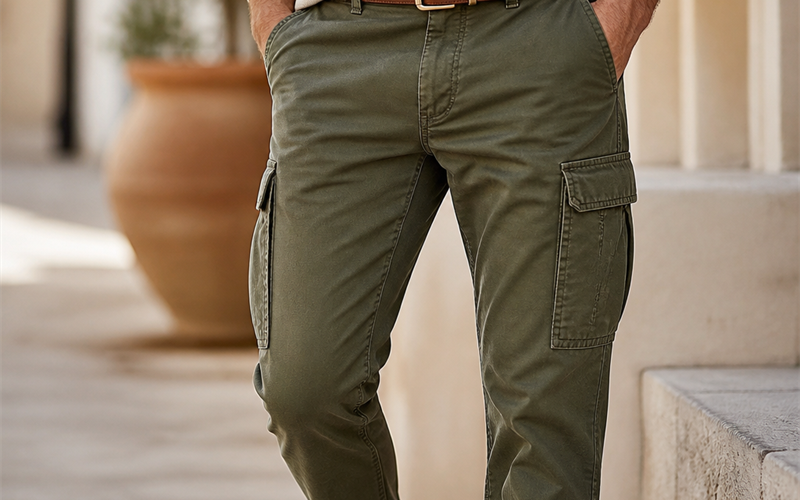
A belt is acceptable — even recommended — when the joggers are "tailored": slimmer through the leg, made from structured fabric like ponte or twill, and fitted with real belt loops. In that case a thin 30–32 mm leather belt completes a smart-casual look without dragging it toward formalwear.
This is where 2026's proportion play comes in. Elevated joggers now mimic trousers closely enough that a clean waistline matters — the kind of tailored sweatpant menswear guides recommend styling with a sleeker, ankle-narrowing silhouette. If your pair sits in smart-casual territory and you're tucking in a knit or shirt, a slim belt keeps the silhouette sharp. The trick is restraint: a narrow strap in matte brown or black, never a wide statement belt or a logo plaque. Our 1-inch slim belts are built exactly for this register.
Belt-or-Not: A Quick Reference by Pant Type
Use this table to decide in five seconds.

| Pant type | Belt loops? | Belt verdict | What to do instead |
|---|---|---|---|
| Classic fleece sweatpants | No | Skip it | Tighten the drawstring; let the cuff taper |
| Pull-on jersey joggers | No | Skip it | Drawstring only; clean white sneakers |
| Tapered tailored joggers | Yes | Slim belt OK | 30–32 mm matte leather, tonal |
| Twill/ponte "trouser-joggers" | Yes | Slim belt recommended | Tuck shirt, add a thin leather belt |
| Cargo joggers | Sometimes | Optional | Belt only if loops + tucked top |
What Belt Works Best With Tailored Joggers?
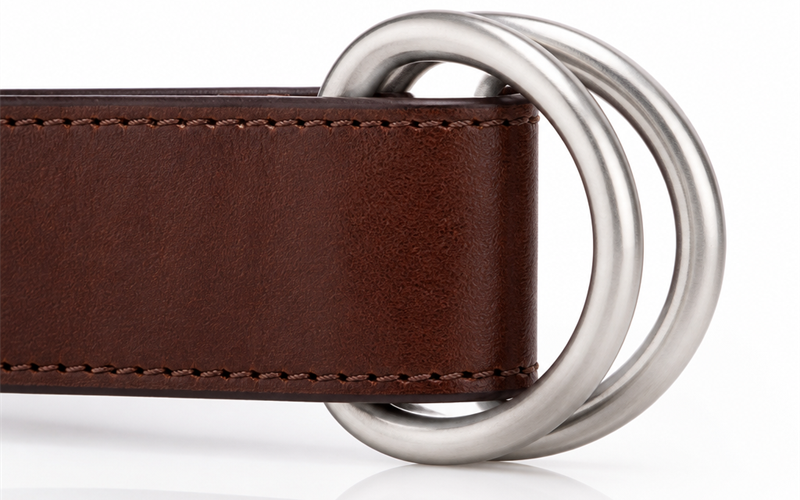
A slim, supple full-grain leather belt — 30 to 32 mm wide — in a tonal brown, black, or espresso. The goal is a quiet finishing line, so the buckle should be small and minimal: a brushed box or prong, never an oversized or branded plaque that fights the relaxed mood.

Width is the make-or-break detail. A 38 mm dress belt overwhelms a slim jogger and looks borrowed from a suit; a 30 mm strap echoes the leaner leg line. The same logic that governs a dress belt versus a casual belt applies here — match the belt's formality to the garment. For comfort over a soft waistband, a micro-adjust closure helps; our ratchet buckle belts tighten in fine increments without bulky holes. If you want one strap that crosses over to denim too, see our guide to what kind of belt to wear with jeans.
How Do You Style Joggers Without a Belt?
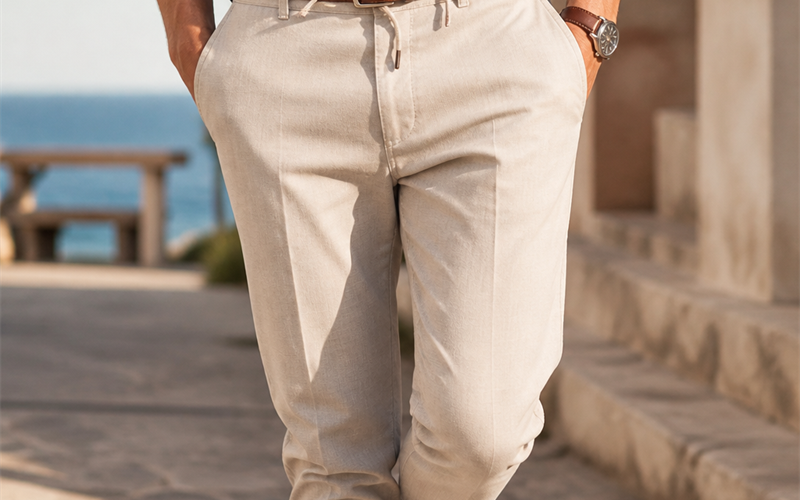
Lean into the drawstring and let proportion carry the look. Cinch the waist for structure, taper the ankle, and balance the relaxed bottom with a fitted or slightly oversized top — a crewneck, quarter-zip, or overshirt. Clean sneakers ground it. No belt required.

For monochrome or "matching set" outfits — the look dominating 2026 athleisure — a belt would only interrupt the unbroken line, so it's better left off entirely. When you do want a leather accent in a beltless outfit, route it through footwear or a watch strap instead of the waist. The same beltless reasoning we cover for high-waisted styling holds for joggers: if the waistband holds itself up and looks clean, adding hardware is a downgrade, not an upgrade. Explore the full men's belts range for the outfits that do call for one.
The Bottom Line
In 2026, the rule for a belt with joggers is refreshingly simple: read the waistband. Drawstring and no loops? Skip the belt — the pant was designed to work without it, and forcing one in only muddies an otherwise clean, modern silhouette. Real belt loops on a tailored, trouser-adjacent jogger? A slim leather belt is fair game and genuinely sharpens the look. At BELTLEY, we'd rather you wear the right belt on the right pant than default to leather out of habit — a handcrafted full-grain strap earns its place on chinos, denim, and tailored joggers, not on a fleece tracksuit. Save the leather for where it counts, and when that moment comes, reach for a slim, tonal piece from our casual belts collection.
Frequently Asked Questions
Q: Can you wear a belt with sweatpants?
Generally no. Sweatpants have an elastic drawstring waist and no belt loops, so a belt has nothing to anchor to and looks out of place. Tighten the drawstring instead and focus the outfit on fit and footwear.
Q: Do tapered joggers need a belt?
Only if they have belt loops and you want a sharper waistline — for example, when tucking in a shirt or sweater. A slim 30–32 mm leather belt works; a wide dress belt does not. Without loops, a belt isn't needed.
Q: What size belt should I wear with tailored joggers?
A slim belt, 30 mm (1.18") to 32 mm (1.25"), in a tonal matte leather. It mirrors the leaner leg line of tailored joggers far better than a 38 mm dress belt, which looks too formal and bulky against soft fabric.
Q: Is it OK to wear a belt with athleisure in 2026?
Yes, in moderation — but only on the "elevated" end of athleisure that uses structured fabric and belt loops. On true performance or loungewear pieces, leave the belt off and let the drawstring and proportion do the styling.