Belt for Indian Wedding Guests (Sherwani vs Western Tux Options)
Quick answer: It depends on your outfit. With traditional Indian wear — sherwani, kurta, or bandhgala — you don't wear a leather belt; the silhouette is beltless, accented instead by a decorative kamarbandh or brooch. With a Western suit, wear a slim dress belt matched to your shoes. With a Western tuxedo, skip the belt entirely (suspenders or a cummerbund instead).
Last updated: May 2026 • By BELTLEY Editorial
TL;DR:
- Sherwani / kurta / bandhgala: no leather belt — use a kamarbandh or brooch if anything.
- Western suit: slim dress belt, matched to your shoes — standard rules apply.
- Western tuxedo: no belt — cummerbund or suspenders, like any black-tie look.
- Wear festive, bright colors; avoid black, white, and red (red is the bride's; black/white can be inauspicious).
Indian weddings are joyful, colorful, multi-day affairs — and as a guest, you have a real choice between traditional Indian attire and a Western look. That choice decides everything about your belt. The single most common question is "do I wear a belt with a sherwani?" — and the answer is usually no. Below we break down all three paths so you're never the guest with a chunky belt cinched over a sherwani. For the foundation of a Western dress belt, see our guide on what makes a formal belt for men.

Which Outfit Are You Wearing to the Wedding?
The belt answer follows the garment:
| Your situation | Go with |
|---|---|
| Sherwani, kurta, or bandhgala | No leather belt — the silhouette is beltless; a kamarbandh or brooch carries the accent. |
| Western suit guest | Slim dress belt matched to your shoes — standard suit rules apply fully. |
| Western tuxedo (reception black-tie) | Skip the belt — suspenders or cummerbund, per tux tradition. |
| Multi-event weekend (sangeet to reception) | Pack one espresso dress belt — it covers every Western-dress event in the lineup. |
The one belt to pack: BELTLEY's dress belts, shipped in 2–3 days.
Do you wear a belt with a sherwani?
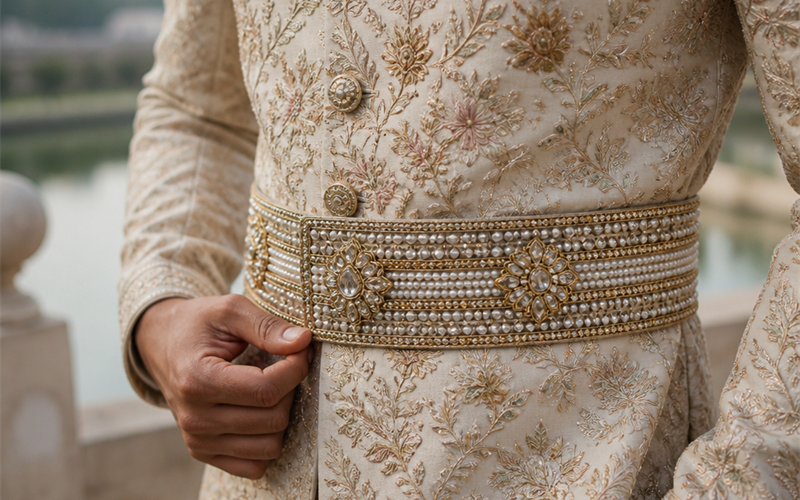
No — a sherwani isn't worn with a leather belt. The sherwani is a long, fitted coat that falls below the knees over a kurta and churidar, and its silhouette is meant to flow uninterrupted. Instead of a belt, the traditional accent is a decorative kamarbandh (waist sash) or a brooch, not Western belt-and-buckle hardware.

The garment's shape settles it. A sherwani is a long-sleeved outer coat, fitted with waist suppression, falling below the knees and buttoned down the front — a coat, not trousers that need holding up. Adding a leather belt breaks the line and reads as a styling mistake. The same goes for a kurta or a bandhgala (Jodhpuri suit): no leather belt. If you want a waist accent, the kamarbandh is the traditional, correct choice.
What belt do you wear with a Western suit to an Indian wedding?
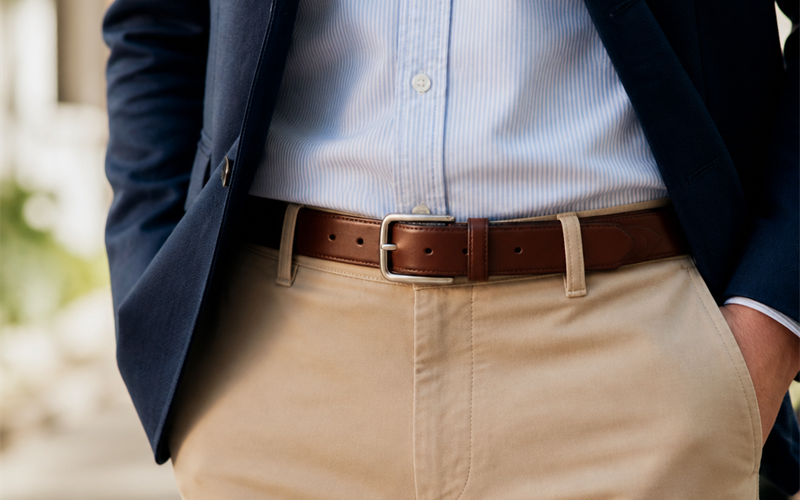
A slim dress belt matched to your shoes — standard rules. If you opt for a tailored Western suit (perfectly acceptable at many modern or U.S.-based Indian weddings), wear a refined leather dress belt in black or brown that matches your shoes, just as you would at any formal Western event. Keep the buckle understated; let your outfit's festive color do the talking.

Western looks follow Western rules. A suit's belt-looped trousers call for a proper dress belt, matched to your shoes — the principle from should your belt match your shoes. A tailored suit is completely appropriate when the invitation leans formal or Western. A clean dress belt finishes it. The festivity comes from your shirt and tie colors, not a flashy buckle.
Key stat: A sherwani falls below the knee as a buttoned coat — which is exactly why it's worn beltless: there are no trousers at the waist to hold up, so a leather belt has no place in the look.
What about a Western tuxedo?
No belt — same as any black-tie look. If the event is black-tie and you wear a tuxedo, you don't wear a belt at all. Tuxedo trousers are designed for suspenders or a cummerbund, and a belt breaks the formal line. This is identical to Western black-tie etiquette anywhere.

The tux rule is universal. As the black-tie code states, belts are never worn with tuxedo trousers — use a cummerbund or suspenders instead. So across all three formal paths, only the Western suit actually takes a belt. We cover this in depth in our cruise formal night guide, and it applies here too.
Indian wedding guest: belt by outfit
| Your outfit | Belt? | Waist detail |
|---|---|---|
| Sherwani | No | Kamarbandh or brooch (optional) |
| Kurta / kurta pajama | No | None, or light sash |
| Bandhgala (Jodhpuri suit) | No | Clean, beltless line |
| Western suit | Yes | Slim dress belt, matched to shoes |
| Western tuxedo | No | Cummerbund or suspenders |
How do you handle the different wedding events?
Match each function's formality. Indian weddings span multiple days — mehendi, sangeet, the ceremony, the reception — each with its own energy. Daytime events lean lighter and more relaxed; the ceremony and reception are the most formal. Your belt decision still follows your outfit: traditional wear stays beltless, Western suits take a matched dress belt.

Read each event, then dress to it. These celebrations are festive, colorful, multi-tradition affairs, so a sangeet might call for a vibrant Indo-Western look while the reception goes full formal. If you're mixing in Western pieces across the week, a versatile men's dress belt covers the suit days. And on color: embrace bright, festive tones, but avoid black, white, and red — red is the bride's, and black or white can be considered inauspicious.
The Bottom Line
The belt question at an Indian wedding comes down to one fork: traditional or Western. Wear a sherwani, kurta, or bandhgala and you skip the leather belt entirely — the silhouette is beltless, accented by a kamarbandh if anything. Choose a Western suit and you wear a slim dress belt matched to your shoes, like any formal occasion. Pick a tuxedo and, again, no belt. Keep your colors festive and steer clear of black, white, and red. At BELTLEY, we make refined full-grain dress belts for the Western-suit days and finely crafted exotic and artisan belts for when you want a touch of luxury under a jacket. Need a versatile belt for the celebrations? Start with our dress belt collection.
Frequently Asked Questions
Q: Do you wear a belt with a sherwani?
No. A sherwani is a long, fitted coat worn over a kurta and churidar, and its flowing silhouette isn't meant for a leather belt. If you want a waist accent, use a traditional decorative kamarbandh (sash) or a brooch instead.
Q: Can a male guest wear a Western suit to an Indian wedding?
Yes, especially at modern or U.S.-based weddings, or when the invitation leans formal or Western. Wear a tailored suit in a festive color with a slim dress belt matched to your shoes — standard Western formal rules apply.
Q: Do you wear a belt with a tuxedo at an Indian wedding?
No. Like any black-tie event, a tuxedo is worn without a belt — use a cummerbund or suspenders. Only a Western suit (with belt-looped trousers) actually takes a belt; traditional Indian wear and tuxedos do not.
Q: What colors should male guests avoid at an Indian wedding?
Avoid red (traditionally the bride's color), and black and white, which various Indian cultures consider inauspicious. Lean into bright, festive colors like blue, green, gold, and orange instead.