Belt for Court Appearance (As a Defendant, Witness, or Juror)
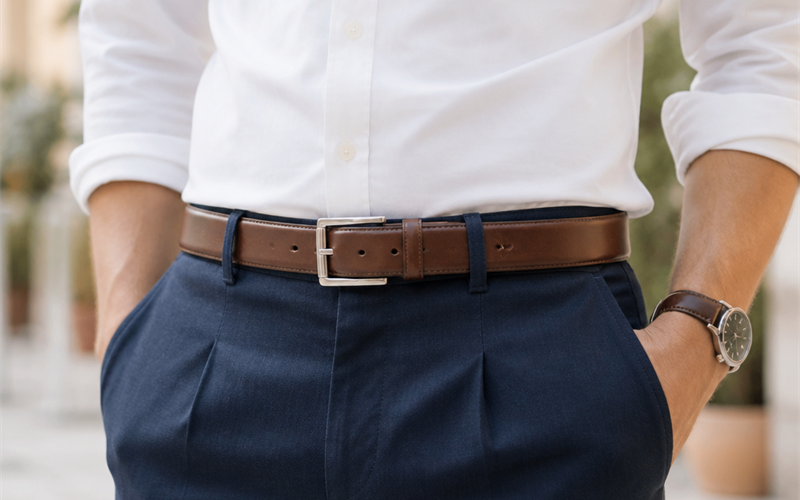
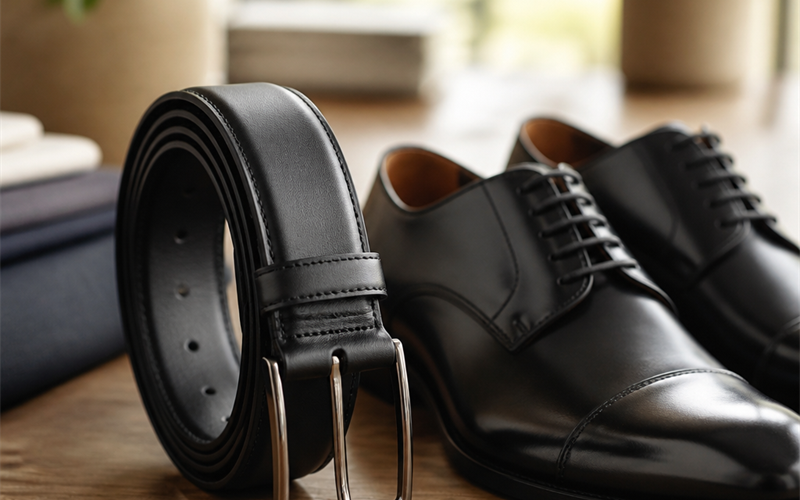
Quick answer: For any court appearance, wear a plain leather belt that matches your shoes — black with black shoes, brown with brown. A simple dark dress belt with an understated buckle signals respect for the court. Defendants and witnesses should dress business formal; jurors can go business casual. In every role, avoid loud buckles, logos, studs, and bright colors.
Last updated: May 2026 • By BELTLEY Editorial
TL;DR:
- Match belt to shoes and keep it plain — this is the universal rule across every courtroom role.
- Defendants & witnesses: business formal — a slim dark dress belt with a suit.
- Jurors: business casual — a clean leather belt with khakis or slacks is fine.
- Avoid logos, studs, statement buckles, and bright colors. The court reads your clothes before you speak.
When you're in a courtroom and you're not the attorney, your clothing still talks — sometimes louder than your words. Judges and juries form fast impressions, and a sloppy or flashy belt undercuts the respect you're trying to show. Whether you're a defendant whose credibility is on the line, a witness being weighed for believability, or a juror reporting for duty, the belt rules are simple and role-based. Below is exactly what to wear in each seat. (If you're the lawyer, see our separate guide on what belt a lawyer should wear in court.)

Courtroom Dress: Your Role, Your Belt
The bench notices details:
| Your situation | Go with |
|---|---|
| Defendant | Business formal: plain black or dark brown dress belt, understated buckle, matched to shoes. |
| Witness | Same standard — credibility is partly visual, fair or not. |
| Juror | Business casual passes — clean leather belt, no statement hardware. |
| Any role, avoid | Logos, studs, bright colors, oversized buckles — nothing that competes with neutrality. |
Quiet and correct: BELTLEY's dress belts, from $58.
What belt should you wear to court?
A plain, dark leather belt that matches your shoes. A slim black or brown dress belt with a simple, low-profile buckle is correct for any court appearance because it reads as respectful and serious. The court is a formal setting, so your belt should be understated — never a place for a statement piece.

Respect is the whole assignment. Courts ask everyone present to dress in a way that shows respect for the proceedings, and a clean dark belt is part of that. A dress belt, not a casual one, is the right category — thin, smooth, matched to your shoes. The aim is to be taken seriously, not noticed for your accessories.
What should a defendant or witness wear?
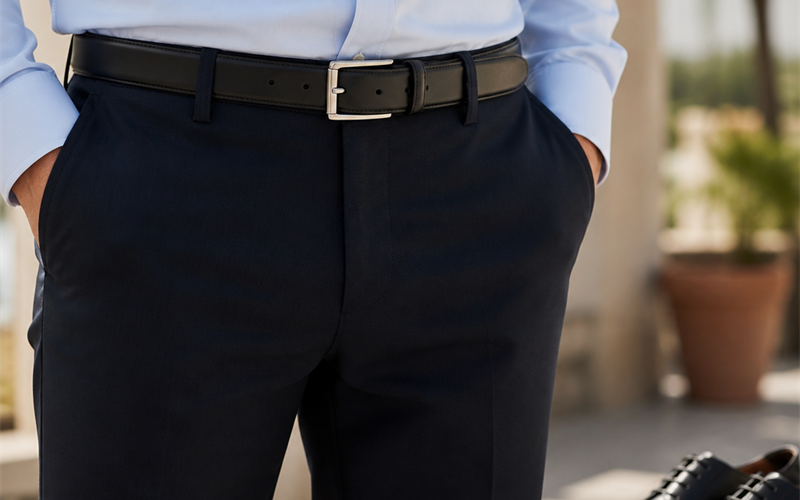
Business formal — a dark suit with a slim dress belt. If you're a defendant or a witness, you're being judged on credibility, so dress as formally as you can: a dark suit, dress shirt, dress shoes, and a matching dark leather belt. Your clothing is the first signal you send before you say a word.

The stakes raise the bar. For a defendant, your liberty can be on the line, and a witness's believability is weighed in part on appearance — the person in a suit reads as more credible than the same person in a polo. A slim black dress belt matched to black shoes completes a courtroom-formal look. If you don't own a suit, pressed slacks, a collared shirt, and a clean dress belt still land well above the minimum. A suit's belt-looped trousers call for exactly this kind of refined belt.
Key stat: Your clothing is the loudest signal you send before you speak in a courtroom — which is why defendants and witnesses are advised to dress business formal, down to a plain, matched belt.
What should a juror wear?
Business casual is the baseline. Most U.S. courts ask jurors for neat, business-casual attire — clean slacks or khakis with a collared shirt and a simple leather belt. A full suit isn't required, but the belt should still be plain and matched to your shoes. Banned items typically include hats, shorts, tank tops, and flip-flops.

Jury duty is more relaxed but still dignified. The expectation across most courthouses is clean, respectful clothing rather than a suit. A neat men's or women's dress or casual leather belt — in black or brown to match your shoes — fits the business-casual standard perfectly. Even relaxed, the courtroom is a formal space, so the "keep it understated" rule still applies.
Court belt by role
| Your role | Dress level | Belt |
|---|---|---|
| Defendant | Business formal | Slim dark dress belt, matched to shoes |
| Witness | Business formal | Slim dark dress belt, matched to shoes |
| Juror | Business casual | Clean leather belt, plain buckle, matched |
| Spectator | Dressy casual | Simple, understated belt |
What should you avoid in a court belt?
Anything attention-grabbing. Skip large logo buckles, studded or distressed belts, bright or unusual colors, and shiny statement hardware. These read as disrespectful or careless in a setting built on dignity, and they can quietly work against you when impressions matter.

The courtroom rewards restraint. Guidance for litigants and witnesses explicitly warns against casual and flashy items, and the broader principle of formal dress is to show respect and not draw attention. Save your statement or exotic belts for another day. Choose the plainest good belt you own, and make sure it fits properly — our size guide helps you land it on the middle hole for a clean look.
The Bottom Line
In court, your belt should do one thing: support a respectful, serious appearance and otherwise disappear. Match it to your shoes, keep the buckle plain, and dial the formality to your role — business formal if you're a defendant or witness, business casual if you're a juror. Skip the logos, studs, and bright colors entirely; a courtroom is no place to stand out. At BELTLEY, we make understated full-grain dress belts built for exactly these high-stakes, low-flash moments — when looking credible matters more than looking flashy. Need a reliable court-ready belt? Start with our dress belt collection.
Frequently Asked Questions
Q: What should I wear to court as a defendant?
Dress business formal: a dark suit, dress shirt, dress shoes, and a slim dark leather belt matched to your shoes. Your appearance is the first impression the judge and jury form, so err on the side of more formal and understated.
Q: Is there a dress code for jury duty?
Most courts ask jurors for business-casual attire — neat slacks or khakis, a collared shirt, and a simple leather belt. Hats, shorts, tank tops, and flip-flops are typically banned. Keep the belt plain and matched to your shoes.
Q: What color belt should I wear to court?
Match your belt to your shoes — black belt with black shoes, brown with brown. Dark, neutral colors read as the most respectful and professional in a courtroom setting.
Q: Can I wear a belt with a big buckle to court?
No. Avoid large logo buckles, statement hardware, studs, and bright colors. Courtrooms call for understated, respectful dress, so choose a plain, low-profile buckle on a dark leather belt.