Belt Buckles as Status Symbols — East vs West
Quick answer: Belt buckles signal status differently across cultures. In much of the West and in fast-growing luxury markets, a bold logo buckle is classic "conspicuous consumption" — visible wealth signaling, a concept coined by economist Thorstein Veblen in 1899. In more understated traditions and the rising quiet-luxury movement, status is signaled by subtle, logo-free craftsmanship that only the informed recognize. Loud vs quiet is the core East-West (and old-money vs new-money) divide.
Last updated: June 2026 • By BELTLEY Editorial
TL;DR:
- A logo buckle is textbook conspicuous consumption — Veblen's 1899 idea of visible wealth signaling.
- "Loud" status (bold logos) vs "quiet" status (subtle craft) is the central cultural divide.
- It maps loosely onto new-money vs old-money and shifting East-West luxury attitudes.
- The 2020s quiet-luxury shift is moving global taste toward subtle, logo-free signaling.
A belt buckle is a tiny object that carries an outsized social signal. For centuries, what sits at a person's waist has communicated wealth, taste, and belonging — but how it signals varies sharply by culture and era. In some contexts, a buckle screams status through a bold, unmistakable logo; in others, it whispers through quality so subtle only connoisseurs catch it. This loud-versus-quiet divide runs through the whole history of luxury, maps onto East-West and old-money-versus-new-money dynamics, and is shifting fast in the 2020s. This guide unpacks how belt buckles function as status symbols across cultures. It builds on our look at why designer belts are so expensive.

Which Status Language Do You Speak?
Loud or quiet — choose your signal:
| Your situation | Go with |
|---|---|
| Rooms where logos open doors | Recognized-brand hardware — conspicuous signaling is a real tool; use it knowingly. |
| Rooms where logos close them | Logo-free craftsmanship — quiet luxury is the dominant 2026 dialect. |
| Cross-cultural business life | Material quality reads everywhere; specific logos read differently per market — texture is the universal language. |
| Insider-signal preference | Genuine croc ($118–$289) — only the people you'd want to notice, notice. |
The insider signal: BELTLEY's crocodile belts.
How do belt buckles function as status symbols?
By signaling wealth, taste, and belonging at a glance. Because the buckle sits centrally and visibly, it's an ideal place to communicate status — either loudly through a recognizable luxury logo, or quietly through evident craftsmanship and materials. The buckle you choose tells others which status game you're playing: visible wealth or discerning taste.

This is fashion's oldest function. A logo buckle is a clear case of what economist Thorstein Veblen described: as the reference on conspicuous consumption explains, he "coined the term… to explain the spending of money on… luxury commodities specifically as a public display of economic power." A bold designer buckle is that display, made wearable. The quiet alternative signals status differently — through knowledge rather than logos, as we cover in are logo belts in style.
What's the difference between "loud" and "quiet" status signaling?
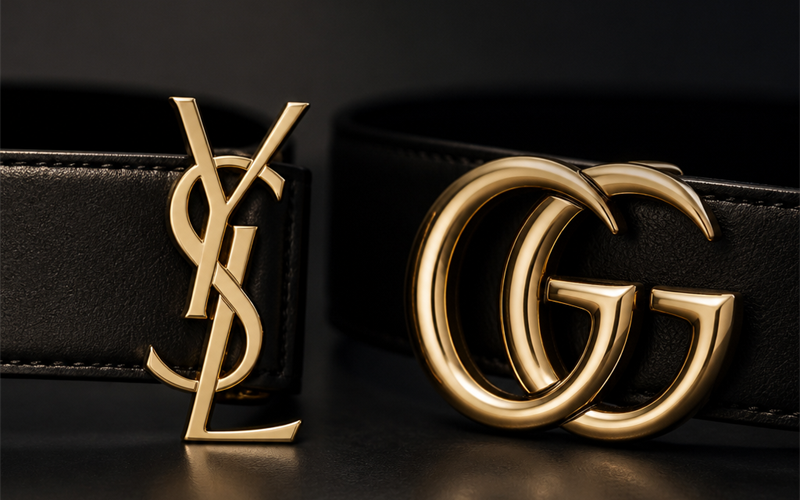
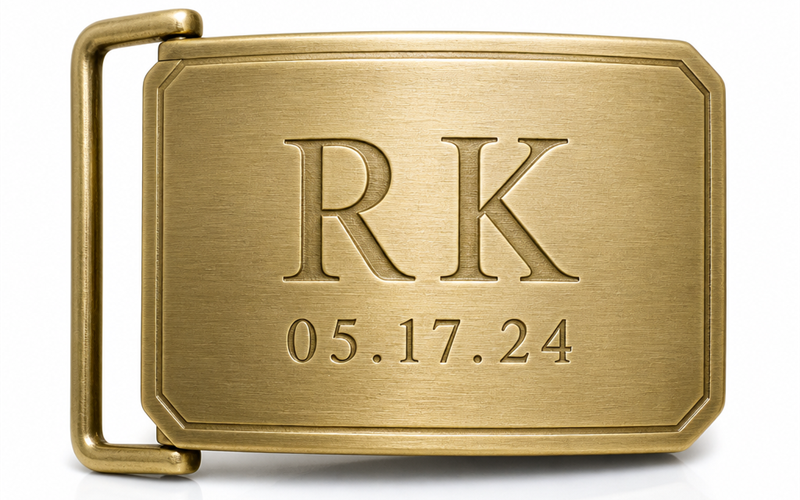
Loud signaling uses visible logos and bold emblems to broadcast wealth to everyone; quiet signaling uses subtle, logo-free quality recognized only by the informed. A big Gucci GG buckle is loud status; a clean, unbranded buckle on obviously excellent leather is quiet status. Both signal — but to different audiences and with different cultural codes.

Key stat: The concept of visible status display dates to 1899, when Thorstein Veblen coined "conspicuous consumption" — meaning the logo belt's job of broadcasting wealth is over 120 years old, long predating modern designer branding.
The distinction is really about audience and confidence. Loud signaling targets the widest possible audience — anyone who recognizes the logo gets the message. Quiet signaling targets a narrow, informed in-group and reads as more secure, since it doesn't seek mass validation. Here's the contrast:
| Dimension | Loud status (logo) | Quiet status (craft) |
|---|---|---|
| Signal | Visible brand logo | Subtle quality/materials |
| Audience | Everyone | The informed in-group |
| Associated with | New money, aspiration | Old money, connoisseurs |
| Cultural moment | Logo-mania eras | Quiet-luxury 2020s |
| Reads as | Bold, aspirational | Confident, discerning |
How does status signaling differ East vs West?
It varies by market maturity and tradition more than strict geography. Fast-growing luxury markets and aspirational consumers worldwide often favor loud, recognizable logos as clear status markers, while established-wealth cultures and understated traditions lean toward quiet, logo-free signaling. The "East vs West" framing really tracks new-money visibility versus old-money restraint — a divide present in every region.

The nuance matters: it's not that one hemisphere is loud and the other quiet. Rather, emerging luxury consumers (anywhere) tend to value the clarity of a recognizable logo, while long-established luxury cultures (anywhere) tend to prize subtle craft. As markets mature, tastes often shift from loud to quiet — a pattern playing out globally now. The dragon's status symbolism in Chinese tradition, for instance, shows how powerful emblems signal standing in the East, as we explore in our cross-cultural animal symbolism guide.
Is the quiet-luxury shift changing global status symbols?
Yes — significantly. The 2020s quiet-luxury movement is moving global taste away from loud logos toward subtle, logo-free signaling, as overt displays of wealth increasingly read as gauche. This is shifting what a "status buckle" looks like everywhere: from a bold monogram to a clean, obviously well-made buckle that signals taste rather than spend.

The pendulum is swinging hard. As the reference on quiet luxury notes, the trend rose as "overt displays of wealth increasingly came to be perceived as gauche" — a shift Highsnobiety tracks in detail in its quiet luxury trend report. That reframes the status buckle: increasingly, the highest-status move is the least branded one — solid craftsmanship with no logo to announce it. This is the philosophy BELTLEY was built on: premium materials and real craftsmanship at fair prices, with no logo tax — quiet-luxury values made accessible. Explore that approach in the full-grain leather belts collection and our piece on why minimalist no-logo buckles are the new flex.
The Bottom Line
Belt buckles have always been status symbols, but the way they signal divides along a loud-versus-quiet axis that maps onto East-West and old-money-versus-new-money dynamics. The bold logo buckle is textbook conspicuous consumption — Veblen's 120-year-old idea of broadcasting wealth to everyone — while the clean, logo-free buckle signals taste and confidence to the informed few. Neither is universally "right," but the 2020s quiet-luxury shift is moving global taste decisively toward subtle, craft-based signaling, redefining what a status buckle looks like. The most current status move is increasingly the least branded one: genuine quality without the logo. That's exactly what BELTLEY delivers — explore the full-grain leather belts and men's belts collections.
Frequently Asked Questions
Q: What is conspicuous consumption in fashion?
Conspicuous consumption, coined by economist Thorstein Veblen in 1899, is buying visible luxury goods specifically to display wealth and economic power to others. A bold designer logo belt is a classic example — its purpose is to broadcast status at a glance, making it a wearable form of visible wealth signaling.
Q: Is a logo belt a status symbol?
Yes — a recognizable designer logo buckle is a clear status symbol, signaling wealth and brand awareness to anyone who recognizes it. It represents "loud" status signaling. The alternative is "quiet" status: a logo-free, obviously well-made belt that signals taste and discernment instead.
Q: Do East and West signal status differently with belts?
Loosely — but it tracks market maturity more than geography. Aspirational and fast-growing luxury consumers anywhere often favor loud, recognizable logos, while established-wealth and understated traditions lean toward subtle, logo-free craftsmanship. The "East vs West" divide is really new-money visibility versus old-money restraint.
Q: Is quiet luxury replacing logo belts?
It's shifting the balance. The 2020s quiet-luxury movement has made loud logos read as less tasteful to many, moving global preference toward subtle, logo-free quality. Logo belts haven't disappeared, but understated, craft-driven buckles are increasingly seen as the more confident, higher-status choice.