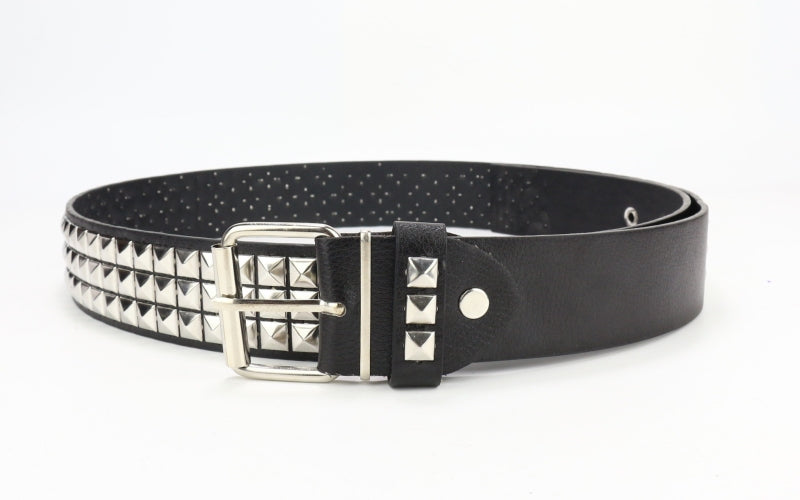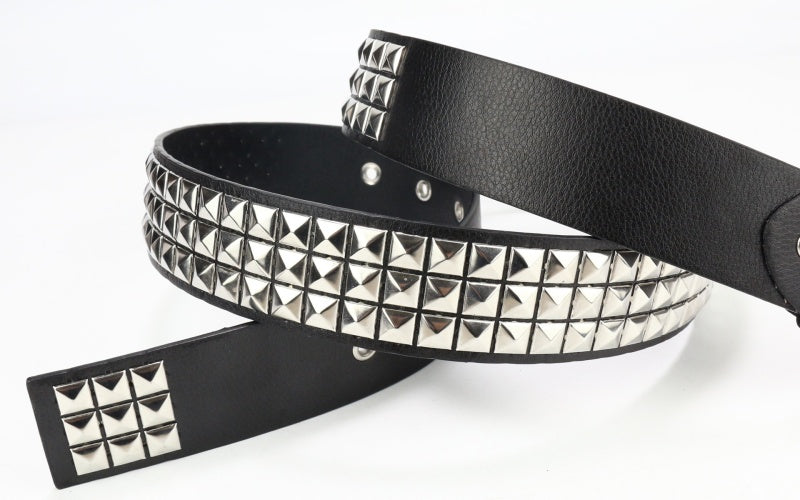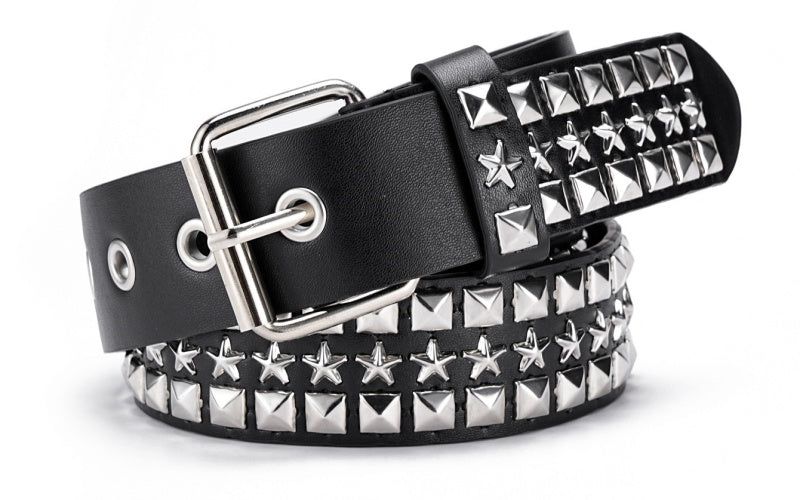
Are Studded Belts Allowed on Airplanes? TSA Rules Explained
TL;DR: Quick main takeaways
- Yes, studded belts are allowed on airplanes in both carry-on and checked luggage — the TSA does not list them as prohibited items.
- Metal studs will almost certainly trigger the metal detector, so you'll need to remove your belt during screening (unless you have TSA PreCheck).
- Spiked belts with sharp, pointed cone studs carry a small risk of being flagged as a sharp object at the officer's discretion.
You packed your favorite studded belt for a trip and now you're second-guessing yourself at the airport. Will it get confiscated? Will TSA pull you aside? Will you hold up the entire security line?
Relax. Studded belts are not prohibited by the TSA and are perfectly legal to fly with. But "allowed" and "hassle-free" are two different things. The metal hardware on a studded belt will interact with airport security systems, and how smoothly that goes depends on your stud type, the screening technology at your terminal, and whether you've planned ahead. Here's everything you need to know.

Does the TSA Allow Studded Belts on Planes?
Yes. The TSA's official "What Can I Bring?" database lists belts as permitted in both carry-on bags and checked luggage with no restrictions on studs, spikes, or embellishments. Studded belts are not categorized as weapons or sharp objects under TSA guidelines.
However, every TSA item listing carries the same disclaimer: "The final decision rests with the TSA officer on whether an item is allowed through the checkpoint." This means a heavily spiked belt with long, pointed cone studs could theoretically be flagged if an officer judges it as a sharp object — though this is exceptionally rare for standard studded belts. If you're wearing a belt with flat pyramid studs or dome rivets, you have nothing to worry about from a policy standpoint.

Will a Studded Belt Set Off the Metal Detector?
Almost certainly, yes. Standard walk-through metal detectors at airport security checkpoints are calibrated to detect metallic objects, and the combined metal mass of a buckle plus dozens of steel or brass studs easily exceeds the sensitivity threshold. According to the TSA's screening procedures, passengers are asked to remove belts before passing through metal detectors or Advanced Imaging Technology (AIT) body scanners.
Here's the practical difference between the two screening technologies:
| Screening Type | How It Works | Studded Belt Impact |
|---|---|---|
| Walk-through metal detector | Detects metallic objects only | Metal studs trigger an alarm; belt must be removed |
| AIT body scanner (millimeter wave) | Detects all objects on the body regardless of material | Any belt — metal or not — shows up; removal recommended |
The smart move: Remove your studded belt before you reach the scanner and place it in a bin. This is standard TSA advice for all belts, not just studded ones. Trying to walk through wearing it just means you'll be asked to go back, remove it, and walk through again — costing you time and patience.

Does the Type of Stud Affect Your Airport Experience?
Yes — and this is where most travelers don't think ahead. The type and material of studs on your belt determines how much extra attention you'll get at security.
- Flat dome studs (brass or steel): Trigger metal detectors but are smooth and pose zero sharp-object concern. Easiest studded style to travel with.
- Pyramid studs: The classic four-sided pointed stud. Triggers metal detectors. Rarely flagged as sharp, but more conspicuous on X-ray screens.
- Cone spikes: Tall, sharply pointed metal spikes. These have the highest (though still low) chance of drawing a second look from a TSA officer, especially if they're long enough to be perceived as a puncture risk.
- Rhinestone studs: Often set in metal prongs, so they still trigger metal detectors. However, they read as decorative jewelry on the X-ray and attract minimal scrutiny. Explore rhinestone buckle belts if you want sparkle without stress.
- Plastic or rubber studs: Won't trigger metal detectors. Will still show up on AIT body scanners. The least likely to cause any delay.
At BELTLEY, we use stainless steel for our buckles and hardware — the same grade used in surgical instruments and marine equipment. It's corrosion-resistant, hypoallergenic, and won't tarnish in your luggage. But like all metal hardware, it will register on a metal detector. The fix is simple: take it off before screening.

How to Pack a Studded Belt for Air Travel
You have three options, each with trade-offs:
1. Wear it and remove at security The most common approach. Thread your studded belt through your jeans, then remove it at the checkpoint and toss it in a bin. Simple, but adds 15-30 seconds to your screening time.
2. Pack it in your carry-on Coil the belt inside your bag before you arrive at the airport. It will pass through the X-ray machine with no issues. The TSA explicitly permits belts in carry-on luggage. This is the fastest option — you skip belt removal entirely.
3. Pack it in checked luggage The zero-risk approach. Your belt goes through checked bag screening, and you never interact with it at the security checkpoint. Best for heavily spiked or unique belts you don't want to risk being questioned about.
Pro tip: If you coil a studded belt in a carry-on, wrap it in a soft cloth or place it in a zippered pouch. Metal studs can scratch laptop screens, sunglasses, and phone cases. A well-made leather belt deserves proper care — even in transit.

Does TSA PreCheck Change Anything?
Yes — significantly. TSA PreCheck members are not required to remove belts, shoes, or light jackets during screening. You walk through a standard metal detector with your studded belt on. If it triggers the alarm, you'll be asked to remove it. But many PreCheck travelers report that moderate belt buckles and light hardware pass without issue, since PreCheck lanes use lower-sensitivity settings for pre-vetted passengers.
If you're a frequent traveler who wears statement belts, PreCheck ($78 for five years, as of 2026) is one of the best investments you can make. Global Entry ($120 for five years) includes PreCheck benefits plus expedited customs clearance — worth considering if you fly internationally with any regularity.
Are Studded Belts Allowed on International Flights?
Studded belts are permitted on international flights departing from the U.S., and most international aviation security agencies follow similar rules. The European Union's aviation security regulations require belt removal during screening but do not prohibit studded or embellished belts. The UK, Canada, Australia, and Japan follow comparable policies.
The one exception to watch: some Middle Eastern and Southeast Asian airports enforce stricter screening protocols and may inspect heavily embellished accessories more thoroughly. You won't lose your belt, but expect a brief manual inspection. If you're traveling with an exotic leather belt made from crocodile or python, also check that your destination country doesn't require CITES documentation for exotic animal products — that's a separate issue from airport security, but equally important.
Studded Belts vs. Other Statement Belts at the Airport
Wondering how other belt styles compare at airport security? Here's a quick reference:
| Belt Type | Metal Detector? | TSA Risk Level |
|---|---|---|
| Studded belt (flat/dome) | Yes | Very low |
| Studded belt (cone spikes) | Yes | Low |
| Chain belt | Yes | Low — but may get X-ray second look |
| Rhinestone belt | Yes | Very low |
| Plain leather + metal buckle | Yes | None |
| Canvas/nylon + plastic buckle | No | None |
| Braided leather + brass buckle | Yes | None |
If you're looking for a statement belt that won't trigger any alarms, a handwoven leather belt with a smaller buckle is the smoothest option. But honestly, any belt with a metal buckle — studded or not — requires removal at standard security. The studs are a non-issue once the belt is in the bin.

The Bottom Line
Studded belts are fully allowed on airplanes — the TSA does not prohibit them in carry-on or checked baggage, and no major international aviation authority bans them either.
The only practical consideration is that metal studs will trigger metal detectors, which means you'll need to remove your belt at security like most travelers do anyway.
Pack it in your carry-on for the smoothest experience, or wear it and budget an extra 30 seconds at the checkpoint. Either way, your studded belt is flying with you — no confiscation, no drama, no issue. Travel well.
Frequently Asked Questions
Q: Do you have to take off a studded belt for TSA screening?
Yes. TSA recommends removing all belts before passing through metal detectors or body scanners. Studded belts with metal hardware will trigger metal detectors, so removal is effectively required unless you have TSA PreCheck and your belt's metal mass is low enough to pass.
Q: Can you bring a studded belt in carry-on luggage?
Absolutely. The TSA permits belts — including studded belts — in both carry-on bags and checked luggage. Packing your studded belt in your carry-on is actually the fastest way through security since you avoid the removal step entirely.
Q: Are spiked belts considered weapons by the TSA?
No. The TSA does not classify spiked or studded belts as weapons. However, the final call on any item rests with the individual TSA officer. Belts with extremely long, sharp cone spikes could theoretically draw extra scrutiny, though confiscation is extremely rare.
Q: What is the best belt for airport travel?
A plain full-grain leather belt with a standard buckle is the most airport-friendly option. It still triggers a metal detector (any metal buckle will), but it passes X-ray screening without a second glance. For zero metal detection, a fabric belt with a plastic buckle is the only true "TSA-proof" choice.
Q: Will a studded belt damage other items in my bag?
It can. Metal studs and spikes can scratch screens, lenses, and smooth leather goods if packed loosely. Coil the belt with the studs facing inward and wrap it in a soft cloth or dedicated belt pouch. Proper leather belt storage habits protect both the belt and everything around it.
Q: Are studded belts allowed on planes in Europe?
Yes. EU aviation security regulations permit studded and embellished belts on flights. You'll need to remove your belt during screening, just as in the U.S. No European airport or airline bans studded belts as accessories.
.