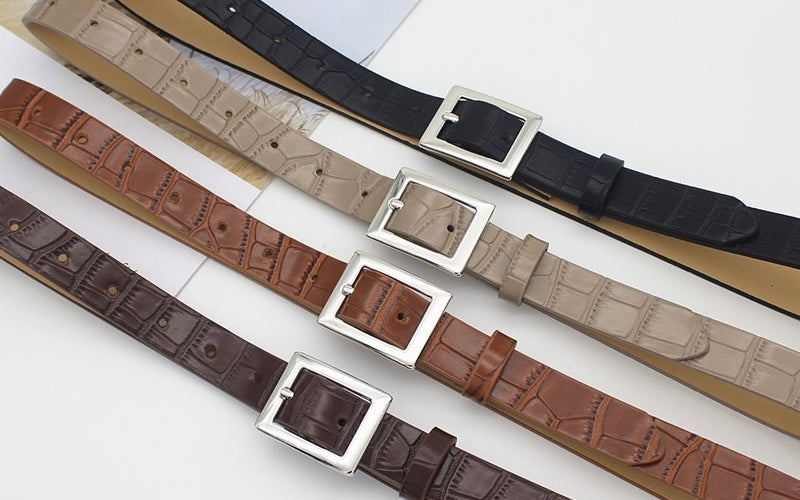
Are Stefano Ricci Belts Worth It? An Honest Price-to-Quality Analysis
TL;DR: Quick Answer
- Stefano Ricci belts are genuinely excellent in material quality and craftsmanship — hand-cut crocodile leather, Florentine artisans, precious metal buckles.
- The price tag ($1,000–$5,000+ for standard models) reflects roughly 30% materials/labor and 70% brand premium, exclusivity, and retail overhead.
- For most buyers, a DTC exotic leather belt delivers 85–90% of the material quality at 10–15% of the price — making Stefano Ricci a lifestyle purchase, not a value proposition.
A Stefano Ricci crocodile belt will cost you somewhere between $2,000 and $3,500. The leather is legitimately superb. The craftsmanship is undeniable. And the eagle-head buckle is instantly recognizable to anyone in ultra-luxury circles.
But the question people actually Google — are Stefano Ricci belts worth it — isn't about whether they're well-made. It's about whether the quality gap between a $2,500 Stefano Ricci belt and a $200 handcrafted exotic leather belt justifies a 12× price difference.
This guide breaks down the materials, the markup, the resale reality, and the alternatives so you can make that call with actual data instead of marketing copy.

Who Is Stefano Ricci?
Stefano Ricci S.p.A. is a private, family-owned Italian luxury house founded in Florence in 1972 by Stefano Ricci and his wife Claudia. The brand started as a workshop producing handmade silk ties inspired by Renaissance artistry and debuted its first commercial collection at Pitti Uomo in 1974. By the 1990s, it had expanded into full menswear — suits, shirts, accessories, and leather goods — and opened its first mono-brand store in Shanghai.
Today, Stefano Ricci operates 78 boutiques worldwide and is often described as the "clothier to the 0.001 percent." The New York Times coined that label, and the brand leans into it. Stefano Ricci even operates a private members' club in Shanghai — a 22,000-square-foot mansion accessible only to customers who spend over $100,000 annually.
In 2010, the company acquired the Antico Setificio Fiorentino, a historic silk mill operating since 1786, ensuring exclusive access to heritage fabrics. This acquisition reflects the brand's philosophy: control every stage of production, source the finest materials, and charge accordingly.
The brand is real. The heritage is legitimate. The question is whether that heritage justifies the price — especially for accessories like belts, where material costs are measurable and comparable across brands. For a broader perspective on how brands like Stefano Ricci fit into the luxury landscape, BELTLEY's ranking of the top 10 luxury belt brands provides useful context.

How Much Do Stefano Ricci Belts Actually Cost?
Standard Stefano Ricci belts range from $1,000 for calfskin models to $3,500+ for hand-selected crocodile with gold-plated eagle buckles. Diamond-encrusted limited editions with 18-karat gold hardware have reached $124,000.
Here's the current pricing breakdown by material:
| Material | Price Range | Buckle Type |
|---|---|---|
| Full-grain calfskin | $800–$1,200 | Galvanized palladium eagle |
| Ostrich leather | $1,200–$1,800 | Palladium or gold-plated eagle |
| Crocodile (matted) | $2,200–$2,800 | Gold-plated eagle or pin buckle |
| Crocodile (polished) | $2,500–$3,500 | Gold-plated or diamond-set eagle |
| Diamond/gold limited edition | $15,000–$124,000 | 18K gold with precious stones |
Prices sourced from Stefano Ricci's official site, Lyst, and 1stDibs as of early 2026.
For comparison: a Hermès Constance reversible belt starts at ~$1,080, and a Gucci GG Marmont belt runs $450–$600. Stefano Ricci sits above both in base pricing because it uses more expensive raw materials (crocodile as the default rather than calfskin) and more elaborate hardware. But the price gap between SR and its luxury peers is smaller than the gap between any of them and a well-made DTC alternative.

What Makes Stefano Ricci Belt Quality Stand Out?
The quality is genuine. Every Stefano Ricci belt is hand-cut, hand-stitched, and hand-polished by Florentine artisans in the brand's workshops near Florence. The crocodile hides are individually selected for scale symmetry, color consistency, and suppleness — a process that rejects the majority of available skins.
Three specific quality markers set Stefano Ricci apart from mid-tier luxury brands:
1. Exotic leather sourcing. SR's crocodile skins come from top-tier CITES-certified tanneries that supply a small number of ultra-luxury houses. The skins are full-belly cuts — the softest, most uniformly scaled section of the hide — rather than back cuts or flanks that cheaper brands use. At BELTLEY, we source from the same tier of CITES-certified Nile crocodile suppliers, which is why we can confirm the material quality is genuinely premium.
2. Buckle construction. The signature eagle-head buckle isn't stamped or cast from base metal. Standard versions are galvanized with palladium or gold plating over a solid metal core. High-end models use 18-karat solid gold with hand-set diamonds. This hardware represents a significant portion of the belt's material cost — often $500–$2,000 for the buckle alone.
3. Construction method. SR belts use hand-stitching with waxed linen thread, burnished and sealed edges, and a multi-step dyeing process that builds color depth rather than applying a surface coat. This is consistent with what top-grade belt makers do — the same techniques BELTLEY's artisans use on our crocodile belt collection. The craftsmanship is real. The question is what multiplier it deserves.

The Cost Breakdown: Where Does Your Money Go?
Let's take a standard $2,500 Stefano Ricci matted crocodile belt and estimate where the money lands:
| Cost Component | Estimated Amount | % of Retail |
|---|---|---|
| Crocodile hide (full-belly cut) | $300–$500 | 12–20% |
| Buckle hardware (gold-plated) | $200–$400 | 8–16% |
| Artisan labor (4–8 hours) | $150–$300 | 6–12% |
| Packaging & presentation | $50–$100 | 2–4% |
| Total COGS | $700–$1,300 | ~28–52% |
| Brand premium + retail overhead | $1,200–$1,800 | ~48–72% |
Estimates based on industry data from The VOU's Stefano Ricci pricing analysis and BELTLEY's internal knowledge of exotic leather and hardware costs.
The material cost of a Stefano Ricci crocodile belt is legitimately higher than most luxury brands — because the crocodile skin and gold-plated eagle buckle are genuinely expensive. But roughly half the retail price still goes toward brand overhead: 78 global boutiques, the private Shanghai mansion, global marketing, deliberately destroyed inventory (the brand incinerated £1.6 million in unsold product in 2018), and the profit margins expected by a house that caters to the 0.001%.
This is the core tension. The COGS is real and high. But so is the markup. For a broader look at how luxury belt pricing works, BELTLEY's analysis of why designer belts are so expensive covers the 12 factors that drive these numbers across brands.

How Does Stefano Ricci Compare to Other Luxury Belt Brands?
Stefano Ricci occupies the highest tier of mainline luxury belts, above Hermès in base pricing for comparable materials. The eagle buckle and maximalist design language position it as the boldest option in ultra-luxury — the opposite of Hermès's quiet discretion.
| Feature | Stefano Ricci | Hermès | Gucci | BELTLEY (DTC) |
|---|---|---|---|---|
| Crocodile belt price | $2,200–$3,500 | $3,000–$10,000+ | N/A (limited exotic) | $149–$299 |
| Calfskin belt price | $800–$1,200 | $1,080–$1,500 | $350–$890 | $58–$150 |
| Buckle material | Gold-plated / 18K gold | Palladium / gold-plated | Metal alloy | 316L stainless steel / brass |
| Signature element | Eagle-head buckle | H buckle | GG / interlocking G | Artisan craftsmanship |
| Handmade? | Yes (Florence) | Yes (France) | Partially | Yes (small-batch) |
| Warranty | Limited | None published | None published | 10-year |
| Style DNA | Bold, maximalist | Quiet luxury | Logo-forward | Material-forward |
| Resale retention | 25–60% | 70–80% | 40–60% | N/A |
Source comparison compiled from brand sites, The RealReal, Styleforum discussions, and BELTLEY retail data.
The Styleforum community debate between Stefano Ricci, Hermès, and Zilli summarizes the split well: SR is for the man who wants his belt noticed; Hermès is for the man who wants his taste inferred. Both deliver exceptional quality. The difference is aesthetic philosophy — and how much brand premium you're comfortable absorbing.

Do Stefano Ricci Belts Hold Their Resale Value?
Moderately. Secondhand Stefano Ricci belts typically sell for 25–60% of their original retail price, depending on condition, material, and specific model. Crocodile models retain value better than calfskin, and eagle buckle editions outperform generic buckle styles.
Here's what the resale platforms show:
- The RealReal: SR belts listed at 40–60% off retail, with crocodile models averaging 50% of original price
- Vestiaire Collective: Prices vary from $250–$700, representing 30–50% retention
- eBay: Wide range from $150–$1,500, heavily dependent on condition and authentication
- Too Good To Be Threw: A $3,600 retail crocodile belt listed at ~$960 — roughly 27% retention
Compare that to Hermès, where belts routinely retain 70–80% of retail and iconic models sometimes appreciate above retail on the secondary market. Stefano Ricci's depreciation is steeper because its customer base is narrower and brand recognition — while elite — doesn't carry the same mass-luxury cachet as the Hermès H.
If resale value matters to your purchase decision, Hermès is the stronger bet. If you're buying to wear for life and never resell, SR's depreciation is irrelevant — and the belt itself will outlast you with proper care.

Are Stefano Ricci Belts Worth It for the Average Buyer?
No — unless "average" includes a wardrobe budget where $2,500 for a belt is a comfortable, non-hesitant purchase. Stefano Ricci belts are objectively well-made. The crocodile is exceptional. The craftsmanship is among the finest in the industry. But the price-to-quality ratio peaks around $200–$400 for exotic leather belts, and everything above that is brand experience, exclusivity, and status signaling.
Here's a practical framework:
A Stefano Ricci belt IS worth it if you:
- Already own luxury wardrobe staples and want ultra-premium accessories to match
- Value the eagle buckle specifically as a recognizable design element within your social circle
- Treat it as a collectible or heirloom piece, not a cost-per-wear calculation
- Can spend $2,500+ without impacting your financial priorities
A Stefano Ricci belt IS NOT worth it if you:
- Want the best possible leather quality per dollar spent
- Prioritize material substance over brand recognition
- Would feel the purchase financially for more than a week
- Are comparing it against craft-focused alternatives that use comparable hides
For the second group — the "Smart Money" buyers who value quality over logos — a handcrafted crocodile belt from a DTC brand delivers the same CITES-certified Nile crocodile leather, artisan hand-stitching, and hardware that won't degrade, at a fraction of the cost. The hide doesn't know which label it's attached to.

The Bottom Line
Are Stefano Ricci belts worth it? As craftsmanship — absolutely. The materials are best-in-class, the Florentine artisan tradition is genuine, and the finished product will last decades. As a value proposition — no, not for most people. Roughly half the retail price of a $2,500 SR belt covers brand overhead, exclusivity theater, and the privilege of that eagle buckle. The crocodile leather underneath is available at the same quality tier from CITES-certified suppliers worldwide.
The honest answer is that Stefano Ricci sells a lifestyle, and they sell it well. If that lifestyle is yours, the belt is a natural extension of it. But if you're after the quality without the brand tax, the same exotic leathers and handcrafted construction exist at a fundamentally different price point. BELTLEY's exotic leather belt collection — Nile crocodile, alligator, elephant, python — is handcrafted by master artisans, fitted with 316L stainless steel buckles, and backed by a 10-year warranty at $58–$299. Because the leather is the luxury. The logo is optional.

Frequently Asked Questions
Q: How much does a Stefano Ricci belt cost?
Standard Stefano Ricci belts range from $800 (calfskin) to $3,500+ (polished crocodile with gold-plated eagle buckle). Diamond-encrusted limited editions with 18-karat gold hardware have reached $124,000. Secondhand models on platforms like The RealReal start around $250–$500.
Q: Is Stefano Ricci a real luxury brand?
Yes. Stefano Ricci is a legitimate, family-owned Italian luxury house founded in Florence in 1972. It operates 78 boutiques worldwide, produces all items in Italy with hand-selected materials, and maintains heritage status through its ownership of the Antico Setificio Fiorentino silk mill (operating since 1786). The brand is genuinely among the world's most exclusive.
Q: Do Stefano Ricci belts last a long time?
Yes. With proper care — conditioning the leather 2–3 times per year, storing flat or rolled, and avoiding prolonged moisture exposure — a Stefano Ricci crocodile belt can last 20+ years. The full-grain exotic hides and hand-stitched construction are built for longevity. The question isn't durability; it's whether that durability justifies a 10× premium over equally durable alternatives.
Q: Is Stefano Ricci better than Hermès for belts?
Different, not objectively better. Stefano Ricci uses bolder design (eagle buckle, maximalist aesthetic) and slightly higher-end default materials (crocodile as baseline). Hermès offers stronger resale value (70–80% vs. SR's 25–60%), wider brand recognition, and a quieter luxury aesthetic. Both deliver exceptional craftsmanship. Your choice depends on style preference and whether you value resale retention.
Q: What are good alternatives to Stefano Ricci belts?
For comparable exotic leather quality without the brand premium, DTC brands like BELTLEY offer crocodile and exotic leather belts at $99–$299. For designer belts vs. luxury brands at mid-tier pricing, Zilli ($800–$1,500) and Berluti ($500–$900) offer hand-finished exotic leather options below SR's price point.