Are Reversible Belts Good or Tacky? (It Depends on How You Roll)
TL;DR: Quick Answer
- Reversible belts are not tacky — but cheap ones absolutely are. Quality is the only variable that matters.
- A well-made reversible belt uses full-grain leather on both sides, a solid buckle mechanism, and clean bonded edges that won't separate.
- Budget reversible belts peel, crack, and develop wobbly buckles within months — giving the entire category a bad reputation it doesn't fully deserve.
You've seen the debate on Reddit threads and fashion forums: are reversible belts good or tacky? The question keeps coming up because people have had wildly different experiences — and both sides are right. A $25 reversible belt from a fast-fashion rack will embarrass you within weeks. A full-grain leather reversible belt, on the other hand, is one of the smartest wardrobe investments you can make. The difference between "good" and "tacky" comes down to exactly one thing: construction quality. Below, we break down what separates a premium reversible belt from a disposable one — and how to tell which you're holding.

Should You Buy One? Check Your Situation
The good-or-tacky answer depends entirely on who's wearing it and why:
| Your situation | Go with |
|---|---|
| Minimalist traveler | Yes — one belt, two colors, zero suitcase space. The category was invented for you. |
| Building a first work wardrobe | Yes, if it's full-grain on both faces — it stands in for two belts while you build. |
| You already own black and brown belts | Skip it — the rotation problem is already solved, and dedicated belts age better. |
| Tempted by a $20 reversible | Don't. Cheap twist mechanisms wobble and bonded edges peel — that's where the "tacky" reputation comes from. |
Quality non-reversible alternatives start at $58 in BELTLEY's full-grain collection.
Are Reversible Belts Tacky?
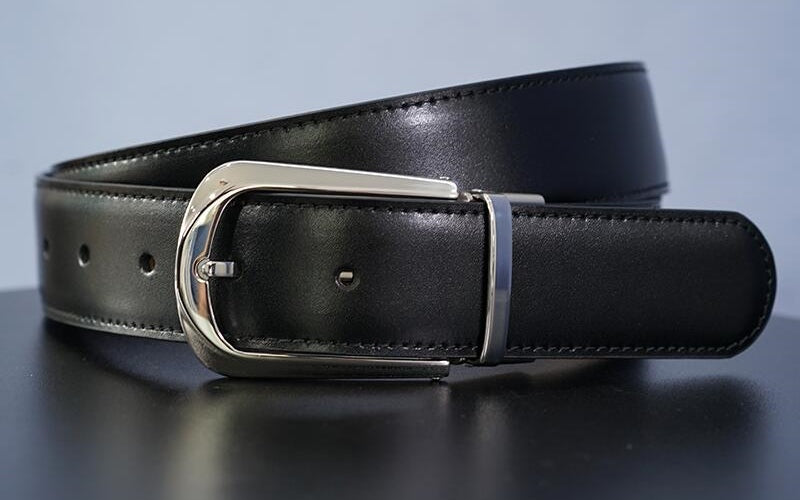
No — reversible belts are not inherently tacky. The "tacky" label applies to poorly made versions that use bonded leather, thin veneers, or flimsy buckle mechanisms. A high-quality reversible belt built with full-grain leather on both sides looks and feels identical to a standard single-color dress belt. The reversibility is invisible when worn.
The stigma comes from a real place, though. According to Obscure Belts' leather guide, many budget reversible belts are constructed by gluing a thin sheet of black leather to a thin sheet of brown leather with a filler layer in between. That layered sandwich peels apart quickly, creating the frayed edges and cracking surface that people associate with "tacky." The problem was never the concept — it was the execution.
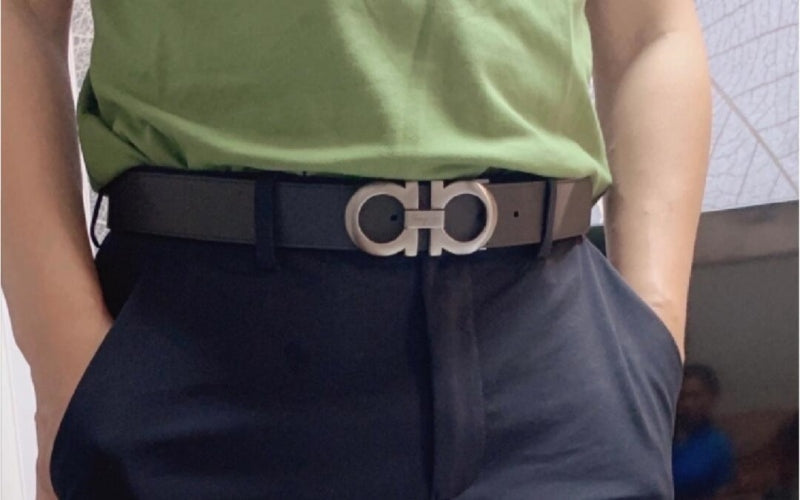
Major luxury houses including Hermès, Montblanc, and Ferragamo all offer reversible belts in their permanent collections. That alone should settle the debate: the format isn't the issue. The materials are.

The Real Pros of Reversible Belts
Reversible belts earn their place in a well-curated wardrobe for several practical reasons:
- Two colors, one purchase. A black/brown reversible belt covers the two most common belt needs in a single piece. For travelers, this means one fewer item to pack.
- Simplified wardrobe decisions. Matching your belt to your shoes is a fundamental dress code principle. A reversible belt lets you switch in seconds without digging through a drawer.
- Cost efficiency. A quality reversible belt at $80–$120 replaces two $60–$90 single belts. That's genuine savings — not a compromise.
- Versatility for work. Fashion research from Tonywell's reversible belt analysis highlights that reversible designs are especially popular among professionals who rotate between navy, gray, and black suiting throughout the week.
These advantages explain why search interest in reversible belts has climbed steadily among Gen Z and millennial buyers, who prioritize versatility and minimal wardrobes over owning dozens of single-purpose accessories. For styling ideas, our guide on how to style reversible belts for work for men covers specific outfit pairings.

What Makes a Reversible Belt Look Cheap?
The difference between a good reversible belt and a tacky one comes down to five construction details. If any of these fail, the belt crosses from "smart" to "sloppy":
| Red Flag | What Happens | What to Look For Instead |
|---|---|---|
| Bonded or "genuine" leather | Surface peels and cracks within months | Full-grain leather on both sides |
| Wobbly buckle mechanism | Buckle loosens after 200–300 rotations | Precision-machined rotating pin or clip |
| Visible glue lines at edges | Layers separate, creating frayed white edges | Heat-bonded or stitched edge sealing |
| Inconsistent thickness | Belt feels lumpy or overly stiff | Uniform caliper across the full length |
| Painted surface | Color flakes off, exposing raw underlayer | Through-dyed or drum-dyed leather |
According to a Quora discussion among menswear enthusiasts, the single most common complaint about reversible belts is edge separation — the moment the two layers start to peel apart. This is almost exclusively a problem with belts using filler material between the outer layers. Full-grain reversible belts skip the filler entirely, bonding two quality hides directly.
If you're not sure how to identify real full-grain leather, our guide on how to tell if a belt is full-grain leather walks through the tests you can do at home.

Are Reversible Belts Less Durable Than Regular Belts?
A premium reversible belt matches the durability of a standard single-sided belt. The construction method — two layers of full-grain leather bonded together — actually creates a thicker, sturdier strap than many single-layer belts. The weak point, when it exists, is always the buckle rotation mechanism, not the leather itself.
Budget reversible belts tell a different story. Jose Real Shoes' belt analysis notes that cheap models use a veneer of leather over a cardboard or synthetic core, which degrades quickly under the stress of daily wear. The buckle pin also loosens in low-quality models, causing the belt to flip unintentionally — the definition of "tacky" in real-world use.
For a deeper breakdown of longevity factors, our article on whether reversible belts are less durable covers material testing, edge treatment, and buckle engineering in more detail.
At BELTLEY, our reversible belts — like the LuxeAffair Reversible Black/Navy — use full-grain leather on both sides with a stainless steel buckle mechanism rated for thousands of rotations. We back them with the same 10-year warranty we put on every belt we make, because the construction earns it.

Who Should (and Shouldn't) Buy a Reversible Belt
A reversible belt is a smart choice if you:
- Travel frequently and want to minimize packing
- Rotate between black and brown shoes during a work week
- Prefer a capsule wardrobe with fewer, more versatile pieces
- Want a quality dress belt without buying two separate pieces
Consider a dedicated single-color belt instead if you:
- Wear one belt color 90%+ of the time (just buy that one in the best quality you can afford)
- Prefer very thick, rugged belts — the double-layer construction of reversible belts adds width that doesn't suit every aesthetic
- Want exotic leather options — reversible belts are typically offered in cowhide, not crocodile or alligator
For women looking for specific pairing advice, our guide on how to style reversible belts for work covers outfit combinations that make the most of a two-tone design.

The Bottom Line
Are reversible belts good or tacky? The belt itself decides. A full-grain reversible belt with a solid buckle mechanism and clean edge treatment is a genuinely smart accessory — versatile, professional, and built to last years. A cheap one with bonded leather and a wobbly buckle is tacky before it even leaves the store.
The answer isn't to avoid reversible belts. It's to demand the same quality you'd expect from any belt you plan to wear daily. Invest in materials that age well, hardware that holds up, and craftsmanship that doesn't cut corners.
Ready to see the difference quality makes? Browse BELTLEY's full-grain leather belt collection — every belt handcrafted, backed by a 10-year warranty, and shipped free worldwide.

Frequently Asked Questions
Q: Are reversible belts professional enough for the office?
Yes. A high-quality reversible belt in black/brown or black/navy is perfectly appropriate for business and business-casual settings. The reversibility is invisible when worn — only you know there's a second color on the other side.
Q: How long do reversible belts last?
It depends entirely on construction. A full-grain leather reversible belt with a quality buckle mechanism can last 5–10 years with proper care. Budget models using bonded leather often show peeling and edge separation within 3–6 months.
Q: Can you tell a reversible belt from a regular belt when it's being worn?
No — not if the belt is well-made. Premium reversible belts have clean, sealed edges and a buckle that sits flat, making them visually indistinguishable from single-color belts. Cheap versions may show a visible color seam at the edges, which is the giveaway.

Q: What's the best color combination for a reversible belt?
Black/brown is the most versatile and popular combination, covering the two most commonly needed belt colors for both formal and casual wear. Black/navy is a strong second choice for professionals who wear a lot of navy suiting.
Q: Are designer reversible belts worth the price?
Some are, some aren't. A designer label doesn't guarantee better construction — some luxury reversible belts still use painted finishes over lower-grade leather. Focus on the material (full-grain leather), the buckle quality (stainless steel or solid brass), and the edge finish rather than the brand name alone.
Q: Do reversible belts work with jeans?
Absolutely. A 1.38" (35mm) reversible belt pairs well with jeans for a clean casual look. Wider reversible belts (1.5"+) can look bulky with slim-cut denim, so match the width to the jean style.