Are Nickel-Free Leather Belts Safe for Metal Allergies?
TL;DR:
- Nickel allergy is the most common contact allergy — roughly 1 in 5 people in North America are affected, and belt buckles are a leading trigger point.
- Nickel-free belts are genuinely safe for people with nickel allergies, provided the buckle is made from solid brass, stainless steel, or titanium — not nickel-plated zinc alloy.
- The label "nickel-free" is not always regulated. Knowing which metals to look for (and which to avoid) is more reliable than trusting packaging claims.
Red, itchy skin right where your belt buckle sits? You're not imagining it, and you're not alone. Nickel contact dermatitis from belt buckles is one of the most commonly reported skin reactions in dermatology — and it's entirely preventable once you know what to look for. Here's a clear breakdown of which belt buckle materials are genuinely safe for metal allergies, which ones aren't, and how to tell the difference before you buy.
Which Buckle Is Safe for Your Skin?
Match your symptoms and shopping situation:
| Your situation | Go with |
|---|---|
| Confirmed nickel allergy | Solid brass or titanium buckles — genuinely nickel-free metals, no plating to wear through. |
| Mild sensitivity, occasional itch | stainless steel — its nickel is bound in the alloy and releases almost none to skin. BELTLEY's standard hardware. |
| Rash from a belt you own | Stop wearing it; clear nail polish on the buckle back is a stopgap, not a fix. Replace the hardware. |
| Buying a gift for someone with allergies | Skip anything labeled just "metal" or "alloy" — those are nickel-plated zinc until proven otherwise. |
stainless hardware comes standard across BELTLEY's belt collections.
What Causes a Metal Allergy Reaction from a Belt Buckle?
Metal allergy reactions from belt buckles are caused by nickel ions leaching from the buckle's surface and contacting skin.

Nickel is a component of many metal alloys used in cheap hardware — including most standard zinc alloy belt buckles — and it can migrate to the skin through sweat and friction. The immune system treats nickel ions as a foreign invader, triggering an inflammatory response known as allergic contact dermatitis.
Symptoms typically appear within 12–48 hours of contact and include redness, itching, raised bumps, and in severe cases, blistering — concentrated in the area beneath the buckle. According to the American Academy of Dermatology, nickel allergy affects approximately 10–20% of the general population and is more prevalent in women than men due to jewelry exposure. Once sensitized, the allergy is permanent — symptoms will recur on every subsequent nickel exposure.
Are Nickel-Free Leather Belts Actually Safe?
A properly made nickel-free leather belt is safe for people with nickel contact dermatitis. The key word is "properly made." Genuine nickel-free buckles use base metals where nickel is either absent or structurally bonded so tightly it cannot leach out under normal wear conditions.

Safe buckle materials include:
- Solid brass — naturally nickel-free; develops a warm patina over time
- stainless steel — medical-grade; trace nickel is present but so firmly bound in the alloy matrix it does not leach under sweat exposure
- Titanium — lightest option; used in medical implants; truly nickel-free
- Solid copper — naturally nickel-free; used in artisan and heritage belt making
Unsafe or suspect materials include:
- Zinc alloy (zamak) — extremely common in budget belts; almost always nickel-plated
- Nickel silver — the name is misleading; it contains nickel and causes reactions
- Electroplated buckles — the nickel plating wears through with use, exposing the base metal and increasing leaching
Is Stainless Steel Really Nickel-Free?
stainless steel contains approximately 10–14% nickel in its alloy composition, which sounds counterintuitive for a "nickel-safe" material. However, the nickel in stainless steel is metallurgically integrated into the stainless steel matrix — it is not a surface coating and does not readily leach. Clinical testing reviewed by the European Centre for Allergy Research Foundation (ECARF) consistently shows stainless steel does not release nickel at levels sufficient to trigger contact dermatitis in the vast majority of nickel-sensitive individuals.

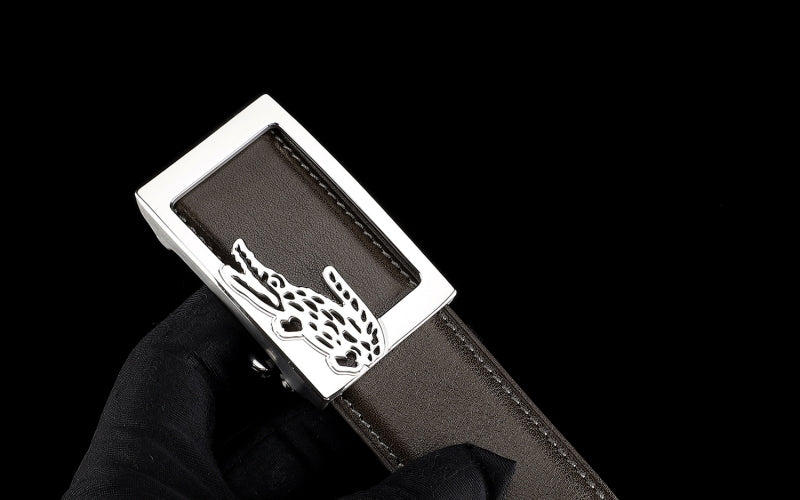
This is why stainless steel is used in surgical instruments, medical implants, and body jewelry for people with known nickel allergies. At BELTLEY, every belt buckle is made from stainless steel specifically for this reason — it provides the hardness, corrosion resistance, and polished finish of premium hardware while remaining safe for sensitive skin. Browse our stainless steel buckle belts if you need a buckle material you can trust long-term.
How to Identify Whether a Belt Buckle Is Truly Nickel-Free
The claim "nickel-free" on packaging is not universally regulated, which means verifying it yourself matters. Three practical approaches:
1. Check the material specification. Look for "stainless steel," "solid brass," or "titanium" explicitly stated — not just "metal" or "alloy." If the listing says "zinc alloy" or doesn't specify, assume nickel plating is present.
2. Use a nickel spot test kit. Dimethylglyoxime (DMG) test kits are available at pharmacies and online. They detect free nickel ions on any surface: apply a drop to the buckle, wait 30 seconds — a pink color indicates nickel. This is the same method dermatologists use. The EU REACH Regulation (Annex XVII, Entry 27) enforced by ECHA mandates that items in prolonged skin contact release less than 0.5 µg/cm²/week of nickel.
3. Avoid plated finishes on budget hardware. Polished, plated surfaces wear through at contact points. If a buckle appears shiny-new but feels light and hollow, it's likely nickel-plated zinc alloy. Solid brass and stainless steel feel noticeably heavier for their size.
For a full overview of buckle types and their material specifications, see our guide to types of belt buckles.
Which Belt Style Is Best for People with Nickel Allergies?
Beyond buckle material, the belt's construction also affects how much skin exposure occurs. Consider these factors:

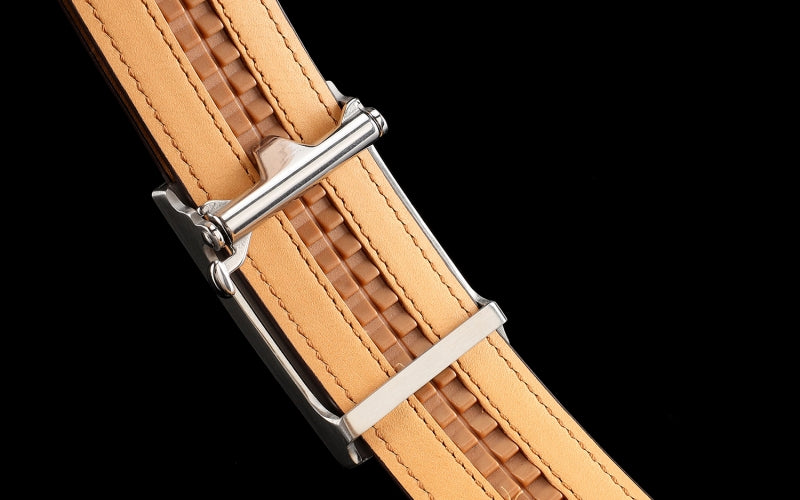
Ratchet belts vs. hole belts: Ratchet buckles have a more enclosed mechanism, meaning the metal hardware often sits further from direct skin contact. However, the buckle housing is typically larger — more surface area if the material is reactive.
Belt width: Wider belts (1.5") distribute pressure differently, potentially reducing concentrated contact in one spot. Narrower belts press the buckle more directly against the abdomen.
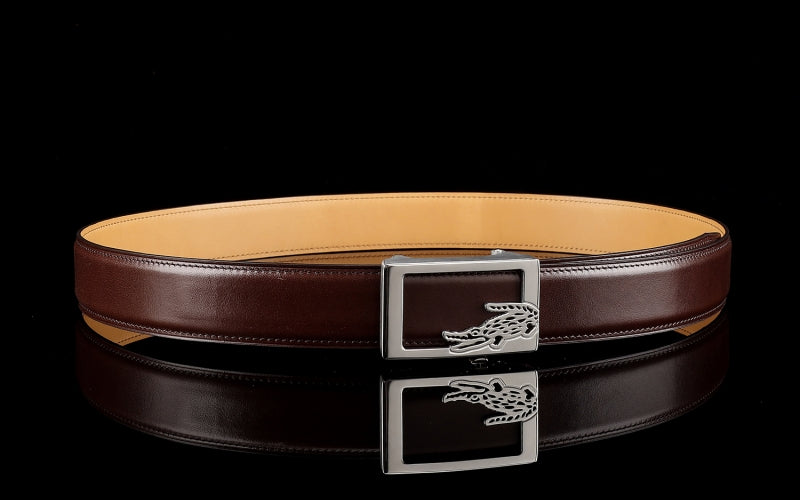
Leather quality: Full-grain leather is naturally thicker and denser, meaning the leather body itself acts as more of a buffer between hardware and skin. Thin bonded leather offers minimal separation. Our full-grain leather belt collection offers both solid brass and stainless steel buckle options — both safe for nickel-sensitive wearers.
What If I Already Own a Belt That's Causing a Reaction?
Stop wearing it immediately — continued nickel exposure can worsen sensitization. Once you've confirmed the buckle is the cause (patch test results or process of elimination), don't attempt to "coat" the existing buckle with nail polish or tape as a long-term solution. These coatings wear through quickly and reintroduce exposure. Replace the belt with one that specifies solid brass or stainless steel hardware. Our brass buckle belt collection is a safe, stylish alternative with hardware that won't trigger reactions.

The Bottom Line
Nickel-free leather belts are fully safe for metal allergies — the critical variable is what the buckle is actually made from. Solid brass, stainless steel, and titanium are the reliable safe choices. Nickel-plated zinc alloy, "nickel silver," and generic "metal alloy" buckles are not. Don't rely on labeling alone: check the material spec, and if you're unsure, use a $5 DMG nickel test kit before wearing.
BELTLEY builds every belt with stainless steel or solid brass buckles — no nickel plating, no shortcuts. Browse our full collection with confidence, or check the FAQ for more questions on materials and construction.
Frequently Asked Questions
Q: Can a leather belt cause a nickel allergy rash?
Yes — the rash comes from the metal buckle, not the leather itself. If you develop redness or itching directly beneath your belt buckle, nickel contact dermatitis is the most likely cause. Switch to a belt with a solid brass or stainless steel buckle to resolve the issue.
Q: Is solid brass nickel-free?
Yes. Solid brass is an alloy of copper and zinc with no nickel content. It is safe for people with nickel allergies and is one of the most popular hypoallergenic buckle materials for premium leather belts.
Q: How can I test if my belt buckle has nickel?
Use a dimethylglyoxime (DMG) nickel spot test kit — available online for under $10. Apply a drop to the buckle; if it turns pink, free nickel is present. This is the same method dermatologists use for patch testing.
Q: Does stainless steel trigger nickel allergies?
In most cases, no. stainless steel contains trace nickel but it is metallurgically bound and does not leach in normal wear conditions. It is used in medical implants and surgical tools and is widely considered safe for nickel-sensitive individuals. A small percentage of severely sensitized individuals may still react — patch testing with your dermatologist is recommended for extreme sensitivity.
Q: What metals should I avoid in belt buckles if I have a nickel allergy?
Avoid zinc alloy (zamak), nickel silver, white metal, and any buckle described simply as "metal alloy" without specification. These materials are commonly nickel-plated and will release nickel ions at contact points with extended wear.