Are Leather Belts Recyclable? (Yes—But Here’s the Catch)
TL;DR: Quick Answer
Here's the short answer: leather belts are technically recyclable, but you can't just toss one in your blue bin and call it a day. Most curbside recycling programs won't touch leather. It jams up the machinery designed for paper, plastic, and glass — and the sorting workers will pull it out and send it straight to the landfill anyway.
So yeah, recyclable in theory. A bit trickier in practice.
But before you throw that old full-grain leather belt in the trash, you've got way better options. Let's talk about what actually works.

Why Your Recycling Bin Rejects Leather
Municipal recycling centers are set up for specific material streams. Paper goes one way, aluminum another, plastics get sorted by resin code. Leather? It doesn't fit neatly into any of those categories.
The bigger issue is the tanning process. About 80% of the world's leather is chrome-tanned, meaning it's been treated with chromium salts to make it durable and water-resistant. Those same chemicals that make your belt last for years also make it a headache for recyclers. Chrome-tanned leather needs specialized processing that most facilities simply don't offer.
The metal buckle is a different story — more on that in a minute.

Is Leather Biodegradable?
This depends entirely on how the leather was tanned.
Vegetable-tanned leather — the kind treated with natural plant tannins like oak bark and mimosa — breaks down relatively quickly. We're talking 2 to 5 years in the right conditions. It's about as eco-friendly as leather gets.
Chrome-tanned leather is a different animal (pun intended). Because of the chemical treatment, it can take 50 years or more to decompose in a landfill. In anaerobic conditions — basically, buried under tons of garbage with no oxygen — that timeline stretches even longer.
Here's what matters though: even the slower-decomposing leather is still a natural material. Compare that to synthetic "vegan leather" belts made from PVC or polyurethane, which are essentially plastic. Those can stick around for 200+ years and shed microplastics the whole time. So when we talk about environmental impact, real leather — especially the good stuff — is still in a completely different league.

What to Actually Do with an Old Leather Belt
Alright, so you've got a belt that's seen better days. Here are your options, ranked from easiest to most creative.
1. Donate It
If the belt is still wearable, give it a second life. Thrift stores, consignment shops, and clothing donation bins all accept belts. Goodwill, Salvation Army, local shelters — they'll take them. One person's worn-in patina is another person's vintage treasure.
2. Sell or Swap It
Got a quality belt with some life left? Platforms like Poshmark, eBay, or local Facebook Marketplace groups are your friend. A well-made leather belt — especially one from a recognized brand — holds its value surprisingly well.
3. Recycle the Buckle Separately
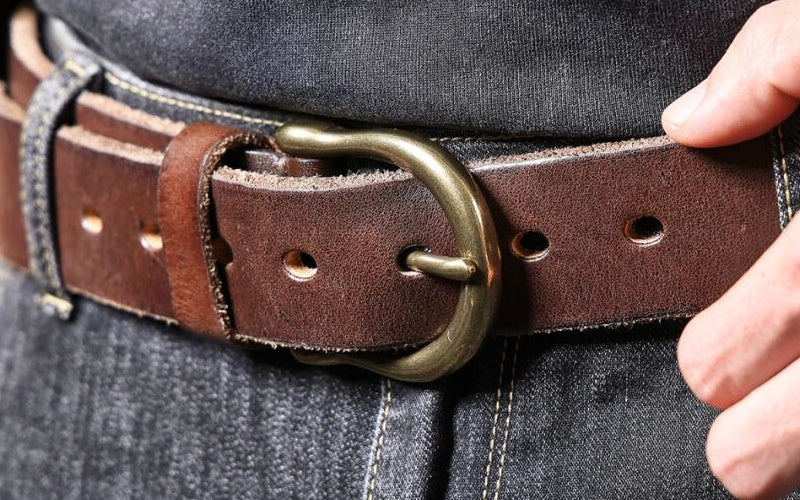
Here's a move most people miss: separate the buckle from the strap. Metal buckles — whether they're stainless steel, brass, or zinc alloy — can go to your local scrap metal recycler. The leather strap itself can sometimes be accepted by specialized leather recyclers or textile recycling programs. Call ahead though. Not every program takes leather.
4. Upcycle It Into Something New
This is where things get fun. Old leather belts are one of the most upcycle-friendly items in your closet. Some ideas that actually look good:
- Drawer pulls and cabinet handles — cut a strip, fold it, screw it on. Instant rustic upgrade.
- Camera strap — trim to length, attach with simple hardware. Photographers love this one.
- Dog collar — you're basically just resizing and adding new hardware.
- Leather bracelet or cuff — cut a strip, add a snap closure.
- Shelf brackets — loop a belt section under a wooden plank, mount to the wall. Pinterest gold.
- Journal or book strap — wrap it around a notebook for that old-school adventurer look.
The beauty of real leather is that it's a material worth working with. It's tough, it takes dye well, and it ages gracefully. You'd never bother upcycling a cheap synthetic belt because the material falls apart the moment you try to repurpose it.

5. Compost It (Maybe)
If you're dealing with a vegetable-tanned belt with no synthetic linings, glues, or finishes, you can technically compost it. Cut it into small pieces first — leather takes a while to break down even in optimal composting conditions. But if it's chrome-tanned or has synthetic components, skip this option entirely.
The Real Sustainability Move: Buy a Belt That Lasts
Here's the thing nobody talks about in these "is it recyclable?" articles. The most eco-friendly belt isn't the one that's easiest to recycle. It's the one you never have to throw away.
A cheap belt from a fast-fashion chain might cost you $15. It'll also crack, peel, and hit the trash within a year or two. Over a decade, you'll buy five or six of them. That's five or six belts in a landfill, plus all the resources that went into making and shipping each one.
A properly made full-grain leather belt — the kind built from a single piece of quality hide — lasts 10, 20, sometimes 30+ years. And it actually looks better with age. The patina that develops on well-worn leather is something you literally can't buy. You have to earn it.
At BELTLEY, every belt comes with a 10-year warranty because we know what full-grain leather and stainless steel buckles can handle. That's not marketing fluff — it's materials science. When the hide is this thick and the hardware is this solid, failure just isn't on the table.

Take Care of What You've Got
Before you even think about recycling or replacing a belt, make sure you're not retiring it too early. Leather is remarkably resilient when you treat it right.
A little leather conditioning every few months keeps the fibers supple and prevents the cracking that kills most belts prematurely. Store it properly — hanging or loosely rolled, not crammed in a drawer — and keep it away from direct heat and moisture.
A belt that's starting to look dry isn't a belt that needs replacing. It's a belt that needs a drink.

The Bottom Line
Leather belts are recyclable, but traditional recycling infrastructure isn't built for them. Your best options are donating, selling, upcycling, or recycling the metal buckle separately. Composting works only for vegetable-tanned leather without synthetic components.
But the greenest thing you can do? Stop buying disposable belts. Invest in one handmade, full-grain leather belt that'll outlast a decade of cheap replacements. Take care of it. Let it age. And if the day ever comes that it truly can't be worn anymore, turn it into a drawer pull or a dog collar and keep it going.
That's sustainability that actually makes sense.

Frequently Asked Questions
Q: Can I put a leather belt in my recycling bin?
No. Curbside recycling programs don't accept leather. It needs specialized processing that most municipal facilities can't handle. Remove the metal buckle and recycle that separately at a scrap metal recycler.
Q: How long does a leather belt take to decompose?
It depends on the tanning method. Vegetable-tanned leather breaks down in 2–5 years under natural conditions. Chrome-tanned leather can take 50+ years in a landfill. Both are significantly faster than synthetic materials, which can persist for centuries.
Q: Is real leather or vegan leather more eco-friendly?
It's complicated, but a high-quality real leather belt that lasts 20 years has a smaller environmental footprint than buying multiple synthetic belts over the same period. Vegan leather made from PVC or polyurethane is essentially plastic and doesn't biodegrade. That said, the tanning process for real leather has its own environmental costs — which is why responsible sourcing and proper care matter so much.
Q: What's the most sustainable type of leather belt?
Full-grain, vegetable-tanned leather is the gold standard. It's the most durable grade of leather, biodegrades more readily than chrome-tanned alternatives, and develops a patina that makes it look better over time rather than worse.
Q: Can I compost an old leather belt?
Only if it's vegetable-tanned with no synthetic linings, glues, or finishes. Cut it into small strips first to speed up decomposition. Chrome-tanned leather should never go in a compost pile due to the chemical residues.
Q: Where can I donate old leather belts?
Thrift stores (Goodwill, Salvation Army), consignment shops, local shelters, and clothing donation bins all accept belts in wearable condition. You can also sell them on platforms like Poshmark or eBay.