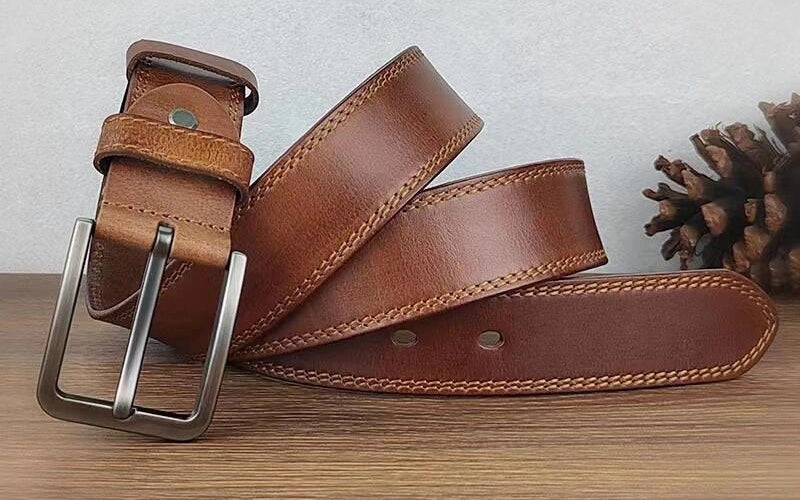
Are Leather Belts Expensive? A Guide to Investing in Timeless Quality
TL;DR: Quick Answer
- Leather belts range from $15 to $1,800+ — the spread depends almost entirely on leather grade, hardware, and brand markup
- The quality sweet spot sits at $80-$150 for a full-grain cowhide belt that will last 10-20 years
- Designer belts costing $400+ often use the same grade of leather as $100-$150 DTC alternatives — the extra cost is brand tax, not better materials
- Exotic leather belts (crocodile, alligator) legitimately cost more due to rare raw materials and specialized craftsmanship

"Are leather belts expensive?" is a deceptively simple question. A $15 Walmart belt and a $1,200 crocodile belt are both technically "leather belts" — but they share almost nothing in common beyond the category name. The real question isn't whether leather belts are expensive. It's whether the one you're looking at is priced fairly for what you're getting. This guide breaks down exactly what drives leather belt pricing, tier by tier, so you can spot a good deal — and a ripoff — from a mile away.
Spoiler: the most overpriced belts aren't always the most expensive ones. For a detailed cost analysis, see our guide on how much a leather belt should cost.

How Much Do Leather Belts Actually Cost?
Leather belt prices vary wildly based on the leather type, construction method, hardware, and brand positioning. Here's the full landscape, based on current 2026 retail pricing:
| Price Tier | Leather Grade | Typical Lifespan | What You Get |
|---|---|---|---|
| $15-$30 | Bonded / PU-coated splits | 6-12 months | Peeling edges, tarnishing buckle, disposable |
| $30-$60 | Genuine leather (lower splits) | 1-3 years | Passable appearance, cracks at fold points |
| $60-$100 | Top-grain or entry full-grain | 3-7 years | Decent durability, basic hardware |
| $80-$150 | Full-grain cowhide | 10-20+ years | Quality sweet spot — premium leather, solid hardware |
| $150-$400 | Full-grain + designer branding | 10-20+ years | Same-quality leather, added brand premium |
| $200-$600 | Exotic (crocodile, alligator, ostrich) | 15-25+ years | Rare materials, specialized tanning |
| $600-$1,800+ | Exotic + luxury house branding | 15-25+ years | Hermès/LV-tier markup on exotic skins |
The table tells a clear story: leather quality plateaus around $150 for cowhide and $600 for exotics. Everything above those thresholds is brand premium, not material premium.

What Makes Some Leather Belts More Expensive Than Others?
Four factors determine the price of any leather belt: the hide, the tanning, the hardware, and the brand. Here's how each one stacks up.
The Hide
Raw material is the single biggest variable. According to leather industry pricing data, full-grain cowhide costs $10-$15 per square foot at the tannery level. Genuine leather (lower splits) costs $2-$4. Exotic skins operate on an entirely different scale — a single crocodile belly hide can cost $150-$500+ wholesale depending on size and grade.
That's why a crocodile belt legitimately costs more than a cowhide belt. The raw material itself is 10-30x more expensive.
The Tanning Process
How leather is processed significantly affects cost and longevity. Chrome tanning takes 2-3 days and produces soft, water-resistant hides at 20-50% lower cost. Vegetable tanning takes 30-60 days using natural tree bark extracts — it's slower, more labor-intensive, and produces leather that develops a richer patina over time.
Most belts under $60 use chrome-tanned leather. Most belts above $100 use vegetable-tanned or combination-tanned hides.
The Hardware
This is where cheap belts cut corners first. A zinc-alloy buckle costs a manufacturer under $2. A solid brass buckle costs $10-$15. A stainless steel buckle — the marine-grade alloy used in quality watches — costs $15-$30. At BELTLEY, we use stainless steel and solid brass across our full-grain leather belt collection because the buckle has to last as long as the leather.
The Brand
This is the factor most buyers underestimate. A detailed cost analysis of a $400 designer belt estimates that raw materials and labor account for roughly $40 — about 10% of the retail price. The remaining 90% covers marketing, retail overhead, licensing, and profit margin. That's the "Brand Tax."
A $100 belt from a DTC manufacturer and a $450 belt from a luxury house can use leather from the same tannery, with similar stitching and comparable hardware. The difference is where it's sold and whose name is on the box.
For more on this dynamic, read why designer belts are so expensive.

Are Cheap Leather Belts a Waste of Money?
Not always — but usually. A $25 belt labeled "genuine leather" will hold your pants up for a few months. But the economics work against you over time.
Here's the math: a $25 genuine leather belt replaced every 18 months costs you $167 over 10 years (roughly 7 belts). A $120 full-grain leather belt lasts the full decade or longer. You save $47 and avoid six trips to the store.
That said, there are legitimate reasons to buy a cheaper belt:
- Trend pieces you'll wear for one season (a neon belt for a costume, a fast-fashion statement piece)
- Utility belts for physical labor where belts get damaged regardless of quality
- Testing a style before committing to a premium version
For your everyday rotation belts, though — the ones you reach for five mornings a week — cheap leather is a false economy.

Are Exotic Leather Belts Worth the Higher Price?
Exotic leather belts — crocodile, alligator, elephant, python — cost $200-$600+ for good reason. The raw materials are genuinely rare and expensive. Crocodile farming is regulated, hides are graded by individual scale patterns, and tanning exotic skins requires specialized processes that most tanneries can't perform.
A crocodile belt from BELTLEY's exotic leather collection costs a fraction of what the same hide would cost at a luxury department store — because we source directly from tanneries and sell DTC. The leather is the same. The supply chain is shorter.
If you're curious about the pricing details, our crocodile leather belt price guide breaks down what drives exotic belt costs at every tier.
But here's the honest answer: exotic belts are a want, not a need. A $100-$150 full-grain cowhide belt is structurally just as sound. You're paying for the rarity, the texture, and the visual presence of exotic leather — and that's a personal value judgment.

How to Tell If a Leather Belt Is Overpriced
Three red flags to watch for:
1. Vague leather labeling + high price If a $200 belt says "genuine leather" or "premium leather" without specifying the grade (full-grain, top-grain), you're likely overpaying for a lower-quality hide with a nice-sounding name. For help decoding labels, see is a genuine leather belt real leather?
2. Designer logo as the primary feature When the buckle logo is bigger than the quality story, the brand is selling status, not craftsmanship. A $550 Gucci belt uses calfskin leather — good quality, but not meaningfully different from what you'd find in a $120 belt from a craftsman brand.
3. No warranty or return policy Brands confident in their materials offer warranties. BELTLEY provides a 10-year warranty on materials and construction. If a brand charges $200+ and won't stand behind their product for more than 30 days, the pricing isn't justified by the quality.
The Bottom Line
Leather belts span from $15 to $1,800+, but "expensive" is relative to what you get. Budget belts under $30 are disposable. The $80-$150 range is where quality and value align — full-grain leather, solid hardware, 10-20 year lifespan. Above $150 for cowhide, you're mostly paying for brand name. Exotic leather belts carry legitimately higher material costs, but DTC pricing makes them accessible without luxury-house markups.
Browse BELTLEY's handmade belt collection — full-grain and exotic leather, stainless steel buckles, 10-year warranty, and free worldwide shipping. Quality leather at honest prices, no Brand Tax.

Frequently Asked Questions
Q: How much should a good leather belt cost?
A quality full-grain leather belt typically costs $80-$150 from a reputable brand. This range gets you premium leather that lasts 10-20 years, solid brass or stainless steel hardware, and proper edge finishing. Below $60, quality compromises are almost guaranteed. Above $200 for non-exotic leather, you're paying brand premium. See our full leather belt cost guide for details.
Q: Why are designer leather belts so much more expensive?
Designer belts from brands like Gucci, Hermès, and Louis Vuitton carry massive markups for brand equity, marketing, and retail overhead. On a $400 designer belt, materials and labor typically account for only about $40 — roughly 10%. The remaining 90% covers the brand experience, not superior leather or construction.
Q: Is genuine leather the same as full-grain leather?
No. "Genuine leather" is actually the lowest grade of real leather — made from inner hide layers that have been sanded, coated, and processed. Full-grain leather uses the top layer with its complete natural surface intact, making it significantly stronger and longer-lasting. A genuine leather belt lasts 1-3 years; a full-grain belt lasts 10-20+.
Q: Are expensive leather belts worth it?
That depends on why they're expensive. A $120 belt that's expensive because of full-grain leather and solid hardware? Absolutely worth it — you'll save money long-term. A $500 belt that's expensive because of a designer logo on the same grade of leather? Only worth it if you specifically value the brand status. For more on this, read are full-grain leather belts worth it?
Q: How much do crocodile leather belts cost?
Genuine crocodile leather belts range from $200-$600 from DTC and specialty brands, up to $1,200-$1,800+ from luxury fashion houses. The price is driven by the rarity of crocodile hides, regulated farming, and specialized tanning processes — not just brand markup.