Are Elephant Leather Belts Good Quality? The Honest 2026 Guide
TL;DR:
- Yes — elephant leather belts are exceptionally durable, with a dense, pebble-grain texture that resists scratches and daily wear better than most cowhide belts.
- The distinctive "treebark" grain makes each belt visually unique, but this same texture isn't ideal for formal dress occasions.
- Pricing ranges from $150 to $600+, depending on sourcing, craftsmanship, and buckle quality — making it a mid-to-high-tier exotic leather investment.
If you've been eyeing an elephant leather belt but aren't sure whether it lives up to the hype, you're asking the right question. Elephant hide is one of the lesser-known exotic leathers, sitting somewhere between full-grain cowhide and crocodile in both price and prestige. This guide cuts through the marketing fluff and gives you a straight answer on quality, durability, and whether an elephant belt belongs in your rotation.
For a broader look at how different animal leathers compare, check out our complete guide to which animal leather is best for belts.
What makes elephant leather different from other exotic leathers?
Elephant leather is distinguished by its dense, irregular pebble-grain surface — often called "treebark" texture — which comes from the natural folds and wrinkles of elephant hide. Unlike the smooth scales of crocodile or the tight grain of cowhide, elephant leather has a rugged, almost prehistoric appearance that no two pieces replicate.

The hide itself is incredibly thick, often 2-3 times denser than standard cowhide. This density translates directly into superior abrasion resistance and structural integrity. Where a cowhide belt might stretch and soften noticeably over a year of daily wear, an elephant belt holds its shape and surface character much longer.
Is elephant leather durable enough for daily belt use?
Elephant leather is one of the most durable exotic leathers available for belts. Its dense fiber structure resists stretching, cracking, and surface scratches far better than standard cowhide, making it an excellent choice for daily wear — especially if you work outdoors or need a belt that handles rough conditions.
The key lies in the hide's collagen fiber arrangement. Elephant skin evolved to protect an animal that moves through dense brush, rubs against trees, and endures harsh African sun. Studies on exotic hide structures confirm that elephant leather's fiber density exceeds that of cattle hide by a significant margin, which directly correlates to tensile strength and tear resistance.
In practical terms, this means:
- Minimal stretching — the belt won't sag or develop oversized holes after months of use
- Scratch resistance — the pebble grain naturally hides minor scuffs that would show on smooth leather
- Long lifespan — a well-made elephant leather belt can easily last 10+ years with basic care
If you're comparing durability across exotic options, our guide to the most durable leather belts breaks down how elephant stacks up against buffalo, bison, and full-grain cowhide.
How does elephant leather feel and look in person?
The first thing you'll notice is the texture. Elephant leather has a pronounced, three-dimensional grain that feels almost like lightly textured stone under your fingers. It's not soft or supple like lambskin — it's firm, substantial, and carries real weight.

Visually, the "treebark" pattern creates a rugged, earthy aesthetic. The grain catches light differently across its surface, giving the leather depth and character that changes depending on the viewing angle. Most elephant belts come in natural tones — black, tan, charcoal gray, and cognac — because the leather's texture is the star, not the dye.
This is not a formal dress belt leather. If you need something to pair with a tailored suit for a boardroom meeting, a smooth full-grain dress belt is the better call. Elephant leather thrives in casual, smart-casual, and rugged-elegant contexts — think dark jeans, boots, and a well-fitted jacket.
Are elephant leather belts worth the price?
Elephant leather belts typically cost between $150 and $600+, which positions them as a mid-to-high-tier exotic leather — more expensive than premium cowhide but generally less than crocodile or alligator. Whether they're worth it depends on what you value: unique texture and extreme durability justify the cost, while formal versatility does not.

Here's a quick price comparison across leather types:
| Leather Type | Typical Belt Price Range | Durability | Formal Suitability |
|---|---|---|---|
| Full-Grain Cowhide | $40 – $150 | High | Excellent |
| Elephant | $150 – $600 | Very High | Casual only |
| Crocodile/Alligator | $200 – $1,000+ | Very High | Excellent |
| Python | $150 – $500 | Moderate | Smart-casual |
| Ostrich | $120 – $400 | Moderate | Smart-casual |
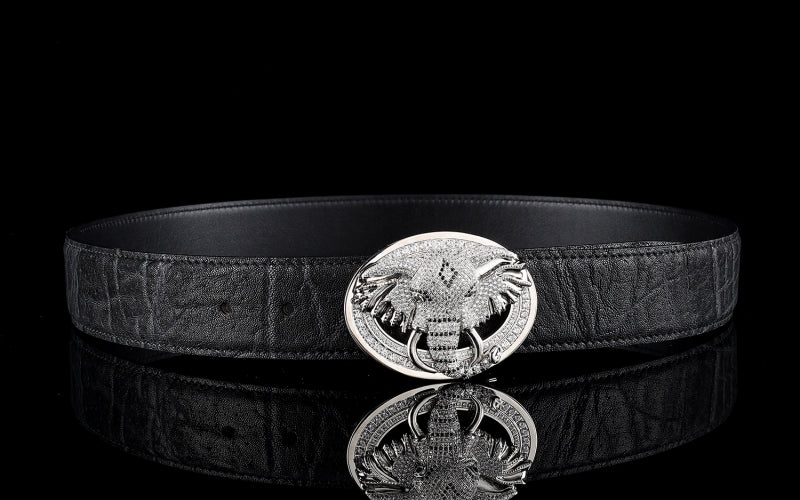
At BELTLEY, our Black Elephant Skin Belt with Chinese Long Buckle sits at $388 — competitive for a handcrafted exotic leather belt with a signature buckle. Compare that to European brands charging €800-900 for similar elephant hide straps, and the value proposition becomes clearer.
If you're exploring the full range of exotic options, browse our exotic leather belt collection to see how elephant compares side-by-side with crocodile, alligator, and python.
What should you look for when buying an elephant leather belt?
Focus on three things: full-grain construction (not corrected or split), quality buckle hardware, and authentic treebark grain pattern. These three factors separate a belt that lasts a decade from one that disappoints within a year.
Grain Authenticity
Real elephant leather has an irregular, non-repeating grain. If the pattern looks too uniform or stamped, you're likely looking at embossed cowhide masquerading as exotic. The genuine article has natural variation — deeper valleys, raised peaks, and an organic flow that can't be faked convincingly.
Construction Quality
The best elephant belts use full-grain construction, meaning the top layer of hide is preserved with its natural fiber structure intact. Avoid "genuine leather" elephant belts — that term usually indicates split leather with a surface coating, which defeats the purpose of buying exotic in the first place.
Hardware Matters
An elephant leather belt is already a statement piece. Pair it with cheap zinc-alloy hardware and the whole thing looks off. Look for solid brass, stainless steel, or bronze buckles that match the leather's premium feel. At BELTLEY, we use stainless steel and solid brass across our exotic belt range because the hardware should be as durable as the leather it holds.
For tips on choosing the right belt for your needs, see our guide to choosing a good leather belt.
How do you care for an elephant leather belt?
Elephant leather requires minimal maintenance — condition it 2-3 times per year with a quality leather conditioner, avoid prolonged water exposure, and store it flat or rolled (never folded). Its dense grain naturally repels dirt and resists drying out faster than smoother leathers.

The treebark texture actually works in your favor here. Minor scratches and scuffs blend into the grain pattern, so you don't need to baby it the way you would a polished crocodile belt. A quick wipe with a dry cloth after wear is usually enough for daily upkeep.
When conditioning, use a light hand — elephant leather is dense and doesn't absorb conditioner as quickly as cowhide. Apply a small amount, let it sit for 15-20 minutes, then buff with a soft cloth. Over-conditioning can actually soften the leather too much, reducing the structural rigidity that makes elephant belts so durable.
For detailed care instructions across all leather types, visit our leather care guide.
Are elephant leather belts legal and ethical to buy?
Yes — elephant leather belts are legal to buy and sell in most countries, including the USA, provided the hide comes from regulated, legal sources such as culling programs or natural death management in African nations like South Africa and Zimbabwe.

The elephant leather trade operates under strict CITES (Convention on International Trade in Endangered Species) regulations. The hides used in commercial leather goods come from government-managed population control programs in southern Africa, where elephant populations have actually grown beyond sustainable carrying capacity in certain reserves.
This is an important distinction: the leather industry does not drive elephant poaching. Poaching targets ivory tusks, not hides. The leather is a byproduct of legally managed programs, similar to how the beef industry utilizes cattle hide.
That said, ethical sourcing varies by manufacturer. If this matters to you, ask your seller about their supply chain. Reputable brands can trace their hides back to the source and provide documentation of legal acquisition.
The Bottom Line
Elephant leather belts are genuinely good quality — durable, distinctive, and built to last. The treebark grain gives each belt a one-of-a-kind look that cowhide simply can't replicate, and the hide's density means it'll outlast most belts in your collection.
They're not for everyone. If you need a belt that transitions seamlessly from boardroom to bar, stick with a full-grain leather belt. But if you want something that stands out, handles daily abuse, and starts conversations — elephant leather delivers.
At BELTLEY, we've worked with elephant hide long enough to know what separates a great belt from a gimmick. Every piece in our elephant leather collection is handcrafted with full-grain construction, stainless steel or solid brass hardware, and backed by our 10-year warranty. Free worldwide shipping, 30-day hassle-free returns — no Brand Tax, just honest pricing
Frequently Asked Questions
Q: How long does an elephant leather belt last?
With proper care, an elephant leather belt can last 10-15 years or more. Its dense fiber structure resists stretching and cracking far better than standard cowhide, making it one of the longest-lasting belt leathers available.
Q: Is elephant leather softer or harder than cowhide?
Elephant leather is firmer and more rigid than cowhide. It doesn't break in as quickly, but that stiffness is exactly what gives it superior durability and shape retention over time.
Q: Can you wear an elephant leather belt with a suit?
It's not recommended. The rugged treebark texture of elephant leather is too casual for formal business attire. Pair it with jeans, chinos, or casual trousers instead. For suits, choose a smooth dress belt.
Q: How can you tell if elephant leather is real?
Real elephant leather has an irregular, non-repeating pebble grain that feels three-dimensional. If the pattern looks stamped or perfectly uniform, it's likely embossed cowhide. Genuine elephant hide also has noticeable weight and thickness.
Q: Are elephant leather belts waterproof?
No leather is fully waterproof, but elephant leather's dense grain provides better water resistance than most cowhide belts. Still, avoid prolonged exposure to rain and let the belt air dry naturally if it gets wet — never use direct heat.
Q: Where can I buy a quality elephant leather belt?
BELTLEY offers handcrafted elephant leather belts with full-grain construction, premium hardware, and a 10-year warranty. We ship worldwide with free shipping and 30-day hassle-free returns.