Are Canvas Belts Good for Work? It Depends on the Job
TL;DR: Quick Answer
- Canvas belts are excellent for physical, manual, and outdoor work — lightweight, breathable, no break-in, and affordable enough to replace when worn.
- They're not appropriate for most office environments, including business casual — the texture and buckle style read as too informal.
- Your workplace dress code is the deciding factor. Physical job? Canvas works great. Desk job? Stick with leather.
"Work" means completely different things to different people. A canvas belt that's perfect for a warehouse shift would look absurd in a client meeting. So the real answer to whether canvas belts are good for work depends entirely on what kind of work you do. This guide sorts it out — covering office dress codes, physical labor, business-casual gray areas, and how to match a belt with your work outfit no matter what your job demands.

What's Your Job? That's the Answer
Canvas-for-work resolves instantly by workplace:
| Your situation | Go with |
|---|---|
| Construction, warehouse, trades | Canvas, yes — light, washable, cheap to replace when the job eats it. |
| Office, even casual-dress | Leather — canvas reads weekend in every office on earth. Full-grain from $58. |
| Outdoor fieldwork | Canvas or nylon — quick-dry beats leather in mud and rain. |
| Mixed days (site mornings, office afternoons) | A casual full-grain leather belt covers both without a mid-day swap. |
The office-and-everywhere option: BELTLEY's full-grain belts, 2–3 day shipping.
Are Canvas Belts Appropriate for Office Work?
No — canvas belts are not appropriate for most office environments. The woven cotton texture, utilitarian buckle hardware, and casual aesthetic clash with business professional and business-casual dress codes. A canvas belt with dress pants or a blazer signals "weekend errand" rather than "prepared professional."
This isn't just opinion. Indeed's business attire guide lists leather as the standard belt material for professional settings, and Buckle My Belt's dress code etiquette guide explicitly notes that leather is the only suitable material for dress and business belts. The difference between formal and informal belts comes down to material first — and canvas falls firmly on the informal side.
The one exception: ultra-casual tech offices, creative studios, and startups where jeans and sneakers are the norm. If your CEO wears flip-flops, a clean canvas belt with chinos won't raise eyebrows. But if there's any ambiguity in your office dress code, leather is always the safer call.

Where Canvas Belts Shine: Physical and Manual Work
Canvas belts were built for physical work — literally. The material traces back to military-issue web belts designed for soldiers who needed gear that was lightweight, tough, and functional under extreme conditions. That DNA translates directly to modern labor-intensive jobs.
Here's why canvas excels in physical work environments:
Lightweight and flexible. A canvas belt weighs 2–4 ounces and bends freely in every direction. You can climb ladders, squat into crawl spaces, and twist under vehicles without the belt digging into your hips or restricting your range of motion. Heavy-duty canvas is designed to prevent cutting or digging into your skin during active movement.
Breathable. Cotton-based canvas allows airflow between the belt and your waist — a real advantage during 8–10 hour shifts in hot warehouses, outdoor construction sites, or commercial kitchens. Leather traps heat against the body; canvas lets your skin breathe while you sweat.

Zero break-in period. Canvas is soft and pliable from the first wear. For workers who rotate through belts frequently or buy a replacement on short notice, this matters. Leather belts need 2–3 weeks to reach peak comfort.
Affordable to replace. Physical work destroys belts. Grease, paint, concrete dust, sweat, and constant friction take a toll on any material. Canvas belts cost $15–$40, making them easy to replace every 6–12 months without guilt. Replacing a $150 leather belt at the same rate would be painful.
Machine-washable. Most canvas belts survive a cold gentle cycle — a major advantage when your belt ends the day covered in mud, sawdust, or food splatter.
Canvas belts are well-suited for:
- Construction and trades
- Warehouse and logistics
- Landscaping and outdoor labor
- Food service and commercial kitchens
- Military and tactical roles
- Farming and agriculture

Can You Wear a Canvas Belt with Business Casual?
Generally, no. Standard business-casual dress codes — chinos or slacks, a collared shirt, and leather shoes — call for a leather belt. Canvas introduces a visual disconnect that most workplace norms don't accommodate. The matte, woven texture of canvas clashes with the polished surface of dress shoes and structured trousers.
Real Men Real Style's belt guide ranks canvas as one of the most casual belt materials, placing it below leather, braided leather, and even elastic stretch belts in formality. Business casual sits in the middle of the formality spectrum, and canvas sits at the bottom — the gap is too wide.
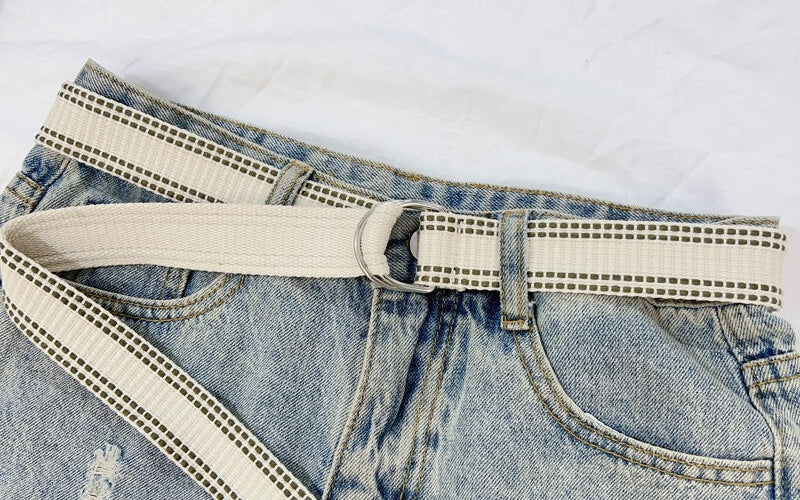
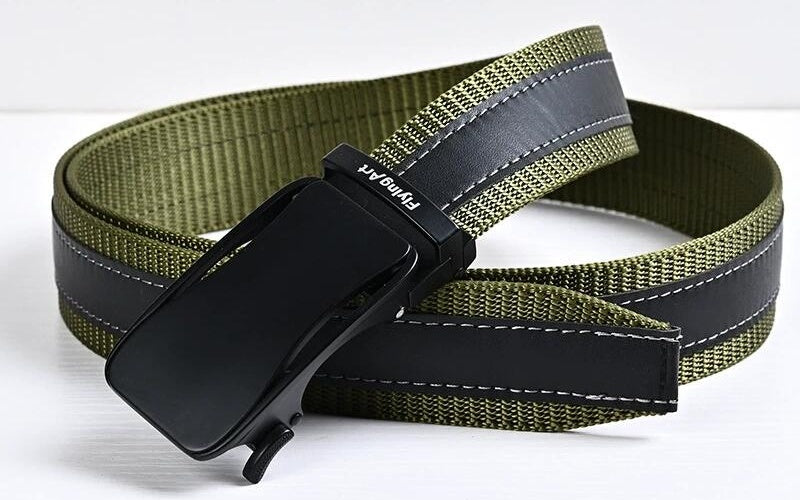
There's a narrow exception: canvas belts with leather trim. Some hybrid belts combine a canvas strap with leather end tips, a leather keeper, and a polished metal buckle. These can pass in relaxed business-casual settings (think Friday at a tech company) because the leather elements raise the formality level. But a pure canvas D-ring belt? Save it for the weekend.
If your work wardrobe straddles casual and business-casual, the smarter investment is a versatile leather belt that handles both — like a casual full-grain leather belt with a clean buckle. One belt, every situation.

Canvas Belt vs. Leather Belt for Work: Quick Comparison
| Factor | Canvas Belt | Full-Grain Leather Belt |
|---|---|---|
| Office-appropriate? | No (except ultra-casual) | Yes (all dress codes) |
| Physical labor? | Excellent | Good (but more expensive to replace) |
| Business casual? | No | Yes |
| Comfort from day one | Yes — soft immediately | No — needs 2–3 week break-in |
| Breathability | High | Moderate |
| Lifespan | 1–3 years | 10–15+ years |
| Machine-washable? | Yes (cold/gentle) | No |
| Cost | $15–$40 | $60–$300 |
| Replacement cost per year | $15–$40 | $6–$20 (amortized) |
| Aging | Fades and frays | Develops patina |
| Dress code range | Casual only | Casual through formal |
The cost comparison reveals an interesting split. For physical work where belts get destroyed regularly, canvas wins on price per replacement cycle. For office work where a belt can survive years of gentle use, leather's amortized cost is lower — and it covers every dress code scenario you'll face. For a deeper look at how belt quality affects longevity, BELTLEY's guide on leather belt durability breaks down the construction details.

What Type of Belt Is Best for Your Workplace?
The right work belt depends on your environment, dress code, and daily physical demands. Here's a quick-reference guide matched to common workplace types:
| Workplace | Recommended Belt | Why |
|---|---|---|
| Corporate office | Full-grain leather dress belt (1.25"–1.38") | Required for professional dress codes |
| Business casual | Leather casual or dress belt | Polished enough for meetings, relaxed enough for daily wear |
| Creative / tech startup | Leather or clean canvas with leather trim | Depends on company culture — observe your team |
| Construction / trades | Canvas or nylon web belt | Lightweight, breathable, cheap to replace |
| Warehouse / logistics | Canvas or heavy nylon | Durability under physical stress; machine-washable |
| Outdoor / field work | Canvas or nylon | Weather-resistant, quick-drying, no break-in |
| Food service / kitchen | Canvas or synthetic | Machine-washable; no conditioning needed |
| Retail | Leather casual belt | Visible to customers; needs professional look |
For office settings, a dress belt in black or brown covers most professional situations. If your workplace falls into the business-casual category, a 1.38" leather belt with a low-profile buckle is the most versatile option. For guidance on choosing the right belt for your build and style, check out BELTLEY's how to choose a good belt for guys.

The Bottom Line
Are canvas belts good for work? For physical, manual, and outdoor jobs — absolutely. Canvas delivers comfort, breathability, and affordability that make it the practical choice for environments that destroy belts regularly. For office work, business settings, or any role with a formal or business-casual dress code — no. Canvas reads as too informal, and leather is the expected standard.
The smartest approach is owning both. Keep a canvas belt in your locker or gym bag for active days, and a quality leather belt for every situation where appearance matters. BELTLEY's men's and women's leather belts are handcrafted from full-grain hides by master artisans, fitted with stainless steel buckles, and backed by a 10-year warranty — because the belt that faces your clients, colleagues, and career should last as long as your ambition does.

Frequently Asked Questions
Q: Is a canvas belt acceptable for a job interview?
No. A job interview requires your most polished presentation, and a canvas belt is too casual for any interview setting. Wear a leather dress belt in black or brown that matches your shoes.
Q: Can I wear a canvas belt with khakis to work?
Only if your workplace has a very casual dress code (jeans-and-sneakers environment). For standard business-casual offices where khakis are paired with collared shirts and leather shoes, a leather belt is the correct choice. The canvas-and-khaki combo reads as weekend-casual, not work-appropriate.
Q: How long does a canvas belt last with daily physical work?
Under heavy daily use — construction, warehouse, outdoor labor — expect 6–12 months before significant fraying, stretched webbing, and buckle-attachment weakening. Coated canvas belts with reinforced stitching can stretch that to 12–18 months. Either way, plan on at least one replacement per year.
Q: Are canvas belts better than nylon belts for work?
Both have trade-offs. Canvas is more breathable and comfortable in heat; nylon is more water-resistant and dries faster. For wet or rainy outdoor work, nylon wins. For hot, dry environments, canvas is more comfortable. For a full comparison, see BELTLEY's guide on nylon belt vs. canvas belt differences.
Q: What width canvas belt is best for work?
For physical work, a 1.5" (38mm) canvas belt offers the best balance of load distribution, belt-loop compatibility, and comfort. Narrower belts can fold or twist under tool weight; wider belts won't fit standard pant belt loops.