Are Alligator or Crocodile Leather Belts Waterproof? (It’s Not a Raincoat)
TL;DR: Quick Answer
- Crocodile and alligator leather belts are water-resistant, not waterproof — brief exposure is fine, but prolonged contact causes permanent damage
- The tanning process strips the hide's natural waterproofing; glazed finishes offer more protection than matte
- Proper conditioning and quick action after water contact will keep your exotic belt looking flawless for years

You just dropped $200 on a gorgeous crocodile leather belt, and now you're staring at a cloudy sky wondering: can I actually wear this in the rain? It's a fair question — crocodiles literally live in water, so surely their skin handles moisture just fine, right?
Not quite. Here's what you need to know about exotic leather and water before you step outside.

Are Crocodile Leather Belts Waterproof?
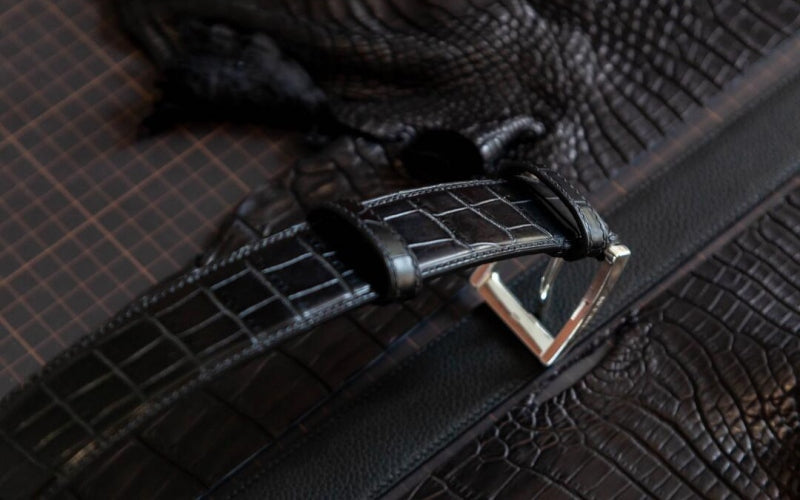
No, crocodile leather belts are not waterproof. They are water-resistant, meaning they can handle brief, incidental moisture — a few raindrops, a quick hand wash splash — without permanent harm. However, prolonged or heavy water exposure causes staining, warping, and cracking that may be irreversible.
This catches most people off guard. The logic seems bulletproof: the animal thrives in water, so the leather should too. But there's a critical step between a living crocodile and a finished belt — tanning.
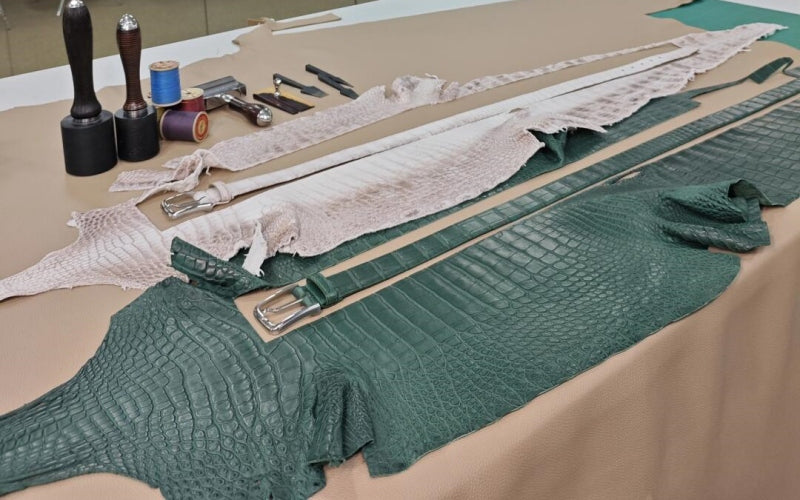
The tanning process chemically restructures the hide's collagen fibers. It strips away the natural oils, mucous layers, and cellular structures that kept the living skin waterproof. What remains is stabilized, beautiful, and durable — but no longer designed to be submerged.

Why Does Tanning Remove Natural Water Resistance?
Tanning converts raw animal skin into leather by replacing the biological waterproofing system with chemical stability. The living crocodile's skin uses mucous membranes, natural oils, and active cellular repair to repel water. Tanning replaces these with cross-linked collagen fibers that resist decay but absorb moisture differently.
According to research published on ScienceDirect, chrome tanning — used for roughly 80% of the world's leather — produces hides that are more water-resistant and stain-resistant than vegetable-tanned alternatives. Most quality exotic leather belts use chrome or combination tanning methods, which provides moderate moisture protection without additional treatment.
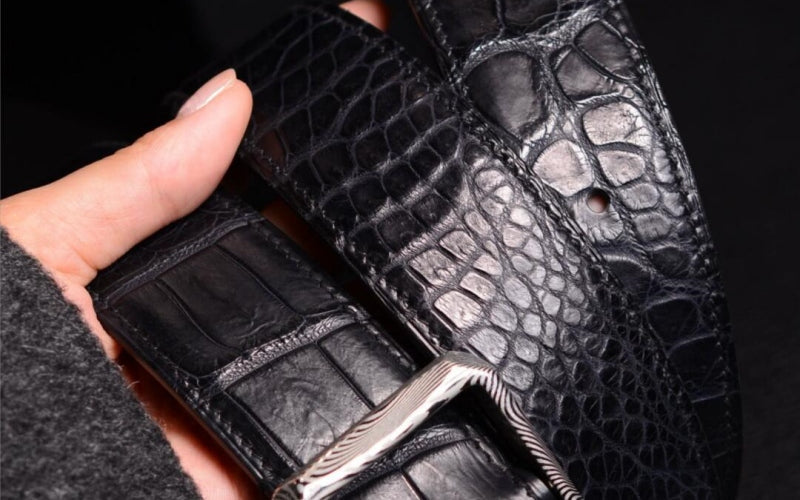
The finish applied after tanning also matters significantly. Glazed or polished crocodile leather repels surface moisture better than matte or natural finishes because the polishing process compresses the surface fibers and adds a protective sheen. If water resistance ranks high on your priority list, a glazed finish is the smarter choice.
Does Alligator Leather Handle Water Better Than Crocodile?
Alligator and crocodile leather perform nearly identically against water. Both are crocodilian hides processed through similar tanning methods, so their water resistance depends far more on the finish and tanning technique than on the species itself.
One practical difference: alligator leather tends to have a slightly softer, more pliable texture, as noted by suppliers like Panam Leathers. This means alligator may absorb surface moisture marginally faster if left untreated. But the difference is negligible for everyday wear. If you're choosing between the two, base your decision on appearance and pattern preferences rather than water performance.
What Happens if Your Exotic Leather Belt Gets Wet?
Water exposure causes spotting, stiffness, and eventual cracking as moisture strips the leather's essential oils. The severity depends on how much water, how long it sits, and how quickly you respond.
Here's what happens at each stage:
- Light splash (seconds): Surface spots that usually fade after proper drying and conditioning
- Moderate exposure (minutes in rain): Visible water marks, slight stiffening of the leather
- Prolonged soaking: Permanent warping, color loss, dried-out fibers that crack and flake — often irreparable
The real threat isn't dramatic rainstorms, though. It's daily sweat. Your belt sits against your waist for hours, absorbing body moisture and salt. Over months, this gradual exposure does more cumulative damage than an occasional rain shower. That's why regular conditioning matters even if you never get caught in a storm — something we cover in detail in our leather care guide.

How to Protect Your Crocodile or Alligator Belt From Water Damage
Prevention beats repair every time. Follow these steps to maximize your belt's lifespan and durability:
Condition regularly. Apply a reptile-specific leather conditioner every 4-6 weeks. This replenishes the oils that act as a moisture barrier. Generic leather conditioners can clog exotic scales and alter the finish — always use products formulated for crocodilian leather. Chamberlain's Leather Milk and Bickmore Exotic are solid choices.
Rotate your belts. Letting your belt rest between wears allows absorbed body moisture to evaporate fully. Two belts in rotation last more than twice as long as one belt worn daily. Check our guide on keeping a leather belt in good condition for more rotation tips.
Store properly. Keep your belt in a cool, dry location — ideally hung or loosely coiled in a breathable dust bag. Never store exotic leather in plastic, which traps humidity and accelerates deterioration.
Use a water-repellent spray cautiously. Some silicone-free sprays designed for exotic leather can add a layer of water resistance. Test on an inconspicuous area first. As Tandy Leather notes, waterproofing treatments can alter the look and feel of leather, so proceed carefully.

What Should You Do if Your Belt Gets Wet?
Act within the first two minutes — blot immediately with a clean, dry white cloth, then air dry slowly away from heat. Speed matters more than technique here.
Follow this emergency protocol:
- Blot — press gently with a lint-free white cloth. Don't rub, which pushes moisture deeper into the fibers
- Shape — lay the belt flat on a clean towel in its natural curve. Don't hang it while wet, as gravity pulls moisture downward unevenly
- Air dry — place in a well-ventilated room at room temperature. Never use a hair dryer, radiator, or direct sunlight — heat causes exotic leather to shrink and crack
- Condition — once fully dry (4-8 hours), apply reptile-specific conditioner to restore lost oils. Read our advice on whether you should condition your leather belt for detailed technique guidance
- Assess — if water marks remain after conditioning, a professional leather cleaner experienced with exotics is your best next step

Which Exotic Leathers Are the Most Water-Resistant?
Stingray leather ranks as the most naturally water-resistant exotic leather, followed by eel and arapaima. Crocodile and alligator fall in the middle of the pack.
| Leather Type | Water Resistance | Notes |
|---|---|---|
| Stingray | Very High | Calcium-filled surface resists water, scratches, and punctures |
| Eel | High | Naturally flexible; good moisture barrier |
| Arapaima | High | Freshwater fish hide; emerging exotic with strong resistance |
| Crocodile / Alligator | Moderate | Scale structure helps; finish-dependent |
| Full-Grain Cowhide | Moderate | Dense fiber structure; improves with wax treatment |
| Ostrich | Low-Moderate | Natural oils provide some protection; quill marks are vulnerable |
| Python / Snake | Low | Thin, scale-lifted edges absorb moisture easily |
| Suede (any animal) | Very Low | Napped surface acts like a sponge |
If water exposure is a frequent concern, a full-grain cowhide belt with wax treatment is the most practical daily-wear choice, while reserving your crocodile or alligator belt for occasions where the forecast cooperates.

The Bottom Line
Crocodile and alligator leather belts are built for longevity — not for swimming. They handle incidental moisture gracefully, but they are definitively water-resistant, not waterproof.
The tanning process that transforms raw hide into that stunning, scale-patterned leather also removes the biological waterproofing the animal relied on. Your best defense is regular conditioning, smart rotation, and fast action if water strikes.
At BELTLEY, every one of our crocodile belts is handcrafted from premium Nile crocodile and backed by a 10-year warranty on materials and construction — because durability should be a given, not a gamble. Browse our full crocodile and alligator belt collection and wear yours with confidence.

Frequently Asked Questions
Q: Can I wear my crocodile belt in the rain?
Yes, briefly. A few minutes in light rain won't ruin your belt. Blot it dry as soon as you're indoors and let it air dry completely before wearing it again. Avoid heavy downpours or prolonged exposure.
Q: Does sweat damage crocodile leather belts?
Yes. Daily sweat exposure is actually a bigger threat than occasional rain because it's constant and goes unnoticed. The salt and moisture gradually strip the leather's oils. Condition your belt every 4-6 weeks and rotate between multiple belts to minimize sweat damage.
Q: Can you waterproof a crocodile or alligator belt?
You can improve water resistance with silicone-free exotic leather sprays, but you cannot make any leather truly waterproof. These sprays add a thin protective layer that buys you extra time in wet conditions. Always test on a hidden area first, as some products alter the leather's appearance.
Q: How do I remove water stains from my exotic leather belt?
Blot the area gently, air dry fully, then apply a reptile-specific conditioner. For stubborn marks, lightly dampen the entire belt surface to create an even tone, then dry and condition uniformly. If stains persist, consult a professional leather cleaner who specializes in exotic skins.
Q: What is the most waterproof exotic leather?
Stingray leather is the most naturally water-resistant exotic. Its calcium-reinforced surface structure creates an almost armor-like barrier against moisture, scratches, and punctures. However, stingray isn't commonly used for belts due to its rigidity.
Q: How long do crocodile leather belts last with proper care?
A well-maintained crocodile belt lasts 10-20 years or longer. Regular conditioning, proper storage, and avoiding prolonged water or heat exposure are the keys to maximizing lifespan. BELTLEY backs every crocodile belt with a 10-year warranty covering materials and construction defects.