When and How to Wear a Braided Belt: The Ultimate Guide
A braided belt does something that plain leather belts can't: it adds texture and visual interest without trying too hard. It's the belt equivalent of rolling up your sleeves — casual, intentional, and instantly more interesting.
But there's a catch. Wear a braided belt in the wrong context, and it looks sloppy instead of stylish. Pair it with the wrong outfit, and the texture works against you rather than for you.
Here's the straight answer: a braided leather belt works best in casual and business-casual settings. It's not a formal belt — and that's exactly what makes it great. It fills a gap in your wardrobe that solid leather belts can't reach.
Let's break down exactly when to wear one, how to style it, and which outfits it works with (and which ones it doesn't).

What Makes a Braided Belt Different
Before we talk styling, it helps to understand what sets a handwoven belt apart from a standard leather belt.
A braided belt is made by weaving or interlacing strips of leather into a pattern — typically a three-strand braid, a diamond weave, or the tighter intrecciato technique made famous by Italian leather houses. The result is a belt with built-in texture, natural flex, and a slightly relaxed aesthetic that flat leather simply can't replicate.
There are a few key practical differences, too:
- Fit flexibility. Most braided belts don't use traditional holes. The prong of the buckle slips between the weave anywhere along the belt, which means you get micro-adjustable sizing. No more choosing between "one notch too tight" and "one notch too loose."
- Movement. The woven construction gives a braided belt natural flexibility. It moves with you instead of sitting rigid against your waist — which matters more than you think during a full day of wearing one.
- Visual weight. A braided belt reads lighter and less structured than a solid belt, even at the same width. That visual quality is what makes it inherently casual.

When to Wear a Braided Belt (The Dress Code Guide)
This is the question most people really want answered. Here's a definitive breakdown by dress code.
Casual — Yes, Always
This is home base for braided belts. Jeans, chinos, shorts, linen pants — a braided belt is the natural companion to everything in your casual wardrobe.
The texture of the braid pairs especially well with relaxed fabrics and fits. Think untucked linen shirts, rolled-up chinos, weekend denim. The belt adds just enough detail to make the outfit look considered without looking overdressed.
Best casual pairings:
- Jeans + tucked-in tee or henley
- Chino shorts + polo shirt
- Linen pants + camp collar shirt
- Dark denim + casual button-down
If you're wondering what kind of belt to wear with jeans, a braided belt in saddle brown or espresso is almost always the right answer for a relaxed weekend look.
Business Casual — Yes, With the Right Belt
Here's where people get it wrong. They assume "braided" automatically means "too casual for the office." That's only true if you're wearing the wrong braided belt.
A slim, tightly woven leather braid in a dark color (black, espresso, or deep brown) pairs perfectly with business-casual outfits. The key is the weave density and the leather quality. A chunky, loose braid? Too casual. A tight, fine-grain weave with a clean buckle? That's business appropriate.
Business casual pairings that work:
- Tailored chinos + blazer + loafers
- Dress trousers (no crease) + button-down + sport coat
- Dark jeans (no rips) + oxford shirt + leather shoes
The belt should complement your shoes in color tone. If you need a refresher, our guide on how to match belts and shoes covers the details.

Smart Casual — Yes, It's Actually Ideal
Smart casual is the braided belt's sweet spot. This dress code lives right between casual and business casual — think dinner at a nice restaurant, a gallery opening, a Saturday brunch where you want to look put together without wearing a suit.
A braided belt adds personality that a plain belt can't. It signals that you've thought about what you're wearing without looking like you tried too hard.
Formal / Black Tie — No
This one's non-negotiable. A braided belt has no place in a formal outfit. Not with a suit, not with a tuxedo, not at a black-tie event.
Formal settings call for smooth, unadorned leather with a clean buckle — typically a dress belt in 1.25" or 1.38" width. The texture of a braid, no matter how refined, breaks the clean lines that formal clothing demands.
If you're curious about the full breakdown of dress belts vs. casual belts, we've written a separate guide on exactly where each one belongs.
| Dress Code | Braided Belt? | Notes |
|---|---|---|
| Casual | Yes | The default. Almost any braided belt works. |
| Smart Casual | Yes | Ideal. Tight weave, refined leather, clean buckle. |
| Business Casual | Yes (with care) | Slim width, dark color, fine weave only. |
| Business Formal | No | Smooth leather, no texture. |
| Black Tie / Formal | No | Never. Smooth dress belt or cummerbund only. |

How to Style a Braided Belt: 7 Outfit Ideas
Enough theory. Here's how to actually wear one.
1. The Weekend Classic: Jeans + Braided Belt
The combination that started it all. A saddle brown braided belt with mid-wash jeans and a white tee is one of the cleanest casual looks you can put together. The belt's texture adds dimension that a plain belt would miss entirely.
Go with a 1.5" width for jeans — anything slimmer gets lost in the belt loops. The Artisan Braided Saddle Brown with its solid copper buckle hits this look perfectly.
2. Summer Casual: Chino Shorts + Polo
Braided belts were practically invented for warm weather. The woven texture reads "relaxed," which matches the energy of shorts and a polo or linen shirt. Go for lighter leather tones — tan, cognac, or honey brown — to keep the palette warm and seasonal.
3. Italian Summer: Linen Everything
There's a reason Italian men have been pairing braided belts with linen for decades. The softness of linen and the texture of woven leather complement each other naturally. Try an intrecciato-style belt with natural or cream-colored linen trousers and an unstructured blazer. It's effortless, but it looks like a million bucks.
4. Smart Casual: Dark Jeans + Sport Coat
When the occasion calls for jeans but the vibe says "don't look sloppy," a dark braided belt bridges the gap. Pair dark indigo jeans with a well-fitted sport coat, a patterned pocket square, and a black artisan braided belt. The braided texture adds visual interest where a plain black belt would disappear.
5. Casual Friday at the Office
Khaki or olive chinos, a gingham button-down, rolled sleeves, and a braided belt. This is the move for offices where casual Friday actually means something. The belt reads casual enough to match the tone but polished enough that HR won't send you home.
6. Weekend Date Night: Tucked Shirt + Tailored Pants
Date nights call for an outfit that says "I put effort in" without screaming "I'm trying too hard." A braided belt hits that balance perfectly. Try dark trousers, a fitted button-down tucked in (this is key — braided belts only shine when they're visible), and clean leather shoes.
7. Women's Styling: Over a Dress or Tunic
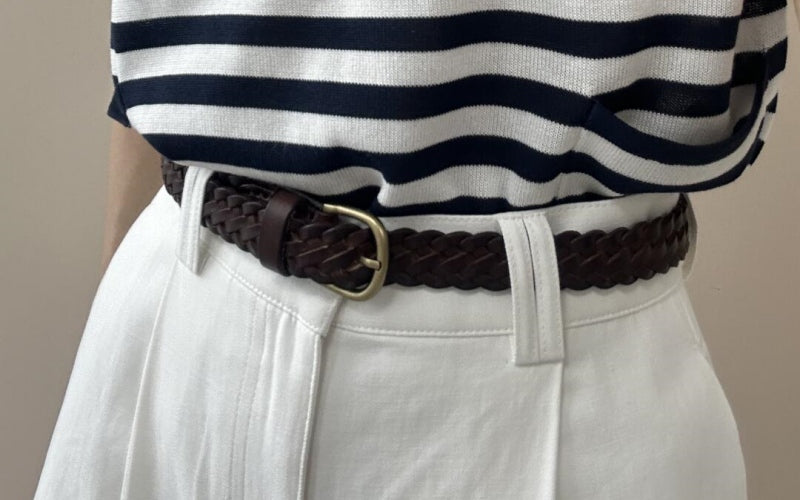
Braided belts aren't just for pants. A women's braided belt in a thinner width (1" to 1.18") worn over a loose dress, tunic, or oversized shirt creates waist definition and adds artisan texture to the outfit. Burgundy and brown braids work especially well over earth-toned or neutral dresses.

Choosing the Right Braided Belt
Not all braided belts are equal. The difference between one that looks great and one that looks cheap comes down to three things.
Leather Quality
This is where everything starts. A braided belt made from genuine full-grain leather will soften beautifully over time. The leather strips will mold to your body, the color will develop patina, and the belt will look better at year three than it did on day one.
Bonded leather or PU braids? They crack, peel, and fall apart — often within months. If the weave is going to showcase the leather this prominently, you need leather that can handle the spotlight.
Weave Tightness
The tighter the weave, the dressier the belt. Loose, wide braids read very casual — great for the beach, less great for the office. A tight, even weave in slim leather strips reads more refined and works across a wider range of dress codes.
Buckle Style
The buckle sets the tone. A solid brass or copper buckle gives the belt a vintage, artisan character. A polished stainless steel buckle leans more modern and can work in dressier settings. Oversized or novelty buckles? Skip them — they fight with the braid for attention and both lose.

How to Care for a Braided Leather Belt
Braided belts need slightly more attention than solid belts because the weave creates more surface area and more crevices where dirt and moisture can hide.
- Clean with a damp cloth — work it gently between the braids. Don't soak the leather.
- Condition every 3-4 months with a quality leather conditioner. The individual strips can dry out faster than a solid strap, especially at the edges. Our leather care guide has specific product recommendations.
- Store flat or loosely rolled — never folded. Folding a braided belt creates permanent kinks in the weave that are nearly impossible to fix.
- Rotate your belts. Give a braided belt at least a day off between wears. This lets the leather recover its shape and prevents stretching at your most-used fit point.

The Bottom Line
A braided belt is one of the most versatile accessories you can own — as long as you keep it in its lane. Casual? Perfect. Smart casual? Ideal. Business casual? Absolutely, with the right one. Formal? Leave it at home.
The key is quality. A handwoven, full-grain leather braided belt gets better with age, fits better than hole-punched alternatives, and adds a layer of visual interest that plain belts can't touch.
If you're ready to add one to your rotation, browse the handwoven collection — every belt is handcrafted by artisans who specialize in leather weaving, backed by a 10-year warranty, and shipped free worldwide. And with a 30-day hassle-free return policy, you can see the quality for yourself with zero risk.

Frequently Asked Questions
Q: Can you wear a braided belt with a suit?
No. A braided belt is too textured and casual for a traditional suit. Suits call for a smooth leather dress belt, typically 1.25" to 1.38" wide, in a color that matches your shoes. If you're wearing a suit without a tie in a relaxed setting, you might get away with a very fine-weave braid — but a dress belt is the safer and better-looking choice.
Q: What width braided belt should I get?
For men wearing jeans or chinos, 1.5" (38mm) is the standard. For dressier business-casual outfits, 1.38" (35mm) works better. For women, 1" to 1.18" (25-30mm) is ideal for most outfits, especially when belting over dresses or tunics.
Q: Are braided belts in style in 2026?
Yes. Braided belts are a timeless accessory, not a passing trend. The 2026 shift toward quiet luxury and artisan craftsmanship has actually made them more relevant than flashy logo belts. A well-made woven leather belt is one of the smartest accessories you can invest in.
Q: What shoes go with a braided belt?
Braided belts pair best with casual and smart-casual footwear: loafers, suede shoes, boat shoes, clean sneakers, desert boots, and unstructured leather shoes. Match the leather tone — brown belt with brown shoes, black with black. Avoid pairing braided belts with highly polished formal shoes, as the textures clash.
Q: Do braided belts stretch out over time?
Quality braided belts made from full-grain leather will develop a slight, comfortable give — but they shouldn't stretch significantly. Cheap braided belts made from bonded leather or synthetic materials will stretch and lose shape quickly. This is one accessory where material quality makes a dramatic difference in longevity.