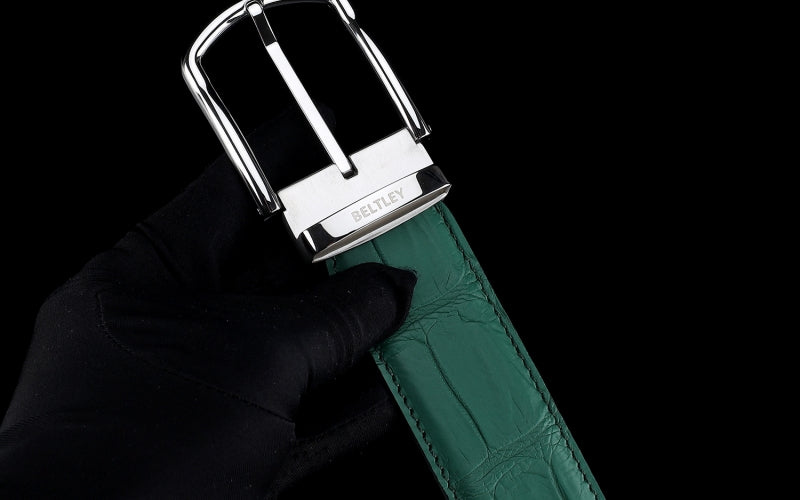
What Leather Thickness Is Best for an Everyday Full Grain Belt? (oz &= mm Guide)
TL;DR:
- For everyday wear, 8–10 oz (3.2–4.0mm) full grain leather is the optimal thickness — firm enough to hold shape, thin enough to thread comfortably through standard belt loops.
- Dress belts run thinner: 5–7 oz (2.0–2.8mm). Heavy-duty work belts run thicker: 10–14 oz (4.0–5.6mm).
- Below 4 oz, single-layer belts roll and deform. Above 12–14 oz single-layer, most pants loops won't accommodate the strap.
Leather belt thickness is described in two measurement systems — ounces (oz) and millimeters (mm) — and neither is intuitive until you've worked with leather before. Knowing what the numbers mean, and which range suits your use case, prevents you from buying a belt that's too stiff to wear comfortably or too thin to hold shape through a year of daily use.
Which Thickness Fits Your Use?
The oz/mm chart is below — this is the shortcut:
| Your situation | Go with |
|---|---|
| One everyday belt | 8–10 oz (3.2–4.0mm) — holds shape, threads standard loops, the sweet spot. |
| Dress belt for suits | 5–7 oz (2.0–2.8mm) — slim trouser loops demand it. |
| Work belt with real load | 10–14 oz or double-layer — see the heavy-duty section. |
| Current belt rolls and twists | It's under 4 oz or it's bonded leather — either way, thickness was the symptom, grade was the disease. |
Every BELTLEY product page lists real specs — start with the full-grain collection.
How Does the oz Measurement System Work for Leather?
The ounce (oz) measurement for leather thickness originates in American leatherwork. It refers to the weight of one square foot of the leather: 1 oz of leather weighs approximately 1 ounce per square foot, and corresponds to approximately 0.4mm of thickness.

Quick reference conversion:
| Leather Weight | Thickness |
|---|---|
| 4 oz | 1.6mm |
| 5 oz | 2.0mm |
| 6 oz | 2.4mm |
| 7 oz | 2.8mm |
| 8 oz | 3.2mm |
| 9 oz | 3.6mm |
| 10 oz | 4.0mm |
| 11 oz | 4.4mm |
| 12 oz | 4.8mm |
| 14 oz | 5.6mm |
Leather is a natural material and hides vary — manufacturers typically specify a range (e.g., "8–10 oz") rather than a single number. According to Weaver Leather Supply's Leather Thickness Chart, commercially available belt blank leather is typically offered in 7–9 oz and 9–11 oz weight ranges for dress and work applications respectively.
What Thickness Is Best for an Everyday Full Grain Belt?
For everyday casual use — jeans, chinos, weekend wear, business casual — 8–10 oz (3.2–4.0mm) is the established sweet spot. At this range, the belt has enough structural rigidity to hold shape under denim weight without rolling, while remaining flexible enough for comfort through a full day of sitting and moving.

The practical reason for this range: standard trouser belt loops are typically 3.8–4.5mm wide (measured front-to-back, accounting for the belt strap passing through). A 10 oz belt at 4.0mm sits at the upper limit of standard loop clearance. Above 10–11 oz in a single-layer construction, the strap may require forcing through tighter loops. Below 8 oz, single-layer belts show noticeable rolling at the buckle area under normal daily tension.
How Does Thickness Differ by Belt Use Case?
Different applications require different thickness specifications:
Dress belts (suit, formal, smart business): 5–7 oz (2.0–2.8mm) Dress trousers have narrower belt loops — typically 3.2–3.8mm width. A dress belt needs to thread cleanly without force and sit flat under a jacket hem. At this thickness, the leather has a clean drape rather than a rigid profile. Our dress belt collection focuses on this range.
Casual everyday belts (jeans, chinos, workwear): 8–10 oz (3.2–4.0mm) The most common specification for quality everyday belts. Firm enough to stay flat and hold its shape at the holes; light enough for all-day comfort without fatigue at the waist. Our full-grain leather belt collection focuses on this range.
Heavy-duty work belts: 10–14 oz (4.0–5.6mm) For tool-carrying, EDC load-bearing, and outdoor work use. At this thickness, single-layer construction may exceed standard loop clearance — double-layer construction using two 5–6 oz pieces is often preferred to achieve equivalent thickness with better fit. See our double layer belt collection for work-grade specifications.
What Happens If the Belt Is Too Thin?
A belt thinner than 4–5 oz (1.6–2.0mm) in single-layer construction will:

- Roll over at the buckle under moderate tension from a loaded waistband
- Stretch permanently at the worn hole within months, creating an elongated hole that weakens with continued use
- Lose dimensional stability — the strap curves side-to-side rather than lying flat through loops
This is one of the most common failure modes in cheaper "full grain" belts that use thin hides to reduce material cost while maintaining the full-grain designation. Full-grain at 4 oz is still full-grain — but it's inadequate for everyday belt applications. The grade specifies the surface layer, not the structural performance. For a complete breakdown of what makes a leather belt genuinely durable, see our post on the most durable leather belt.
What Happens If the Belt Is Too Thick?
Single-layer leather above 12–14 oz creates different problems:
- Standard pants loops (especially in slim-fit trousers and dress pants) won't accommodate the strap thickness without forcing
- The stiffness at this range means the belt resists bending at the body, creating a rigid band sensation rather than a comfortable waist fit
- Buckle engagement requires more force, particularly at the first hole
The solution for buyers who need the rigidity of thick leather without the loop clearance problem is double-layer construction — two thinner pieces laminated together. The combined thickness achieves work-belt rigidity while each layer clears loops individually during threading. Our post on thin vs thick belts for men covers the practical tradeoffs in detail.
Does Single-Layer vs Double-Layer Affect the Thickness Calculation?
Yes. A double-layer belt's stated thickness reflects the combined strap, not individual layers. When a product lists "double layer full-grain" with a combined thickness of 8–10 oz, each individual layer is typically 4–5 oz — much thinner than a single-layer 8–10 oz piece, with different flex characteristics.

Double-layer belts flex with the seam line as the bending axis, giving them a slightly stiffer but more uniform profile than single-layer equivalents of the same total thickness. For most buyers, the practical difference is negligible; the construction decision matters more for extreme-use cases like daily tool-carrying.
The Bottom Line
For a full grain everyday belt, 8–10 oz (3.2–4.0mm) delivers the right combination of structural rigidity and comfort. Dress belts go thinner (5–7 oz); work belts go thicker (10–14 oz). Below the everyday range, rolling and hole deformation become the dominant failure modes. Above it, loop clearance becomes the practical constraint.
Browse BELTLEY's full-grain leather belt collection, where each product listing specifies leather thickness — so you know exactly what you're getting before you order. Check the size guide for fit and width information alongside thickness specs.
Frequently Asked Questions
Q: What oz leather is best for an everyday belt?
8–10 oz (3.2–4.0mm) is the standard for everyday casual belts. This range provides the structural rigidity to hold shape under daily wear without being too stiff to thread through standard belt loops or wear comfortably through a full day of sitting.

Q: What is 1 oz leather thickness in mm?
1 oz of leather thickness equals approximately 0.4mm. So 8 oz = 3.2mm, 10 oz = 4.0mm, 12 oz = 4.8mm. This conversion applies to vegetable-tanned and chrome-tanned full-grain leather; density varies slightly by tanning method and hide origin.
Q: Is 5 oz leather too thin for a belt?
For everyday casual belts, yes. 5 oz (2.0mm) is appropriate for dress belts worn with trousers that have narrow loops. For everyday jeans and chinos use, 5 oz single-layer belts will roll at the buckle and show hole stretching within 12–18 months. Minimum 8 oz is recommended for everyday durability.
Q: How thick is a standard leather belt?
Most commercially available quality leather belts range from 7–10 oz (2.8–4.0mm). Budget leather belts often use 4–6 oz material to reduce costs. Premium everyday and work belts start at 8 oz, with double-layer construction reaching 8–12 oz combined.
Q: Can a belt be too thick for pants loops?
Yes. Single-layer leather above 10–12 oz may not thread through slim-fit trouser or dress pants loops without forcing. Standard casual pants loops accommodate up to about 4.0–4.5mm (10–11 oz). For thicker specifications, double-layer construction or confirmation of loop width before ordering is recommended.
%20full%20grain%20leather%20is%20the%20optimal%20thickness%20%E2%80%94%20firm%20enough%20to%20hold%20shape,%20thin%20enough%20to%20thread%20comfortably%20through%20standard%20belt%20loops.%0ADress%20belts%20ru...)