
What Designer Belts Are in Style? (Trend GUIDE in 2026)
TL;DR:
- Big buckle belts are 2026's #1 accessory investment — confirmed by Celine, Dior, and Khaite runways
- Wide belts (40-60mm) are back as a power-silhouette tool after years of minimalism
- Stacked belts are the SS26 street-style move: two belts, different widths or colors, worn at once
- Classic houses (Hermès, Celine, Gucci) remain strong; the smartest play is craftsmanship over logo
- Earth tones dominate the 2026 color story — chocolate brown, terracotta, petrol blue
The belt has become fashion's most debated accessory in 2026. After half a decade of quiet minimalism and "no-belt" dressing, the pendulum has swung hard: bold buckles, architectural widths, and layered styling have turned the belt into sculpture, not an afterthought. Runways from Celine to Dior to Khaite all made the same statement this season — your belt is the point. With so many directions pulling at once, this guide cuts through the noise to identify which designer belt trends have real staying power and which are worth your actual investment dollars.

What Are the Biggest Designer Belt Trends in 2026?
The five dominant designer belt trends in 2026 are: statement buckles, wide maxi belts (40-60mm), stacked/double belts, elevated western, and refined classics from heritage houses. Runway data from the SS26 season shows buckle hardware and belt width as the two most active design variables.
The shift is unmistakable. According to trend reporting from Who What Wear's 2026 big-buckle belt feature, statement-hardware belts are among the top accessory investments of the year — appearing consistently across Celine, Dior, Khaite, and into street style. When three houses with entirely different creative directors land on the same design language in the same season, a trend has legs.
If you want to explore where designer belts are heading in 2026 at a broader level, BELTLEY's complete 2026 belt style guide covers the full picture across all belt categories — not just designer.

The Big Buckle Belt — 2026's Defining Accessory
This season's statement hardware draws from two distinct reference points simultaneously: 18th-century Rococo ornamentation and industrial modernism. The result is buckles that feel both historical and completely current — and unmistakably the focal point of any outfit.
At Celine, new creative director Michael Rider introduced an oval buckle etched with the name and Paris address of Maison Celine — a house signature that reads as intimate rather than status-driven. At Dior, Jonathan Anderson executed a bow-motif buckle channeling Rococo refinement through a clean contemporary silhouette. At Khaite, a molten-metal style buckle was paired with everything from denim to leather pencil skirts, proving the trend's range. All three examples land in different aesthetic registers — yet all confirm that the buckle is where the design energy is concentrated in 2026.
How to style a big buckle belt without it overwhelming your look: contrast is everything. Pair an ornate Rococo-style buckle with something incredibly casual — a relaxed white tee, loose jeans, clean sneakers. If you choose a sleek molten-metal shape, use it to cinch an oversized blazer for an instant hourglass silhouette. The belt does the talking; everything else stays quiet.
BELTLEY's unique buckle collection occupies this same bold-hardware territory — tiger, dragon, elephant, and snake motif buckles cast in 316L stainless steel or solid brass on full-grain leather straps. The design language aligns directly with what's happening on SS26 runways, without the Brand Tax.

Are Wide Belts Back in Style in 2026?
Yes — wide belts are definitively back. After years dominated by thin, minimal silhouettes, the "Power Width" standard has shifted to 40-60mm (roughly 1.5" to 2.4"). These wider belts are worn over blazers, coats, knitted dresses, and oversized shirts to sculpt the waist and anchor the silhouette.
According to Hop Lok Leather's 2026 belt trend analysis, width is now the primary design variable in contemporary belt collections, with the 40-60mm range becoming a new power-dressing standard. That aligns with what we see across runways and street style: a wide belt cinched over an otherwise simple outfit changes proportions and visual weight immediately.
For women, as covered in BELTLEY's post Are Wide Belts Still a Thing for Women?, the maxi and obi-style belt have moved from trend to wardrobe staple. The 1.5" (38mm) belt sits at the practical edge of this shift — wide enough to read as intentional, versatile enough for standard belt loops.
BELTLEY's 1.5" belt collection covers this width in full-grain leather across the season's key palette: chocolate brown, espresso, petrol blue, and black.

What Is the Stacked Belt Trend and How Do You Wear It?
The stacked belt trend means wearing two belts simultaneously — different widths, colors, or textures layered at the waist or hip. One belt feeds through the loops (functional); the second sits just above or below (decorative). It emerged prominently on SS26 runways and has since crossed into mainstream street style.
The runway references are specific. Coveteur's breakdown of the stacked belt trend points to Rachel Comey SS26 as a defining moment: two belts in different shades of brown paired with trousers — one looped through, one resting below. Michael Kors layered two coordinated black belts on a one-shoulder dress with ends hanging loose. Tom Ford placed a cream and a black skinny belt over a suede trench coat for a tonal contrast effect.
Vogue Scandinavia's SS26 street-style coverage confirms the stacked belt has moved fully from runway to daily dressing, particularly among fashion-forward European and American consumers.
Practical guide to stacking belts:
- Width contrast works best: pair a 1.5" leather belt with a 1" or thinner style
- Tonal or complementary colors outperform exact matches (brown + tan, black + espresso)
- Keep the rest of the outfit clean — stacked belts command enough attention on their own
- Works over: high-waisted trousers, midi dresses, trench coats, denim, oversized suiting
This trend is also a smart way to get more styling mileage from belts you already own — a simple swap of the outer belt can completely shift the character of a look.
Is the Western Belt Trend Still Going Strong in 2026?
Yes — the western belt trend has extended well beyond its 2024-25 peak. In 2026 it has evolved from rodeo-literal to elevated western: tooled leather details, clean concho-inspired hardware, and rich earth tones replacing the flashier rhinestone versions of earlier seasons.
Who What Wear's 2026 western trend report identifies western-influenced pieces as key buys of the year — specifically pointing toward "good taste" investment pieces over costume-level western looks. The distinction matters: elevated western is about leather quality and refined hardware, not maximum decoration.
According to 2026 belt trend analysis from Reptiles House, the season's key palette centers on chocolate brown, terracotta, olive green, sandy beige, and petrol blue — precisely the tones that define elevated western dressing, and a significant departure from the all-black minimalism that dominated previous years.
BELTLEY's detailed guide Are Western Belts in Style in 2026? covers the styling mechanics in depth, but the short version: a wide, full-grain leather belt in a warm earth tone with a clean square or oval frame buckle hits the sweet spot between western heritage and contemporary polish.

Which Classic Designer Belts Are Always in Style?
Not everything in 2026 is about newness. A consistent finding across belt trend research is that a small number of classic designer belts simply don't go out of style. Here's where the major houses stand right now.
Hermès Constance Belt — The benchmark for understated luxury. The Constance H buckle in palladium or gold is as relevant in 2026 as it was decades ago. As BELTLEY's post Are Hermès Belts Still in Style in 2026? covers, the Constance succeeds because it's built entirely on material quality and proportional precision — not logo signaling.
Celine Triomphe Belt — The sleeper hit of 2026. With Michael Rider's new creative direction, the Triomphe has been reinvested with quiet authority. It's become shorthand for "I understand fashion" rather than "I own fashion."
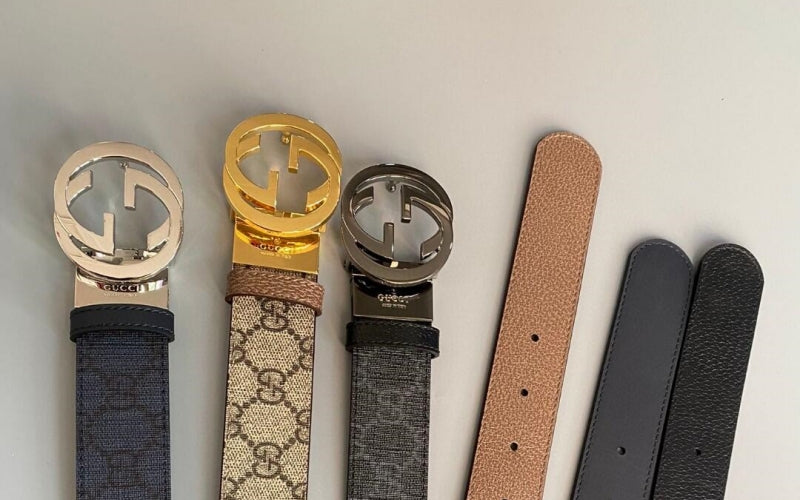
Gucci GG Marmont Belt — The logo belt that defined 2017-2022 has receded somewhat, but its craftsmanship holds up. For a direct assessment of whether it's still worth buying now, BELTLEY's Are Gucci Belts in Style in 2026? addresses the current market position honestly.
Ferragamo Gancini Belt — The Gancini buckle's sculptural silhouette makes it one of the more timeless pieces in this space. It reads as design-conscious without announcing its price.
The common thread: exceptional leather quality, refined hardware, and no dependence on surface decoration to assert value. That's also why the BELTLEY designer belt collection is built around the same principles — hardware you can see and feel, leather that develops a patina instead of peeling, at prices that don't carry the legacy house overhead.

What Makes a Designer Belt Worth the Investment?
A designer belt is worth the investment when it offers full-grain leather (not bonded or genuine leather), quality metal hardware (316L stainless steel or solid brass — not zinc alloy), and construction that will outlast trends by a decade or more. The material core is what separates a five-year belt from a fifteen-year belt.
The luxury house markup typically pays for real estate, heritage marketing, and history — not always material upgrades. Many $400-600 logo belts use the same or lower-grade hardware as well-made direct-to-consumer alternatives. When evaluating any designer belt: flip it over. Check the edge finishing, the stitching density, and whether the buckle hardware feels substantial in hand.
For buyers who want to go further up the material hierarchy, BELTLEY's exotic leather belt collection includes crocodile, alligator, and elephant leather — the actual apex materials that designer houses charge $1,000+ to access. These are available DTC with free worldwide shipping and a 10-year warranty on materials and construction. No Brand Tax attached.
BELTLEY also covers the value question head-on in Are Luxury Belts Worth It in 2026? — worth reading before committing to a purchase at any price point.

The Bottom Line
In 2026, the designer belt landscape is defined by five clear movements: statement buckle hardware drawing from Rococo and industrial references; wide maxi silhouettes in the 40-60mm range; stacked dual-belt styling carried from runway to street; a refined western revival grounded in earth tones and quality leather; and the enduring relevance of a short list of truly timeless classics from Hermès, Celine, Gucci, and Ferragamo.
The smartest purchase isn't necessarily the most expensive one. It's the belt that uses genuine full-grain leather, quality hardware, and a silhouette aligned with where fashion is moving — not where it was three years ago. The five trends covered in this guide all share a common direction: more material integrity, more design intentionality, and less reliance on logo signaling to carry the look.
Browse BELTLEY's designer belt collection — handcrafted from full-grain and exotic leather with 316L stainless steel or solid brass hardware, backed by a 10-year warranty. Free worldwide shipping. No Brand Tax.
Frequently Asked Questions
Q: What is the most popular designer belt trend in 2026?
The big buckle belt is the standout trend of 2026, validated by runway appearances at Celine, Dior, and Khaite in the same SS26 season. Among classic styles, the Hermès Constance and Celine Triomphe continue to hold strong as evergreen investment pieces that outlast any seasonal cycle.
Q: Are wide belts in style in 2026?
Yes. Wide belts in the 40-60mm (roughly 1.5" to 2.4") range are firmly in style in 2026, worn over blazers, coats, and dresses to sculpt the waist and command attention. This width standard has replaced the ultra-thin silhouettes that dominated the late 2010s and early 2020s.
Q: What is the stacked belt trend exactly?
The stacked belt trend involves wearing two belts simultaneously at the waist or hip — one functional (through belt loops), one decorative (resting above or below). It appeared on SS26 runways from Rachel Comey, Michael Kors, and Tom Ford, and has since moved into everyday street style.
Q: Are Gucci belts still in style in 2026?
Gucci belts remain relevant in 2026 but have lost some of the cultural dominance they held during the peak logo-belt era (2017-2022). The GG Marmont's craftsmanship still holds up; fashion-forward consumers are simply gravitating more toward belts defined by unique hardware or material quality rather than monogram patterns.
Q: Which designer belt holds its value best?
Hermès belts consistently hold their value best — the Constance and Kelly styles have strong resale markets due to limited availability and exceptional construction. Celine's Triomphe has strengthened in secondary market pricing under new creative direction. Logo-dependent belts from LV and Gucci tend to fluctuate more with trend cycles.
Q: Is it worth buying a designer belt in 2026?
It depends on what you're buying. A belt with genuine full-grain leather, quality hardware, and a classic or trend-forward silhouette is always worth the investment — it outlasts trend cycles and improves with wear. A belt purchased purely for the logo is a riskier buy. For 2026 specifically, belts with statement buckles or architectural width represent the stronger long-term investments because their design language has staying power.

%C2%A0are%20back%20as%20a%20power-silhouette%20tool%20after%20years%20of%20minimalism%0A...)