Types of Belt Buckles: The Ultimate Guide for Men and Women
TL;DR:
The buckle is the first thing people notice about a belt. The leather does its job quietly. The buckle announces itself.
And once you know what you're looking at — a plaque, a ratchet track, a solid brass frame — you start seeing them everywhere. You notice when the hardware is cheap. You notice when it isn't. You develop opinions.
There are more types of belt buckles than most people realize, and they fall into two overlapping categories: functional type (how the mechanism works) and style type (what it looks like). A plaque buckle is both — it's a specific attachment mechanism and an aesthetic. A western buckle describes the look, not the mechanism. You need both lenses to make sense of what you're buying.
Explore BELTLEY's full buckle collection if you want to see the full range upfront, or keep reading for the breakdown.
1. Frame & Prong Buckles
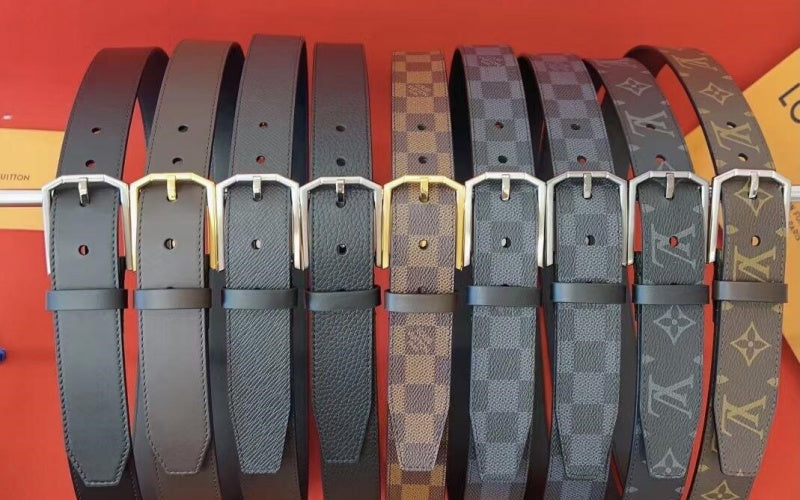
The oldest functional buckle design still in widespread use. A metal frame — rectangular, oval, or square — surrounds a center bar. The prong, a thin metal pin, pivots from that bar and passes through holes punched in the belt strap. You thread the strap, find the right hole, and the prong holds everything in place.
As Wikipedia's buckle history notes, this basic mechanism has been in use since antiquity — the Romans wore them on armor, the Medieval period refined them for leather goods, and Western formal dress standardized the slim single-prong frame in the 20th century. It hasn't changed much because it doesn't need to.
Single-Prong Frame Buckle

One prong, one center bar, one clean line. The single-prong frame buckle is the default for dress belts, and it earns that status. It's slim, unobtrusive, and signals that you dressed intentionally without broadcasting the hardware.
At BELTLEY, our single-prong frames are made from 316L marine-grade stainless steel — the same alloy spec used in surgical instruments and marine hardware. It won't tarnish, won't pit, and won't cause a nickel reaction the way cheap zinc alloy buckles sometimes do. The grade designation matters more than most buyers realize.
Best for: Dress pants, suits, business formal, business casual. Belt width: Usually paired with 1.25" (32mm) or 1.38" (35mm) straps.
Double-Prong Frame Buckle

Two prongs side by side on the same center bar. The double-prong offers a more secure hold — useful on heavy work belts or wide western straps where a single prong might flex under tension. In a dress context it reads as heavier and more casual. In workwear and western contexts it signals durability, which is appropriate.
Best for: Work belts, outdoor use, wide western-style straps. Belt width: Common on 1.5" (38mm) and wider.
Box Frame / Box & Prong Buckle

A box-frame buckle is a single-prong frame where the back bar is as substantial as the front — forming a complete enclosed box rather than a simple open rectangle. The prong is often heavier gauge. The result looks more solid and intentional than a standard frame buckle without going full-western in scale.
BELTLEY's box and prong buckle belts occupy the space between casual and smart-casual — the enclosed frame reads as designed rather than decorative, like the belt knows what it's doing.
Best for: Smart casual, dark denim, chinos, weekend wear.
2. Plate & Plaque Buckles
Plaque buckles put the decorative face front and center. The buckle is a solid flat plate — or a shaped metal frame with a flat surface — and the belt strap slides through channels on the back, locking into a hidden hook beneath the plate.

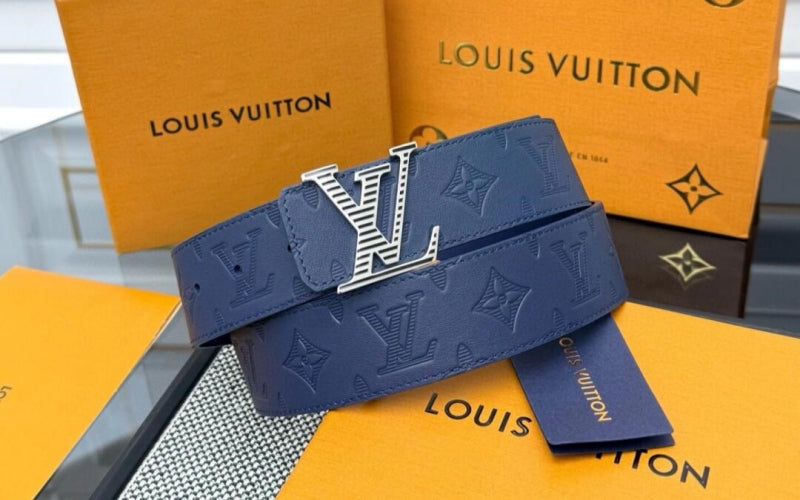
The result: the front face is entirely smooth, branded, or decorated. No prong breaks the surface. This is why luxury houses like Ferragamo and Gucci use plaque-style hardware — the plate is the canvas for a logo, an engraved motif, or a clean brushed-metal surface that lets the quality of the finish speak for itself. Esquire consistently cites the plaque buckle as the benchmark for a serious dress belt — no visible prong, no surface noise, just the leather.
BELTLEY's plaque buckle belts use the same principle: a polished or brushed plate face with the attachment mechanism completely hidden on the reverse. The front reads as deliberately minimal or confidently branded, depending on the face design you choose.

Best for: Dress and smart-casual contexts, any look where the leather should be front and center. Note: Most plaque belts don't use holes in the strap, so sizing is usually set at purchase. Some allow strap-length adjustment; others require trimming by a cobbler.
3.Ratchet & Track Buckles
The ratchet buckle — also called a track buckle or automatic buckle — eliminates holes entirely. The inside of the belt strap carries a row of fine teeth machined into the leather. The buckle engages those teeth with a spring-loaded mechanism, letting you tighten or loosen in precise 1/4-inch increments.

The practical advantage is real. After a long lunch, you don't need the next hole to be in exactly the right position. You release the mechanism, reset, done. To remove the belt completely, press a release tab hidden under the buckle plate.
From the front, a well-designed ratchet buckle is indistinguishable from a plaque buckle — the mechanism is invisible until you turn it over. BELTLEY's ratchet buckle belts use a smooth plate-face design with a machined steel track system — not the plastic-clip ratchets you find in airport belt shops that crack after a year of use.

Best for: Business dress, travel, anyone tired of punching new holes. Belt width: Most ratchet systems are engineered for 1.25" (32mm) to 1.38" (35mm) straps.
4.Western & Statement Buckles
Western buckles are defined more by size and aesthetic than by mechanism. Underneath the ornate face, many use a standard frame-and-prong attachment. What makes them western is the scale, the decoration, and the cultural vocabulary: large rectangular or oval plates, heavy engraving, relief work, inlaid stones, rope borders, longhorn motifs, eagle reliefs.

True western trophy buckles — the kind awarded at rodeo competitions — can run 3 to 5 inches wide and weigh several ounces. The size was a deliberate signal: these were earned, not purchased. Everyday western-inspired buckles are more restrained, still larger than a dress frame but proportionate enough for casual daily wear outside of rodeo contexts.
Western buckle culture has deep American roots. The oversized decorative buckle originated as a rodeo competition prize, which is why the most elaborate ones still carry that sense of accomplishment rather than mere ornamentation. They're a legitimate statement when worn in context. GQ counts the western buckle among the most personality-driven accessories in casual dressing — the kind of piece that says something specific about the wearer. Context is the key variable.

Best for: Western wear, country events, creative-casual dressing, any situation where the buckle is supposed to be the focal point. Belt width: Typically 1.5" (38mm) and wider.
5. Rhinestone & Decorative Buckles
Rhinestone buckles use faceted stones — cubic zirconia (CZ), crystal, or genuine gemstones — set into the metal face. The range runs from a single accent stone at the center to an all-out jeweled statement piece covering the entire plate.

The stone quality matters enormously and is easy to spot once you know what to look for. BELTLEY's rhinestone buckle belts use jewelry-grade CZ with gold plating — not the plastic-set rhinestones that cloud over and begin falling out within six months of regular wear. CZ cut to jewelry tolerances refracts light the way a gemstone does. Costume rhinestones just reflect, and dully.
Rhinestone buckles operate in the fashion space between evening statement and creative-casual personality. They work with evening wear, bold casual outfits, and anywhere you want the belt to be the thing people mention.
Best for: Evening wear, fashion-forward casual, events, women's styling, gifts.
6. Animal Motif Buckles
Animal motif buckles carry a sculpted or relief-cast animal face or figure as the buckle plate — and BELTLEY goes deeper into this territory than most belt makers, with dedicated collections for each motif.
These aren't arbitrary designs.
Each carries weight. Tigers signal strength and authority. Dragons represent power, protection, and transformation — a buckle with serious visual presence. Snakes carry connotations of wisdom and renewal. Horses evoke freedom and heritage. Elephants project resilience and memory.

Whether the symbolism matters to you or the look is enough on its own, the result is distinctive — no one will confuse an animal-face buckle for a generic dress belt:
- Tiger buckle belts — confrontational, bold, high relief
- Dragon buckle belts — sculptural, intricate, unmistakably intentional
- Snake buckle belts — sinuous form, often paired with python leather for the full effect
- Horse buckle belts — equestrian aesthetic, pairs naturally with heritage leather colors
- Elephant buckle belts — weight and gravitas built into the design
Best for: Creative-casual contexts, personal expression, gifting (the symbolism adds meaning that a plain buckle can't).
7. Ring Buckles: O-Ring and D-Ring
Simpler mechanisms. Fully casual aesthetic. Two types worth knowing.

O-Ring Buckle: A single continuous ring — circular or oval — through which the belt strap threads and folds back on itself. Friction holds the fold. No prong, no mechanism, no adjustment precision. Common on thin leather fashion belts and fabric straps. Frequently shows up in women's waist-belt styling, boho contexts, and minimalist casual outfits.
D-Ring Buckle: Two D-shaped rings side by side. The belt threads through both rings and folds back through the first. Highly adjustable (not limited to pre-punched holes) and very secure. Originally a utilitarian/military design — still used on tactical belts, canvas belts, and utility work gear. In fashion, it appears on casual fabric and leather belts where the utilitarian aesthetic is intentional.
Neither the O-ring nor the D-ring belongs in a formal or business-dress context. They read as casual by design, and that's exactly right — their contexts are inherently casual.
8. Belt Buckle Materials: What the Metal Actually Is
This is where most buyers stop paying attention, and where most disappointments originate.
316L Stainless Steel

The premium standard for quality belt hardware. The "L" indicates low carbon content, which improves corrosion resistance at welds. The molybdenum content in 316L — absent in standard 304 stainless — makes it resistant to chlorides, meaning sweat and salt water don't degrade it over time. It's hypoallergenic, holds polished and brushed finishes without surface plating (which means the finish is permanent, not peeling), and maintains its appearance across years of daily wear.
The metallurgical properties of stainless steel grades make this distinction clear: 316L costs more to source than 304 or zinc alloy alternatives, and the performance gap is not subtle over a 5-year wear period. BELTLEY uses 316L across its stainless steel buckle belt line. It's the right call. For broader context on why material sourcing and supply chain quality matter, the Leather Working Group's tannery certification program sets the global standard — the kind of rigor that separates durable goods from disposable ones.
Brass

Traditional buckle material for quality heritage pieces. Solid brass is heavy, warm in tone, and develops a patina that many people find more characterful than a static finish. BELTLEY's brass buckle belts use solid brass — not brass-plated zinc alloy. Solid brass has a weight and warmth that plating cannot replicate. It's the material of choice for western-style buckles and heritage leather aesthetics. Permanent Style — one of the web's most trusted menswear voices — consistently identifies solid brass hardware as a hallmark of quality heritage leather goods.
Zinc Alloy (Zamak)
The budget option. Almost universally chrome- or nickel-plated to look presentable. Fine initially — problematic after 12-18 months of regular wear: the plating flakes, the zinc underneath oxidizes, and the surface degrades visibly. Found in fast-fashion accessories and cheap imported belts. Not in anything BELTLEY makes.

Gold and Rose Gold Plating
The base material (stainless, brass, or zinc) coated in gold via PVD (physical vapor deposition) or electroplating. PVD plating is extremely hard — microns thin, but dense enough to resist scratching under normal wear. Standard electroplating is thinner and less durable. If the hardware color matters to you, ask about plating method before you buy.
For guidance on coordinating buckle metal tone with your other accessories — watch, shoe hardware — see Should Your Belt Buckle Match Your Watch?
How to Choose: Occasion-Matching Framework
The buckle choice isn't purely aesthetic — it signals the dress register you're operating in.
Formal (suits, business formal): Single-prong frame or ratchet. Slim profile. Polished silver or polished gold, matched to your shoe hardware. Nothing wider than 1.25". No decorative elements. The goal is invisible coordination, not visible buckle.
Smart Casual (chinos, blazer, dark denim): Box frame, plaque, or ratchet. Width up to 1.38". Brushed finishes are appropriate here. A subtle decorative element — a minimal logo face, a clean embossed border — works without reading as overdressed.
Casual (jeans, weekend wear): Most buckle types that aren't visibly dress-specific. Western-inspired, box frame, rhinestone accents, animal motifs — all contextually appropriate. Width can go to 1.5". The buckle can have presence.
Statement / Evening / Fashion: Rhinestone, animal motif, oversized western. These are the contexts where the buckle is supposed to be noticed. Play accordingly. These buckles weren't designed to disappear into an outfit.
The underlying logic behind occasion-matching — why the buckle carries dress-code signal value — is explained more fully in What Is The Point of a Belt Buckle?
Quick Reference Table
| Buckle Type | How It Works | Formality | Ideal Width | Best Context |
|---|---|---|---|---|
| Single-Prong Frame | Prong through holes | High | 1.25"–1.38" | Suits, dress pants |
| Double-Prong Frame | 2 prongs through holes | Medium | 1.38"–1.5" | Work, casual |
| Box & Prong | Prong through holes (enclosed frame) | Medium | 1.38"–1.5" | Smart casual, chinos |
| Plaque / Plate | Hidden hook, no holes visible | High–Medium | 1.25"–1.38" | Dress, brand statement |
| Ratchet / Track | Spring-loaded teeth, micro-adjust | High–Medium | 1.25"–1.38" | Business dress, travel |
| Western / Statement | Prong through holes (large face) | Low | 1.5"+ | Western wear, creative casual |
| Rhinestone / CZ | Varies | Medium–Low | Varies | Evening, fashion, gifts |
| Animal Motif | Varies | Low | Varies | Creative, personal expression |
| O-Ring | Friction fold | Low | Varies | Casual fashion, women's belts |
| D-Ring | Double-ring thread | Low | Varies | Utility, canvas, casual fabric |
The Bottom Line
The buckle is not a background detail. It's the focal point of the belt — and a signal of the context you're dressing for. A slim single-prong frame in 316L stainless communicates one thing. A large hand-engraved western buckle in solid brass communicates another. Both are correct. Neither is interchangeable with the other.
The practical framework: match the buckle profile to the dress register (slim for formal, substantial for casual), match the metal finish to your other hardware, and don't avoid decorative options when the context actually calls for them.
BELTLEY has been building belts since 1999 — every piece ships with a 10-year warranty and free worldwide delivery, and the 30-day return window means zero risk if the buckle you chose doesn't look the way you expected. Browse the full belt buckle collection and filter by the type that fits your context.
Frequently Asked Questions
Q: What are the main types of belt buckles?
The main functional types are the frame/prong buckle (a prong passes through holes in the strap), the plaque or plate buckle (a flat face with a hidden hook on the reverse), and the ratchet buckle (a spring-loaded mechanism engaging a toothed track for micro-adjustment). Style categories — western, rhinestone, animal motif — describe the aesthetic of the buckle face and can be applied to any of the underlying mechanisms.
Q: What is the difference between a prong buckle and a ratchet buckle?
A prong buckle uses a metal pin that passes through pre-punched holes in the belt strap — your fit is limited to whatever hole positions exist. A ratchet buckle uses a toothed track on the inside of the strap, letting you adjust in small increments without holes. Ratchet buckles look cleaner from the front, fit more precisely, and are increasingly preferred for dress and business wear. From the outside, a quality ratchet and a quality plaque buckle look identical.
Q: What type of buckle do luxury belts use?
Most luxury fashion belts — Hermès, Ferragamo, Gucci — use plaque or plate-style buckles. The flat decorative face allows the brand logo or motif to dominate without a visible prong breaking the surface. The strap slots into channels on the reverse and locks into a hidden hook. This keeps the front face completely uninterrupted.
Q: What metal are good belt buckles made of?
Quality belt buckles are made from 316L stainless steel (marine grade, hypoallergenic, permanent finish), solid brass (heavy, warm tone, develops patina), or occasionally sterling silver in high-end western pieces. Avoid zinc alloy (zamak) — it's plated over a base metal that oxidizes, and the surface finish degrades within 1-2 years. When a belt says "stainless steel," it's worth asking whether it's 304 or 316L. The difference shows up over time.
Q: What size belt buckle is correct for a suit?
For a suit, use a slim buckle: single-prong frame or ratchet, width no greater than the belt strap (1.25" to 1.38" maximum). The buckle should have a low profile — no engraving, no oversized face, no decorative stones. Metal finish in polished silver or polished gold, matched to your shoe hardware. The standard is coordination, not visibility.
Q: Can you swap out a belt buckle for a different style?
Many quality leather belts are designed with a removable buckle — the strap folds over the buckle's center bar and is held by a snap or screw fastener. If the fold uses a snap or screw system, the buckle is interchangeable. Belts with permanently stitched or riveted folds are not buckle-swappable without a leather craftsman's involvement. When buying, ask the brand whether the buckle is removable before purchasing if interchangeability matters to you.