Is a Buffalo Leather Belt Good Quality? (Detailed Answer By BELTLEY)
TL;DR: Quick Answer
- Full-grain buffalo leather belts are excellent quality — tougher than cowhide, with 40% more tensile strength and a lifespan of 10–15+ years
- Not all buffalo belts are equal. Leather grade matters more than the animal it came from. Full-grain = great. Bonded "buffalo" = garbage with better marketing.
- Expect a stiff break-in period, more weight, and fewer color options than cowhide — but also a belt that ages beautifully and refuses to quit
Someone told you buffalo leather makes a great belt. Someone else told you it's stiff, heavy, and overpriced. Both are right. Sort of.
A buffalo leather belt can be outstanding quality. Thick. Durable. The kind of belt you hand down to your kid and it still works. But it can also be cheap corrected-grain nonsense stamped with the word "buffalo" to justify a higher price. The difference isn't the animal. It's the grade.
Let's figure out which one you're actually looking at — and whether it's worth your money. If you're also weighing other leather types, our guide on which animal leather is best for belts covers the full lineup.

What Makes a Buffalo Leather Belt "Good Quality"?
The quality of a buffalo leather belt depends on three things: the leather grade (full-grain vs. lower grades), the construction method (hand-stitched vs. glued), and the hardware (solid brass or stainless steel vs. plated zinc). Get all three right, and you have a belt that lasts a decade or more.
The leather grade is the biggest variable. Buffalo Jackson breaks the leather grading system into four tiers:
- Full-grain — The entire top surface of the hide, untouched. Natural scars, pores, and grain visible. Strongest. Most durable. Most expensive.
- Top-grain — Top layer sanded or buffed to remove imperfections. Thinner. Smoother. Still decent.
- Genuine leather — Misleading name. It's the lower layers of the hide after the good stuff was sliced off. Weak. Peels.
- Bonded leather — Leather scraps ground up and glued together like a leather smoothie. Avoid.
A full-grain buffalo belt is exceptional. A bonded buffalo belt is a $30 disappointment with a two-month lifespan. The word "buffalo" on the label doesn't tell you which one you're holding. The grade does.

How Durable Is Buffalo Leather Compared to Cowhide?
Buffalo leather is roughly 40% stronger in tensile strength than standard cowhide. Its fibers are thicker and more widely spaced, and the hide is not stretched during tanning — which preserves natural density. A full-grain buffalo belt can last 10 to 15 years with basic care.
The Buffalo Billfold Company tested this extensively. Their finding: bison leather's thicker fibers compensate for the slightly lower density, making each fiber last longer under stress. The result is a belt that handles daily friction, sweat, and bending without warping or cracking.
Cowhide is no slouch. A quality full-grain cowhide belt lasts five to ten years. But buffalo has a structural edge. The hide averages 3–4mm thick. Cowhide sits at 1–2mm. That's not a subtle difference. It's the difference between a notebook and a textbook.
One caveat: durability only matters if the construction holds up too. Glued edges, cheap thread, and zinc-alloy buckles will fail long before the leather does. A $200 buffalo strap with a $2 buckle is an expensive disappointment. At BELTLEY, we pair our leather with stainless steel or solid brass buckles — because a belt is only as strong as its weakest component.

The Honest Pros and Cons
No leather is perfect. Buffalo has real advantages and real drawbacks. Here's the unfiltered version:
Pros:
- Built like a tank. 40% more tensile strength than cowhide. Resists scratches, tears, and daily abuse.
- Ages beautifully. Develops a deep, rugged matte patina. Scratches blend into the grain. Your belt at year five looks better than it did at year one.
- Moisture resistant. Handles sweat and humidity better than most leathers. Won't dry out and crack as fast as untreated cowhide.
- Holds its shape. Doesn't sag or curl after months of wear. The belt stays where you put it.
Cons:
- Stiff break-in. Fresh out of the box, a buffalo belt feels like wearing a leather hula hoop. Give it two to three weeks. It softens.
- Heavy. Noticeably heavier than cowhide. Not a dealbreaker, but you'll feel it.
- Fewer color options. The bold grain pattern limits dyeing versatility. You'll mostly find black, brown, and espresso.
- Needs conditioning. Buffalo leather can dry out if neglected. Condition it twice a year. That's less effort than watering a houseplant.
- Costs more. Roughly 15–30% pricier than equivalent cowhide. You're paying for tougher material and harder processing.
According to FavoredLeather, the pros significantly outweigh the cons for anyone who prioritizes longevity over immediate comfort. The break-in is temporary. The durability is permanent.

How to Tell If a Buffalo Leather Belt Is Actually Good
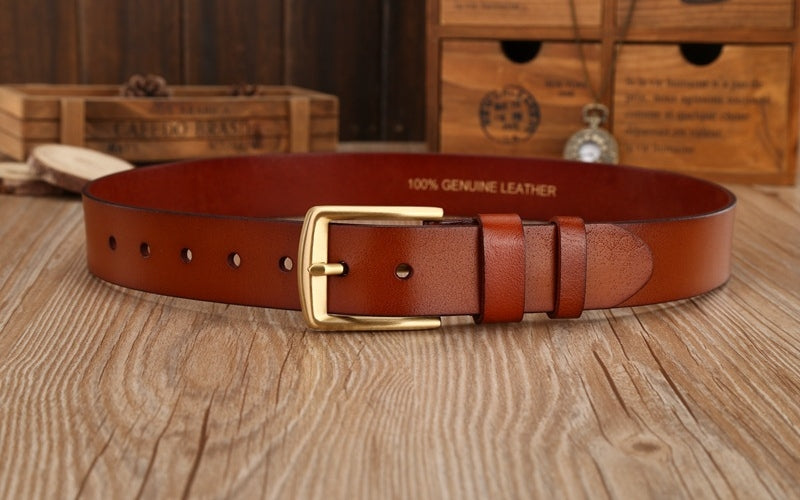
Not every belt labeled "buffalo" deserves the name. Some are corrected-grain cowhide with an embossed grain pattern. Others are genuine bottom-layer scraps from a buffalo hide. Here's how to spot the real thing:
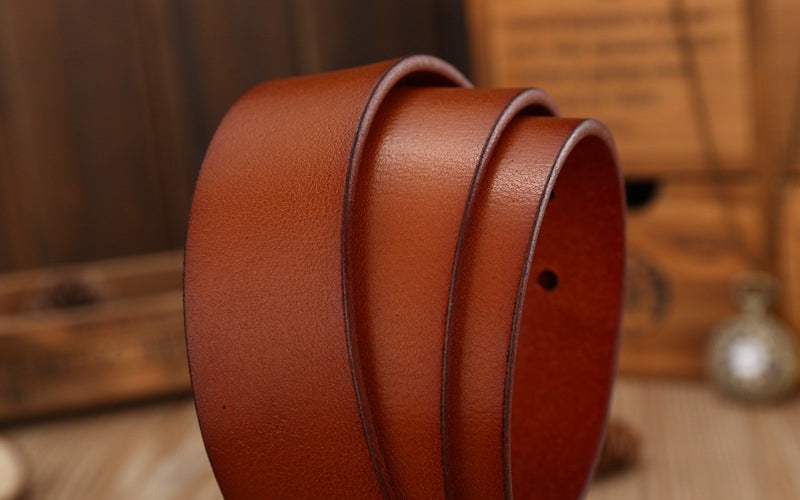
Look at the grain. Authentic full-grain buffalo leather has visible pores and an irregular, pronounced texture. According to Stonestreet Leather, if the surface looks perfectly smooth and uniform — or shows a repeating pattern like wallpaper — it's been corrected or isn't buffalo at all.
Touch it. Real buffalo feels thick and substantial. Pinch the leather. It should have a slight spring-back quality. If it feels thin, floppy, or papery, you're holding a lower grade.
Check the edge. Full-grain buffalo shows dense, consistent fibers at the cut edge. Bonded leather looks crumbly, like pressed sawdust. This is the fastest tell.
Smell it. Real leather smells like... leather. Rich. Slightly earthy. Fake or heavily corrected leather smells like chemicals or nothing at all.
Read the fine print. "Genuine buffalo leather" sounds premium. It's actually the second-lowest grade. You want the listing to say full-grain buffalo or full-grain bison. If it just says "genuine," proceed with suspicion.
For a deeper checklist, our guide on how to tell if a belt is full-grain leather walks through every test.

Buffalo Leather Belt Quality Scorecard
Here's how a full-grain buffalo belt stacks up against other common belt leathers on the metrics that actually matter:
| Quality Metric | Buffalo (Full-Grain) | Cowhide (Full-Grain) | Genuine Leather | Bonded Leather |
|---|---|---|---|---|
| Tensile strength | Excellent (40%+ over cowhide) | Very good | Poor | Terrible |
| Thickness | 3–4mm | 1–2mm | 0.5–1mm | Varies (compressed) |
| Lifespan | 10–15+ years | 5–10 years | 1–3 years | 3–12 months |
| Patina development | Rich, matte, rugged | Smooth, glossy | Minimal | None (peels) |
| Break-in comfort | Stiff (2–3 weeks) | Mild (1 week) | Soft immediately | Soft (then falls apart) |
| Moisture resistance | High | Moderate | Low | Very low |
| Scratch resistance | High | Moderate | Low | Low |
| Price range (belt) | $80–$200 | $50–$150 | $20–$50 | $10–$30 |
Notice a pattern? The leathers that feel great on day one tend to fail fastest. The ones that make you work for it reward you the longest. Buffalo sits at the top of the non-exotic tier. Firmly.
If you want to step into the exotic tier, crocodile leather belts outperform everything on this chart — but at three to five times the price.

What About the Break-In Period?
New buffalo leather is stiff. Really stiff. Like "did someone replace my belt with a ruler?" stiff. This is normal. And temporary.
The break-in period for a full-grain buffalo belt runs about two to three weeks of regular wear. Your body heat softens the fibers. Your movements create natural flex points. By week three, the belt molds to your waist and hits that perfect zone between rigid and relaxed.
Von Baer's leather guide confirms that unstretched buffalo leather gradually conforms without losing structural integrity. Unlike thinner leathers that stretch out, buffalo softens in place. It adapts without sagging. That's a meaningful distinction for a belt you'll wear daily.
You can speed things up slightly with a light application of leather conditioner. Don't overdo it. One thin coat, let it absorb overnight, and wear the belt the next day. Resist the urge to soak it. Buffalo leather rewards patience, not shortcuts.
The Bottom Line
A full-grain buffalo leather belt is genuinely excellent quality. It's thicker than cowhide, tougher under stress, develops better character over time, and outlasts most alternatives by a wide margin.
The trade-offs — stiff break-in, heavier weight, slightly higher cost — are minor annoyances for a major upgrade in durability. The key word is full-grain. That's what separates a 15-year belt from a 15-week belt. If the listing doesn't specify the grade, assume the worst and shop elsewhere.
At BELTLEY, we use full-grain leather across our entire lineup — including buffalo-texture and bison options in our rugged belt collection — because there's no point building a handcrafted belt on subpar material. Every belt ships with a 10-year warranty, free worldwide shipping, and 30-day hassle-free returns. Browse the men's belt collection and see what quality actually feels like.
Frequently Asked Questions
Q: Is buffalo leather better quality than cowhide?
At the same grade, yes. Full-grain buffalo is roughly 40% stronger than full-grain cowhide in tensile strength and lasts significantly longer. But a full-grain cowhide belt still outperforms a top-grain or genuine buffalo belt. Grade matters more than animal.
Q: How long does a buffalo leather belt last?
A full-grain buffalo leather belt lasts 10 to 15 years or more with basic care — condition it twice a year and store it flat or hanging. Users regularly report buffalo leather goods lasting decades. The material gets tougher and develops better patina with age.
Q: Does buffalo leather crack?
Not easily. Buffalo leather's thick fiber structure makes it highly resistant to cracking. The main risk is dryness from neglect. If you condition it every six months and keep it away from direct heat, cracking is extremely rare. See our leather care guide for full maintenance tips.
Q: How can I tell if my buffalo leather belt is real?
Check for irregular, pronounced grain with visible pores. Pinch the leather — real buffalo feels thick with a spring-back quality. Look at the cut edge for dense, consistent fibers (not crumbly compressed material). If it looks perfectly uniform or has a repeating pattern, it's likely corrected-grain or not buffalo.
Q: Is the stiff break-in period on buffalo belts normal?
Completely normal. Buffalo leather is thicker and unstretched, so new belts feel rigid. Most soften within two to three weeks of daily wear. A light coat of leather conditioner can help speed things up, but the break-in happens naturally through body heat and movement.
Q: What grade of buffalo leather should I buy for a belt?
Always buy full-grain. It's the highest quality grade — the entire top surface of the hide, unaltered. Avoid "genuine leather" (misleading — it's actually a low grade) and bonded leather (ground-up scraps glued together). If the product listing doesn't specify full-grain, ask the seller directly before purchasing.