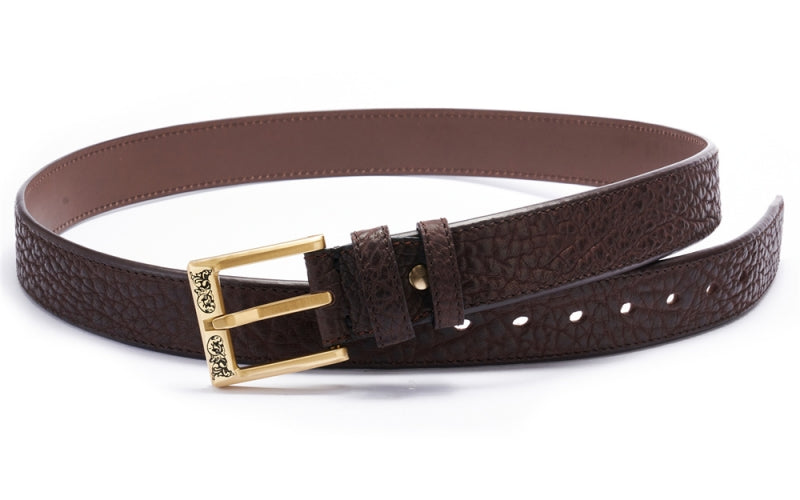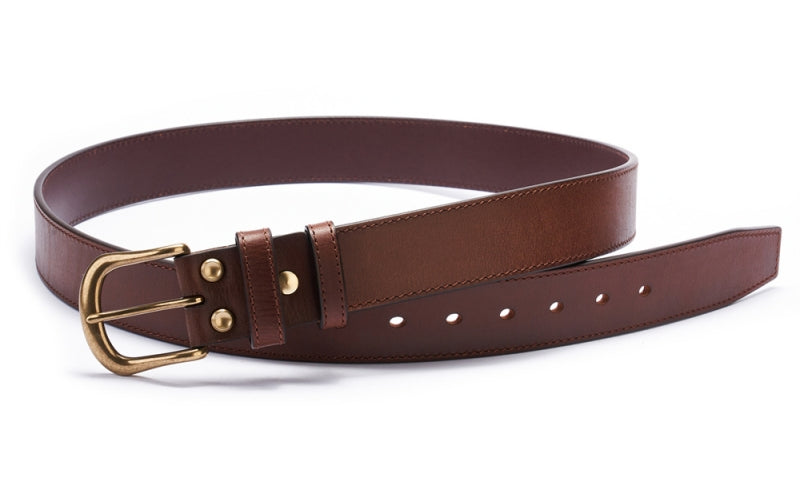
How to Choose a Belt Size for a Man (Simple Guide)
TL;DR:Quick answer
- Buy a belt 2 inches larger than your pants waist size — a 32" waist needs a 34" belt
- The center hole should be your working hole — 2 holes spare on each side
- Belt length is measured from the fold/buckle end to the center hole (not tip to tip)
- When between sizes, go larger — you can punch a hole; you can't add length
Belt sizing confuses more people than it should. The labels aren't standardized across brands, some belts use inches, some use S/M/L, and the measurement method varies depending on who made it. Add in the question of how far the tail should extend past the buckle, and it's easy to see why people buy the wrong size twice before getting it right.
Here's the full breakdown — clear, fast, and accurate. And if you already know your size, BELTLEY's men's belt collection lists exact measurements for every strap.

The Core Rule: Add 2 Inches to Your Pants Size
The standard belt sizing rule is simple: your belt size should be 2 inches larger than your pants waist size.
- 30" waist → 32" belt
- 32" waist → 34" belt
- 34" waist → 36" belt
- 36" waist → 38" belt
This rule positions the center hole of a standard 5-hole belt as your working hole, leaving two holes spare on each side. That's the correct fit — it gives you adjustment room in both directions and ensures the belt tail extends the right amount past the buckle.
The American Society for Testing and Materials (ASTM) standardizes sizing conventions for leather goods, and the +2" rule aligns with industry norms for traditional 5-hole belts with holes spaced at 1-inch intervals.

How Is Belt Size Actually Measured?
Belt size is measured from the fold end (where the strap meets the buckle) to the center hole — not from tip to tip. This is where most sizing confusion comes from.
If you measure a belt tip-to-tip and get 44 inches, that's not a 44" belt. The tip includes the tail that extends past the buckle when worn, which varies depending on how the belt fits you. The actual size — the number a brand lists — is the fold-to-center-hole measurement.
How to measure a belt you already own:
- Lay the belt flat
- Measure from the fold (or from the inside edge of the buckle pin) to the center hole
- That number is your belt size
How to measure without a belt:
- Wrap a tape measure around your waist at trouser height (not your natural waist — where your pants actually sit)
- Add 2 inches to that measurement
- That's your belt size
Our size guide page includes a visual measurement reference for every BELTLEY belt.

What If the Belt Uses S/M/L/XL Sizing?
Some belts, particularly fashion and casual styles, use generic sizing rather than numbered inches. Here's a general conversion:
| Size Label | Waist Range | Belt Length (approx.) |
|---|---|---|
| XS | 26–28" waist | 28–30" belt |
| S | 28–32" waist | 30–34" belt |
| M | 32–36" waist | 34–38" belt |
| L | 36–40" waist | 38–42" belt |
| XL | 40–44" waist | 42–46" belt |
| XXL | 44–48" waist | 46–50" belt |
Generic sizing is less precise than numbered sizing. When possible, choose a belt with a specific inch or mm measurement listed — it eliminates guesswork entirely. BELTLEY lists exact strap measurements for every belt rather than relying on S/M/L labels.

How Far Should a Belt Extend Past the Buckle?
The belt tail should extend 2 to 4 inches past the buckle when worn — ideally landing near or just past the first belt loop after the buckle. The exact amount depends on belt width and personal preference, but the tail should always reach at least the first keeper loop.
Too short: the tail barely clears the buckle and flaps loose — looks unfinished. Too long: the tail extends past the second or third loop — looks untidy and proportionally off.
The classic guideline from traditional tailoring conventions is that the belt tail tip should sit roughly 2–3 inches from the buckle face, aligned toward the body's center. On a correctly sized belt, this happens naturally when using the center hole.
For more detail on this specific question, our post on how far a belt should extend past the buckle covers the full range of scenarios.

Should Your Belt Be the Same Size as Your Pants?
No — your belt size should be larger than your pants size, not the same. A belt sized identically to your waist measurement would have the buckle hole at the very first position, leaving no adjustment range and an uncomfortably short tail.
The +2" rule accounts for the fabric and structure of the trouser waistband, the natural position of the belt loops, and the mechanics of how a buckle prong seats in a hole under real-world wearing conditions. Your bare waist measurement and your trouser waist size are already different for the same reason.
For the complete breakdown of how these numbers relate, see our guide on whether a belt should be the same size as your pants.
What to Do If You're Between Belt Sizes
If you're between sizes, always go larger — never smaller.
A belt that's slightly too long can be adjusted: punch an extra hole at home with a leather hole punch (available for under $10), or have it done at a cobbler. A belt that's too short cannot be extended, and forcing the first hole position means no adjustment room in either direction.
Ratchet-style belts eliminate this problem entirely — they adjust in 1mm increments rather than 1-inch hole spacing, making precise fit possible regardless of where your waist falls between standard sizes. BELTLEY's 1.5" (38mm) casual belt range includes ratchet options for exactly this reason.
Does Belt Size Change with Different Pants?
Yes — your belt size may vary slightly depending on the trouser cut and waistband construction. A slim-fit trouser with a close-fitting waistband may require a different belt hole than relaxed-fit jeans with more waistband ease.
The practical solution: use the +2" rule as your starting point and check the fit with each specific garment. If one pair of trousers uses the third hole while another uses the second on the same belt, that's normal — the center hole is a guideline, not a fixed rule. What matters is that you have adjustment range on both sides.
Wearing multiple trouser cuts is also a good reason to consider the 1.38" (35mm) belt width — it threads most dress trouser and casual trouser loops without needing separate belts for each.

The Bottom Line
Choosing a belt size for a man comes down to one rule applied consistently: pants waist + 2 inches = belt size. Measure fold-to-center-hole (not tip-to-tip), aim for the center hole as your working position, and go larger if you're between sizes. Everything else — S/M/L conversion, tail length, loop fit — follows from getting that base measurement right.
At BELTLEY, every belt lists the exact strap length from fold to tip and specifies which hole is the center position. That information is on the product page so you know exactly what you're ordering before it ships — free worldwide with a 30-day hassle-free return if the fit isn't right. Browse by width at the men's belt collection and filter to your size.
Frequently Asked Questions
Q: How do I know what size belt to buy for a man?
Take your pants waist size and add 2 inches — that's your belt size. A man with a 34" trouser waist needs a 36" belt. This positions the center hole as the working hole, leaving adjustment room in both directions. When in doubt between two sizes, choose the larger.
Q: Should a belt be the same size as your pants size?
No. A belt sized identically to your waist would have no usable adjustment range. Your belt should always be 2 inches larger than your pants waist size to ensure proper fit and correct tail length past the buckle.
Q: How is belt size measured?
Belt size is measured from the fold end (where the strap meets the buckle) to the center hole — not from tip to tip. A belt labeled 36" measures 36 inches from buckle fold to center hole. Measuring tip-to-tip gives a longer number that doesn't reflect the actual working size.
Q: What belt size do I need for a 32-inch waist?
A 32-inch waist requires a 34-inch belt using the standard +2" rule. On a 5-hole belt, this puts the center hole as your default working position with two holes of adjustment available in each direction.
Q: How far should a men's belt extend past the buckle?
The belt tail should extend 2 to 4 inches past the buckle face when worn. The tip should pass through the nearest keeper loop and sit cleanly alongside the trouser waistband. Too short looks unfinished; too long looks untidy. A correctly sized belt with the center hole in use achieves this naturally.