How Much Should a Belt Overlap? (The Right Length)
TL;DR: Quick Answer
- A properly fitted belt should overlap 2–4 inches past the buckle when fastened at the center (third) hole
- Less than 2 inches looks too tight and stresses the belt; more than 6 inches looks sloppy and means the belt is too long
- The center hole gives you room to adjust up or down without the belt looking too short or too long
A belt that's the right width and the right leather but the wrong length still looks off. Too much tail flopping past the first belt loop. Or not enough — the strap barely reaches past the buckle and the belt feels like it's choking you.
The overlap — the amount of leather that extends past the buckle after fastening — is the detail that signals whether a belt fits properly. Get it right and nobody notices. Get it wrong and it's visible every time your jacket opens or your shirt rides up.
This guide covers the ideal overlap length, which hole to fasten on, what to do when a belt is too long, and how to size correctly the first time.

How Far Should a Belt Extend Past the Buckle?
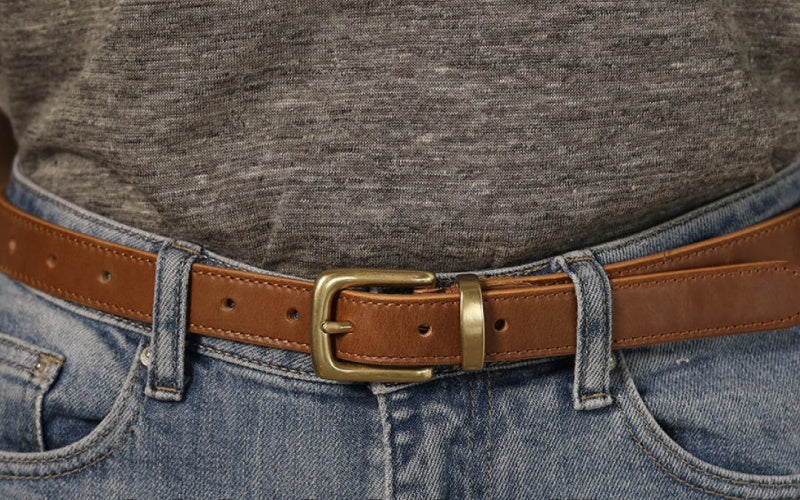
A belt should extend 2 to 4 inches past the buckle when properly fastened. This length allows the tail to tuck cleanly through the first belt loop and sit flat against your waist without excess material bunching or dangling.
According to Elliot Rhodes' belt fitting guide, the ideal fit is a belt fastened at the center hole with just enough tail to reach through the keeper loop and the first pant loop. That typically works out to 3–4 inches of overlap for casual belts and 2–3 inches for dress belts.
For a detailed walkthrough of belt extension, our article on how far should a belt extend past the buckle covers every scenario.

The Center Hole Rule
Most belts come with 5 holes. The goal is to fasten at the center hole — the third hole. This gives you the cleanest overlap and the most flexibility.
Why the center hole matters:
- Balanced overlap. Fastening at the center hole produces 2–4 inches of tail — the visual sweet spot.
- Room to adjust. Weight fluctuations, different trouser rises, and seasonal layering can shift your waist measurement by an inch or two. The center hole gives you two holes in each direction — room to tighten or loosen without the belt looking wrong.
- Longest belt life. Alternating between the center hole and its neighbors distributes stress across three holes instead of concentrating it on one. According to Hanks Belts' sizing guide, the center-hole strategy also prevents premature stretching at a single point.

What the holes tell you:
| Hole Used | What It Means |
|---|---|
| 1st hole (closest to buckle) | Belt is too large — consider sizing down |
| 2nd hole | Slightly loose — acceptable for low-rise wear |
| 3rd hole (center) | Ideal fit — proper overlap, balanced look |
| 4th hole | Slightly snug — acceptable for higher-rise trousers |
| 5th hole (farthest from buckle) | Belt is too small — size up or the belt is worn out |
If you're consistently on the first or fifth hole, the belt is the wrong size — not "close enough." Forcing a belt into the wrong hole creates either excess tail (too large) or a strap that barely clears the buckle (too small). Our size guide helps you find the right length from the start.

What Happens When the Overlap Is Wrong?
Too Much Overlap (6+ Inches)
The tail extends well past the first belt loop. It flaps, curls, or has to be awkwardly tucked under a second loop. This signals the belt is at least one size too large. The visual weight of all that extra leather drags the waistline down.
According to Irreverent Gent's belt measuring guide, excess tail is the most common belt-fit mistake men make — usually from buying a belt based on pant size alone without accounting for how belt sizes are measured.
Too Little Overlap (Under 2 Inches)
The tail barely clears the buckle. There's not enough length to tuck through the keeper loop, let alone a belt loop. The belt looks strained, and the stress concentration on the outermost hole accelerates wear and stretching. If you gain even an inch, the belt becomes unwearable.
The Goldilocks Zone (2–4 Inches)
The tail tucks through the keeper loop and the first belt loop, then stops. No excess. No strain. The belt lays flat, the buckle sits centered, and the tail doesn't create visual clutter. This is the target.

How to Size a Belt for the Right Overlap
Getting the overlap right starts with buying the correct size. Here's the formula:
Method 1: Measure your body
- Wrap a flexible tape measure around your body where you'll wear the belt — hips for jeans, natural waist for dress pants.
- Read the measurement in inches.
- Add 2 inches. That's your belt size.
- A size 36 belt means the distance from the buckle edge to the center hole is 36 inches.
Method 2: Measure an existing belt
- Lay a belt that fits well on a flat surface.
- Measure from where the buckle meets the leather to the hole you use most.
- That measurement is your belt size.
According to Obscure Belts' sizing guide, the add-2-inches rule works for most body types. The extra 2 inches accounts for the leather between the buckle and the first hole, ensuring the center hole lands at your actual waist measurement.
For a complete walkthrough, our article on how to choose a belt size for a man covers every measurement method. Women can follow the same principles using our belt sizing guide for women.

What to Do If Your Belt Is Too Long
You bought a belt. It fits on the right hole. But there's 6+ inches of tail flapping around. Here are your options, from easiest to most permanent:
Use the Keeper Loop
Most belts have a leather keeper loop between the buckle and the first belt loop. Tuck the tail through it. If there's still excess, some belts have a second keeper. This handles 1–2 inches of extra length.
Add an Extra Keeper
A cobbler or leather shop can add a second keeper loop for $5–$10. This discreetly controls extra tail without modifying the belt.
Trim from the Buckle End
This is the permanent fix. According to Extra Petite's belt resizing guide, remove the buckle (most quality belts have screw-on or snap-on buckles), trim the excess from the buckle end with a craft knife and a straight edge, re-punch the screw hole, and reattach. A local cobbler does this for $10–$20.
Never trim from the hole end. You'd lose your adjustment range and end up with a belt that's too short if your weight shifts even slightly.
Professional Shortening
Any shoe repair shop can shorten a belt in 10 minutes. Cost: $5–$20 depending on the buckle attachment type. According to Ask Andy About Clothes forum, this is the cleanest option — a professional cut with proper tools leaves no visible evidence of alteration.

The Bottom Line
A belt should overlap 2–4 inches past the buckle when fastened at the center hole. Less than 2 inches means the belt is too small.
More than 6 inches means it's too large. The center hole gives you flexibility in both directions and keeps the tail length in the visual sweet spot. If your belt is too long, trim it from the buckle end or have a cobbler shorten it for under $20.
BELTLEY's full-grain leather belts come with a straightforward size guide so you get the overlap right from day one — and with removable buckles on most styles, resizing at home takes minutes.

Frequently Asked Questions
Q: How many inches should a belt hang past the buckle?
Two to four inches. This allows the tail to tuck through the keeper loop and the first belt loop without excess. For dress belts, stay closer to 2–3 inches for a cleaner look. For casual belts, 3–4 inches is standard. Anything over 6 inches means the belt is too large.
Q: Which belt hole should you fasten on?
The center hole — the third hole on a 5-hole belt. This gives you 2 holes in each direction for adjustment and produces the ideal 2–4 inch overlap. If you're consistently on the first or last hole, the belt is the wrong size.
Q: Should you cut a belt that's too long?
Yes — but trim from the buckle end, not the hole end. Remove the buckle, cut the excess, and reattach. A cobbler charges $5–$20 for this. Cutting from the hole end removes your adjustment range and risks making the belt permanently too short.
Q: Does belt overlap length matter for style?
Yes. Too much tail creates visual clutter at the waistline — especially visible with tucked-in shirts and suits. Too little looks strained and uncomfortable. The 2–4 inch range keeps the belt looking intentional and well-fitted, which is especially important in business and formal settings.
Q: How do you keep a belt tail from flapping?
Use the keeper loop between the buckle and the first belt loop. If the tail still extends too far, add a second keeper (a cobbler can do this for $5–$10), or trim the belt from the buckle end. Some women use a small hair elastic wrapped around the strap as a discreet holder — it works well on narrow belts.

%20hole%0ALess%20than%202%20inches%20looks%20too%20tight%20and%20stresses%20the%20belt;%20more%20than%206...)